People are quick to forget that the human mind is a firewall in computing environments. A car that can be remotely turned off by satellite signal is not a car with which I would want to share the road. Process automation will probably create the Runaway Train effect in due time.
I disagree. What god is capital punishment meant to appease? It's supposedly there for people who are too dangerous to keep alive right? Human sacrifice seems to me like it was meant to bring better harvests or otherwise give the illusion of controlling a chaotic/random natural process.
I don't think so. I think it's current justification is typically framed in the form of 'punishment', and its historical justification was purely religious. And, coincidentally, was at least partially about giving the punished person a fair shot at redemption by punishing them while they were still on earth - which is literal god-appeasement.
Regardless, I think equating capital punishment with ritual sacrifice is a fair judgement. No matter how rational our rituals and systems for killing people seem, there's no reason to suggest that the Aztecs did not feel similarly about their rituals and systems. Law is not supposed to be a science, so it's also not free from cultural relativism, even if you're not a cultural relativist generally.
I consider all distinguishing characteristics between people or groups of people to be projections utilized by human minds to motivate and bring forth highly-ritualized purifying violence, which ranges in intensity from inconsequential name-calling to full-scale genocide. My best historical example of this from pre-modernity was the 13th Century Cathar Purge, where the War refrain "Kill them all and let God sort them out" originates, and continues forth until this day. Records point to a similar practice within the Aztec regime, with self-sacrifice a common action to sustain the empire.
Given the advanced bureaucratic practices common to empires in precolonial America, it seems the Aztecs simply required regular sacrificial deaths (via suicide or homicide) to maintain their office, in addition to regularly liquifying prisoners or the enslaved. Like a death camp which ran on self-motivated suicide, for reasons of cosmic accounting.
It's dismaying that user 5DFractalTetris' comments here are so heavily downvoted, since they're clearly civil, literate, grammatical, and made in good faith.
Personally I find 5DFractalTetris' claims to be preposterous and wrong, but IMHO downvotes should be reserved for something other than "I disagree with this comment."
it wouldnt make for a good interface, but I wonder if there is any value to having up/down vote for karma and i agree / disagree to allow users to express their level agreement with the comment.
"What god is capital punishment meant to appease?"
I have to agree just a shade with the premise.
A lot of punishment is morally oriented, and it's derived from our value system which is headed by 'God', or at least an interpretation of that.
Murderers are executed not just to keep them off the streets, but as a matter of punishment which is fundamentally pleasing to our moral code ... headed by God.
I think old-school capital punishment is at least distantly related to the concept of sacrifice.
"Civic religion" is a concept that some people subscribe to. It doesn't have gods per se, but it has abstract concepts (like e.g. justice) that can be similarly worshiped.
How are they different? (I don't mean this sarcastically)
In one world, we believe that a crime committed causes harm against a social construction. In the other...
To me, it seems like the crucial difference is whether the person responsible for the act is the one punished. It is not clear that is the objective of the modern (American) justice system. It is even less certain that was an issue with pre-Enlightenment justice systems.
Human nature seems to be more "someone has to pay!!" more than "the person responsible has to pay!"
> One is to appease "the gods". The other is to protect society
Defining 2 things then calling the definition different is not compelling.
The thinking that makes them less different is that they both serve "a greater good" (a just society or secular society) or "specific good" (of a community or divine favor). How you perceive the original intent or what terms you use are not relevant to the association.
Not sure why this was downvoted, but I support your question.
As modernists, we believe that it's important to punish the person who is responsible for a crime. It is not clear that is
1/ "Justice",
2/ shared by our ancestors,
3/ any more clear or moral than other belief systems.
It boils down to the purpose of the modern justice system. I've heard all the following reasons, each with deficiencies:
1) because doing wrong must be met with punishment (tautology)
2) because it keeps dangerous people off the street (not structurally optimized for)
3) because it makes our society safer (abstract/generic)
4) because it makes it clear that each individual is responsible for their actions (most believable to me)
I guess my question is this: why do we put people in jail (or kill them)? Personally, I don't think our justice system exists to make "good society" safer[0]; I think it's to control people so they behave in the same way those in charge want people to behave. (I.e., the initial motivation is amoral.)
[0] if so, victimless crimes wouldn't be so heavily regulated
Perhaps divine retribution is a better explanation than ritual sacrifice in theocratic regimes, in the case that a god or a group of gods require the death of the mortal body so the soul can face metaphysical justice for Earthly sin.
However, regardless of the metaphysical beliefs of a state, any entity of sufficient size & organization will often be recognized by an individual as possibly having godlike power over the individual's body. Whether or not that truth actually ritualizes state-sanctioned violence, or the diffused psychological impact of that violence can be called a sacrifice, is a matter of opinion; however, being that it is state-sanctioned it is obviously distinct from murder, and because these punishments often have no deterrent effect on the populace, their true nature is in camera obscura.
Perhaps in a modern context. I know that the ancient Chinese were big into sacrificing prisoners and captives of war. And the end result is eerily similar even when couched in terms of law and order. Sacrifice has both been used to appease or ask favor of the gods, and to assert ones rightness and an other’s wrongness. Capital punishment fits the second criterion to a tee.
You absolutely can. If the U.K. made extramarital sex illegal and enforced it syphilis cases would fall. There are plenty of other less drastic measures that would have the same directional effect.
Evolution isn’t magic. The USA used to have malaria. Now it doesn’t.
Better approach in my mind is to develop vaccines.
Last I checked marriage is by no means an STI preventing form of contraception so I think you mean monogamous relationship. As many people are in happy monogamous relationships with no intent for marriage because of a variety of reasons.
It's not entirely clear to me how you would even go about enforcing such a law. Why would either participant report their "crime"? Isn't that effectively what Judeo-Christian beliefs have encouraged since their inception?
I suggest you learn to read more carefully. I did not suggest syphilis would be eliminated by making extramarital sex illegal. I said its incidence would be reduced. If you make something more expensive people do less of it. Fewer people smoke marijuana now than will once it’s legal because part of the cost is the possibility of a criminal record and all that entails.
Infections would fall by the amount caused by extramarital sex, multiplied by the probability that people are actually deterred by illegality, plus network effects. That won't completely eradicate syphilis, but still lower the numbers.
We could also chemically castrate everyone through the water supply.
I mean, we should keep all our options on the table.
The Nazis shot people in the head for extra-marital sex. But they never got a handle on the problem. And to be honest, I doubt we can bring more ruthlessness to bear on the problem than they managed.
To paraphrase Darwin: if extramarital sex is outlawed, only outlaws will have extramarital sex.
And looking at other apes for a (very) rough metric, it's really hard to run against evolution when evolution's selected for...at least a certain genetic strain that leans toward non-monogamy. Interestingly enough, many bird species, while mating for life, are not sexual monogamous in that period.
The real question is: what're we going to to with all those chlamydia-infected koala bears?
>The Nazis shot people in the head for extra-marital sex.
I can find zero statements outside this comment on HN backing up or even implying any sort of punishment relatively close to this absolutely absurd statement. Nazism wasn't some cartoonishly evil villain. Propping it up as such is dangerous because it makes people see it as an absurd historical event that is too crazy to be repeated.
Malaria is not limited to the tropics and historically was common in parts of Europe and North America, and likely even in what is now the United Kingdom.
I remember reading a proposal for a system where a high speed train would travel non-stop for the entire length of its route. In halfway towns a shuttle would be sent out to match the train's speed, interface with it to exchange passengers then detach to return to the halfway town platform.
It sounds unbelievable, but remember it was once considered insane to consider building a railway between Liverpool and Manchester.
The problem would be the scheduling. Even at the best of times railways rarely run on the kind of precision that these kinds of operations would demand. Plus it’d require a lot of duplicate railway since presumably it would take distance for shuttles to accelerate and decelerate, and the shuttles would need to get back to the original stations in time for the next trains.
On most rail routes in Austria we have high speed trains and low speed trains on the same routes. When you need to go to a smaller station, you get off at the closest major station and switch to the slow train. It would be awesome if you could just switch directly to the low speed train whenever the high speed train passed it... (Then you don't even need to have shuttles going back and forth)
Seems extremely cost prohibitive. In addition to the extra rails and control systems, you’d need a high speed locomotive and several cars for every single station along the route.
Reminds me of the moving platform idea a few years back. Essentially, platform trains would run on a loop, connecting to high speed express trains. It sounded unsafe, but maybe not more dangerous than a slip coach.
I have someone to chat to and they're aren't a bot, and maybe they have like a lifetime of experiences from a nation I will never really know and cannot really imagine. It's cool and I have utmost respect for it. I've worked with humans from places where food is considered sacred and given away for free, places where the Volkswagen is almost the only auto to be found, and humans who have survived genocides. They are worth a premium, sirs!!
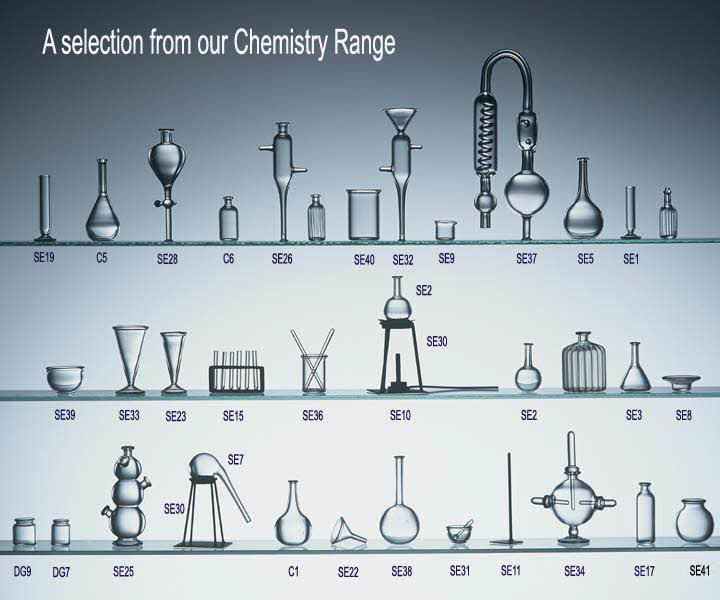
I am interested in the amount of specialized glasswork required by the institution. I also doubt that the glassware of tomorrow's science is even remotely like the glassware of today's. The next glassworker is more of a materials scientist, with glassware as a skill, probably; in much the same way as a programmer may know both Java and Python.
You can see the clear differences. Assuming you can get the printer at all, 3d printed glass has layers (and therefore isn't going to contain gases or hold vacuums very well), it's easily 10x heavier, far more expensive, ...
Presumably they will be making progress with this. There are several different techniques under development now, ranging from the one you mention to working with regular molten glass.
You could leave hollow parts open and go inside there with a torch or laser. It's common to reach into tubes or vessels with tools in many techniques, from modern 'inside out' to ancient painting methods. This would be difficult for sections with hidden inner parts or curves, so perhaps it could all be prepared and then assembled in stages (which is what we do anyway when making these things by hand).
Also there are several alternate methods under development that won't leave a rough surface, like hot glass methods.
Glass can be smoothed by heating to temperatures below that which cause sagging and deformity. If the smoothness is fine, on the order of a frosty surface (>200 grit or so) that would polish it (this is called kiln polishing). Of course, you risk basically melting the piece so this is a delicate operation with anything other than a plate of glass.
If 3d printing doesn't work, we can create robots that do what glassblowers do. I could easily script what I do for the right machinery (a series of computer controlled lathes and torches).
What about individuals who prefer tent dwelling and regular work (paid and volunteer) but eschew both illegal drug use and unemployment?
I have a tent I could call a home but am not entirely comfortable crashing wherever I can, although generally I like being outside as much as possible. Tent dwelling is also historically well-respected, hard housing being the niche of farmers and royalty. I'd go as far to say that if people in tents aren't safe it's not a good neighborhood, because tents are fragile. They're also not garbage: some of them are fireproof and UV resistant with two or three shells. And, if you've never built housing, I can tell you: it is a huge chore for hundreds of people, including chemical workers, lumberjacks, metalworkers, and coal miners.
Why not build a Black Rock City where the Burn never stops? If cities sponsored that niche, the gig economy would ramp up to "unstoppable machine" instantly. Sociologically, there's not much difference between a tent city at a festival and an apartment building with a range of incomes, in terms of deviancy and community struggles. From a housing and urban development perspective, some of the new textiles are better and more sustainable than industrial construction.
> Why not build a Black Rock City where the Burn never stops?
You know, that would actually be a fascinating thing to see. I doubt it will ever happen given how litigious our society is, but that seems preferable to what we're doing now. San Francisco spends about $250 million on homeless services[1], but you'd never know from walking around. You could probably fund a non-stop Burn with that; the budget for a 65,000 person burn for a week is 37 million[2]. You'd have fewer people and less overhead so I think it would work.
How coordinated was it though? I also think part of the solution is to provide something more appealing to the mentally ill homeless and the lifestyle-homeless. There is a lot of space an hour or two from most major cities that could be used in a project like this.
Something of a commune, heavily staffed with mental health professionals and with very attentive services (medical, cleaning, garbage). Encourage the more willing to undertake/share those roles. Make it feel somewhat self-organised and free.
Run a very loose "street school" - open-air where possible, 1-2 hours a day, variety of interesting topics. (I'm surprised they don't try doing that in SF.)
Burners are mandated to be self-sufficient and leave no trace; only chemical toilets are provided. If that ethic was practiced by this population, there would be many more options.
I've known one U.S. karoshi. Beyond that, I know maybe four or five individuals, myself included, in private and public sector U.S. roles, who have overwork habits: cigarettes and/or coffee, fasting diets, sleeplessness, social isolation, second jobs and volunteer schedules which seem necessary to hold their communities together. Probably all the truckers who die in their 40s or 50s are overwork deaths.
Truckers and office worker overwork deaths are probably among the most absurd, though I don't have figures regarding light industrial factories. The millenary lifestyle of agriculture and correspondence with the bureaucratic authorities is mostly lost, as arable land is commodified into multi-million dollar "lottery property" which renders a life without the risk of overwork death, and with happiness and a modest, long-duration passive income, almost entirely inaccessible to those not born into a family holding that sort of land. I don't know if that's entirely true but I've been doing research and the bootstraps by which I might hoist myself do indeed seem mythical.
Not all citizens are guaranteed a pension or benefits, and cannot necessarily access roles which do. The pensions and their management are a political talking point ("Candidate X will disrupt pensions"), which is outward and openly-admitted evidence of corruption, and where the situation becomes even more troubling.
This is not merely something a company could fix, at least not in the U.S.A..