He would be awaken in the night to his mother screaming in pain while United healthcare denied claims and refused new treatment. She had severe neuropathy.
Holy shit this would leave a scar on anyone. I couldn't even imagine the emotional pain this causes.
Not saying this justifies murder but what would you do if a close loved one was screaming in agony daily and there's nothing you can do about it because the insurance company is blocking treatments?
Reposting since my other comment is hidden under a flagged comment.
It really sounds like he has hEDS. Hypermobile Ehlers Danlos (hEDS) can cause Small Fiber Neuropathy and back pain, as well as poor healing from surgery. It’s also more common in engineering type people, higher IQ, ADHD, anxiety disorder etc
It’s probably the most under-diagnosed condition in general. It’s also autosomal dominant. Can present as psychosomatic - gaslighting from doctors is typical.
It’s a shame more people don’t know about it because there are ways to effectively treat it - it’s an area where patient communities are far ahead of the medical community. So this could be a failure on two fronts, a failure of insurance but even if they had unlimited coverage there still would have been a failure in treatment.
Hypermobile Ehlers Danlos (hEDS) can cause Small Fiber Neuropathy and back pain, as well as poor healing from surgery. It’s also more common in engineering type people, higher IQ, ADHD, anxiety disorder etc
It’s probably the most under-diagnosed condition in general. It’s also autosomal dominant. Can present as psychosomatic - gaslighting from doctors is typical.
It’s a shame more people don’t know about it because there are ways to effectively treat it - it’s an area where patient communities are far ahead of the medical community. So this could be a failure on two fronts, a failure of insurance but even if they had unlimited coverage there still would have been a failure in treatment.
I don't have sciatic pain, thank God, but I have bulging discs from a spinal compression injury. The first few months were excruciating -- I couldn't exist without horrific pain, no position I could lay in, sit in, stand in, etc., would provide any relief. I couldn't stand fully upright for weeks. And, even post-recovery, the last 2 years haven't exactly been pleasant. I am still managing my lower back on a day-to-day basis but I am primarily pain-free today.
Chronic pain really takes you somewhere else mentally. Now that I am, for the time being, on the other side of it, it has also made me extremely empathetic to people who suffer through it.
He could have asked for charity, or asked hi multi-millionaire grandfather or fabulously wealthy family for help, or sued the insurance company, or taken out loans, or made a ton of money of his own and paid cash and negotiated directly with the providers, or mortgage the family mansion, sell everything he owns. There are millions of things he could have done.
"Nothing you can do about it" is just a lie people tell themselves to justify violence.
Well, it fixed a perceived wrong.
Oftentimes injustice is what actually hurts.
I do believe, though, that there is a vast spectrum of behaviours in between non violent inaction and an isolated random killing, that make a lot more sense in every way and that is called politics.
What do you think were the dynamics of the engineering team working on this?
I'd think this isn't too crazy to stress test. If you have 300 million users signed up then you're stress test should be 300 million simultaneous streams in HD for 4 hours. I just don't see how Netflix screws this up.
Maybe it was a management incompetence thing? Manager says something like "We only need to support 20 million simultaneous streams" and engineers implement to that spec even if the 20 million number is wildly incorrect.
There's no way 300 million people watched this, especially if that number is representing every Netflix subscriber. The largest claimed live broadcast across all platforms is last year's Super Bowl with 202 million unique viewers for at least part of it, but that includes CBS, Nickelodeon, and Univision, not just streaming audiences. Its average viewers for the whole game was 123 million, which is second all-time to the Apollo 11 moon landing.
FIFA claimed the 2022 World Cup final reached 1.5 billion people worldwide, but again that seems like it was mostly via broadcast television and cable.
As far as single stream, Disney's Hotstar claimed 59 million for last year's Cricket World Cup, and as far as the YT platform, the Chandrayaan-3 lunar landing hit 8 million.
100 million is a lot of streams, let alone 300. But also note that not every stream reaches a single individual.
And, as far as the 59 million concurrent streams in India, the bitrate was probably very low (I'd wager no more than 720p on average, possibly even 480p in many cases). It's again a very different problem across the board due to regional differences (such as spread of devices, quality of network, even behavioral differences).
I mean, yes, but nobody streams RAW video in practice, and I can't imagine any users or service providers who'd be happy with that level of inefficiency. In general, it's safe to assume some reasonable compression (which, yes, is likely lossy).
Not through a single system, the advantage of diversity rather than winner-takes-all.
The world cup final itself (and other major events) is distributed from the host broadcaster to either on site at the IBC or at major exchange points.
When I've done major events of that magnitude there's usually a backup scanner and even a tertiary backup. Obviously feeds get sent via all manner - the international feed for example may be handed off at an exchange point, but the reserve is likely available on satelite for people to downlink on. If the scanner goes (fire etc), then at least some camera/sound feeds can be switched direct to these points, on some occasions there's a full backup scanner too.
Short of events that take out the venue itself, I can't think of a plausible scenario which would cause the generation or distribution of the broadcast to break on a global basis.
I don't work for OBS/HBS/etc but I can't imagine they are any worse than other broadcast professionals.
The IT part of this stuff is pretty trivial nowadays, even the complex parts like the 2110 networks in the scanner tend to be commoditised and treated as you'd treat any other single system.
The most technically challenging part is unicast streaming to millions of people at low latency (DASH etc). I wouldn't expect an enormous architectural difference between a system that can broadcast to 10 million or 100 million though.
One hypothesis, if Iran doesn't escalate more, is that Israel take advantage of not retaliating (which will be devastating for Iran and probably be close to a global war) and ask in return to have a harder stance on Iran. The world has been blind about Iran converting into a nuclear power and USA stance very soft for being USA, the top military and business power in the world.
The other hypothesis is retaliation... which obviously turns to a global war. I don't know if precisely a WWIII because the domestic situation of well developed countries is lazy regarding military action.
Basically someone has to blink. My estimation is that the Israeli government has a lot more latitude since the Iranian governemnt is sort of fueled by this hatred of Israel and the US so they really cant be seen to back down. Luckily this attack wasnt really that bad and to me signifies that Iran doesnt want to escalate so I think likely Israel blinks now with the excuse of focusing on Gaza.
Iran knew that though, which was the point, and does make the attack not that bad. Maybe Im just being hopeful though but it really does seem like Iran did what they could to escalate as little as they realistically could and Israelis will respect that.
it's like if you wearing a bullet proof vest, i shot you. fail to kill. and my defense for attempted murder "he knew it was going to happen and had vest on. it's not that bad after all"
More like "if I didnt try to kill you I would be killed myself, so I shot you in a place I knew it wouldnt kill you". Iran's government has positioned itself so that it needs to respond to avoid unrest. They could not have done nothing, and this wasnt much in the scheme of things.
This would have justified a symbolic attack whilest exporting less weapons and terror which Israel may have correctly interpreted as a victory.
Now we have a very substantial provocation by a party working on nuclear weapons. After they can threaten Armageddon they can export nearly unlimited harm short of existential.
We'll be hearing a justification for a preemptive strike on their ability to make war shortly and in 90 days half their leadership will be dead.
you do realize that it is literally first time that so many ballistic missiles are shot together and nobody even knew till today if it's possible in general to defend against such attack ?
I dont see what that does to quell the domestic calls for a response to the embassy attack. Of course I want Iran to stop the bullshit, but the realty is that they couldnt let this attack go unless they wanted massive unrest. So the question remains, how should Iran respond to the embassy attack? To me this seems like just about that absolute minimum they couldve done.
I’m curious if you think this is bad, what do you think of the number of missiles that are sent to and hit targets in Gaza?
To my eyes, compared to what Israel is actively doing against Palestinians, this really doesn’t seem that bad. In fact I would even go so far as to say it is expected. Countries engaging in genocide rarely do so in peace.
israel doesn't use ballistic missiles in gaza. you also need to look at how many rockets hamas and hezballah shoot at israel. the only reason that there is not more damage and dead it's because israel is vested in protected it's citizens.
Your account has unfortunately been breaking the site guidelines, including by using HN primarily for political battle. We ban accounts that do that, regardless of what they're battling for or against, because it destroys what this site is supposed to be for.
If this keeps up we're going to have to ban your account, so it would be good if you'd review https://news.ycombinator.com/newsguidelines.html and stick to the intended use of the site from now on.
i see dozens of accounts constantly posting political, anti israeli content, anti semitic content for months and engaging in same type of discussions. somehow it ok but posting pro israeli content always gets downvoted and accounts banned.
it's not new. i observed it through the years. and it's not only for political topics, but also for anything that doesn't correspond to "majority opinion"
at this point of time this website is worst than reddit and twitter, where plurality of opinions is tolerated.
Isn't this a damning condemnation for the tech world? Can anyone think of another product that was so popular and then people started abandoning it for their own mental health? This sounds like drugs!
We created the most influential hardware device in the past 30 years (smartphone) and within 5 years it was used to weaponize human vulnerabilities (high jacking dopamine, porn, propaganda, etc...) and has had a huge negative impact on our young people so much so that social media* is now being compared to smoking. I think the takeaway is "Don't trust anything this industry makes because eventually they'll use it to extract profits and harm you in some sneaky way". Kinda like how most people rolled their eyes when tobacco companies push vapes as "safer".
Most of my non tech friends are starting to look at the tech industry like the oil industry. Greedy, hurting society for profits, and delusional. This is sad because most people I work with are amazing and great people who build fantastic products.
* I think social media would be a fraction of what it is today without the smartphone
I too feel every ounce of this. It's in the air. As a data oriented person I'm uncomfortable relying on "feels like" and "intuition" but that's all I have.
The best way I can describe it is "societal rot". Just 10 years ago there was optimism in the air. Now every damn day I see SEVERELY mentally ill people losing their shit in the streets and there's more and more of them each month (I live in a medium sized US city). There's human shit all over the sidewalks. Nudity in front of children. Are we supposed to think this is ok?
I recently ordered food delivery and the girl delivery driver passionately thanked me for a $9 tip. The desperation and despair in her eyes was disturbing. I see this same look in too many people. It's not normal. People seem to be struggling in a way that I've never seen in my life (I'm 34).
Also its difficult to find hope. It's no longer easy to support yourself with a high school education. In response to that more people got educated. Great! We currently have the most educated population in the history of the United States. But oh no we now have an AI rat race where the main monetization strategy is replacing those white collar jobs with AI. People can only take so much.
BTW I'm a typically very positive person (based on feedback from peers and co workers)
Folks seem terrified to really "let loose" and have fun. Fear of judgment seems to be the basis of their fear. I don't think this fear is completely irrational. Social media (or something) seems to have made people jump to unjustified conclusions fast about people they don't even know. People assume the worst now.
Before: "Oh random person X just asked if I want to dance. How fun!"
Now: "Can you believe a random person came ask me to dance? What a creeper!"
Before: "Look at the kids having fun playing in the ditch and making mud pies!"
Now: "Who leaves their kids unsupervised in the rain? Should we call the police?"
Before: "I think I'll try an improv class. It looks like fun. Why not!"
Now: "I want to learn piano but I'm scared to be bad in front of everyone while learning."
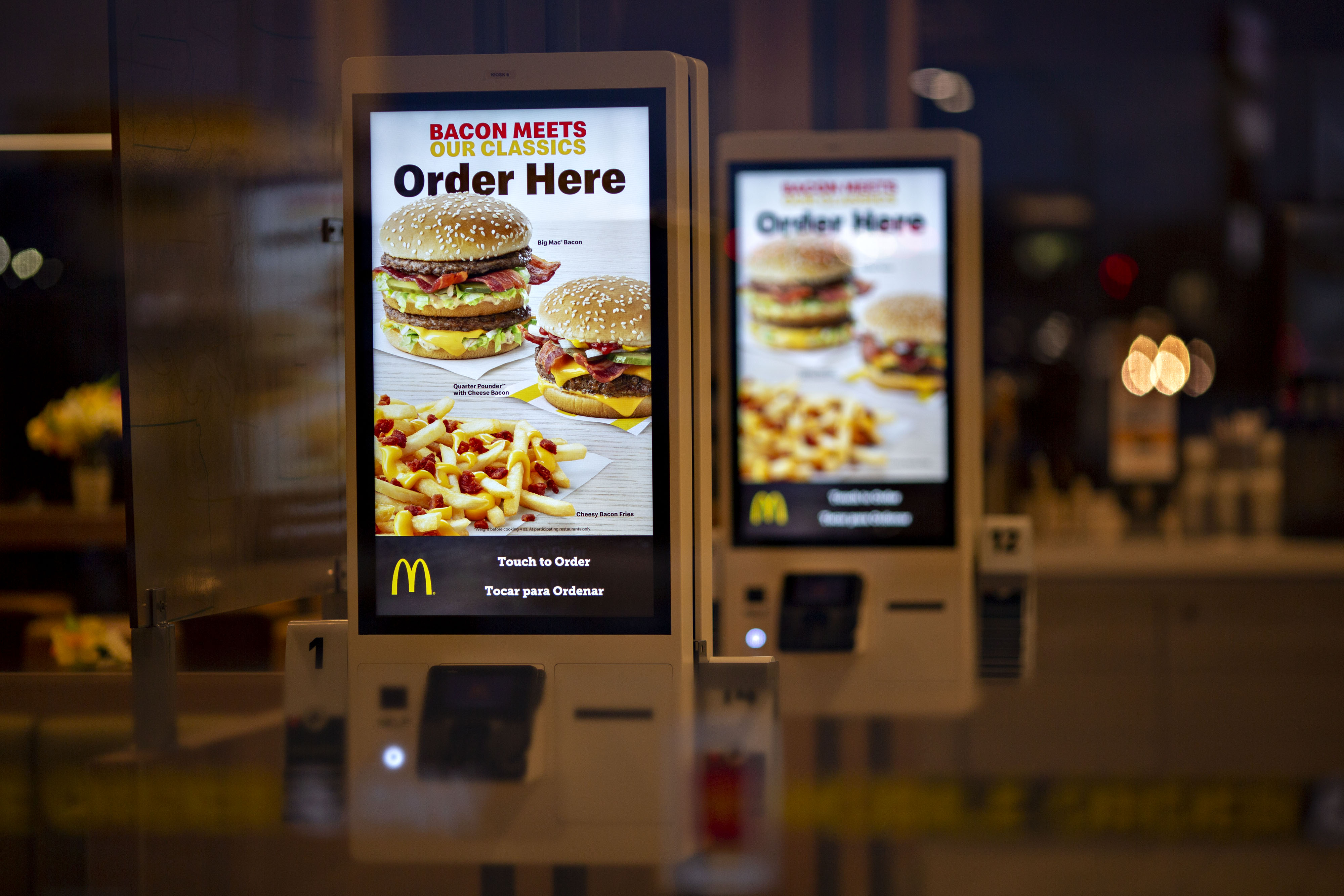
I worked at McDonalds for 4 years. 2 as a kitchen worker. 2 as a shift manager. I've personally cleaned these machines too many times to count.
I've never heard one person tell "the truth" about this (at least in my personal experience).
Our ice cream machine was often down too but not because it was broken. Because we were short staffed and making ice cream is a HUGE time sink for employees. The manager would just tell the employees "no more ice cream" and they all knew what's up. They'd be very happy that they could focus on food and McCafe and thus not disappoint customers too much due to slow service.
Folks don't quite understand that McDonald's is consistently short staffed and the workers are often doing the work of 2-3 people just to try to get you fast and hot food.
To be fair, Wikipedia says McDonald’s is now 80 (!!!) years old, I expect many foundational aspects of the business have changed since then. But it is wild to see particular aspects of the evolution. I wonder how much was anticipated/planned, and how much “just happened”
The company whose OG sign said "McDonald's Famous Hamburgers" the year they introduced "fast food" principles into their operations was actually built around shakes?
Ray Kroc (who is really responsible for the growth of the McDonald's franchise) was a milkshake machine salesman. I believe he was introduced to the McDonalds brothers when selling them a milkshake machine that could mix multiple individual milkshakes at once.
They did pretty much give up on the shakes not long after becoming a popular place. They were one of if not the first to switch from actual cow milk to chemical gelatin formulations.
So they really have always been struggling with the difficulties of quickly serving an ice cream product for their entire existence. That's a long time to have a thorn in your side and put up with it. 80 years according to the other comment.
Your local franchisee or municipality has made this decision for you: McDonalds corporate and every franchisee in my area employs straws that do not disintegrate.
Had a stint myself and cleaned those Taylor shake machines, takes time as have to disassembler the entire chamber - lots of sharp blades and not many trusted to do it right. Let alone checking all the O-rings, which you often need spares and short of the one you need. Then inspections....so often find they would at least try to close the machine early to shorten the close, and often be down. Sometimes due to lack of milk for the machine and no they can't just pop down the local supermarket to get some - least not known that ever happen, nor risked as be job ending kinda things as cutting into that franchise supply grip.
One problem with your claims is this is pretty well documented as a uniquely McDonalds franchise problem at this point.
Competing fast-food franchises serve similar frozen dairy products, in a similar staffing environment, without their machines constantly being out of service.
This video covered the situation fairly well IIRC:
Also staff not keeping the ice cream machine full or ignoring the warnings on the screen or...all the other things. As long as people followed all the rules the machines they were bullet proof.
This makes sense for daytime-rush "broken" ice cream machines; but almost all the reports I've seen about "broken" machines are about people coming into a dead store during the night-shift, when the employees would in theory have nothing better to do than make them an ice cream.
The store looks dead but do you know if the night crew is caught up on their closing responsibilities? Doing dishes, stocking nuggest sauces, cleaning the grill, disassembling the fry hopper, organizing the stock room, etc...
If the store closes with none of these done the manager will blow their labor budget due to taking 3 hours to close and the employees will be pissed.
Your rebuttal is a good one and your somewhat right. Grabbing you an ice cream cone when there's no customers likely isn't a big deal. The manager usually cuts the ice cream while being overwhelmed (Ahh! 7 ice cream cones and we have 10 cars behind them. No more ice cream!) and never tells employees to start offering it again. Offering ice cream again would piss off the employees and also slow down the manager who's trying to hit labor and drive through times
> The store looks dead but do you know if the night crew is caught up on their closing responsibilities?
I mean, I've never worked in fast food myself, but that split of responsibilities assumes that the night shift are closing, no? There are a lot of 24-hour McDonald's locations, where no explicit "closing" ever happens.
I would assume that in a 24hr location, a lot of what would otherwise be "closing" responsibilities are either spread out as "clean as you go", turned into something done at shift-start/shift-end for each shift (and so made a lot quicker by only having 1/3rd the accumulated workload for each shift), or pushed to the dead-est period (which according to one Quora post is "in the middle of the graveyard shift, 3-6AM".)
You underestimate the creativity and laziness of night shift food workers. Once a daytime manager says "no ice cream", how far away is a night shift worker from just repeating that mantra?
Source: Was one, did that for other things all the time.
> " Sorry, we don't deliver to your area on Mondays "
It also needs to be cleaned (daily when I was crew), and that often means taking it apart early to get ahead of closing, or putting it together late because you didn’t have enough time to get to it before breakfast ended, or maybe just don’t put it back together at all because the person that usually did it was gone that day.
When I worked there during our lunch rush, we would have a person dedicated to every task, fries, coffee, orders, bagging. When it came to the dinner rush, we would have half the staff or less then our lunch rush. So in a sense it is the work of 2 to 3 people.
Also during overnight we would have only one person in the front, and one in the back. Once Uber eats came on the scene our workload increased 3x or more, but no extra staff was added! :-)
Edit: that’s not even mentioning when we would be short staffed, due to people not showing up / calling in, which happened every other day it felt like, and the shift wouldn’t be replaced.
Yes. Lunch rush is the baby of all McDonalds management. You'll rarely see an understaffed store then. Coincidentally this is the shift that most store managers work.
Night shift is where you'll see the cluster-fucks occur most and it's when the ice cream machine will be "down" the most in my experience
Lunch is like one $1200 hour, dinner is $4-600/hour, but occurs over many more hours. Lunch is definitely busier and better staffed, and the dinner crew usually needs to to start thinking about closing, so a few go off at 7 to start dish or clean the back room or whatever.
The customer load on a service business like McDonald's is going to vary chaotically from minute to minute. It's a difficult problem to have it match the staffing level, while staying in business.
I suspect this is a franchisee trying to improve profitability versus a company wide issue. I suspect it is highly variable. Also, sometimes sales are unexpectedly higher than normal.
We have comments from people who’ve worked there, which fit the general impression that the places tend to give.
I haven’t worked in fast food, but I’ve worked in retail, and it was my experience that the “nice” manager would schedule us, like… one extra person beyond the bare minimum.
Why do you suspect this, do you have any particular insight into these kinds of businesses beyond the rest of us?
Well, yes I do. I have owned four franchised businesses - all quick serve restaurant style - from two different national chains. Individual franchisees have significant leeway in how they schedule. Some, particularly marginal locations, will cut staffing to the bone. Others that are more confident in sales and doing well are able to schedule more than the bare minimum so that customers don’t wait as long and employees are happier.
Sales unexpectedly higher than normal happens, but that typically only lasts an hour and then you go clean the now very messy store, while if sales were normal you would have enough staff on hand to keep it clean as you go. Stores keep enough clean trays and the like around to handle the worst case extra busy, and the trash cans can go an hour without being emptied. Customers will pick the least dirty table.
Back in the early 2000s, I worked on a product that was the only profit center in a public company. While there were people who worked on overall technical architecture, it was only myself and one front end dev dedicated to the product. Other products that ran in the red had dozens of employees because they were the things that got touted to Wall Street, but we were the very boring thing that kept the company alive.
Back in high school I worked in fast food as a closer. One front end person, one backend person, one manager for dinner rush, late rush, clean up from the day both in the kitchen and the store, some basic prep for the next day (morning shift did main prep), and they kept pushing us to get our times down so that we could walk out the door as soon as the store closed rather than taking any time after closing for our cleanup, etc. Our labor cost per hour was likely around $17. The energy to run the ovens, refrigerators, etc was fairly consistent, while our labor cost for any extra time after closing was a variable cost that ate into their profit margin.
Doesn't matter what industry -- ask a doctor about their workload -- if management can squeeze labor costs, they will.
Of course, there's a great deal of price sensitivity especially on commodity products. But - perhaps implicit rather than explicit within my remarks - there's also mismanagement or questionable management. And, price is not always aligned with profit. That Arby's generated something like $1MM in yearly profit, in 1996 dollars. The extra $5.05 they would have paid me for the hour after closing to ensure the store was actually clean, prep was properly done, pans were cleaned etc, made exactly jack squat difference to their margin.
In the case of the tech company...let's just say they are all but forgotten, while other players came along with competent management and have formed new multi-billion dollar businesses.
Sure, there are a lot of incompetent employers. They usually go out of business. Businesses have a high failure rate, and it's pretty darn hard to make enough at it to put up with all the aggravation and work required to make it successful. Businessmen do not go into business to make a 3% return on capital, as anyone could buy a bond that pays 3%.
Bill Gates famously never went on vacation for something like the first two decades of Microsoft.
I'll counter you. How do you find competent, reliable people that show up to work consistently and work hard for $9.00 an hour?
You're doing the work of your buddies who called in. Your buddies called in because they're 17 and they're dad made them get this job. They hate it! This happens every damn day.
It's a relative time sink and the toughest logistical challenge in the whole store for workers due to soft serve melting so fast.
You must make the ice cream last. The car has to be at the window (or customer at the counter) when you start. This is the only item in the store that must be prepared like this so you must always have a free person to do this. McDonalds does't provide the labor budget to have "free people" standing around to get your ice cream when you need it. Making ice cream almost always hurt another area of the store in a small way.
Also making a soft serve ice cream cone is much harder than you think. Took me ~2 months to get it down. Dont even get me started on dipped cones.
Fun fact: This is why your mcflurry doesnt have candy at the bottom. Workers hate ice cream! They dont blend it with the machine, they'll just hand blend it to be quick.
The fix would be to take the burden off the the employees. Automate it just like they did drinks. Or increase the labor allowance to have the staff to handle ice cream. They'll probably never do that though.
This question makes me think that you believe the problem is an efficiency that can be solved rather than an intentional choice.
Ive worked at several restaurants as a waiter and food prep staff. The businesses have very thin margins and most costs are fixed except for…labor.
When it’s lunch rush, it feels like every atom of your being is pressed to the limit. Then when that’s done your manager has to come around and start assigning random cleaning and other tasks so people aren’t just hanging around.
When they schedule, they want to just *barely* handle the busiest time or otherwise it’s an inefficiency in the system.
Also to mention, restaurant staff aren’t the most…stable workforce in the world. So even if they do schedule to have some buffer, people will quit and call in sick on a dime.
I know what op is talking about when they say they do the work of 2-3 people and I believe them. The system is designed to squeeze that extra bit out of everyone.
If there was a magic mystery inefficiency they found, that would translate to decreasing staffing per shift, not increased breathing room for the individual workers. (IMHO)
I've never worked at a McDonald's, but I have had to operate and maintain a soft-serve ice cream machine. I don't eat soft serve ice cream because I know how long it takes to clean these machines properly. I've seen what happens when they aren't. I don't trust that places like fast food joints that are understaffed, where the employees aren't motivated enough to do a thorough job, would take the time necessary to make sure those machines are clean.
In my experience the major time sinks happen when multiple McFlurrys were ordered. Mixing one takes about 15-30 seconds, and if too many are ordered at once the ice cream would start to come out slower.
When you’re backlogged with multiple people in line, multiple orders, and you’re a 1-3 person crew in the front, every second counts. Ice cream was the easiest thing to cut because of the stereotype that it was always broken so people didn’t question that it was “down”, and those precious seconds made my 17 year old life much easier.
It likely doesn't, but McCafe Drinks/Burgers are a staple. Coffee and Burgers are likely included in most of their orders, Ice Cream they get a few each hour.
If it’s only a few that’s no more of a backup than someone getting to order and going “uhhhhhhhhhh” or the people arguing with the cashier that something was wrong.
How long ago was this and have the machines changed over the years? Because this ice cream machine always broken seems like anew phenomenon compared to my tenure back around 97.
I was there for about a year IIRC, other than cleaning the machine "making ice cream" was dumping the premixed liquid into the top two compartments.
Every retail/food service job is understaffed. You ask what people displaced by AI will do for a living? That. They'll do that. Because, actually, we do need people at PoS, if we're selling to other people. Hint hint as to why you should be supporting "unskilled" labor unions, high wages for those workers, and the destigmatizing of those types of jobs.
Displaced workers going into unskilled labor doesn't seem like an idealized "post-AI" situation. If anything, it might be something we should guard against. There's nothing wrong with honest work, but some would probably paint that scenario as dystopian, if you consider that many people think creative and autonomous work are important to human flourishing. If anything, I'd want AI to take over those rote jobs so people can focus on that type of creative work they tend to find more fulfilling.
I’m not sure if I’m capable of performing fulfilling work that would also have anything resembling of a demand.
Take creative work. The pre-AI market was already extremely competitive. Few artists can chase autonomy, the rest needs to sell out to some level - usually significant; not the human flourishing we wanted.
AI may disrupt this; still, my guess is that the pool of profitable creative workplaces remains unchanged, at best.
Let's draw another circle: things you make when 'financial obligations' are not a concern. Where does that intersect? Why aren't we drawing it? How much science was done by 'gentlemen scientists' who never worried about money? How much more would we know if that one person who could have figured out electromagnetism in 1400 didn't have to plow fields all day?
There are a lot of people who fail to self-actualize entirely due to environmental differences. Starvation, hypothermia, robbery and petty crimes, unemployment, destruction/loss of property, social rejection, discrimination, self-doubt, and even a lack of respect is enough to prevent someone from enjoying life fully.
Accepting the hardship of reality is the only way you can realize deterministic change. Making blanket statements about "opportunity" in the US will have you immediately proven wrong no matter what you claim. Your opportunity is not the same as a Puerto Rican's which is not the same as an impoverished and sickly rural teenager in Montana. Changing your frame of reference is not any easier than it is to stop looking foreign or get a bunch of money really quickly.
No one is going to argue that the world isn't your oyster as a tall, fit, cis white man (many people's definition of "sound mind and body"). However, the rest of us deserve a chance. That we're not always able to get one is not an in-born character flaw.
It’s possible that viewpoint is the correct one at an individual level while also being the incorrect one at a societal level, if the goal is a meritocratic society.
That is a really great place for you to be in! Where code useful and thus valuable, there is a lot in that intersection. Unfortunately where art is concerned, that intersection may be an empty set.
I personally derive a lot of satisfaction from other people enjoying using the programs I write, and I love it when they make money using it. (Many have described to me how D gave them a competitive advantage.) Many give back by funding our annual D conference and providing funding for several of our critical staff members.
I wrote Empire for my personal satisfaction eons ago, and when other people copied it and spread it around, I discovered that it was a lot of fun to get unsolicited emails from people who liked playing it and wanted to let me know. I still get them regularly!
Do you actually know any artists or musicians? Any of them that are successful? What you described wouldn't be "selling out," it'd be success. Selling out is the food service job they do to pay their rent, or the lessons they teach, etc. The person you were responding to was pointing out that it's not likely that there is a market for everyone's art, even if everyone was true to their own creative vision.
Yeah but that wasn't the context the person you were responding to was using it in. By your own example, Nirvana doesn't make any sense as they were tremendously successful doing their thing
Oh, it certainly is the context. Nirvana had its beginnings and appeal by being uninterested in success and only played to a niche as "their" group. When Nirvana suddenly became wildly successful, that group felt betrayed.
Nirvana is the perfect example of what I was talking about.
It’s almost like the idea of “making a living” is what needs disrupting the most. I didn’t ask to be here, and it’s kind of a shit deal for most folks the way things work now. “How many Einsteins” etc.
If the art I’m interested in making doesn’t fit into this “utilitarian” monetary income model, it means that I can only pursue art in my “spare time”, outside of a necessary job and (for lots of us) family obligations. I guess I could become an art star, or a viral sensation, but we all know how unlikely that is for any one person. There’s not much middle ground.
The thing that we have to acknowledge as a culture is that we don’t generally value art, or highly-specific research avenues, or much of anything that isn’t “productive” in the most myopic sense. That’s a cultural choice, and it’s a bad decision. It fits in well with our naked pursuit of short-term optimization at the expense of everything else though, so at least we’re consistent. Yay.
Look at the immensity of the music business, hollywood, books, furniture, buildings, landscaping, toys, the shape of my desk phone, and we pay plenty for it! I look around my office and see the work of artists in most everything in it.
The art that's being disrupted is "give me a picture of a guy riding a bike through our downtown in an impressionist style" (for a brochure or some marketing material). I'd call that artisanal more than creative - it certainly takes skill to produce something that meets those requirements of an acceptable degree of quality, but I don't there is much humanity loses out on having computers do that.
People simply romanticize that kind of work because of its loose association with highly-prestigious creative work. I don't think we lose out on Picassos if we lower the number of graphic designers or caricature artists.
That kind of artisanal work is something that artists can rely upon to fund their more creative ventures. And it is still creative, takes advantage of their illustration skills, etc.
I think that's largely true and most of us are trying to find a balance. Most modern jobs have some aspect of drudgery, or at least less palatable tasks, and we're trying to move the needle towards those tasks that we find fulfilling. But I'd argue some jobs are inherently less amenable to this, if you subscribe to the previously mentioned idea of fullment.
Whatever you'd like, you have to look at reality. It's clear that AI is coming for jobs that are about manipulating information before jobs that are about switching between manipulating objects and serving people.
Service jobs COULD be fulfilling. Spending a few hours a day helping your neighbors access the goods and services that they need is a part of community-building; people enjoy that kind of labor. The problem is the corporatization and "shareholder value"-centric bone-deep resource cuts that characterize most of these workplaces, where employees are forced to work under conditions that nominally prioritize profit over everything else (but are really also about, specifically: employee control, legal ass-covering, and union-busting).
If people got paid well for working limited and predictable hours where they could rely on coworkers to keep the labor load reasonable, I think these jobs would be more desirable. What better way to spend the value unlocked by AI automation?
1) as already stated elsewhere in this thread, automation has been coming for manual labor jobs for decades/centuries before AI has been coming for knowledge workers
2) I think "service" jobs is the wrong discriminator. There are lots of service jobs that are fulfilling. We're a social species and generally have the desire to contribute to our tribe. Service jobs often scratch that itch. Personal training, wedding planners, hairstylists, chef etc. are all service jobs that are fulfilling enough that people want to do those things even when they don't get paid. That should be confused with the rote, drudgery that is associated with jobs like assembly line work or fast food. I'd argue it's less about the pay (although that can't be ignored) and more about the work. Just look at the service job of attorney with its relatively high bar of entry and high pay, yet it still has pretty insane attrition rates. Even if the pay and status is good, people want a job that's fulfilling.
1) *Silicon-based manual automation (which is mere decades old and has hit a people-shaped wall)
2) You're conflating and categorizing jobs to benefit your argument, not as an accurate reflection of what I presented. Chef work is brutal, too. The main point seems to be that a mechanically unfulfilling job either needs to have fulfilling social contact (functioning as pressure relief, leverage, etc.), or high pay (i.e., an out). Most people would work a (safe) soul-deadening job for a year if they'd get 20 times the median wage out of it.
I think that “people shaped wall” is largely defined by that subsidization problem already mentioned elsewhere. If people were paid a non-subsidized wage I think that “silicon-based” automation would begin to take even more of a substantial amount of manual labor. But that “silicon-based” piece is a constraint that wasn’t part of my original point, so it seems you’re levying that for your own, different argument.
I’m only using the words you mentioned. You brought up service jobs, although you may have been using the term somewhat sloppily. Your explanation seems to bolster the point though. People will “put up with” a soulless job if it’s a means to an end. People don’t simply “put up” with a job that is inherently fulfilling. Circling back to the original point, AI forcing people into drudgery is probably not to the benefit of society, especially if there isn’t high pay.
> If people were paid a non-subsidized wage I think that “silicon-based” automation would begin to take even more of a substantial amount of manual labor.
This is the opposite of most takes, which hold that automation takes over when wages climb too high. But this again assumes capability that machines haven't demonstrated, and does not consider the social externalities.
>But that “silicon-based” piece is a constraint that wasn’t part of my original point
We're talking about AI.
I think you're letting your personal fears warp your analysis. It's clear that service jobs - I am using the correct denotation - are not ipso facto drudgery if structured in such a way as to minimize antisocial aspects. Namely, long hours, weird schedules, and understaffing, which exacerbate undesirable tasks. Happily, the value AI creates paired with the increased size of the service workforce ameliorates these concerns. Scanning groceries for 8 hours on minimum wage sucks. Scanning groceries for 4 hours for higher pay, and with backup in case you need a break, or to leave early, or have an irrate customer, sucks a lot less. This is the clear goal we should be aiming for in order to crowd out the actual dystopias in the works.
>hold that automation takes over when wages climb too high.
It's not when wages climb too high, it's when the cost differential between wages and automation climb too high. It's possible to have stagnant or declining wages and still be taken over by automation, if the cost of automation drops at a faster rate.
>We're talking about AI.
Yes, and the OP was talking about what happens when AI takes peoples jobs. I was making the larger contextual point that we can see what happens when people lose their job to technology. AI job loss is a subset of that broader context.
>It's clear that service jobs - I am using the correct denotation - are not ipso facto drudgery if structured
I think you've moved the goalposts to suit your arguement. The original point was that people will be working "retail/food" jobs.
>Every retail/food service job is understaffed. You ask what people displaced by AI will do for a living? That.
You took that original point and then expanded it to encompass all service jobs. I do not think all service jobs are drudgery, and I'm made that point clear. Will AI help us get to the point where all get semi-leisurely pro-social and fulfilling work in a service economy? Maybe to a techno-optimist, but I don't see evidence that is the direction our system tends toward. Even if it did, I think it will be a long, long time away with the potential for miserable local minima along the way. So while I do think that certain service jobs can be fulfilling, that is not the future the OP was initially claiming we'd inhabit.
>It's not when wages climb too high, it's when the cost differential between wages and automation climb too high. It's possible to have stagnant or declining wages and still be taken over by automation, if the cost of automation drops at a faster rate
You're splitting hairs to distract from the fact that you misrepresented the dynamic earlier. The point remains that the purported bare per-unit-hour cost savings of AI-based automation versus human labor doesn't necessarily account for newly-incurred costs and externalities, which is the real reason why the latter hasn't been replaced.
>I was making the larger contextual point that we can see what happens when people lose their job to technology. AI job loss is a subset of that broader context.
You broadened the scope to non-AI-based automation.
>The original point was that people will be working "retail/food" jobs.
Which is what I originally commented on. You keep asserting a fundamental drudgery inherent in those positions, and I'm saying that that's inaccurate. I'm not moving goalposts, I'm making a point about why more people working them, and having an interest in working conditions and pay being better, will lessen that drudgery.
>You took that original point and then expanded it to encompass all service jobs.
No.
>I do not think all service jobs are drudgery, and I'm made that point clear.
I don't think you have.
>Will AI help us get to the point where all get semi-leisurely pro-social and fulfilling work in a service economy? Maybe to a techno-optimist, but I don't see evidence that is the direction our system tends toward.
So, here is the crux of the issue. My argument was simple, but it's apparently so outside your concept of what's possible that you just... refuse to understand it. That's fine, people get dragged kicking and screaming into the future all the time. But that doesn't make me wrong. It just means you lack some combination of imagination and observation skills. And I'm sorry if that's rude, but I've had arguments with Trump supporters and nuclear energy advocates that were less frustrating.
>So while I do think that certain service jobs can be fulfilling, that is not the future the OP was initially claiming we'd inhabit.
To conclude, hopefully for good: I know. I'm (first mention of AI) OP. I explained the remedies for the current woes of such positions as workers are inevitably displaced to them.
It's not unskilled labor which will preserve, so much as it is labor that is difficult to automate. Plenty of skilled jobs, like being a therapist or surgeon, would also be difficult to automate.
McDonalds is also at the far end of the spectrum of "human service jobs that are less-skilled but difficult to automate". There is plenty of demand for higher quality versions - requiring a higher degree of skill and creativity - of the same general type, like fine-dining.
Truly creative (in the sense of it having a high degree of novelty and quality) work is not at risk of being automated any time soon. What is at risk of being automated is the category of "creative" work that requires some skills but is mostly assembly line. Category-defining or truly novel art almost by definition can't be produced by existing AI in any form, because AI can only remix the content it's seen already. "Generic rock song" or "clip-art like picture of a guy yelling at a computer" are at risk of going away, but I hardly think that means humanity will no longer flourish - producing that kind of stuff is romanticized as a cool, highish status thing to do, but functionally I don't really see it as any different or more worth preserving than obsolete skilled labor of the past like carriage-makers or human-computers.
I also think people tend to make the "Lump of Labor" fallacy when thinking about this stuff - economically speaking, if human workers are no longer needed to produce some high-value output, in the long run the excess labor/"talent" that gets freed from that task finds other value-producing tasks to do: https://en.wikipedia.org/wiki/Lump_of_labour_fallacy. Long-term unemployment and underemployment is completely a solvable economic problem; both can increase due to short term shocks like technological development and shifts in supply/demand, and in some cases underemployment is more a matter of "wrongly skilled", but long term they're both a matter of ensuring there is enough money, liquidity, and capital deployed to drive demand for marginal increases in both jobs and quality-of-jobs (without ruinous inflation).
I agree with some of what you said, but some of this comment seems overly intellectualized to the point of being out-of-touch.
Have you ever worked in fast food? What makes you think it can’t be automated? From my experience (admittedly decades ago), it’s ripe for automation. The work is largely rote and well controlled. The main edge cases (eg an order of salt free fries, or custom orders) are fairly easily managed without out-of-the-box thinking. The processes are well-defined and controlled. In fact, that’s a major contribution of franchise model: the entire process is already defined largely turn-key. IMO one of the reasons they aren’t automated already is because we essentially subsidize wages with social safety nets. This allows the human wage rate to stay below the cost of automation.
We also may disagree on the idea of creative work. By my estimation, creative is defined as not being rote. Maybe the discrepancy is whether you believe combining preexisting ideas is creative; to a large extent most would agree, but that doesn’t, for example, pass the PTOs definition of “non-obvious” so I think there’s some debate as to if it’s truly creative work.
I currently think the jobs that are least likely to be automated are non-rote manual labor, especially non-greenfield repair. Fixing a non-routine plumbing issue or installing a one-of-a-kind control system would just not be economical to automate.
I tend to agree, but there are various degrees of "meat space." Rote manual work has been getting automated away for decades. Now AI is taking away rote (or adjacent) knowledge work. The question is whether a reasonable solution for those displace by AI in the knowledge sector is to go work in the rote manual labor space. That presupposes their labor rate is suppressed below that of automation.
Those things never seem to work properly, at least in the UK. Receipt printers are always broken. Also was a study a few years back pre-COVID about them being covered in faeces particles.
I do prefer them to ordering at the counter due to pretty bad eyesight and having more time and I usually pay by card anyway but they're not the best things.
pre-COVID about them being covered in faeces particles.
Gross. But somehow I doubt the POS credit card reader would be any different. Those types of studies find grossness everywhere (feces on movie seats, urine in the bar peanuts etc)
It was a ridiculous experience when I tried one recently.
I wanted a bag of ice, since they sell them cheaper than the Kwik-e-mart and I had some perishables I didn't want going bad on the way home.
Do I want to log in? No. Am I sure? But I could be earning bajillions of Rewards Points for my $1.75 purchase!
Now, where are bags of ice? It's not in an obvious category, there's no search, and finally, someone realizes I'm having trouble and looks herself, and then we finally find it at the bottom of the drinks menu, which has too many options to fit on the screen without scrolling randomly.
Now, I proceed to pay. Except I can't. I have a piece of crumpled paper issued by the central government I wish to exchange for my ice. But there's no note acceptor on the machine. The kiosk prints a receipt and I'm supposed to take it to the attended till to pay. Except there was nobody attending it. Again, try and flag down someone so I can finally complete my transaction.
Before, it was "Bag of ice, please." "$1.75", and I'm done in 1/4 the time. Of course, that was facilitated through labour, rather than $4000 worth of shiny touchscreen monitor and glorified Raspberry Pi.
No 'note acceptor'? Thank god, that shit is slow, finicky and ugly. Just PayPass with your plastic card and have the order number in 5 seconds. No, 99 of times from 100 I don't need any paper receipt with an order number, so I don't even click on "print the receipt" button in the first place.
And lastly, I don't buy bags of ice, shovels and dildos at McD.
> Do I want to log in? No. Am I sure? But I could be earning bajillions of Rewards Points for my $1.75 purchase!
Now this is what should bring a slightly boiling cauldrons and pitchforks made from chinesium to those who thought and designed that shit up.
Not to mention ordering via the app and collecting. QR code websites and tablet ordering machines are rapidly replacing humans taking your order across most restaurants, in the UK and Japan at least.
This is how I can tell neither of you have ever done gig delivery. I'll give you one guess as to how smoothly pick-up goes when there's no one at the cash register. We haven't gone full-automat yet, and I still need someone to actually hand me the order. Preferably, multiple someones, to service the multiple delivery drivers waiting for their pick-ups.
"Taking the order" means listening to their order, keying it in and taking payment. All of that is replaced by apps/kiosks, right? Of course somebody needs to pack it and send it to you.
Again, if you'd been in one of these establishments lately, you would know that all of those tasks are likely done by one person. Including the ones with kiosks (which are often broken or can't take special orders).
Not aimed at you, but the other commenters on your comment.
There is no such thing as unskilled labor. Put a fucking normie from the street into any of these 'unskilled' jobs and find out just how many skills are needed just to do something like customer service.
Looking down on those people is what will lead to another internal conflict. They'll be the ones you depend on when society goes to shit.
It is not a moral argument. It's a colloquialism that differentiates between different types of work. In part, those jobs are "unskilled" when they take less training to perform. It's not meant to demean the work or the worker.
A plumber or electrician is equally "skilled" work as a software developer, largely due to the extensive apprenticeship requirements.
If it can be taught to a teenager in a couple of days -- which is how many fast food employees get started -- it's not a "skill" in the context of https://en.wikipedia.org/wiki/Skill_(labor)
Thank you. I wanted to put this in but couldn't figure out where it would fit.
In particular, the emotional and interpersonal regulation needed to do well at these jobs sometimes borders on superhuman. People stress over office politics, like it's not child's play compared to getting through an 8-hour shift dealing with the sick and irritable public that come into Wendy's or Walgreens with zero leverage over these people who hold your employment in their hands (not even being able to pass things off to a manager, since they're likely bouncing between different stores).
And every workplace has systems and policies that have to be learned. Smart and experienced people can analogize and cut some of the learning curve, but it's still measured in days and weeks, not hours.
Most jobs ever done by convicts as penal labor would be fundamentally unskilled, no? These are jobs with no expectation of unique talent or skill; with no lengthy on-the-job training; with no ability to fail at the job so badly that they would ever "fire" you. Jobs like "here's a pickaxe, start hitting rocks" or "sit here and pull down the stamper each time a license plate is in front of you" literally can't be done poorly — only done either efficiently or lazily.
The difference between unskilled, semi-skilled and skilled labour is usually based on how long it takes to learn how to do the job. It's not meant to be demeaning.
The local Starbucks has regular staff turnover. I've observed that it takes a new guy about 2 days to get up to speed on how to make the treats and run the cash register. Over time they'll get better and more efficient at it, but not that much.
Part of the problem is that for some of these jobs, there is only so much money an employee is able to generate. And for some industries you can only get away with raising prices so much (fast food is relatively easy to raise prices).
I have friends in the grocery industry and they are so hard up for workers (even unionized/good-paying ones) and the margins are already so razor thin that they are looking at starting to close the store on certain days of the week.
So even in unskilled positions, you are going to need huge increases in labor productivity. Which means more customers per employee. So bigger fast food places, bigger stores, bigger farms, bigger hospitals, etc.
> Real hourly and annual minimum wages are statutory minimum wages converted into a common hourly and annual pay period for the 30 OECD countries and six non-member countries for which they are available. The resulting estimates are deflated by national Consumer Price Indices (CPI). The data are then converted into a common currency unit using either US $ current exchange rates or US $ Purchasing Power Parities (PPPs) for private consumption expenditures.
> So even in unskilled positions, you are going to need huge increases in labor productivity.
Or you could tax the excess profits that companies are earning from eliminating jobs through automation and AI, use that money to pay for healthcare and cover subsidies to bring the cost of food and other necessities down. Then the cost of labor goes down and you don't need to torture people for more productivity.
> Because, actually, we do need people at PoS, if we're selling to other people.
I don't know about that. I used to order from a kiosk at a Burger King in 2007 and skip the line.. At a fast food joint, point of sale is likely the easiest job to replace with a machine. My guess for the hardest to replace is cleaning..
He doesn't strictly refer to a cash register and the person behind it, but to the entire counter where someone has to put your order together. The cash register ringing part can be automated away easily, but the "putting all your ordered items onto a tray" part is not automatable in any economically feasible way in 2023, and will not be for the foreseeable future.
In my experience, "Point of Sale" as a term refers to the cash register and the actions around it, not the rest of the business such as delivering the food to the customer.
So it's going to be a dystopian Amazon job, where the fries and burgers come down in conveyor belts and you just put them into the right box. For 8 hours at a time.
Personally I'd prefer that job be automated because it's so mindless.
I worked at a big box retailer. I enjoyed helping people find solutions to their problems. I assume many chefs enjoy making good food and interacting with their regulars. Ask old-school diner workers or department store salespeople how they felt about their work, particularly when they were paid an actual living wage. The soul-crushing parts aren't inherent to those jobs, they're imposed by exploitative elites. Your dystopia is a "filthy rich f*ckwad" problem, not a "thank you, please come again" problem.
I'd argue that working in a fast food restaurant isn't in the same category as working in a diner or other actual restaurant, being a chef, or working for a big box retailer.
However, whether or not some people find those positions enjoyable isn't relevant to my point. If everyone has to work in those jobs, most people won't find that fulfilling or enjoyable because they're not suited to that sort of work. And when you add the fact that these are low-paying jobs, you have most people doing something they hate for very little pay, because (in this scenario) the work they are suited to do is unavailable. That's the beating heart of a dystopia right there.
(I put too much emphasis on the pay rate. I actually think the pay rate is of secondary importance for this point. A job you hate that pays very well will still make you unhappy.)
>I'd argue that working in a fast food restaurant isn't in the same category as working in a diner or other actual restaurant, being a chef, or working for a big box retailer.
I don't disagree. I'd like you to think critically about why.
>If everyone has to work in those jobs, most people won't find that fulfilling or enjoyable because they're not suited to that sort of work. And when you add the fact that these are low-paying jobs, you have most people doing something they hate for very little pay, because (in this scenario) the work they are suited to do is unavailable. That's the beating heart of a dystopia right there.
I think this is incorrect. Firstly, because (per the proposal) they wouldn't be low-paying. Secondly, and to the contrary, if everyone has to work these jobs, then not only are they no longer jobs only for losers and the unskilled, they are suddenly jobs with a lot of staff with which to build accommodating and reasonable schedules.
I WANT a society where my doctor serves food or works the register for a few hours a week, or where someone laid off from their 6-figure coding job can earn (or even be given) enough to avoid losing their house. That's the opposite of a dystopia; that's a world where even the most educated and prestigiously-employed community members are connected to the rest of us. Maybe that's a dystopia for them?
It has a happy ending for the protagonist, and IIRC only because he inherited an Australian passport. Everyone else in the USA was completely stuck into being meat robots for the overseer AIs.
Depends more on whether you support progressive social policies though (I'm a lot less confident Australia would go in like it did, but I'd like to think it could - we did Medicare in the 70s after all).
Gradually not sure. Do we need people in pos. You already do your own order in kiosk and phone. No staff. Cut that. Sorry you cannot order thee we do it take your order.
The food arrived by order number as like today in slot.
If McDonald's paid their workers like software engineers, they'd have to charge at least $50 a burger, assuming the sales volume stays the same. But if burgers were $50, the sales volume would drop to zero, and the business would collapse.
This thread seems a bit out of touch. Most folks are speaking on the practicalities of a 3 party system but are missing the elephant in the room.
IMO This isn't so much support for the 3 party system. It's the American public saying "Hey this is obviously broken so we need to do something.... anything".
Just like if you ask the average person "Hey what should we do about AI?". They'll say something like "Stop it immediately! I don't want that crap taking my job". We all know it's wayyyy more nuanced than that but the takeaway is people are uncomfortable with AI. Most people are too busy to be well read on everything.
Could someone please enlighten me on why we don't treat governing like we do software solutions?
When I'm given a task to complete, my first instinct is to find where other developers have done what I'm asked to do and then utilize their wisdom into my own solution which will likely look very similar to theirs.
Why do we see such drastically different approaches to solving issues in society and government?
Want better education? Step 1: Find a state/city that has great education and study what they did to achieve it
Want less crime? Step 1: Mimic a state/city that has successfully reduced crime
Seems so simple to me but yet I never hear politicians/people saying things like "Boston has successfully raised their level of education by doing XYZ so we're going to follow those steps here with minor tweaks to best suite our area"
> Could someone please enlighten me on why we don't treat governing like we do software solutions?
Because half the country doesn't like the answers that experience produces. Reducing crime isn't hard: support and hire police, put criminals behind bars, and ticket even small/petty crime (broken windows policing). The formula works but because evenly applying the rules produces disparate outcomes among various groups it's evidently racist and it's preferable to just allow violent criminals to run unchecked on the streets.
> Reducing crime isn't hard: support and hire police, put criminals behind bars, and ticket even small/petty crime
Am I taking crazy pills, or is this just simply not the approach that countries with globally low crime rates take? At the very least, it's insanely reductive. USA already has the highest incarceration rate per capita in the world. Supporting and hiring more police officers into a broken system won't help anything, especially when the cops are often criminals themselves (let alone the fact that their priorities so frequently seem to be contrary to the community's).
On some level, sure, we need a form of policing that the public trusts, and we need to take crime seriously when appropriate. USA is nowhere near the first point, and is fumbling the bag terribly when trying to apply the second point.
Strong social support nets and programs, fostering community and civic culture, a focus on rehabilitation instead of punishment, working to prevent the conditions that create violent crime in the first place--these are all much more effective steps as opposed to "more cops, more people in jail."
Exhibit A. It works, but it seems like it shouldn't work, so we should reject it and do something that keeps not working.
America is a more violent place; it has been for its entire history. Things that work in places with incredible cultural homogeneity don't work here, no matter how many happy images they conjure. What actually works here is policing, and SF is an example of people who believe your post following it off a cliff.
> working to prevent the conditions that create violent crime in the first place
The conditions that prevent violent crime are simple: consequences for violence.
Many jurisdictions let people that commit violent crime walk again and again.
From my neck of the woods? The perpetrator of the Waukesha parada massacre had a long history of violent behavior and was out on bail for trying to run someone over with his car a few days prior. Aliyah Perez, the niece of a Milwaukee alderman, was killed in a domestic situation by a man that had previously committed "a brutal domestic attack in which he stomped on, choked, and punched the victim, pulling out clumps of her hair and knocking out a tooth." He was given a minimum sentence only to return to his previous behavior and kill his next victim.
I don't care how our prison population compares to the rest of the world if clearly dangerous and violent people are walking free. The purpose of prison is to separate such people from the rest of society.
If all 2 million people in prison in the US are violent criminals, then there's a _really_ big problem.
Clearly it's better to stop people from becoming violent criminals, then to wait (or push them, e.g. by increasing income inequality, reducing respect for "unskilled" professions, etc.) for them to become violent criminals and then punish them.
Countries with globally low crimes rates are racially homogeneous. (For the liberals: This doesn't mean that racially homogeneity implies low crime rates, of course.)
Sometimes one of the "windows" to fix, though, is the community-government relationship. And when the only viable way to catch every graffiti artist is to stop-and-frisk every teen in the area for months or years on end - is that truly the right way to fix that relationship? Is that the decent thing to do?
You need to go one level lower. Your proposed solution works in countries that have a working social system. Current state and history of the US prevents your proposal to improve anything.
If everyone in a country feels valuable and equitable coming up with solutions that benefit everyone is very easy. As it stands in the US there will always be someone that sees themselves losing something and prevents any improvement.
> Could someone please enlighten me on why we don't treat governing like we do software solutions?
We do. It’s called “product-market fit” in software. It’s called “elections” in democratic government. The government provides the services and competence its leaders, and consequently its electorate, demands.
San Francisco’s electorate demanded what it’s getting. As you can see just from these comments, “the facts” are twisted, distorted, and obfuscated to confirm a preferred narrative. But the faith in the narrative, whichever narrative you hold, never wavers.
Elections don't decide which policies will work, only which will be implemented. It's quite simple to see what worked elsewhere and in the past if people would care to look.
Crime is a for profit business for the perpetrators, politicians, and law enforcement, and the only victims are, well, the victims. There isn't much profit in peace.
the point of having a bunch of different states and municipalities is you can test something in one place and see if it works. like weed legalization, some states did it and the world didn't end so others try. or constitutional carry, some states did it and the world didn't end so others try.
there's some poli sci theory that politics is actually about the majority's schadenfreude at fucking over the minority. which seems increasingly credible. but that means we've been pushing more and more stuff to the feds for years so this is now harder to do.
let states and counties do more stuff again. like this should be a party neutral issue, let the dems to more dem stuff and the reps to more rep stuff.
Politics has always had an emotional component because many people are led by emotions, but things are pretty bad right now. Question the emotional orthodoxy on either side and prepare for war.
The approach you suggest is very common in the public sector, almost to a rule.
Public services are just massive, costly, complicated, and cater to all sorts of vulnerable populations, and the public have pay for it. The time horizon on some complicated projects is so long that knowledge can change in the meantime and make the project/strategies look incoherent. E.g., some countries decommissioned public transport options over decades when cars became more widespread, and are undoing it now because cars became too widespread, and it'll take decades to rectify. Then there are world events that upend everything, such as Ukraine or COVID-19. It's just very complicated, far more complicated than anything in software development in my experience.
> The is primarily due to the conservative party's realization half a century ago that they could motivate their base with rage and grievance politics instead of with good policy, and win doing so
Democrats are mayors of 31 of the nation's 34 largest cities, most of which are places I certainly would not care to live. Is it "good policy" that lead to the reason for this article, or are all of San Francisco's 8 Republicans to blame for this tragedy?
> The GOP is all about anger and, honestly, hate.
Ahhh yes. Supporting school choice to get inner city kids out of crap schools is hate based. Not wanting children who aren't even able to consent to going on school field trips to make permanent, life altering decisions by destroying their bodies? Clearly an anger thing.
> It's easier to sell "hey, just get more cops" than to explain that crime is often driven by economics
Yep, people are stealing iPhones because they're starving. That's 100% a thing that is happening. And violent crime surely has economic advantage attached to it, right? The guy who killed Bob is now richer thanks to his actions?
You appear to be completely unable to engage on the issues in good faith while whining that "the other side" is doing exactly the same thing.
For comparison, the murder rate in two Republican cities: Nashville (100+/annually), Dallas (200+ annually, 1.3m pop) vs San Francisco (<60 annually, 800k pop).
On a per capita basis (i.e., per 100k pop), almost all of the 50 most dangerous metro areas for violent crime are Republican strongholds, the only exception being Detroit at #5.
> The is primarily due to the conservative party's realization half a century ago that they could motivate their base with rage and grievance politics instead of with good policy, and win doing so (google "southern strategy").
I've got no dog in this fight, and this comment is peak American. If you don't see that the other side is doing the EXACT same thing, you're part of the problem.
Please show me an example where in the same period of time the Democratic party has done anything as egregious as the Southern Strategy.
I'd also welcome any example of a policy initiative led by the GOP that addresses any of the myriad serious issues in American life, chiefly those addressing poverty, education, and health care.
> Please show me an example where in the same period of time the Democratic party has done anything as egregious as the Southern Strategy.
Democrats purposefully supporting far-right candidates in the 2022 primaries because they believed they would be easier to win against in the general election doesn't exactly speak towards their supposed self-righteous ideals.
I don't know about you, but amplifying the voices a party claims to be so dangerous purely because they believe it to be in their own short term self-interest is pretty damn egregious to me.
I wouldn't put that anywhere near the activities of the GOP, who have literally spent 5 decades emboldening racism, and who have in the last few cycles flirted with or openly embraced fascism.
The problem in the US is that one party is attempting governance in good faith, and the other is marching towards fascism with absurd levels of party discipline, which means there's very, very little ideological variance in GOP candidates.
I get what you're saying, each party has their flaws, the GOP more so than democrats. I think my point here is that politicians are politicians regardless of what party they are aligned with. But in general, in a country with 300M+ people, there are still many millions of average republicans who hold traditional conservative values. And while I may disagree with them, I can at least hold a respectful conversation with them as opposed to so many of the MAGA-nuts who just want to scream about conspiracy theories. But that's the type of nuance that's lost in comments painting everyone who identifies with the letter R as evil and fascist thus only leading to more division.


Holy shit this would leave a scar on anyone. I couldn't even imagine the emotional pain this causes.
Not saying this justifies murder but what would you do if a close loved one was screaming in agony daily and there's nothing you can do about it because the insurance company is blocking treatments?