I’ve spent years of therapy trying to overcome my fear of talking to strangers. Mostly it just feels inappropriate and unwanted; like I would be intruding on people. I can talk to strangers when there’s an appropriate social context (e.g. clerks / service people). But lacking the right context, it feels deeply uncomfortable.
Has anyone overcome this problem? Where would you go to interact with strangers–importantly where there’s an appropriate social context that permits interacting.
First: Work a job that is socially embedded. Restaurants, grocery stores, front desk retail, anything customer service related. Getting comfortable with people has a weird out-of-order solution where if your discomfort is visible, the interaction will sour; find something that forces a fix to the initial discomfort, like the jobs above. They'll act as a shim that'll let you bypass the initial anxiety.
Second: The emotions you wear on your face are what perpetuates a conversation. If you can find a reason--not act, not fake--to want to talk to someone, to learn about them, they will immediately, unconsciously pick up on it, and return that excitement. Conversely, if you don't trust someone, or think they don't want to talk to you, they wont want to talk to you, and they won't find you trustworthy, either. It's a counterinruitive, ready-fire-aim thing. You don't need to be perfect at this, you just need to be aware of it. People are excellent at vetting intentions.
Third: The idea that there's somewhere you can go that will make socialization easy is a farce. Interaction is "permitted" everywhere, and you can try it anywhere. Go for several short conversations instead of putting all your effort into one. You should be fishing for enthusiasm: if you get no effort back, then it is unwanted. Drop it and try again with someone else.
Literally any event/gathering is a great place to start.
The whole point of bringing groups together is to encourage people to interact. It’s awkward for everyone, but you can make it less awkward for others by just being friendly.. complimenting someone, or even just asking a simple question to get some engagement.
As long as you are respectful, friendly, and not pushy, everyone will respect you back.
Try to find some local gatherings in your own community, maybe a church potluck (they won’t care if you’re not religious, they are just happy you are there) .. maybe a local game shop has some DND evenings, or just find something that aligns with your personal interests.
To improve your nervousness about speaking, toastmasters or a Dale Carnegie class are both good options as well.
Go work retail somewhere that doesn't try to hard-sell people.
Most places will start by giving you some training materials on how to initiate friendly, non-threatening interactions with the customers. These are basically to burn some non-business cycles with the customer to prove that you're not trying to hard-sell them by using aggressive and manipulative techniques on them[1].
There are a lot of open-ended, safe topics you'll use for this. But once you get comfortable with the technique, you'll realize that you could use almost any question. Even rather specific ones like, "What's your favorite sandwich" can start a perfectly fine conversation with someone. Most people like new, unpredictable utterances and as long as you present it as non-threatening it can lead to a fruitful conversation.
Along with this you'll learn to time your speech to provide plenty of spaces where your interlocutor can cut away if they so wish. E.g., if you've told 3 pithy little stories which were each less than 15 seconds, they will feel at ease staying for one more before they go away. If on the other hand they aren't able to predict whether your next story is going to be a fun 10 seconds or an excruciatingly dull 5 minute rabbit hole, things are going to get awkward real quick.
Finally, if you don't listen you won't sell shit so you will have a nice daily scorecard on your progress.
1: It's amazing how well this works. Hard-selling commissions must be so razor thin that the salespeople can't even spend 30 seconds to build normal rapport with another human being. I've literally never had the experience of an employee starting out as a human being and then pivoting to aggressive/manipulative tactics. But maybe all the salespeople who excel at that are employed by big pharma and since I'm not a doctor I don't have contact with them.
What kind of therapy do you look for for things like this? As someone deeply inverted, prone to "creatively interpreting" things in a negative light, who dwells on imagined sleights, etc. I've thought maybe I need some professional help. But I'm kind of afraid of talking to people about my issues in general so I don't know what kind of therapist would work for me.
Love yourself first. If you truly believe that you have value;
that when you open your mouth and speak to others, you brighten their day;
that when other people meet you, they are happier or smarter than they were before they met you;
then it is your natural obligation to talk to other people (don't dehumanize them by calling them strangers), because you are giving them the gift of your own special human light.
I randomly said "Hi" and chatted very briefly about my kid and the apartment to a random young woman in the elevator. On the way out she literally did a little hop and a skip and in a chirpy tone she said "Yay! Interaction!"
I realised that after the COVID lockdowns people were so starved for contact with other people that any interaction would make their day. You don't need a pandemic for that, you can always make peoples' day just a bit better by saying hello.
I also feel awkward when a situation is new to me, keep repeating talking to strangers until you became used to it, that is how it works, that is how we make horses be calm and not freak out when they see plastic bags.
Yes, I went to a Montessori school through 6th grade (now 25 years old). I have mixed feelings about the experience.
I agree that it did well to set my up academically. I ended up going to middle/high schools that were relatively average academically, so I was pretty strong in all subjects in comparison to my peers. Ultimately I went to a very prestigious college and now work in a wonderful finance job I love. However in the many years of therapy I’ve had as an adult, I continue to identify Montessori school as a foundational contributor to my social anxiety, and ultimately my ensuing clinical depression over a lack of social life which haunted most of my college years.
My Montessori school had about 15-25 kids / class year. Some of the larger years were split into two groups with separate teachers. Every year, maybe one or two kids left to go to other schools and one or two new kids joined, but for the most part I grew up with the same core set of children for seven years. I honestly believe this had a permanent negative effect on my ability to socialize and form new friendships that I am only barely beginning to correct over a decade later. Admittedly I did not participate in any extracurricular outside of Montessori school (particularly because it had its own after-school programs). So when I transitioned to a public school for middle/high school, it was a sharp culture shock and I definitely struggled to fit in.
I think Montessori schools are worthwhile academically, but you should be careful to keep your children in contact with other kids outside the Montessori bubble.
At least in my country (Romania), the norm in all public schools is to have the same set of ~30 children you'll go to school every day with from grade 0-1 (6-7 years old) to grade 8 (14 years old). Since there are very few to no electives, you'll spend ~all of your time in school with all of these kids every day for 8 years - and virtually everyone in the country has this experience (private schools are very rare).
Edit to add: the whole school would have significantly more people, typically around 5-10 30-pupil classes for each of the 8-9 years. So perhaps the difference is the total number of children in the same school - though typically interaction between different classes, even of the same year, was far less than within-class.
Same in China (Shanghai). Same 30 to 35 students in the same class would do 1st to 6th grade. Then you'd usually go to a different school for 7th to 9th grades, then take a test to get into a high school for 10th to 12th grades. All three would have the same class you'd stick with, usually with way more intra-class interaction than inter-class interaction.
Sports was usually one thing that was more inter-class, but that was it.
I had never heard of Montessori schools before this thread so I'm sure there is more going on than I'm aware of - but I wanted to point out that what you describe here:
> school had about 15-25 kids / class year. Some of the larger years were split into two groups with separate teachers. Every year, maybe one or two kids left to go to other schools and one or two new kids joined, but for the most part I grew up with the same core set of children for several years.
seems perfectly normal from a UK primary school perspective (up to age 11 or 12 depending on the area). I'm surprised to hear that kids younger than that age would be expected to have larger peer groups in the US.
Huh, is that the maximum number of students of the same age? To be clear, the Montessori school I went to had a little over 100 students with all 6 class years combined.
For context, in the US many public middle/high schools are like two orders of magnitude larger per class year. Many schools have like 1000 kids / class year.
It would be fairly typical for a UK primary school (up to age 11) to have up to 30 kids per class, but only 1 class per year - so ~210 kids total. Some schools have 2 classes per year, so double that for 400-500 in the whole school - but that many is rare in my experience.
Secondary school (11-16) is more commonly around 30 per class, 7-12 classes per year, 5 year groups in the school - so 1000-1500 kids. 16-18 can either be at the school (which would then be a smaller cohort than the 15-16 year group due to some people going elsewhere), or an external college which is highly variable in size.
In France, a typical primary school will have between 100 and 200 kids total maybe 250 in Paris but that would be a large one. A middle school will be between 400 and 800 students and a high school around 1000.
1000 kids / class year is unheard of. That seems huge to me to the point I can’t understand how it would work. I knew mostly everyone in my class year up to high school and even then I probably knew more than half. Might explain why the social scene is far less brutal here than in the US.
It is also the norm in parts of Eastern Europe - having the same 20-30 class year between the ages of 6-7 and 16-17.
Could it be that the social life at the 'prestigious college' was just rubbish, e.g. geared towards extraverted mba-types with 'default' social activities being clubbing and drinking?
I went to school in a rural area of the US and we also had about 20 kids in most classes. It started to get a little more crowded towards high school as there seemed to be a lot of people moving to the area and it didn't seem to be expected. But everyone was worried there were too many kids in class when there were 30 at that point.
So I think this varies quite a lot across the US. I tend to feel that large cities have more crowded classes than rural areas, but I have no data for that.
> Every year, maybe one or two kids left to go to other schools and one or two new kids joined, but for the most part I grew up with the same core set of children for seven years. I honestly believe this had a permanent negative effect on my ability to socialize and form new friendships that I am only barely beginning to correct over a decade later.
While I believe your experience to be entirely legitimate, what you are describing is the norm throughout most of Europe and I can assure you that most of us are socially adjusted (or at least somewhat socially adjusted).
We have a Montessori nearby we considered, but ultimately decided it was too risky due to the small class size - if we went in blind and ended up with a bunch of kids ours didn't get along with it would be painful to roll back.
The local public school seems to be fine (this is elementary/middle grades). Thinking about going from there to a more elite private high school though, biggest downside being that it will require a bit of a commute.
I wish you could load this all up into a world simulator and see which option worked out best 10 years into the future :-)
i am very confused by the reasoning for your choice. i believe the smaller the class size, the less likely there are going to be any problems. for one, the teacher will have more time for each child and be able to notice and deal with conflicts, and also your child will spend more time with the same kids, and so they will have more opportunity to get along.
but most of all, i do not believe that children can not learn to get along over time. so any issue with kids not getting along is going to be temporary.
It was mostly a numbers thing. If probability of any given kid being a good match is p, I wanted a good chance of getting 3-4 good matches i.e. wanted (1-p)^(N-4) to be small, while not losing too much quality due to overpopulated class. I thought a cohort of 20 in the class year was too small. We've also had a cautionary experience with an earlier grade where too many classmates were aggressive little shits who were no fun to deal with (though with enough good eggs to counterbalance).
ok, i do agree that prior bad experience does shape ones expectations, and i could not say that i would not allow my self to be influenced by such an experience. that said, from an outside perspective, i don't think the odds are stacked like that. from my personal experience, a large class size doesn't make it more likely for any one child to make friends. on the contrary. in my class of 25-30 kids i had no friends at all. i believe that a smaller class of say 15 kids would have increased the opportunities to make friends because there would be less opportunities for others to exclude me from their activities.
even if your child makes friends easily, large classes allow the class to split into multiple subgroups, cliques that stick together. the smaller the class, the less likely this should happen. at least that is what my intuition suggests. i would put the limit for that to 10-15 kids though. any more than that is an invitation to form subgroups.
but we also must not forget the montessori aspect here, which has a strong influence on the group dynamics and individual childrens behavior.
for one, i believe that the montessori approach is driving and motivating children in a way that they simply don't show as much negative behavior as they would exhibit in a traditional class.
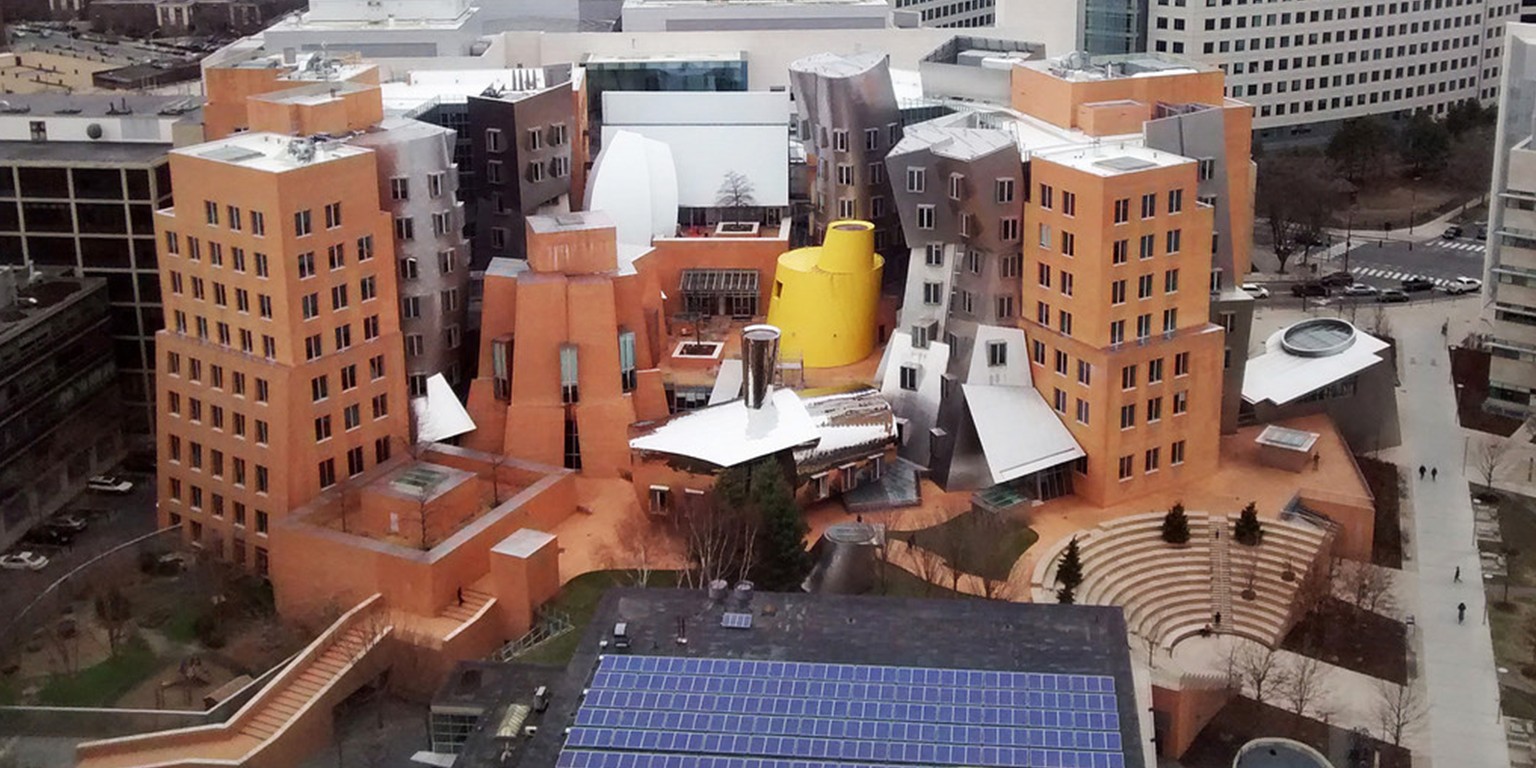
This article doesn't provide much context on the challenges of the building's architecture.
If the exterior[1][2] did not give any indication, the inside is quite difficult to navigate. Unless you're a grad student who lives and breathes this building (where most of the EECS department is located), you'd better allocate 10 minutes to finding the professor's office you intend to visit. I can't find great pics of the interior (only some floor plans[3][4]), but there's a variety of confusing stair cases, open atrium's spanning multiple floors, irregular floor plans and office layouts, and an abundance of cluttered spaces. No good flat surface goes unused.
I'd never considered that it would be impossible to provide comprehensive 2.4GHz coverage because of graph coloring problems. The point about certain 5GHz channels being effectively unreliable due to radar was also an interesting insight I'd never heard before.
Most consumer mesh systems do not support those 5ghz channels that mandate DFS. I can’t think of one that does support them, although numerous non-mesh systems do support them.
If your router(s) do support those channels, they can be quite nice to have in a residential setting, as people I’ve observed tend to not have equipment operating in those channels. High traffic airports can be a problem, as you and the article mention, since DFS may get triggered with great frequency.
Nearby military bases in general (not just airfields) may also result in burdensome DFS triggering, although YMMV.
I'm passionate about systems programming and performance engineering. I love
learning about operating systems, compilers, and databases. In my free time, I'm
writing my own C compiler in Rust, which you can find on my GitHub.
I currently work full time as a backend software engineer at a SaaS start up.
I'm looking for opportunities that inspire my passions, so internal
infrastructure that handles big data sets, high throughput, or low latency are
areas I'm super interested in. I'm mostly looking for work in either C++, Go, or
Rust. Other than those areas, I'm also deeply interested in open source
software.
I am also finishing my degree in Computer Science at MIT this December. Looking for full time
work starting in early 2021. Only interested in positions that are remote or in Boston or the Manhattan area of NYC.
Here's a video lecture from the MIT Professor (Dennis Whyte) who was leading the research group that provided some of the key designs for the SPARC reactor. As the NYT article explains, that research has been spun out into a startup that raised $200M.
The key breakthrough is the advancement of REBCO tape superconductors which allow you to (1) generate record breaking magnetic field strengths (2) easily disassemble the super conducting loop for fast repairs / refuels / more modular design.
It's a long talk, but it's extremely fascinating. Basically everything becomes much easier once you can increase the magnetic field strength. This talk is fairly accessible to even relative laypeople who have a vague understanding of E&M physics.
Buried in the wiki page for YBCO is a note that REBCO is a synonym of sorts. The superconducting tapes that are discussed in the talk thus would seem to be YBCO.
They don't need to be that cold to start superconducting, 4.2K is just the temperature you could expect with liquid helium cooling. It would actually be superconducting with liquid nitrogen but the reason why you would still want to go colder is because superconductors have a maximum magnetic flux that they can sustain while still being superconducting. The current travelling through a superconductor itself also contributes to the magnetic flux so even though it's superconducting there's still a limit as to how much current you can pass through a conductor and how high of a magnetic field you can create. This limit is dependent on temperature though, so you definitely want to use liquid helium so you can create a much stronger magnetic field.
Right. To expand: Maybe someday we can use liquid hydrogen or nitrogen (or even water, depending on progress with hydride superconductors) for these reactors, but a big reason they’re able to make this more compact reactor work is the much higher critical currents/fields that these high temperature superconductors can handle when cooled far below their critical temperature. See: https://fs.magnet.fsu.edu/~lee/plot/plot.htm
He goes into detail about SPARC as well and why a higher magnetic field using HTS superconductors enables performance that can otherwise be obtained by greater size as ITER is trying.
> That 9 day and almost 14-hour rebuild means that using the WD Red 4TB SMR drive inadvertently in an array would lead to your data being vulnerable for around 9 days longer than the WD Red 4TB CMR drive or Seagate IronWolf.
The other 4TB drives they compared against completed in around 15 hours, meaning the SMR drive could potentially take 14x longer to rebuild a RAID.




E.g. here's a 12 year old blogpost on the topic from the ROBLOX developers: https://archive.is/oXPyM
To be honest, it would probably be better off disabled by default. Its legitimate uses are pretty niche.