I imagine it’s a nod to the way the stated goal would normally be pursued, but in this case is not.
It sounds like a good idea to establish a uniform national policy! And the federal government can do that (although only for the very specific purposes spelled out in the Constitution). The right way to do that is to pass a law through both houses of Congress, and the president to sign it into law. Maybe the law even specifies a broad framework and authorizes the executive branch to dial in the specific details (although the court seems to be souring on that kind of thing too).
The god-king proclaiming a brand new framework governing a major new sector of the economy To Be So is.. not the normal way
That's the whole point. They aren't law, and they were (probably) never meant to be so far-reaching, and yet the clear purpose of this Executive Order is to tell the states what laws they can enact. The EO doesn't have the legal power to do that directly, but it clearly outlines the intention to withdraw federal funding from states that refuse to toe the line.
> The order directs Attorney General Pam Bondi to create an “AI Litigation Task Force” within 30 days whose "sole responsibility shall be to challenge State AI laws" that clash with the Trump administration's vision for light-touch regulation.
The EO isn't about Federal Preemption. Trump's not creating a law to preempt states. So a question about how Federal Preemption is relevant is on point.
> My Administration must act with the Congress to ensure that there is a minimally burdensome national standard — not 50 discordant State ones. …
Sounds like leaving it up to Congress! But then the administration vows to thwart state laws despite the vacuum of no extant preemption, so effectively imposing a type of supposed Executive preemption:
> Until such a national standard exists, however, it is imperative that my Administration takes action to check the most onerous and excessive laws emerging from the States that threaten to stymie innovation.
So preemption link is relevant, I think; and at any rate, helpful to give background to those not familiar with the concept, which constitutes the field against which this is happening.
Also why are they small federal government states rights for things but big federal government centralized power for this? It doesn't make sense to me.
I think the message between the lines is what's important, and it goes like this:
"We in the executive branch have an agreement with the Supreme Court allowing us to bypass congress and enact edicts. We will do this by sending the Justice Department any state law that gets in the way of our donors, sending the layup to our Republican Supreme Court, who will dunk on the States for us and nullify their law."
We don't have to go through the motions of pretending we still live in a constitutional republic, it's okay to talk frankly about reality as it exists.
It goes deeper than that - the Supreme Council will issue non-binding "guidance" on the "shadow docket", so that when/if the fascists/destructionists [0] lose the Presidency, they can go back to being obstructionists weaponizing high-minded ideals in bad faith. As a libertarian, the way I see it is we can disagree politically on what constitutes constructive solutions, but it's time to unite, stop accepting any of the fascists' nonsense, and take back the fucking government - full support for the one remaining mainstream party that at least nominally represents the interests of the United States, while demanding they themselves stop preemptively appeasing the fascists. The Libertarian, Green, or even new parties can step up as the opposition. Pack the courts with judges that believe in America first and foremost, make DC and PR states to mitigate the fascists' abuse of the Senate, and so on. After we've stopped the hemorrhaging, work on fundamental things like adopting ranked pairs voting instead of this plurality trash.
[0] I'd be willing to call them something else if they picked an honest name for themselves - they are most certainly not "conservatives"
It's right in the text of the EO: they intend to argue that the state laws are preempted by existing federal regulations, and they also direct the creation of new regulations to create preemption if necessary, specifically calling on the FCC and FTC to make new federal rules to preempt disfavored state laws. Separately it talks about going to Congress for new laws but mostly this lays out an attempt to do it with executive action as much as possible, both through preemption and by using funding to try to coerce the states.
There's a reasonable argument that nationwide regulation is the more efficient and proper path here but I think it's pretty obvious that the intent is to make toothless "regulation" simply to trigger preemption. You don't have to do much wondering to figure out the level of regulation that David Sacks is looking for.
This is quite literally going to lead to a Supreme Court case about Federal Preemption. Bondi will challenge some CA law, they will lose and appeal until they get to the Supreme Court. I don't have any grace to give people at this point, you have to be willingly turning a blind eye if you do not see where this will end up.
Federal preemption requires federal law (aka laws written by congress). How else would it get to the supreme court?
The EO mentions congress passing new law a few times in addition to an executive task force to look into challenging state laws based on constitutional violations or federal statues. That's the only way they'd get in front of a judge.
If the plan is for the executive to invent new laws it's not mapped out in this EO
> Federal preemption requires federal law (aka laws written by congress). How else would it get to the supreme court?
1. No federal preemption currently. (No federal law, therefore no regulation on the matter that should preempt.)
2. State passes and enforces law regarding AI.
3. Trump directs Bondi to challenge the state law on nonsense grounds.
4. In the lawsuit, the state points out that there is no federal preemption; oh yeah, 10th Amendment; and that the administration's argument is nonsense.
5. The judge, say Eileen Cannon, invalidates the state law.
6. Circuit Court reverses.
7. Administration seeks and immediately gets a grant of certiorari — and the preemption matter is in the Supreme Court.
> passing new law … only way they'd get it in front of a judge.
The EO directs Bondi to investigate whether, and argue that, existing executive regulations (presumably on other topics) preempt state legislation.
Regardless, the EO makes it a priority to find and take advantage of some way to challenge and possibly invalidate state laws on the subject. This is a new take on preemption: creation of a state-law vacuum on the subject, through scorched-earth litigation (how Trumpian!), despite an utter absence of federal legislation on the matter.
the Task Force can try to challenge state AI laws. they can file whatever lawsuits they want. they will probably lose most of their suits, because there's very little ground for challenging state AI regulations.
A lot of people here are switching over to Apple's side, but I wouldn't be so quick to throw Kapeli under the bus.
Imagine this scenario:
You buy your cousin a fancy sword for his birthday one year, which he later uses as a murder weapon against his girlfriend. The police look up the serial number and see that although it's registered under your cousin's name, your credit card was used to purchase it.
They arrest your cousin, give him a fair trial, convict him of murder, and place him on death row. You're not in touch with your cousin, so you are completely oblivious to everything which has happened. At this point, SWAT officers storm your home and arrest you, refusing to tell you why. You're thrown in a cell and told you have been placed you on death row, and that their decision is final and can’t be appealed.
Your only saving grace is the fact that you happen to be mildly influential in a small community with ties to the government, and you're able to get your side of the story out.
Articles are written about you. People are outraged at the government. Others come forward to tell of their dead relatives who had been wrongly executed as well.
The Attorney General reads one of these articles and scrambles to do PR damage control.
Se has her aid call you and demand that you make a public statement saying that The Government did nothing wrong, that you were the one who purchased the weapon so they were justified in their actions, and that they are so graciously working with you to clear your name. Of course, they completely ignore the part about their negligence and what would have happened if you were just some no-name.
---
I believe Apple desperately needs to change their policies. These statements like "We can't provide you with any more information.", "This decision is final.", and lack of communication are wrong. Sure, they are a private company and have the legal right to remove anything from their platform at any time for any reason without any notice or explanation, but that doesn't mean that their actions should be supported and endorsed by the communities of users and developers.
Their actions should have consequences in the form of diminished trust, which may be the straw the breaks the camel's back in many developer's and user's choices to continue developing for and using their platform.
I will say that it was not smart of Kapeli to publish the phone call; at least not yet. He should have waited a bit longer, and only published it if Apple didn't follow through on their word. However, I still believe Apple is in the wrong here, and Kapeli's only real crime is that of naivety.
I struggled with severe hypochondria for about two years.
I had been feeling tingling/numbness/buzzing all over my body, coming on in waves and lasting anywhere from minutes to over a week at a time. I was ~~worried~~ convinced that it was MS.
My (awesome) doctor told me that it was super unlikely to be something as serious as MS, and that it was most likely my anxiety. I had always avoided medications in the past; even though I knew I had anxiety, I thought I could continue coping with it on my own. I finally took his advice and started taking an SSRI (Paxil) and my very physical symptoms disappeared almost immediately even at the lowest dose, after lingering for months.
Before I started on the medication, I was unable to read the news or search Google about anything health related because the simple mention of any random disease would send me into a near panic attack. Now, I can research any disease in depth and feel zero anxiety.
Oh, and did I mention that prior to being worried about MS, I was convinced that I had some type of heart defect. My doctor at the time was not nearly as good as my current one, and she indulged in my anxiety and we went through the whole battery of tests: EKG, Holter monitor, echocardiogram. Everything came back normal, but my worry just shifted to a new thing.
I guess my experience has led me to two conclusions: treat your anxiety first, and try to find a great doctor.
"Funny", after grief, I started to feel tons of problems, but also heart issues (as mentioned in another comment in this thread). Although it was way more than tingling and sensations (pain in fingers arteries, arm veins, heart, all felt like tiny clogging things moving around), I couldn't lift my arms, run or do any sort of efforts, for an ex athlete it was very damaging.
Anyway I also did the same tests as yours. Things looked normal, but I dismissed their tests (a 5min effort test is not enough, you can exhaust yourself in 5 minute, you'd need 15minutes sustained effort to trigger change in heart and vascular regime). After 2 different doctors, I finally accepted the SSRI pill. It did affect my state tremendously for 2 days, mostly brain and lung. Still not good enough on the muscular/stamina side though.
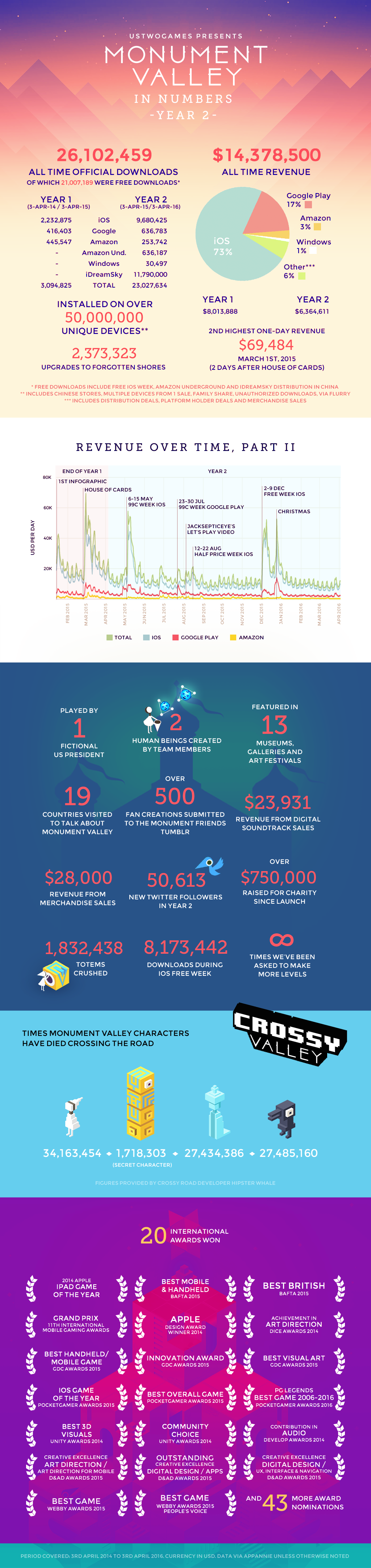
ahh thanks. I was looking at just the year 2 stats[0]. Good for them. Not only is the disclosure/information super cool and forthcoming and a good way to help out the community, but just a cool take on an industry that is typically secretive and cutththroat.
I'm not really an OSX developer, but shouldn't it be possible to bypass the sandbox in a way by offering the user to install an unsandboxed auxiliary application via a download from your website which then communicates with the main sandboxed App Store application using some protocol and performs any actions which the MAS version would be otherwise unable to?
For example, perhaps the auxiliary application runs a local HTTP server with a REST API. The MAS application simply makes HTTP requests to the auxiliary application such as `POST /applescript/doStuff`.
Against Apple Terms I believe. They will ban you if they find out.
I was talking with apple support and they basically said that if we even offered some extra component to get rid of the spinning gear we would most likely be banned.
Citation of the specific term needed. It isn’t against any of them and plenty of apps do it (Things, Boom or Monity come to mind). Apple requires that the app is functional without extra downloads and the app itself must not download the extra executables. But it’s OK to use them for extended functionality (Things: system-wide popup; Monity: extra sensors) as long as you only point the user to where to download the extra helper and they do it themselves (see e.g. http://www.monityapp.com/helper/ for one such helper download page, linked from in app).
Japan has a pervasive air of safety. As a foreigner who can speak a total of 4 words of Japanese, I felt completely safe wandering the streets alone at night, anywhere from the alleyways of Tokyo to the suburbs. There were surprisingly many people outside late at night, yet I never got a "sketchy" feeling from them like I would even in the most safe/affluent parts of America.
If I was in distress for any reason I am confident that I would be able to get assistance from any random stranger nearby. In fact, while on the train, I witnessed a girl collapse and start seizing. The train was relatively busy at that time but everyone sort of just reacted as if they shared a hive mind. 2-3 people kneeled down to try and help her, a few people got the attention of the conductor, and everyone was very respectful and helpful. I can just imagine what would happen if this occurred on Bart. You would probably either be ignored or people would record you on their phones and upload the video to Facebook.
> I can just imagine what would happen if this occurred on Bart. You would probably either be ignored or people would record you on their phones and upload the video to Facebook.
That's not my impression. (Unfortunately I can't think of an actual counterexample.) I think people everywhere tend to help out. I imagine that when Americans are reluctant to get involved, they feel they don't know what to do, and they're afraid they'll be criticized or even sued for supposedly making things worse.
Such as trying to apply popular technologies to everything (in the best case, because of shortsightedness and in the worst case because you have a financial interest in the popular technology and its adoption for everything) instead of realizing that, in many cases, while you are holding a hammer, not everything is a nail.
Not making any comment about the submitted link, but I understand where that feeling comes from.