I just wanted to highlight that there are multiple approaches in use for the same problem / in the same domain, and GNN does not seem to be the most widely used one.
(I have no extra knowledge of the topic, just read the article and found it interesting)
You are right that at certain points randomness is emphasised, but I think the main claim of the article is that evolution is not driven purely by random mutations.
The generally accepted theory is that progress is driven by small, continuously occurring changes (mutations), which happen solely due to DNA/RNA transcription errors (random = not influenced by external factors), and this gradually leads to the formation of new capabilities/species.
Instead the article suggests that
1. there are multiple other paths how the DNA is modified, not just by point errors (not just mutations) - examples of this are the TE changes you quoted, but also completely absorbing long pieces of DNA (and potentially entirely new capabilities) from other species, inbreeding, etc.
2. and that external factors influence the frequency of this happening, e.g. by reacting to stress (the process is not purely random)
> The generally accepted theory is that progress is driven by small, continuously occurring changes (mutations), which happen solely due to DNA/RNA transcription errors (random = not influenced by external factors), and this gradually leads to the formation of new capabilities/species.
First thing - Darwin did not knew about DNA. So new discoveries how DNA changes does cannot be used to disprove his work.
To prove that Darwin was wrong you need to find that some stress condition in some population will result in genetic changes that "counter" that condition. So "correct" (not random) DNA change is triggered by some condition.
It is true that Fidesz, his party, has won 2/3rds of the seats in the Parliament, though they only got 45.2% of the total votes. This victory was in part due to them significantly re-drawing the regions used during the elections to their favour, changing rules for voting from abroad (making it easier to vote from neighbouring regions where most of the people are traditionally their supporters, but more difficult from other parts of the world, where most of the population would like to see a change). It was also helped by using the state to fund and run their own campaign with virtually unlimited amount of money (they were the ruling party in the previous term as well), gradually taking control of all media outlets (especially traditional print and TV ones, further strengthening their base in more rural areas), etc.
Since then they have taken even more control of the media, diverted the majority of EU and state funds to loyal businessmen (a regular gas-fitter became the wealthiest man in the country in a few short years, believed to be the straw man of Orban himself), filled all major positions with their own people (including most recently the high court), created laws directly against the civil society and LMBTQ+ people, stopped most of the funding to towns that have elected politicians from the opposition, taken control of all universities and actively worked on getting rid of CEU (one of the best, independent university, which was criticised due to being funded by George Soros), signed secret business deals for enormous amounts of money with Chinese and Russian interests that will almost certainly never be beneficial for Hungary, etc.
The comparison to Belarus is not correct in the sense that in Hungary violence has not been used (fortunately), but apart from that the governing party has done everything else they can to keep their power and crush everyone else.
The point is the same though: due to the nature of the Hungarian voting system, the winner can easily get more mandates than what would follow from the raw results, and this is why it is beneficial to manipulate the voting areas.
I think the problem is that a lot of these claims could apply to many other countries as well, and don't obviously implicate Orban in doing things that are clearly beyond the pale. For example:
- The UK has got a bunch of boundary changes queued up that have been pending for years, which will benefit the ruling party. It sounds bad when put like that, however the boundary changes themselves were recalculated using census data (I think) in a neutral way, so although it helps the ruling party that isn't what led to the changes.
- It's hard to understand for a non Hungarian exactly what the voting rule changes might be about, but it sounds like it may be related to postal voting (people in neighbouring regions can go there physically). A lot of countries either restrict or want to restrict postal voting because it's drastically more susceptible to fraud, and there are constant allegations that left wing parties in particular like to abuse postal voting. Again the UK has exactly the same problem and some conservative MPs want to tighten the rules over who may vote postally due to a string of scandals related to it.
- Using the state to fund their own political campaigns. Again, any consistent standard that said this is evil would need to have considered the UK a rogue state in 2016, because the government at the time used vast sums of government money to fund the campaign to remain in the EU. For example the government sent a mailshot to everyone in the entire country, which alone cost more than the theoretical spending limit for the entire campaign. Government resources were routinely deployed in other ways to try and win the vote. Yet unsurprisingly, nobody in the EU complained at the time.
- "Gradually taking control of all media outlets" sounds like a reference to supporters of Orban coming into editorial positions rather than the government literally passing a law that gives Fidesz direct control over the press. Is that not so? In which case, under what standard can that be described as illegitimate? European media is totally dominated by supporters of the EU Commission and centre-left parties to the extent that in some parts of Europe, Eurosceptic conservative media hardly exists at all. Clearly the same thing has happened with different political movements in other parts of the world.
- Filling major positions with their own people and other such things, that's exactly what governments are meant to do. It's a necessary step in order to govern, in fact. No government can run a country if all major positions are controlled by people who oppose the government. Again, the UK is an interesting counter-point: it has major constitutional problems due to the lack of the government doing this, with the result that various organizations that are technically parts of the government are run by people who see themselves as some kind of quasi-official opposition, and who constantly try to undermine the actual elected government instead of doing their job.
What is being done by Fidesz is definitely not what "most other developed countries" do. I won't be able to discuss all topics, but I'll give you a few examples of the media situation.
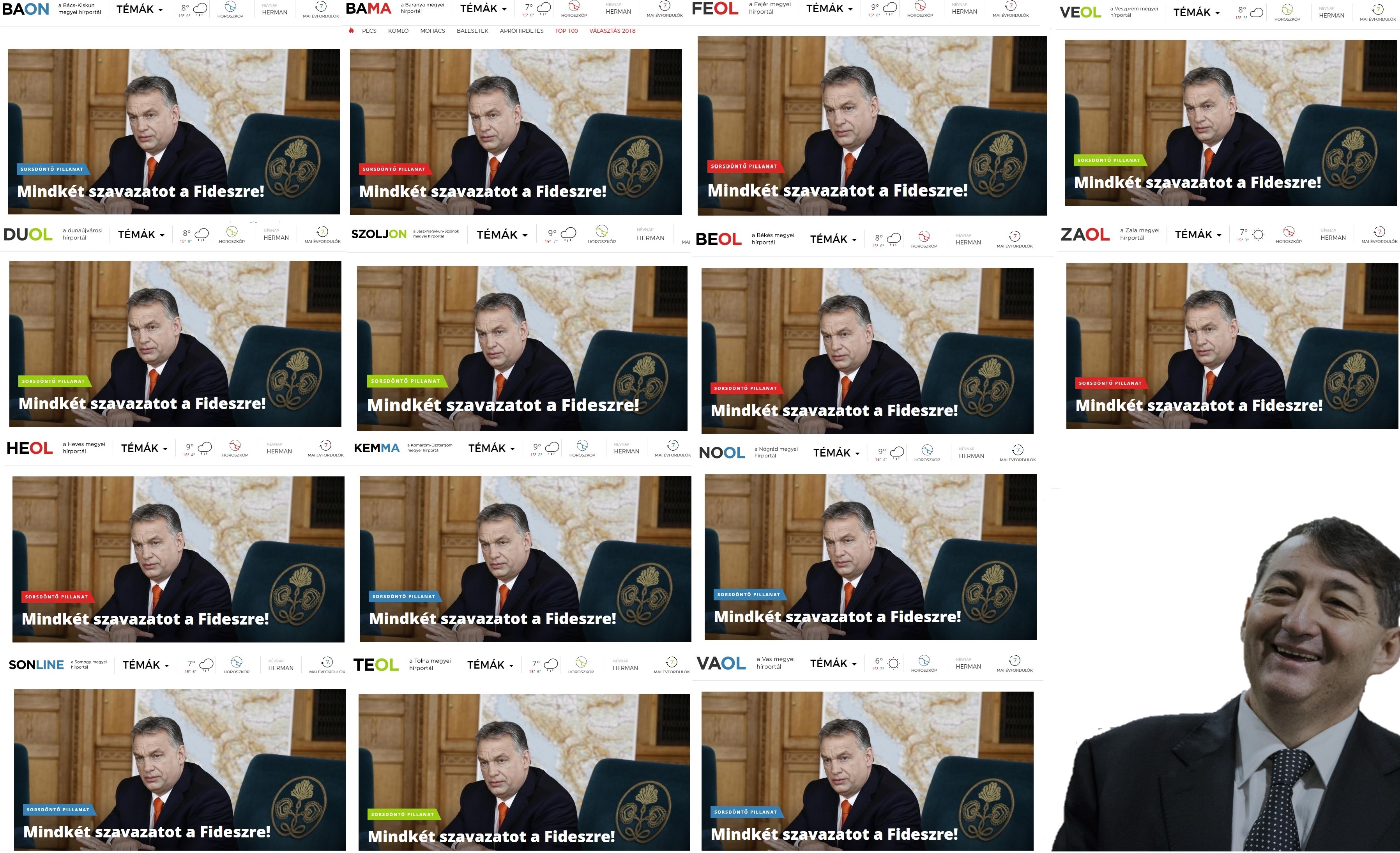
There were several businessmen who became extremely wealthy within a very short period, either by working directly for the government (usually with all the typical signs of corruption), or by getting financed directly or indirectly by the government in the form of huge free loans, grants, etc. These businessmen then started buying different media outlets, some of which were 'usual' business transactions, while others were very nasty stories in themselves (the ownership change of the news site Index.hu was probably the biggest scandal). At some point all of these supposedly independent businessmen decided to give away ALL of the media companies they owned for free to a new non-profit entity. This transaction was given a special exemption by the government from all the usual checks and requirements (like antitrust), even though hundreds of media outlets were concentrated in a single entity, which now governs the majority of print newspapers and radio stations. Since this has happened, all of them transfer exactly the same messages - for example look at the following picture to see the front page of the 19 or so county news sites the day before the last election, where the headline says "Both votes for Fidesz!". These used to have independent editorial boards and focused on local news previously.
The state-owned national media holding MTVA (like the BBC in the UK), which of course is supposed to give an unbiased view of the world, also transfers exactly the same messages - there were several scandals where it became public that even senior editors had to send their content for review to Fidesz's people for review, and they got detailed instructions on what and how to say.
Viktor Orban, the prime minister for 10 years, refuses to answer questions or give interviews to any media that is considered to be 'the opposition', even the sites with the highest number of daily readers. At the same time members of the opposition parties are given close-to-0 airtime on the state-owned national channels, and even when they are shown, it is in a negative context.
The national media regulatory body does not check any of the previous issues, but they have been very active for example in revoking the license of one of the last non-Fidesz-friendly radio stations (Klubradio) recently, which also became a scandal.
The work of journalist is made more and more difficult because the state refuses to give information to them or even answer basic questions - for example during the corona virus epidemic, Hungary had by far the least informative site on the topic, yet it was filled with propaganda news. For example to create a chart of the daily cases, journalists had to manually check the site every day and save the currently shown numbers. In order to get a breakdown per county about the cases, they had to submit an official inquiry, where first they said that such data is not available (!), then used all 45+45=90 days to give an answer. Of course the answer only contained the data for the time period when the questions was sent, so it was basically impossible to get up-to-date information.
Viktor Orban still frequently uses the same defence that "they are working in an unfriendly media environment and only try to restore balance", but that is simply not true.
That's useful additional context and information, thanks. My point was only that without deep knowledge of the situation, many of the allegations sound not so different from things that happen elsewhere in Europe.
"In follow-up experiments, when the researchers instead chose which toy the baby would play with, the phenomenon disappeared entirely. If you take the element of choice away, Feigenson said, the phenomenon goes away."
Absolutely not a doctor, so no way qualified to give professional advice, but the article states that not everyone followed the diet during all treatments, so they included all patients who complied at least during half of the cases, and the positive results are based on this extended group. This, and the suggested mechanism of why they think the method works, would lead me to believe that it makes sense to try it.
If I understand correctly this is a low-calorie diet, which is easier to follow than a strict water-only diet, but they claim it is equally effective. They recommend it also for healthy individuals, 5 days a month. Does anyone have experience with it?
Just from personal experience, I've found that fasting is actually easier that something like a fast-mimicking diet. Maybe there's something physiological going on, or maybe it's just psychological, but I find it much harder to eat a little bit than to just not eat. Then when I do get to eat, I can eat enough to feel satisfied.
I do actually, did it twice this year one week in January and then again during lockdown during the last week of March I think. I heard about it from the guy who came up with it, he wrote a book about the merits of a Mediterranean plant-based diet (with the occasional fish, but no meat) that resonated quite well with me, since it's easy to implement and also really delicious - I mean there isn't really all that much that go wrong with eating vegetables, some bread and pasta, nuts, olive oil, and fish (also had the welcome side-effect to reduce my meat-consumption to pretty much zero now)
Anyway, so after I switched my diet I decided to give his FMD a go and was pleasantly surprised - it's pretty tough, the second and third day were the worst for me, I was just incredibly hungry (and honestly speaking I did'n really achieve any mental clarity during those days), just went on a ton of walks. But I felt I gained a lot of mental strength following that experience, it was easier for me change eating or drinking habits simply because this exercise of control over your most basic need really provides you with a boost of confidence.
You obviously also lose a lot of weight (around 4kg per week) and I've lost even more since then, maybe 20kg since the beginning of the year (though that's a combination of sport, this pescatarian Mediterranean diet, but probably also those 2 fasting sessions). I plan on doing it again, though I want to try out 'real' water fasting next time. I think this is a great starting-point into fasting, though.
My little advice would be to pick a right season of the year(if you live in 4 seasons). If you start fasting, from day 2-3 you would feel cold. And if outside is around 0 C and you have to walk somewhere, wind blows, it's not nice. Even sitting in regular office feels colder then.
The first sentence was misleading to me as well (it does refer to mice, but only as a "was also effective on mice" sense), but the study was done on humans.
AImotive | Research Engineers/Scientists - Planning, Control, Sensor Fusion, AI, Image Processing | Budapest, Hungary (EU) | ONSITE | https://aimotive.com/
AImotive is the largest independent team in the world working towards fully self-driving car technology. Our unique toolset is engineered to answer all the challenges of autonomous mobility, powered by advanced artificial intelligence, simulation technology, and supporting hardware architectures. This complex approach to self-driving car technology allows our team to develop systems quickly in the safest possible way.
Our team currently has over 200 members. The company has offices in Helsinki Finland; Mountain View, California; and Tokyo, Japan. The bulk of our development happens at our headquarters in Budapest, where a team of 140 highly skilled engineers spearheads our efforts. Among them are over thirty specialized artificial intelligence researchers, while 20+ members of our team hold PhDs.
We are looking for experienced researchers and developers for a variety of roles, including Research Engineers and Scientist in Planning and Decision Making, Control, Sensor Fusion, AI and Image Processing among others. We have cars on the road on two continents, ongoing projects with major car manufacturers and Tier1s and a really motivated team, which is still small enough that you can make a great impact. Budapest is a great place to live and superb connections to the rest of Europe make it easy to explore the whole continent.
It has been around for a long while, has superb connectors to many different languages (we mostly interact with it from Python), and has been recently open-sourced. Free, but they also provide hosting for your charts for a very modest fee. Highly recommended.
Unless this has changed, you need the $9,950/year plan to serve it "behind your own firewall". I.e. otherwise plots on done on their systems by uploading data.
That used to be the case until the end of last year, but it has been open-sourced and you can render a plot entirely on the client side, without a roundtrip to Plot.ly's servers (no rate limits anymore, custom integrations to your existing stuff, etc.), for free.
We looked into it after they open sourced it; AFAIK, it is still designed to connect to their streaming servers with an API key (or run locally in an ipython notebook or similar "offline"). If you want to make your own private dashboards for your own system you still need https://plot.ly/product/enterprise/#plotly-on-premise
I might be missing something here, but does this mean that .NET Framework and .NET Core have diverged, and you need to take extra steps to keep code compatible with both?
The major differences between .NET Core and the .NET Framework: [...] APIs — .NET Core contains many of the same, but fewer, APIs as the .NET Framework, and with a different factoring (assembly names are different; type shape differs in key cases). These differences currently typically require changes to port source to .NET Core.
While I understand the motivation, this at first sight looks like something that will be with us for a long time, and could make life more difficult especially for library authors, who need to potentially target both 'platforms'.
[Disclaimer: haven't used .NET technologies for a very long time and might be horribly wrong here]


(Partially) Google Research's/DeepMind's NeuralGCM is based on hybrid models using ODEs and learnt physics: https://www.nature.com/articles/s41586-024-07744-y
Microsoft Research's Aurora on vision transformers: https://www.microsoft.com/en-us/research/blog/introducing-au...
Huawei's Pangu Weather is also a 3D transformer I believe https://www.nature.com/articles/s41586-024-07744-y
I just wanted to highlight that there are multiple approaches in use for the same problem / in the same domain, and GNN does not seem to be the most widely used one.