Possibly tangential, but this article and some of the discussion here reminded me of this HN thread from 2020: "Ask HN: Former software engineers, what are you doing now?" - https://news.ycombinator.com/item?id=23951850
A former boss of mine retired early once he decided he was done with the politics required to navigate his work. He fully unplugged from corporate life and got comfortable delving into his passions... cycling, woodworking (so much woodworking), etc. He seemed to be having a blast from what I could see. I recently caught up with him, and it turned out after about a year off, he'd just accepted a job at a fintech that his former boss reached out about. I guess for him it was time to go from that specific job but maybe not quite from engineering in general.
> So really the ideal is not just having an app that generates a token but one that generates a specific type of token depending on what type of transaction you're performing and won't accept, for example, a login token when adding a new payee. I haven't seen any bank with that level of 2fa yet, has anyone else?
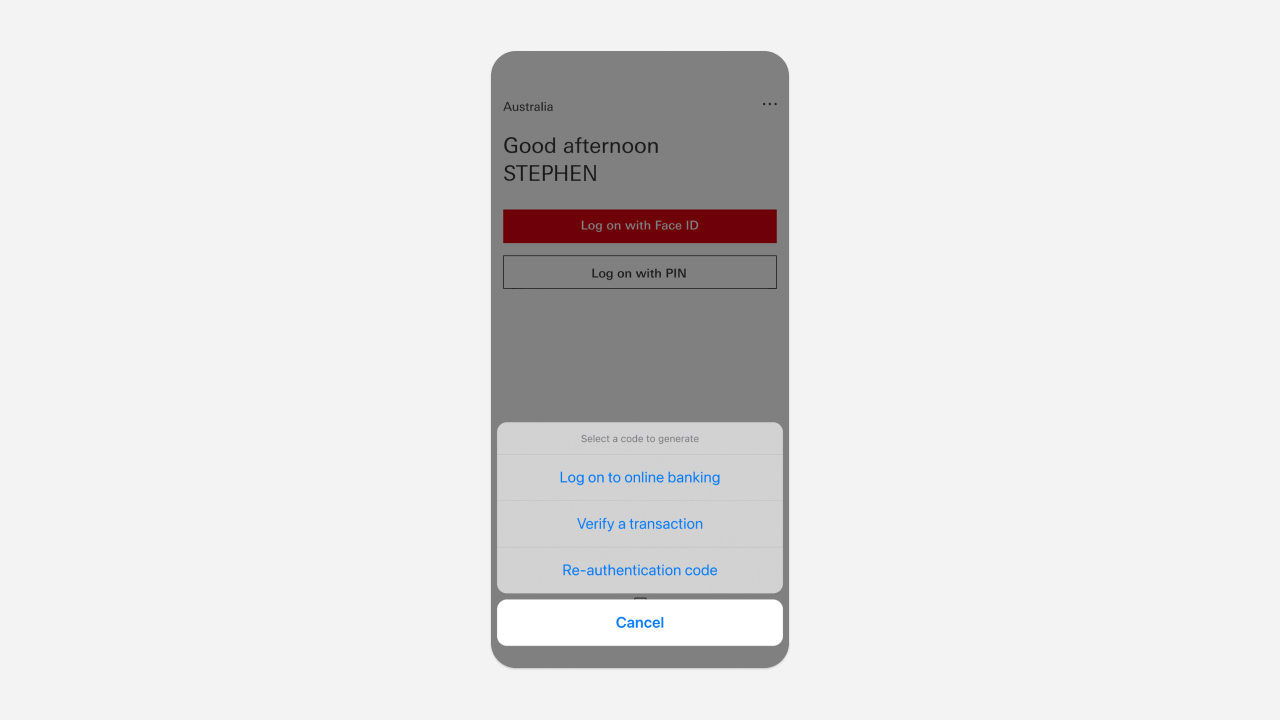
HSBC actually has this. All of their country-specific apps allow you to generate a different security code depending on whether you want to login to the website, verify a transaction (e.g. transfer funds to payee), or re-authenticate (e.g. to change your personal info, like your phone number).
- You can subscribe to your TripIt calendar, so that all of your trip details automatically show up on your personal calendar app. You only have to do this once (not for every trip). If like me, you use your calendar to run your life, this is a huge productivity benefit.
- You can forward your flight confirmation emails and accommodation booking emails from most hotels, trip booking sites (e.g. Booking.com, Kayak, Amex Travel) and even Airbnb/VRBO/etc. to TripIt, and they parse the contents and add the details to your itinerary
- For me, it's now become my source of record for when I was last in/out of the country, which I find super useful for US immigration stuff (green card, global entry, citizenship applications, etc.) and some non-US visa applications too
- If your company uses Concur for travel/expense management, you can link your work account as well so that work trips show up there too
- I think this might be a Pro feature, but you can get alerts of gate changes, flight delays, baggage carousel assignments, etc., oftentimes even before your airline informs you
- I don't use this as much, but you can also invite people to individual trips and they automatically get all itinerary updates
There's lots more benefits, but these are my top ones that come to mind. The UI is super old school, which I don't love, but the convenience far outweighs this and some of the other cons for me.
I don’t drive, so I’m a little unclear as to what the issue is with Tesla’s force-touch turn signals specifically in roundabouts. The article only states that it’s a problem, but not how it’s a problem. Could anyone elaborate?
To be clear - I can understand why this design is awful more generally. What I don’t understand is the problem it poses specifically in roundabouts since that seems to be the central point of the article.
Roundabouts require turning for an extended period of time. During the turn your hands are often required to be in a non-standard position. By attaching the turn signal to the front of the wheel, you now need to hunt for it's position and calculate it's orientation (if the wheel is upside down, the left turn signal is on the right). The stalk stays in one place so you can develop muscle memory easier.
If your wheel is turned because you are in a curve, your “right turn” button will be on top or maybe even on the left of the wheel, depending on how sharp the curve is. This can be disorienting and cause you to look away from the road and at your wheel to figure out where it is. The turn signal stalk is always in the same place regardless of your wheel turn angle because it attaches to the steering wheel column rather than to the wheel itself.
Because on a roundabout you have to activate the turn signal while turning the other way. If the turn signal is on the steering wheel, it's going to be hard to find it and press the right way.
On a small roundabout, it's a tighter turn. You might need to keep the wheel turned more than 90°. The left and right signals will be in the wrong order, and it will be confusing to hit the right one at the right time.
With a stick that, uh, sticks out, it's easy to trip it in the right direction with your finger as you turn without taking your hand off the wheel. My guess is that using a "force touch" button will need you to take your hand off the wheel during a turn to press the button, and possibly even figure out which button (left or right) to press. All this is speculation on my part, of course.
The turn signal buttons are on the steering wheel, which means that if you're trying to press those buttons while the wheel is already being turned (most notably in a roundabout) then there is no way to know where the buttons are located other than by looking at the steering wheel.
Using touch interfaces whilst driving is very difficult, you generally have to look at the button, taking your eyes off the road, to press the right thing. Tesla also put both indicator buttons on the same side of the steering wheel, it’s not naturally intuitive at all.
Controls that change position in a vehicle require you to pay attention to them. As the controls in this car rotate with the steering input instead of remaining where they can be easily reached, they require you to pay attention to where they have move to so that they can be activated.
This is fine in regular driving situations but very difficult when you have multiple things going on at the same time that require your attention, such as when you are turning in a roundabout.
Normally this is activated with your left hand pushing a stalk up or down and is deeply ingrained in anyone trained in a modern vehicle.
It’s the same issue with touch screen inputs, but in this case it’s safety related and a common and critically used component required for safe operation of the vehicle.
Tesla’s insight about self-driving warranting the removal or rearrangement of input controls is a tad rich considering full self driving has been promised for years and has never been delivered. Back in 2016, Elon Musk claimed that Tesla cars could “drive autonomously with greater safety than a person. Right now.” Now in 2023 they are changing safety equipment for “full self driving” but still haven’t delivered FSD, but I’m sure you know the background.
You have to push a button on the wheel to activate the turn signal, but while the vehicle is turning, the wheel is at an angle, so the button is in a different place than usual. Both in space, and for people who shuffle their hands when they steer, potentially relative to the driver's hands as well. Makes it more difficult to activate than a standard stalk that's always in the same place, and is a larger target.
> he also found a specific case where they are dangerous: roundabouts/
In Norway, you have to indicate your exit in a roundabout by activating your turn signal, and he found it difficult while turning the steering wheel, which you have to do in a roundabout.
Not trying to be a dick, but if one has driven on a roundabout the issue is somewhat obvious - hence my comment above.
Secondly, my comment was posted before the parent had added a note about roundabout, so my assumption was that the parent had not seen that note from the article that I had copied above.
Have driven through a roundabout, still dont understand the issue.
I have thumb actuated volume buttons on my steering wheel, and can use them in a turn.
I actually could see the the lever being harder.
If im going through a roundabout with my hands at 12 and 4, a shifter at 9 seems hard to actuate.
Im guessing that roundabouts in Norway are tighter than im used to, and drivers have to reset their hand position away from the button to ergonomically maintain the turn?
I couldnt see how this detail isnt obvious from the article description, especially to someone who doesnt drive.
In a roundabout, I (so as to not generalize how people drive), move my hands on the steering while turning - as in turn and then then when hands cross, adjust and turn more. As in when going anti-clockwise on a U.S. roundabout, initially the right had is on right and left on left, but while turning the hands cross (left hand on right and right on left), so you adjust and lather-rinse-repeat. (I hope I'm making sense).
So: the signal/indicator lever is in a fixed position which can be pressed when the correct turn/exit comes. But if the buttons are on the steering (I'm assuming 2 buttons, touch or actual doesn't matter), their position changes as the steering is rotating so I will have to take my eyes off the road and see where in the steering is the correct button and then press it. For a right exit/turn, the button may be on right, or left, or top or bottom or anywhere on the steering depending on the amount of steering turn.
This is what makes it hard/inconvenient/dangerous.
that makes sense, I am also curious how this all translates to teslas with Yolk wheels where you don't reposition on the wheel (like pictured in the article)
The driving instructor believes that the capacitive buttons on the surface of the steering yoke are difficult to use while you are turning through a roundabout.
Might just be me, but I didn’t read the above comment as blaming Reagan but rather pointing out that widespread homelessness isn’t a new issue, and the absence of regular foot traffic in that particular neighborhood is a bigger contributor to its current state.
Most graduate students are in the US on F-1 visas [1] and still need to maintain a minimum course unit enrollment per semester in order to be in status [2]. IANAL, but I would assume they're not exempt from the new in-person requirement for their registered courses.


A former boss of mine retired early once he decided he was done with the politics required to navigate his work. He fully unplugged from corporate life and got comfortable delving into his passions... cycling, woodworking (so much woodworking), etc. He seemed to be having a blast from what I could see. I recently caught up with him, and it turned out after about a year off, he'd just accepted a job at a fintech that his former boss reached out about. I guess for him it was time to go from that specific job but maybe not quite from engineering in general.