This really reminds me of a new paper [1] from my colleagues. All figures in the paper link to a website, where the figures can be reproduced and dynamically changed in the browser from the source data. It's really cool, it is a static website that runs DuckDB, WebR, and ggplot. Here [2] is an example for the first figure.
Have you tried unnesting the subquery? From the images posted in your blog it's not clear to me how often the subquery is run. Maybe unnesting it somehow like this should work well:
    SELECT COUNT(*)        as "count",
         COALESCE(MAX(EXTRACT(EPOCH FROM age(now(), runs.created_at)))::bigint, 0) AS "max_age"
    FROM runs
      JOIN stacks ON runs.stack_id = stacks.id
      JOIN worker_pools ON worker_pools.id = stacks.worker_pool_id
      JOIN accounts ON stacks.account_id = accounts.id
      /*unnesting*/
      join (SELECT accounts_other.id,  COUNT(*) as cnt
       FROM accounts accounts_other
         JOIN stacks stacks_other ON accounts_other.id = stacks_other.account_id
         JOIN runs runs_other ON stacks_other.id = runs_other.stack_id
       WHERE accounts_other.id
         AND (stacks_other.worker_pool_id IS NULL OR
          stacks_other.worker_pool_id = worker_pools.id)
         AND runs_other.worker_id IS NOT NULL
        group by accounts_other.id) as acc_cnt
      on acc_cnt.id = accounts.id and  accounts.max_public_parallelism / 2 > acc_cnt.cnt
     /*end*/
    WHERE worker_pools.is_public = true
      AND runs.type IN (1, 4)
      AND runs.state = 1
      AND runs.worker_id IS NULL
      /* maybe also copy these filter predicates inside the unnested query above */
The way I love doing these kinds of things is by literally using three lines of R code:
library(sqldf)
tab1 = read.csv("file1.csv")
sqldf("select * from tab1")
sqldf [1] is a library with which you can access R dataframes just like tables in SQL (it is actually using SQLite in the background). I do not have much experience with programming in R itself, but you barely need it. This approach has the advantage that it is very flexible, and you get the power of the (IMHO) best plotting library ggplot with it. Of course, you can also do more complicated stuff like joining multiple dataframes and basically everything else you can do with SQLite, and then store results back in R dataframes. This workflow works if you use an IDE which lets you execute single lines or blocks of codes like R-Studio. Then you also get a nice GUI with it, but there are also plugins for VI/Emacs that work very well.
Checkout the R bindings for DuckDB[0]. You should find that it does the same thing (i.e. run SQL against a dataframe/file on disk) much faster for many SQL operations.
The EU has exported 41 millionen vaccine doses of which the UK has gotten 8 million so far [1]. Meanwhile, the UK and US do not export any vaccines at all. So just as a back of the envelope calculation, with 41 millionen doeses the EU could have vaccinated an additional 10% of its population, while the UK would have had more than 10% less vaccinatetions without those 8 million. This would not completetly close the gap, but the numbers would be quite different then.
Anyway, you can interpret this in a postivie way: the EU is trying to be good and is sharing its vaccinations more or less fairly with other countries (for now). However, you can also see it as the EU has no real power at all and is just an easy target to get fooled over by other countries..
Nonsense. This isn’t really about countries exporting/not exporting. These vaccine deals are with private companies who produce their product around the world. Just because vaccines are manufactured in a specific country doesn’t make them property of that country.
Whichever country is contractually at the front of the line will have their order fulfilled first/according to the terms of the contracts.
The EU wasted months negotiating lower prices and then took longer with approvals.
There is no good guy or bad guy (at least until the UK or EU blocks exports preventing execution of the private contracts - at that point the country blocking the exports becomes the bad guy).
> Nonsense. This isn’t really about countries exporting/not exporting. These vaccine deals are with private companies who produce their product around the world. Just because vaccines are manufactured in a specific country doesn’t make them property of that country.
The US used the national defense production act to block any export of BioNTech/Pfizer vaccine produced in the US to other countries, so no, this is not just "These vaccine deals are with private companies who produce their product around the world." - countries can and do influence these deals if it benefits them. UK did the same thing.
Don’t conflate the ability to negotiate carefully with banning exports. The private company AZ signed a contract with the British govt according to which they can export once they have delivered the agreed doses to the U.K. the faster they deliver on their commitments, the faster they can start exporting. No one forced them to sign the deal and no one in the UK is banning exports of the vaccine.
This is hair splitting, because the effect is exactly the same. The UK made sure not to export any vaccines until it has more than enough. This is exactly what the the US is doing, even if they use technically slightly different means.
Having a preferential contract with a single supplier is not remotely the same as imposing export controls on every supplier within a territory. The EU is and always has been allowed to source vaccines from the UK and the fact it voluntarily chose not to does not mean it was 'effectively' banned from doing so. The British government spent months and tens of millions of pounds setting up the AZ supply chain while the EU were haggling over its contract. It's not then unreasonable for the British government to require that it has priority on the supply it was instrumental in creating.
You just confirmed my point. The EU -in contrast to the US and the UK- did not want any exclusivity. They wanted collaboration and a fair distribution of vaccines. They negotiated on a EU level exactly to avoid any nationalistic competition. I am not saying that the US/UK strategy is bad in any objective way. I am just saying that it is the same strategy.
By "fair" do you mean EU countries favoured over the rest of the world? How much have the EU exported? They only house 6% of the world's population, but are keeping something like 75% for themselves, no?
And how much would be the EU's "fair" share of vaccine manufactured in the UK? As they seem to be expecting far more than that 25% for themselves, from their retoric they wanted it "evenly" distributed, i.e. massively in their favour, directly from Ms Von der Leyen's mouth:
“That is the message to AstraZeneca, ‘You fulfil your contract with Europe before you start delivering to other countries’.”
There's nothing "fair" about the EU's distribution of the vaccine, claiming otherwise shows complete naivety or bare faced lying.
Don't conflate Merck with Merck. There's two "Merck", one is Merck KGaA, which is a German company, and the other one is Merck & Co. Inc., which is the US company. These are independent entities today, they just share a common history by originally being a German company, of which the US company was splitted off during WW1.
The Oxford/Merck deal would have been with Merck KGaA, as far as I know. The US government would have had no means to apply export bans to a German-based company.
I have no knowledge beyond what I just heard from you.
That sounded implausible. The country which had the ability to negotiate that happened to be the same country where the doses were manufactured? Why couldn't the UK apply its careful negotiating skills elsewhere too?
Alternative hypothesis: the credible implicit or explicit threats of a ban were what enabled the deal. "Sign this or else."
The UK government provided a lot of the money to AZ to build out the local vaccine supply chain and factories. Those factories most likely wouldn't exist unless the UK government had paid that money. So, as part of paying for all that, they asked for timed exclusively.
Also remember the vaccine was developed by Oxford using a significant amount of UK government funding, and was licensed to other countries, such as India, for low cost manufacturing.
We did also buy a lot of vaccine from other places (e.g. Pfizer which is also being widely deployed). But with AZ in particular (and to some extent Novavax) there was a focus on building a local supply chain so that countries can't play games with our vaccine supply. Supposedly Pfizer turned down the offer to build UK based factories.
- The vaccine is mainly funded by Oxford University and AstraZeneca (AZ) . The UK Government also provided £65.5m.
- Most of the AZ vaccine for the UK is being made in the UK. AZ have said none of their vaccines have been sent from the EU to the UK.
- AstraZeneca said its agreement with the EU allowed the option of supplying Europe from UK sites, but only once the UK had sufficient supplies (due to the contract the UK negotiated) .
- A drop in confidence in the AZ vaccine means there are lots of unused vaccines. France and Germany have used only about half of the AstraZeneca jabs they have received, according to the European Centre for Disease Prevention and Control (ECDC).
- 10 million Pfizer-BioNTech vaccines have been exported from the EU to the UK.
Are there really a lot of unused vaccines in Europe though? What are the equivalent numbers for other countries? I submit it's a supply chain thing, there's a week's worth of vaccines moving from the factory to the humans
No there are not. Those are second doses. In EU they 'reserved' second doses. UK for example went on to vaccinate as much as possible. That's why there will be a delay now of a month or two.
Unfortunately the drop in consumer trust has been enormous. [0] And humans lose trust faster than they regain it.
After the wild "let us suspend AZ and let us restart it in two days" ride, it will be much harder to get AZ into arms of European patients. Even here in the Czech Republic, where AZ wasn't suspended, the reverbations in the public are stark and all kinds of half-baked conspiracies started circulating. (An example: "Germans want to get rid of a junk vaccine and force it on us Slavic untermenschen, while they will only use more expensive and better Pfizer for themselves.")
(a) Consumer confidence wasn't high in the first place
(b) This wasn't without reason. AZ has significantly more severe side effects and is less effective.
(c) That said, I'd certainly still take it, it is highly effective at preventing the worst outcomes.
(d) That said, the whole "consumer confidence" narrative is a canard. Its effects don't come anywhere near the effect of the delivery shortfalls. It's so totally ridiculous that it does make me wonder where it is coming from.
How much did they fund before the initial order? I can't seem to find a source. All the results just talk about their down payment not the initial funding like the UKs £65m. https://www.bbc.co.uk/news/56483766
Another hypothesis: Oxford was originally going to partner with Merck [1] but there were no supply guarantees in that contract. AstraZeneca was willing to give guarantees and run production in the UK, so the UK government leaned on Oxford and had them partner with the more agreeable supplier.
I don’t know why you presuppose the U.K. is where it would have had to be manufactured. Manufacture in the U.K. appears to have been made to happen at the insistence and investment of the U.K. government, from my recollection of a thread by an Oxford researcher involved.
There appears to be a similar deal with Novavax to setup similar domestic capacity in the UK for its vaccine.
Even if the UK was threatening AZ with an export ban, they didn’t force AZ to accept those terms. AZ could have just said no and made the U.K. government look incompetent and unleashed media scrutiny on BoJo.
Yes, having the industrial base is part of the attraction of the UK for pharmaceutical companies. As is having a skilled workforce and a reliable system of laws.
I’m rejecting your original point about the U.S. and U.K. doing the same thing, which they aren’t.
Well, the motivation and effect is exactly the same which is what most people care about in the end. It's a nationalistic move which is what makes your day if you're a nationalist.
This is not what the contract says. The contract says there is no other contract that would prevent them fulfilling the EU contract. Since the contract makes no promises about delivery schedule it’s pretty clear the U.K. contract does not prevent its fulfilment, as the U.K. contract can only delay it.
However the EU contract seems to insist the initial 300M doses are made within the EU itself, and the EU has its own dedicated supply chain regardless that can eventually deliver, so this also seems to exclude conflict with the U.K. contract.
>"The US used the national defense production act to block any export of BioNTech/Pfizer vaccine produced in the US to other countries"
This is false. The DPA was invoked in order to a) block the export of certain raw materials in order to prioritise local production of vaccines and b) to compel drugmaker Merck to help produce its competitor Johnson & Johnson’s COVID-19 vaccine.[1] It does not block the export of vaccines. The White House clarified this last week as well.
The US government purchased those. They own those doses and so they are not AstraZenca's to sell.
From your own nytimes link:
>"Last May, the Trump administration pledged up to $1.2 billion to AstraZeneca to finance the development and manufacturing of its vaccine, which it developed with the University of Oxford, and to supply the United States with 300 million doses if it proved effective."
AstraZenca is free to export any vaccine beyond their contractual obligation of those doses. Jane Psaki confirmed as much in her WH press conference on Thursday.
That’s not been demonstrated. It has been claimed that a separate supply chain was initially purchased for the U.K. within the EU. No evidence has been presented that AZ doses from EU supply chain were diverted.
Only for one clause of the contract. There's a requirement that all vaccines supplied under the contract are sourced from within the EU, with some provision for AstraZeneca to source from elsewhere under exceptional circumstances, and it says the UK is treated as part of the EU for the purpose of that clause and only that one. The part requiring them to set up an EU supply chain and make a best effort to supply the EU with a certain number of doses on a certain schedule does not include the UK. Like, someone went to actual effort to ensure it didn't apply to that part of the contract (and I wouldn't be surprised if it came from the EU side).
Yep, the contract between the EU and AZ explicitly states that the UK shall be treated for most purposes (manufacturing site and so on) as an EU member. The UK is not included in the EU orders so.
>Whichever country is contractually at the front of the line will have their order fulfilled first/according to the terms of the contracts.
Tell that to Canada. They were securing doses from day one and still suffered from delayed shipments and now have to contend with countries of manufacture forbidding export. What really pisses me off is that the US Gov had 30 million doses of Astra for several months and it it isn't even approved for use. Why hoard it when you can save lives in other countries while you have no intention of using it soon if ever? Sure they might get their approval in May or June but by then I expect the other manufacturers to have ramped up to cover everyone everywhere.
My understanding is that the manufacturer of the vaccine didn't apply for emergency approval- they are letting it go through a longer process by their own choice.
There might be perfectly valid reasons for this- I am not sure to what extent the government could or would want to force it to fast-track.
The manufacturer didn't apply for EUA because the European trial was a mess, and there was basically no chance of FDA approval based on the data they had.
The FDA is already reluctant to use trials from jurisdictions that may be very different demographically. When the trials are marginal, confused, and confounded, the chance of a FDA approval become negligible.
If the AZ US trial pops out good data, you can expect a speedy EUA application.
Probably the same reason why the manufacturer hasn't requested EU approval of the Dutch plant where they manufacture vaccines exported to the UK. That is, to make more money.
Canada put all their eggs in the CanSino vaccine even though they knew they had a bad relationship with China. This summer China conveniently blocked all progress and Canada was left scrambling. Blame Trudeau not the US.
“ Early last year, Canada also signed an agreement with Chinese vaccine-maker CanSino for a vaccine trial, but that deal fell apart. CanSino had initially agreed to bring its vaccine candidate to Canada for testing.Critics have accused the federal government of failing to move swiftly to secure agreements with the likes of Pfizer and Moderna because it was focused on that failed deal.”
My sister is a pharmacist in Toronto. She is personally vaccinating people right now as we speak. She said as of last week Ontario only had 200,000 Astra Zeneca vaccine doses allocated to it until April. 200,000 for 15 million people. She says that maybe Ontario may get more on Friday via the US sending more AZ but there’s no information about anything else. Until a few days ago, AZ could not be given to anyone over 64 which caused a lot of confusion and anger. And then Ford said in a conference that they were letting people get the AZ vaccine but they didn’t let the pharmacies know ahead of time, causing even more confusion.
My mom who is in her 80s, her second dose of Pfizer was just recently pushed out by 4 months because they don’t have enough supply. My aunt who is in her 70s couldn’t register (until recently as I mentioned) for a shot because they didn’t have any supply for her age range.
So no, Canada doesn’t have the doses it needs. It’s last in line because they started negotiating months after every other country and only after CanSino deal crumbled.
Canada signed deals with Pfizer and Moderna on August 5th. The EU signed a Pfizer + Biontech deal on September 9th. The US signed a Pfizer + Biontech deal on July 22nd.
And yet, Canada is substantially behind the EU on receiving doses, despite putting an order in more than a month earlier.
Given that the US only came to the agreement two weeks before Canada, I don't think Trudeau was sitting on his hands, waiting months for the CanSino deal to fall apart, before exploring alternative options. Seems to be a bit of an exaggeration by the Tories.
I don’t think this is true? I recall an infographie from before vaccines had been deployed anywhere which showed where all of the countries were sourcing their vaccines from, in what quantities, etc, and I believe Canada was buying all sorts of vaccines so they would have much redundancy in case problems arose with any of them.
You are lying. Canada has ordered 7 times the amount of population. From different manufacturers. You’re making things up.
Biggest problem of Canada? There’s no local manufacture. And yes you can blame the liberals for that. Your anti Chinese talking point is not based in facts.
The deals closed after the CanSino deal fell through. Canada didn't sit around, waiting for it to fall through, before negotiating the others. Securing multiple sources of vaccine from independent providers was always the government's plan.
But because the first of those four deals fell through (and because the countries manufacturing vaccines bought in other deals are prioritizing their domestic markets), politicians of all party affiliations now have an excuse to grouse.
>"What really pisses me off is that the US Gov had 30 million doses of Astra for several months and it it isn't even approved for use."
The drugmaker must apply for emergency use authorization before it can't be approved in the first place. They still have not applied for EUA as of today.
The time-wasting meme is a lie from the UK Government. The UK contract was signed after the EU contract. They posted the contract by accident which was picked up on in some of the press. It also had the same clauses as the EU.
On the other hand the UK still has a fully nationalised health service which means that it was in a much better position to be able to scale the vaccinations. That's probably the real reason that they're ahead.
Give it another 10 years of Tory rule and they'll "catch down" to the rest of the world.
This is a misunderstanding, as incidentally is the claim that the UK contract was signed three months earlier, because in both cases there is the assumption that there is "a" contract and no money flowed or contractual obligations were created before then. The reality is that in both cases, memoranda of understanding, investment agreements, and all sorts of other documents also exist and in some cases were signed earlier. In particular, there were agreements first with Oxford and then with AZ to start scaling capacity very early and even before the notional purchase contract signature in May (that's the one that was later superseded at the same time as the final EU contract was signed).
So it is simultaneously true that they signed a contract within a few days of each other, but also not quite the full picture.
The original claim regarding the EU dragging its feet over signing the contract was made by the AstraZeneca CEO, not the UK government. And the UK's contract is not entirely the same as the EU's. For example, the EU waived its right to sue AstraZeneca for delivery failures, something the UK did not. This article by Politico does a good job of going beyond the rather reductive coverage (both pro-UK and pro-EU) in most of the press coverage of this affair, and digging more deeply into the facts:
The conclusion, at least as I interpret it, is that both the UK and the EU can reasonably claim to have priority, based on their respective contracts, but that the UK did a better job than the EU in making theirs enforceable. Hence, AstraZeneca has prioritised them, while the EU has been forced to resort to political rather than legal measures to attempt redress (publishing the contract, export controls, etc.). And the UK's closer ties to the AstraZeneca vaccine project likely did mean they started work on the UK supply chain somewhat earlier than in the EU, even although the final contracts were signed essentially simultaneously (one day apart).
I honestly don't really see this as an affair with clear good guys and bad guys, but it seems like most people are determined to do so, and inevitably along the lines of their pre-existing sympathies.
Part of the issue, and this is something that both AZ and the EC fucked up in their contract negotiations is not thinking about this contingency. "Best reasonable efforts" is pretty clear... if you only have one customer.
If you have multiple customers, who signed slightly different contracts at different times, and who also have different side agreements regarding specific facilities they may have paid for in part or in whole, you really need to define how you make allocation decisions in case of shortfall so that everyone understands their risk exposure.
I will personally hold the EC responsible because although AZ has also messed up by not negotiating a clearer contract, it is the EC that indirectly works for me and it is their job to think about this on my and my family's behalf. Had they understood the consequences of being so far back in the production queue much earlier they could have spent more on upgrading production but it is not clear to me that they even understood this until January. While I'm sure that they are trying their best, and bad luck with Sanofi plays a part here as well (as does the incompetence of e.g. the Dutch government in managing distribution), I am pretty unimpressed with how they have dropped the ball here.
It's not good them saying, "oh AZ isn't producing as much as they thought they would". Ok, cool story bro but they're making a novel biological, so you should have anticipated this and done more to prepare plans B, C, all the way through F. Not just placed a few commercial orders and then hope it all works out.
But if the contract states there are no competing customers, and talks about 4 different sites, I'd say most bases should have been covered.
Az then turning around, and using three of these sites exclusively for UK production (since it was 'first') kinda defeats that.
Then there is indeed a difference in contract law, where the UK is far more focused on the letter of the contract, while European law is more about 'what could have been done'.
In the middle of a pandemic there isn't much we can do against pharmaceuticals. In the mean while has Az delivered more than Moderna until now.
So, we should take what we can. Only thing we could blame the EC on is that we should not have based our strategy of vaccinating out on such an unreliable, inexperienced partner with a complicated biological process.
Looking back and keeping the Pfizer vaccin European would have been less naive, but we would have started these vaccins wars.
Will be interesting what the long term consequences are of having UK and US vaccinated two months sooner.
I don't think Europe will forget this.
But if the contract states there are no competing customers, and talks about 4 different sites, I'd say most bases should have been covered.
But does the AZ-EU Advance Purchase Agreement[1], which is the somewhat redacted document that was published, talk about 4 different sites? I haven't found anything about specific sites so far, nor any guarantee that there are no competing customers. Have I missed something?
In section 5.1, it does state that AZ shall use its BREs to manufacturer the Initial European Doses within the EU. Then in section 5.4, it states that AZ shall use its BREs to manufacture the Vaccine at manufacturing sites located within the EU, and that specifically for section 5.4 only, that includes the UK. If the exception proves the rule, those sections together appear to imply that AZ must try to manufacture those initial batches for the EU within the EU not including the UK, and then any subsequent manufacture can be done in either the EU or UK (and otherwise there are some additional provisions about other possibilities). Maybe a lawyer can comment on the choice of language there, but it seems awkwardly written to me.
It does not say there is no competing contract, it says no contract would prevent fulfilment of its contract. The EU contract stipulates that the delivery schedule is only an estimate, so another contract that was estimated to permit that delivery schedule would not conflict. It also seems to stipulate that the initial 300M doses will be manufactured within the EU, but this is incidental to this claim.
I think the underlying problem is that there is just not any real cooperation on global vaccine distribution. Certainly the details about the enforceability of the various contracts wouldn't matter if the customers all talk between themselves and agree on what would be acceptable modifications of the delivery schedule.
In the event, it seems neither Boris nor Biden seem very interested in considering anyone else before they've scored enough points at home, and meanwhile real international cooperation on vaccine deliveries is dead. Oh well, hope not all trade follows that pattern shrug.
Sources? I've heard the "EU signed before UK" multiple times now, but nobody ever links to a source. It just seems unlikely, no? Why would they be so catastrophically far behind in that case?
Similarly - the NHS is great, but not unique. Norway for example has a system akin to the NHS (and so do many EU countries) and there's no correlation there. Norway is waaaaay behind the UK and the US. Again, it seems unlikely that the NHS is the cause.
It's obvious you hate the Tories, but that shouldn't cloud your judgment to such a degree that you fail to celebrate the real achievement of the UK's vaccination rate.
It's my impression that the vaccination program in Denmark is very efficient just like in the UK. However, the speed is limited by the vaccine imports which are governed by deals made by the EU. I would think that Norway is similarly limited by imports. (They are not in the EU so probably are making deals at a national level.)
Individual member states can approve their own vaccines. Look at Hungary. Italy wants to use and manufacture the Russian vaccine, but the EMA hasn’t approved it yet. Why not?
> the Russian vaccine, but the EMA hasn’t approved it yet. Why not?
Because nobody applied for approval for the longest time. It was just a few weeks ago that a German company decided to apply for this approval. Now the wheels of assessment are turning.
The EU “time-wasting meme” comes from a direct quote from the AZ CEO.
According to Dominic Cummings recent select committee hearing, the vaccine programme was largely built outside/adjacent to any existing NHS processes. It was given NHS branding for public trust reasons (just like the new-from-the-ground-up Track and Trace endeavour).
The vaccination rollout programme is very much NHS. Vaccination is something the NHS does. So that shouldn’t be surprising.
Believe Cummings point was that The Department of Health wasn’t in control as it is in terms of test and trace. So NHS + Cabinet office (and not DHSC’s normal red tape, funding models) = success.
However, I think “sources” in the vaccination task force have said Cummings is full of it.
Administering each vaccine seems to be 100% NHS. While it is quite likely that Cummings is full of it, he did specifically mention that the vaccine task force works outside of the Department of Health.
“That is why we had to take the vaccine process out of the Department of Health.”
Cummings is a self-serving apparatchik with an eye to his future reputation so of course he’s trying to claim he was involved in the one successful program initiated by the government. I’m not sure why you give his claims any credence given his proven lies elsewhere.
I’m no fan of his and ad hominem arguments don’t help anyone. Considering the lack of transparency across the whole vaccine programme, I think the fact he made the point several times without being called out (in a committee hearing designed to call out any BS) is quite pertinent.
He lied to the public, repeatedly, in a very obvious way. He was also in that segment being fed softball questions by Aaron Bell, Conservative MP which were probably arranged in advance.
I therefore don't in any way trust his self-assessment of his own department's work and the 'vaccine task force' he set up, which incidentally hired some of his associates, who were paid very well, for example the PR firm:
A director of the public relations firm paid £670,000 to advise the head of the UK government's coronavirus vaccine task force is a longstanding business associate of Dominic Cummings.
Gosh, that article is incredibly revealing of some serious cronyism going on. It does also, however, confirm that the task force was operating outside of the DoH as per the original point.
If you trust what he says about who did what. If you don't, it could mean it operated outside the DoH but actually did very little in the procurement process.
> On the other hand the UK still has a fully nationalised health service which means that it was in a much better position to be able to scale the vaccinations. That's probably the real reason that they're ahead.
EU doesn't have problems with vaccination but with supply of vaccines, we use up all we can get (at least until AZ issues, now people are afraid to vaccinate with it).
There are many (all?) countries in EU that have health service nationalised in EU. The only country I know that doesn't is US.
Public Health care =/= nationalized health service
e.g. germany is holding up a ton of vaccines for the second shot right now, so no, we are not using everything we have. Supply is one thing, distribution is another. And the EU has trouble sorting out the latter, a problem that will hurt even when supply increases to a point were there will be more doses than needed around June/July.
I'm genuinely curious what's the difference between public and nationalized health service?
Nationalized for me means that something is owned by state (and for me it is the same as public).
(You are right I forgot about second dozes, but I think that's a good thing considering manufacturers are not supplying us on schedule - and some stupid countries - like mine - use up all vaccines and hope that there will be a second doze in 6 weeks).
Sure it’s private companies but it wasn’t random chance that led to AstraZeneca (a British–Swedish company) working with the Oxford group in the U.K. or Pfizer (an American company) with BioNTech. It’s a lot easier to control production when it happens within your borders (eg Trump did have some executive order banning exports but this was just symbolic when the defence production act was invoked.)
The current bottleneck in the Pfizer vaccine production is the last manufacturing stage — combining the mRNA with lipid nanoparticles. There are currently two plants for it, one in the US and one in Belgium. The US plant only delivers to the USA, the Belgian to the rest of the world.
What I would like to know is why did we not use the year we had to build out local manufacturing capability? Given the gravity and cost of the pandemic surely we could have thrown a few billion at it and done a conflict-style mobilisation to get manufacturing capacity far above what is needed as a redundancy measure.
2. Everyone's just blindly hoping that we won't have to repeat the quarantine-wait-a-year-and-a-half-for-vaccines for the inevitable tide of COVID-19 variants, that will be evolving in the world's unvaccinated populations.
Look, the people who should have been sorting out vaccines were running around like headless chickens trying to deal with a global pandemic.
Nobody has experience with this, and pretty much all Western governments thought they were done post June 2020, which clearly wasn't the case.
They focused on other things (and there were lots of other things to focus on), and it's caused massive problems now.
I completely agree that we should have built more manufacturing, but we didn't know which vaccines would work at the time.
To be honest, the only people who could have actually made this happen was the US Federal Government in 2020, and they were focused on different things.
Your expectations of the people we trust to manage society for us are way too low. Maybe this is part of the problem with the rot of western civilisation. We’ve let our standards slip to pitiful levels. If I could foresee this a year ago sitting at home on my sofa with practically zero experience they could too. It is their job to and lack of specific experience doesn’t excuse the lack of application of basic and universal risk mitigation strategies. It doesn’t matter which vaccines would prove to work or not. You ramp up manufacturing capabilities and tooling on the 10 most likely candidates. It’s called hedging and the whole world knows about this strategy for a long time. No epidemiologist thought it would be over in June 2020. All the messaging was and is 2 years at least.
Or your expectations are too high?
Like, this has never happened before, we dodged sars, mers and swine flu so absolutely nobody was prepared.
And have you offered to supply your government with all your vast supply chain knowledge? This stuff is complicated, and one link in the chain failing reduces all capacity.
To be fair, they did try (to a certain extent). The reason that we have as many vaccines as we do is because the US, UK & EU poured money into all of the vaccine efforts.
I'm also super disappointed at the lack of ambition, to be honest (every human should be vaccinated by EOY if we actually want this to be done), but given my experience running much smaller scale logistics, I'm amazed we've done as well as we have.
As I note above, the US Feds could definitely have done better, as could the EU, but there's a sense of deference to private providers which I find unwarranted, and which could be the cause of the slowness.
I also don’t understand why we need to negotiate with the private sector at all. This is a crisis. Set a fair price. Mandate an open license, open up manufacturing to anyone and everyone who can do it and just start doing it. Regarding supply chain difficulties we can also throw money at that. For sure there are people and companies who can solve each individual problem if given the resources. Right now we don’t have the luxury of efficiency we just need to get it done.
I don't know what other countries did but the UK did start doing this.
There was lots of talk about cronyism when Kate Bingham was appointed to run the vaccine task force but taking bets and investing early even when outcomes weren't know is one thing the UK seems to have done well in the last year
BioNtech has entered into an alliance[1] with 13 European companies to boost the vaccine production, as well as Chinese Fosun Pharma[2]. The agreement with Pfizer was important for the initial trials and production launch of the vaccine, but it's not binding and BioNtech is free to license the vaccine to other manufacturers (most likely under a different brand name from Comirnaty).
Also, BioNTech has partnered with German Evonik[3] and Merck[4] to accelerate vital lipids production by the second half of 2021.
They (BioNTech) themselves have only a few in Germany (2 or 3), but it's produced by other companies for them now as well totalling to around seven according to this German source: https://www.pharma-food.de/markt/standorte-corona-impfstoff-.... I say around because not all do the whole production sometimes only parts of it as it seems. Didn't dig very deep into it.
> President Trump first invoked the DPA in late March 2020 in response to the coronavirus pandemic...limiting the export of medical goods, increasing domestic production of masks and ventilators
> Accordingly, I find that health and medical resources needed to respond to the spread of COVID-19, including personal protective equipment and ventilators, meet the criteria specified in section 101(b) of the Act (50 U.S.C. 4511(b)).
Note that this is the executive order for allowing the Secretary of Health and Human Services to do things...
> (c) The Secretary of Health and Human Services shall issue such orders and adopt and revise appropriate rules and regulations as may be necessary to implement this order.
It wasn't specifically saying "you, company, make this."
> President Donald Trump on Thursday invoked the Defense Production Act to push 3M and six major medical device companies to produce protective masks and ventilators needed for the coronavirus outbreak, bowing to weeks of pressure to expand the federal government’s use of the emergency statute.
> President Donald Trump will use the Defense Production Act to compel an unnamed company to produce 20 million more coronavirus testing swabs every month — weeks after labs and public health officials started warning that shortages of these swabs were hurting efforts to ramp up testing nationwide
> These acquisitions will fulfill a large-volume purchase of diagnostic systems and assays for COVID-19 testing and will expedite shipments of these systems and assays to every nursing home certified by the Centers for Medicare & Medicaid services (CMS) with a Clinical Laboratory Improvement Amendment (CLIA) Certificate of Waiver – approximately 14,000 nursing homes – in the United States.
> Trump raised the specter of invoking the Defense Production Act -- which allows the president to require companies to prioritize contracts deemed essential for national security -- if the U.S. struggles to obtain the vaccine for its citizens.
> “If we have any problems, we will be instituting the Defense Production Act and make sure we don’t have any problems,” he said.
I'd argue that in a time of crisis, the EU government is being negligent if it's not forcing domestic production capacity to prioritize output for domestic use.
If it nationalized the factories, or seized supply it hadn't ordered, I might consider it the bad guy. But irrespective of who gets the vaccines first, the EU has already bought the some portion of the supply.
> I'd argue that in a time of crisis, the EU government is being negligent if it's not forcing domestic production capacity to prioritize output for domestic use.
I understand that viewpoint but feel like the long term consequences politically would be too high. We live in a globalised world where most of the richest countries do little of their own manufacturing. If we start blocking exports in times of crisis the foundations of that system would be damaged.
Yes, but wrt nationalization, that was more a statement of where I would draw the line if I had to choose whether the EU was being a good/bad actor rather than the EU's actual capacity as an organization.
I would argye that the EU merits government status, given the degree to which it dictates standards in the eurozone. Even though it is fairly weak, and lacks enforcement capacity on its own, my understanding is that the EU as a body has the capacity to set standards for the block as a whole, restricting export of certain goods like the vaccine for example. I could be wrong, though?
The original comment, and this retort, sums up the argument in a nutshell. I see both sides of this one, offered both of these arguments to a friend last night. It's complicated, like most of these things.
Damn I hate saying this... but, to be fair to the pharma corps... ugh, I feel sick for saying that... manufacturing vaccines isn't like making plastic cups and straws. I'm in no way qualified to explain pharmaceutical production, but I highly doubt it's that simple to just Thanos snap produce these things. Equipment, QC, materials, whatever, it takes time. This on top of still having to produce all the other drugs we need to keep their pockets lined. Part two, I remember seeing something regarding specialty freezer storage for shelf life and general transport. I believe that's still valid? Not everywhere has the logistical bandwidth for transport or storage of this. Then take into the legally abiding procedures to ensure the safety of the drug itself, which we should all be thankful for. Piss poor pharma is already a problem as is, we don't need more issues. Then general legal hurdles of deployment and tracking, yada yada. This isn't like sewing up a mask, bubble wrap Fedex it out. Damn it, I defended pharma. I'm going to Hell for that.
The world as we now it runs on supply chains. And yet, pople still think electricity comes from a plug, milk from bottle in a supermarket. As does toilet paper, and we all know how that worked out last year. That people have the expectation that once a contract for a vaccine is signed, and the vaccine is approved, enough doses are immediately available to inculate everyone id dangerous. Especially since a lot of politicians seem to think exactly the same way.
The UK is not blocking exports. The EU were free to conclude contracts with the (not very productive) UK manufacturers at the same time HM government was doing so.
To be nonsense it would need to also not have happened in practice. The UK and the US have not exported the vaccines and kept them all for themselves. This is fact not nonsense.
CEO of AstraZeneca: "But the UK contract was signed three months before the European vaccine deal." "When we entered the agreement with Oxford, they had already been working with the UK government on this. "
Its more complicated than that. These deal are not executed, the moment the final signature is signed.
Instead, there are multiple steps along the way, that matter much more than some singular data point of a very long contract process that has many stages.
Can you give a citation for that. The generally agreed figure is that it was done 3 months later. Bear in mind, the EU has still not even approved production from the AZ Halix plant. EU has generally been doing things slower than the UK.
You're being fed BS. AZ signed with the Alliance, that contract was turned over to the EU comission. AZ is most likely caught up in giving their vaccine to the UK first and they are lying constantly. See the controversy on their efficacy in the US.
Hmm. I did a quick scan read over the Politico article, but I'm confused. It doesn't seem to be about contracts and the words "contract" and "alliance" don't appear in it. Did you copy/paste the wrong link?
I also tried the two France24 links. They're both 404 Not Founds. The final link is also a 404. That's a bit odd. Where are you getting these links from? At any rate, the result is you've not provided any evidence that AZ is lying, which is a very bold claim to begin with. Why would they do that? AZ is part Swedish and has a Greek CEO, it's not like they're a 100% pure British firm of tub-thumping Brexit supporting patriots who inexplicably don't want to supply Europe with vaccine. Although by now I wouldn't be surprised if they're thoroughly sick of the EU and its games.
Meanwhile the EU has:
a) The motive to lie.
b) A track record of doing so repeatedly, a completely undeniable one.
It's ridiculous how often the EU or leaders of members states have said totally untrue things about this vaccine or the UK, I made a list at some point (see my old comments) and within a week there'd been another two lies coming out of Europe. I'm not the one being fed BS here - in many of those cases Europe's leaders have already admitted they'd said untrue things!
Asked about the Halix situation, the commission said on Friday that the EMA was ready to fast-track authorisation of new production facilities once it received an application and the necessary information from AstraZeneca.
I don't really understand what's going on with the Halix plant, but surely there must be more to it than that. There's presumably no way the EMA are just sitting there going "well we can't do anything until they mail us over the papers".
Certainly the UK MHRA have been working closely with the companies to move the process along very quickly, as has been confirmed by both the government and the companies themselves.
I'm curious to know what's really going on at the Halix plant.
Knowing how these sorts of regulations work, there's probably considerable scope for speeding things up by parallelising. That's apparently how the MHRA went faster. Usually the regulator would demand a complete pack of information in specific formats, etc, so you have to wait for all the components to be ready before submission (which may well cost money, I'm not sure, but for corporate approvals like that it often does).
In the absence of further guidance and given the EU's hostility to them so far, AZ may be waiting to ensure it has all its ducks in a row before submitting.
In the UK the regulator was willing to do partial processing of applications in parallel with the project being executed, which isn't normal and poses obvious complexities, but can speed things up when latency is what matters most. If the EMA hasn't indicated any willingness to do that, and it's not the first time they've come up with this "we're waiting for submission" business, then it may be causing artificial delays.
It is in EMAs interest to do incremental processing and this is what they have been doing in other cases.
It is in AZs interest to not start the process which would make the factory available for EU, where AZ is not willing to deliver at this time. (Instead, they ship doses even from the EU factories to UK and elsewhere.)
Given this, you would need something concrete to back your speculation to the contrary.
Can you provide a citation for the EMA doing parallel processing because I have yet to hear about that and in fact read the opposite.
It's not in AZ's interest to keep an expensive factory idled in an environment of unprecedented demand, obviously. They want to sell vaccine to whoever will take it. AZ is "unwilling" to deliver to the EU because it has signed contracts putting other countries first and they are able to consume the entire supply. Once the UK is done, they will suddenly become "willing" (if such a term makes sense when contracts are involved) to deliver to the EU as well.
So to be clear, you are describing factual statements as speculation (which is wrong) and then making spurious claims about AZ/EMA's claimed interests instead of what they're actually doing.
> Can you provide a citation for the EMA doing parallel processing
"Rolling review" is the term I've seen typically used for the process that you described, and Wikipedia has references for various rolling reviews by EMA starting with the following: "In October 2020, the Committee for Medicinal Products for Human Use (CHMP) of the European Medicines Agency (EMA) started 'rolling reviews' of the vaccines known as COVID-19 Vaccine AstraZeneca (ChAdOx1-SARS-CoV-2) and Pfizer-BioNTech COVID-19 Vaccine (BNT162b2)."https://en.wikipedia.org/wiki/History_of_COVID-19_vaccine_de...
Then I wonder how it has ended in a situation where a factory is apparently ready to go to produce but is waiting for regulatory approval, and the regulators are claiming they're waiting for paperwork to be submitted. That shouldn't be possible in a genuinely parallel review process.
The parent comment is a reply to me so I’ll assume you’re also referring to me:
1. I voted remain and would again.
2. Everybody I’ve spoken to that actually lives in the EU agrees the EU has screwed up - it seems to mostly be remain voters who can’t move on who disagree with this.
3. If you have evidence contrary to my comment share it, keep the personal attacks to yourself.
I actually live in the EU and I don't feel the commission has screwed up on this. I love that we have a somewhat equitable distribution model across the union. The core issues have been with producers heavily overpromising supply on the expectation that approval would take months longer, and with national politicians repeating those unrealistic promises verbatim to their populations to improve their popularity, and then blaming the EU when producers failed to deliver on their promises. AZ has been the worst about this, delivering dramatically less than promised, and have been scumbags in general about it, notifying the commission very late, sometimes after deadlines were already missed. Together with their refusal to be open about export movements EU->UK they've managed to create an enormous amount of suspicion.
The official line from these companies always seems to be that they were able to ramp up production to make the vaccines for the UK because the UK committed to its order signficantly earlier than the EU. (I've never seen this next bit said explicitly, but the subtext, as I read it, is that the EU was holding out for a better price.)
Of course I don't know the accuracy of such statements. But if that is true, you could certainly argue it would unfair that the EU should benefit from production capacity that only exists because of commitments made by the UK, and the location of the factories is fairly irrelevant to that.
You could counter argue that I am mistakenly treating the "EU" and "UK" as a single individual person each who deserves to suffer the consequences of their actions, when in fact the people suffering are individual citizens who had almost no control over the negotiation process. But, on the flip side, if companies cannot rely on agreements made during difficult negotiations to be honoured then it will be harder to secure such agreements in future.
A good summary of EU problems is described [1]. Washington and London understood that crucial to mass procurement was throwing large amounts of R&D money at many companies in hopes some would work. Brussels focused on haggling down the cost per dose. Europeans pay a few dollars less per dose but ended near the back of the shipment line.
Which is too simplistic. The UK, the US and the EU depend on their local manufacturing capacity. That capacity is limited, regardless initial delivery schedules were sufficient for herd immunity in the EU around June/July with a significant surplus in Q3/4. That surplus was slated to be shared with developing countries.
Solid plan, solid procurement strategy. But after that procurement, nothing. No coordination of national campaigns with manufacturers, no planning on local and regional level, no operational procurement plan. And the list goes on.
Good question. Based on my experience in SCM I would say a combination of circumstances, luck and better management.
The UK had a head start (due to earlier approval of the AZ vaccine, they were the second ones after the Russins and before the US), of one and a half months or so. The UK gotlucky that AZs prodution in the UK went smoother than the one in Belgium. And cirumstances are in favour of the UK, initial deliviery volumes are low accross the board, regardless of supplier, and a smaller population allows higher per capita numbers in these cases.
The main reason so, IMHO, is the UKs approach and management of the campaign. With NHS, theUK coud build upon one entitiy to run things, the UK streched the second shot and didn't hold inventory back for it. And the UK seems to have proper operational supply chain management in place.
The EU (meaning individual member states) on the other hand has a larger population, at least 27 individual entities (Germany adds 16 individual states to that), o central planning (Germany has none on the federal level and I haven't seen any on state level so far neither), no coherent strategy. Appointment managment doesn't work. The EU also screwed up supply by ordering more in january (volumes that weren't needed) which resulted in further delays. And the list goes on.
In a nut shell, the UK didnt screw with the suppliers supply chains up to end f production and has a grip on the down stream supply chain up to peoples arms. The EU screwed with suppliers and has zero plan about everything after doses are delivered to a national distribution hub.
EDIT: The EU has to coordinate 27 nations and has to avoid an EU-internal bidding war. The UK doesn't.
It's worth remembering the UK bought 3x as many doses per capita than the EU (of AZ), and its domestic manufacturing capacity anyway has to serve a much smaller population. The luck in large part is the Ox/AZ was successful and fast, and the UK had placed a very large order for it.
Yep. The EU on the other hand spread the risk across multiple suppliers. One of which fell through so far, Sanofi if memory serves well. I for my part have no issue with the procurement strategy. The contracts, assuming they are all similar to the AZ one, are crap so.
And after contract signature, the EU basically took a step back. The EU did tell member states that logistics will be critical, and that logistics will be up to member states to sort out. Kind of right, but also kind of lazy. Even lazier are member states that failed to sort logistics out. Especially those that were fast to blame the EU for that.
This whole thing is not EU business, member states are responsible for medical issues.
The procurement, and the procurement alone, was something the member states decided ad-hoc to pool in this particular instance, in order to avoid exactly the kind of situation between member states that we currently have with the UK.
And that has actually worked remarkably well: all the EU member states have essentially the same percent of their population vaccinated. Solidarność! They are also actually doing quite well internationally, with only the US/UK and Israel significantly better (and some Gulf states).
And of course the US/UK achieved this by not playing fair. Trump tried to buy Biontech outright, and you can bet he would have denied Germany access to the vaccine developed in Germany had he succeeded. Oxford wanted to partner with Merck, but the UK government forbade this and forced them to go with Astrazeneca instead, exactly because they could then foist UK-first contracts on them.
Coming back to the EU procurement process: there simply was no precedent for this, no EU jurisdiction, no EU body that regularly does this, and thus no expertise. Thus the contracts :-/
"The EU took a step back" is incorrect, as there simply wasn't and isn't a role for the EU here at all, even the procurement wasn't really an EU thing.
Because around half the EU production is exported whereas until a few days ago exactly 0% of the US and UK production were.
"Until a few days ago" because the US just recently agreed to send some vaccine to Canada. For the first time. Canada had been getting vaccine produced in the EU. UK is still at 0.
USA has effectively banned export. UK signed a better deal (https://www.politico.eu/article/the-key-differences-between-...), three months earlier, and as a result all AZ vaccine produced domestically in the UK is going to UK Citizens, and they are higher up the queue for AZ product manufactured in the EU. This produces the same effect as an export ban (i.e. domestic production used entirely by country), but is really just the result of competent procurement.
The EU shat the bed by not banning all exports just like the US did. It's insane to me that the EU allowed 41 million vaccine doses produced INSIDE the EU to be exported to other countries while Europeans are dying and in lockdown.
It would be insane to hold this necessary vaccine back from the world just to serve egoistic purposes. Just because the EU has good production infrastructure should not make them the “winner“ in some world wide “vaxing race“
and of course the UK did as well, as the previous poster kindly pointed out:
> This produces the same effect as an export ban
How exactly you achieve being an egotistical sociopath seems a secondary concern.
Now of course both the US and the UK were in extremely dire straits at the tine, with by far the worst outcomes. So I guess that behavior is at least somewhat understandable when you have your back against the wall. Doesn't really make it any better, though.
All of the mentioned actors are egotistical sociopaths in your example, as the EU is not talking about equitable access, only access for its own citizens.
If you care about equitable access you should be praising the UK, and in particular Oxford, for making its vaccine available at cost, and for having dedicated supply chains already established for poorer nations.
There's still plenty to criticise, but the current framing demonstrates the egocentrism of all of the actors.
This is a very narrow view. The U.K. has made sure there are international supply chains to distribute the Oxford vaccine, and far more of that is being supplied internationally than the entirety of doses exported from the EU.
I think your 50% figure is also too high, though it is a high proportion, but these doses are primarily going to wealthy countries.
If the EU were asking for U.K. doses to be routed to other (particularly poorer) countries I would be sympathetic to the position, but this spat is about getting the EU doses, not about equitable access.
The U.K. is also experiencing a significant shortfall in doses compared to those that were projected to be delivered by AZ. Production yields have been lower across the board according to Oxford researchers involved in the scale up, and several delivery milestones were missed for the U.K.
What makes this so painful for me is that person responsible, the comission president von der Leyen, was not actually elected by the people.
We need some massive reforms and rebuilding after this. There already was a lot of EU scepticism, and instead of taking this opportunity to shine, they completely squandered it and destroyed trust.
> What makes this so painful for me is that person responsible, the comission president von der Leyen, was not actually elected by the people.
Forgive me for picking on this, but I see it regularly come up whenever the deficit of democracy in the EU is discussed and I completely disagree with that assessment.
The President of the US is not elected by "the people". The PMs of most countries are invited to form a government by the head of state, not directly by the people. This is a common feature in many democracies, executive roles are not directly elected and are instead picked based on support by parliamentary majorities. The President of the European Commission is elected by the Parliament, which is itself elected directly by the people of the EU. I see absolutely no problem there.
There are other things which deserve more attention, like the disproportionate amount of power the Council has vis a vis the Commission and the Parliament.
Thanks for being the 1000 person to explain this to me.
They promised before the election that the candidate of the strongest party would get the job.
The whole plan was to strengthen the parliament, and the whole promise was broken after the election, _because_ the council wanted to make sure the parliament and commission are kept weak.
Whenever I have this discussion people for some reasons assume I don't know even the most basic mechanics of the system I critize.
And the same people always conveniently forget what we were promised during the election campaign. All parties agreed to make the candidate of the strongest party after the election the commission president. They all promised that.
Von der Leyen is the council and national governments taking a dump on the parliament. And it didn stop there! During the backroom deals that lead to this, the parliament negotiated that they will only play along if they finally get more power.
Fast forward a couple of months and they got stiffed and insulted again. The brexit deal i.e. was an affront to parliament, because they didn't even get to vote it on it. The vaccine deals were kept secret from them. And on and on and on.
The only directly elected body in the EU is constantly being disrespected.
You act like these are separate problems, but the fact that we got von der Leyen, who didn't even run in the election, IS THE SAME thing as the problem of Power of council vs. Commission vs. Parliament. The later caused the former.
(Sorry for the tone, I got angry, but not at you. Please read it in mickey mouse voice to take the edge off.)
Personally, I think that the Commission should be directly elected by the Parliament from it's members, which would make it much more similar to the national governments.
I'm not sure the Council (i.e. the member states) would agree to that though.
At least since Lisbon, the EP has some (not enough) power over Commissioners.
I agree. This would also mean there have to be coalition negotiations. It would drastically increase the public debate across Europe and give people more stake in what is going on.
This is not by some accident of history. It is a deliberate decision of euro-skeptic countries to avoid turning the EU into a superstate. It is usually the same countries who then go to complain about the "democratic deficit" of the EU institutions. I went through the Brexit referendum debates and the hypocrisy was rank.
I.e. national governments using EU to pass legislation, which they then oppose locally, claiming the evil EU is forcing it upon them against their will.
Generally, blaming all bad things on the EU and acting like it's a foreign power whenever it servers their needs, obfuscating the the national governments are the ones with most power over EU decisions.
The trouble is that none of the parties involved have any incentive to fix this. The national governments certainly don't, because it gives them a convenient way to pass laws they don't like, and the EU doesn't either because it both gives the EU more power and makes national governments beholden to them. For all the talk some populist politicians make about leaving the EU, it's not like they actually would because that would mean giving up their power to pass laws without that inconvenient democratic accountability.
I reckon this was a major reason Brexit went the way it did. Supporters of the EU liked to point to the fact that actually, our government was behind a lot of the unpopular EU actions to argue that Brexit supporters had been tricked into wanting to leave the EU. What they didn't get was how completely unconvincing an argument that is. The politicians who were busy undermining and blocking any attempt to leave the EU also used it as a way to pass laws that the people they represent didn't want, shielding themselves from any kind of accountability to the general populace, and that was meant to make everyone fall in line behind them and want to remain in the EU? Ridiculous.
Could you clarify what you mean, please? Surely the argument is that some politicians busy undermining the EU and promoting leaving it, or other manoeuvres born out of Eurosceptic populism, also used the EU as a way to shield themselves from responsibility for unpopular laws via passing them "abroad", which they could use to then rally their domestic basic on Eurosceptic grounds, isn't it? You seem to be saying the opposite.
It is possible for the EU to both have a democratic deficit, and for the completely opaque and unaccountable process for choosing the head of the Commission to be a part of that. Bear in mind, the EU Parliament is not a real parliament, so it does not improve things much when the 'spitzenkandidaten' is selected. That's how Juncker happened, a literal alcoholic. EU always ends up with failures at the top, it seems to be an unwritten law.
> Just like in the UK where the PM is elected by each democratically elected MP
That's not the case. The PM is appointed by the Monarch, who will almost always choose the leader of the party able to command a majority in the House of Commons. That leader will be chosen according to the rules of their party. Boris Johnson won an election where all eligible members of the Conservative Party had a vote; it is the case that the shortlist of two was decided by MPs.
The PM is also a regular MP and has to be elected by their local constituency voters.
Technically of course, however the monarch is "advised" by the previous prime minster, who by convention tells her the person who can command confidence the house, which is the person who will get 50%+1 of the votes.
If we're being technical the PM does not have to be an elected MP, and can be from the house of lords.
Yes, but the candidate was Weber. Von der Leyen didn't even run for parliament.
It was all a big deuce dropped on the parliament, really. The parliament is the only directly elected body in the EU, and the nations governments hate the idea that it could gain any kind of real power.
The German chancellor is elected the same way. There is nothing preventing a candidate change after the election, plus there is no way to tell which coalition will actually form. And still almost nobody would argue that the German federal government isn't democratically legitimized.
I mean why do all of you just keep ignoring what I'm saying?
We were promised that the candidate of the winning party would get the job!
All parties in the election agreed to that. We had debates between the candidates rooted on that promise. The whole election was based on that.
The EU has serious problems with democratic legitimacy, it has serious problems with Trust, and yet people defend those moves because they are technically legal.
The voters were told one thing and they got another thing.
And then the EU does an about-face and wonders why there is so many people distrusting it.
Do you want the EU to succeed or not? If you want it to succeed, like I do, we have to call out the issues and fix them, instead of defending broken things because we still believe in the whole.
The EU will never reach its potential if we don't mature it's political system and give the people some direct, visible control.
For me the biggest deal breaker is that the laws come out of nowhere. Suddenly there is policy, then vote and then implementation. If you don't like the proposed laws you cannot vote down people who proposed it. Then when it comes to vote of parliament is often too late. Most MEP don't even know what they vote anyway (watch any session, it's eye opening). I don't know how anyone can stand for it and defend it.
In US Congress you can only vote down the member from your district. In the EU, your vote impacts the selection of MEPS not just for one small district, but for an entire country’s worth of MEPs. So your vote does matter and you can vote down the party you disagree with. You just don’t seem to understand how it works. Watch any parliament at work and it’s just as eye opening.
> In US Congress you can only vote down the member from your district.
In the US Congress you can vote for, or against, both your district’s representative in the House and your entire state’s representatives in the Senate.
But, more important, the EP, while it is involved in some legislation, doesn't have the preeminent lawmaking power that you'd expect of a parliament; the European Commission has legislative initiative, and their legislation must be confirmed by the European Council and in some cases the European Parliament.
So, great, the electoral system for the EP is arguably more effectively representative than that for the IS Congress, but that would matter a lot more if the EP had the legislative role of the US Congress or a normal parliament.
> In the EU, your vote impacts the selection of MEPS not just for one small district, but for an entire country’s worth of MEPs.
With the result that candidates aren't accountable to voters, only to party bureaucracy, since their chances of reelection depend much more on where they are on the party list than on how many voters approved of their voting.
Not to mention that MEPs don't get to write the laws - the laws are written by the unelected commision.
In the UK in a landslide election, about 70% of MPs retain their seats. The only threat to the majority of Tory and Labour MPs at a given election is the threat of deselection by about 300 local party members.
Depending on the country there may be a party list system, but in somewhere like Ireland you vote for the individual members via a very democratic STV.
That some national governments have instituted a closed list system instead is a failing of those national governments, who want to keep the power with themselves rather than with the people.
> In the UK in a landslide election, about 70% of MPs retain their seats.
If 30% are voted out then that suggests more (perhaps 60%?) were at risk of being voted out to the point where it would influence their decisions.
> The only threat to the majority of Tory and Labour MPs at a given election is the threat of deselection by about 300 local party members.
Which is again a big improvement in accountability over what MEPs face.
> Depending on the country there may be a party list system, but in somewhere like Ireland you vote for the individual members via a very democratic STV.
By which you mean every country in the EU except Ireland and Belgium uses a party list system, and even the Belgian system is mostly party list based (just split by language as well).
> If 30% are voted out then that suggests more (perhaps 60%?) were at risk of being voted out to the point where it would influence their decisions.
No, that's not how elections in the UK work
> Which is again a big improvement in accountability over what MEPs face.
MPs get to be voted out by their local parties
MEPs in Ireland get to be voted out by the voters without the failures of the undemocratic FPTP system
That's not a problem with the EU, it's a problem with the individual countries. Just like the power resting with the council (like nominating head of commission. The rest of the commissioners are more like US Secretarys who are nominated by the president and approved by congress)
This is a failure with the nation states, similar to the days when states appointed electoral college directly from their senate rather than via popular vote.
Incumbents losing 100% of elections would not be a sign of a healthy democracy; the obvious candidate for an ideal target would be 50% (given that the post-2010 UK is a de facto two-party system). So 30% is not so bad relative to that.
> MEPs in Ireland get to be voted out by the voters without the failures of the undemocratic FPTP system
Ireland's 13 MEPs are democratically accountable (though even then, an individual voter must split their attention 13 ways). The other 692 aren't.
> That's not a problem with the EU, it's a problem with the individual countries. Just like the power resting with the council (like nominating head of commission. The rest of the commissioners are more like US Secretarys who are nominated by the president and approved by congress)
So what's the practical fix? The EU passed a lot of unpopular measures for which no-one was visibly accountable (and it really doesn't matter if there was some legal mechanism for the UK to avoid implementing them, given that actually exercising any such mechanism was outside the Overton window of UK politics). Leaving the EU was a crude sledgehammer that's had a lot of collateral damage, but how else could UK voters have got away from laws written by party cronies and voted on by other party cronies? The EU's lack of accountability is not a superficial flaw that they're working on fixing; it's deep-rooted and it's hard to escape the idea that the powers that be like it that way.
yawn.. why do you brexiteers even care about EU anymore?
The European Commission isn't directly elected by citizens in the EU but the President of the Commission needs to be approved by Members of the European Parliament (MEPs) who are elected by voters from member states. MEPs also vote on whether to approve Commissioners who are nominated by governments of member states. In no country citizens directly elect the government. EU commission EU's government. The commission president is equivalent with a PM
We were promised that the candidate of the strongest party in the parliament election will get the job.
Every time this comes up people explain to me again what I already know, and never ever they seem to remember what the people were promised before the election.
That system was propagated by the two “Spitzenkandidaten” themselves. It’s not a law nor did the national governments sign up for it.
So yes, it was a bit of deception, created as part of of a fight between institutions. Just about nobody decided their vote based on these candidates, anyway.
> It would be hard for individual countries to do any worse.
It would be pretty easy for any individual countries that don't actually produce vaccines to do worse.
Just look at Canada, for instance. It's a rich country that hoarded vaccine pre-orders (Enough to vaccinate its population three times over), and what was the result? A lower vaccination rate than the EU. That's because Canada does not control any part of the R&D or manufacturing process, so its orders got pushed to the back of the line. And neither do most of the countries in the EU.
What makes you think Slovakia or Greece, or Italy are going to be any better off? What makes you think that if vaccine procurement were up to each individual country, that any of those countries would see a single dose before, say, Belgium reached 100% vaccination?
By having the best distribution system in the world, and by leveraging that into a promise to gather data on vaccine efficacy before anyone else can.
This trick only works for one small wealthy country. Nobody cares so much about the second fastest set of vaccination health data that they will prioritize shipments to your country. Slovakia and Greece would still be shit out of luck.
It's like pointing at a lottery winner, and saying - 'look, this is the strategy you all should be emulating to get out of poverty.' The problem is, there is only one winner, and there is only one guinea pig of a country that will commit itself to being a case study for a fast, full rollout, as long as it gets priority on vaccines.
Also, Israel's impressive vaccination statistics conveniently ignore its Palestinian population, which is not getting those doses.
I would love for the EU to even give glimpses of a super government; what I see is fractal bureaucracy. Every crysis that seems to come up, it's a show of people in suits, negociating and coming up with plans and commisions and big worded manifests, and coming up with solutions sometimes decades after the initial spark.
I come from Central Eastern Europe i.e. the poor people of the great EU. Our government is incompetent, corrupt, all the stereotypical attributes, and somehow, the most incompetent, lazy and corrupt end up Europoliticians (note: this is not a rule, there are exceptions). It's almost like a status symbol of when you beat the system; you get a nice cozy place where you do nothing. I am highly skeptical that we are alone in this.
Then, from a ground level, as someone that wants to love the European Union and can see the great economic benefits it brought us since joining, I can't help but stare in awe as all the brain gets drained from my country. Every single capable person has to decide whether they want to stay here and basically fight for scraps or go to the west where they get money they couldn't dream of here.
Sorry for the rant, your mention of a super government made me irrationaly angry at something I can't have, or don't want in its current form, and your deconstruction point is very much aligned with what I think needs to happen' currently.
The idea of a competent super government encompassing 700 million people is a fantasy. Instead, as the EU heads toward more integration you’ll see more of the debilitating infighting that makes the US government so dysfunctional. Once Germany and France start chipping into the common tax base, your politics will become preoccupied with telling Poland it has to have abortion or something similar. When you’re subsidizing someone else you feel entitled to tell them how to live.
Visa and borders won't stop capable people from migrating out of the country that you are amusingly planning to fix by isolation. It didn't before you joined the bloc, it won't after you "deconstruct the EU" — and you know it well.
As long as you have precisely pinpointed the issue with supplying EP with incompetent MEPs (a common problem among most members of the bloc today, arguably including the appointment of Ursula von der Leyen), you've resorted to a completely destructive resolution of deconstructing the EU. As a punishment for the failures of your homeland, I suppose? "Bad EU did it, not our fault" is such a common trope among local politicians (hallo Österreich[1] from the latest news) and some citizens.
The solution is in fixing your domestic politics, not dragging your capable citizens and fellow European neighbors down. It's solely thanks to the European Union's common approach[2] that the small/poor members of the bloc have truly equal access to vaccines. Otherwise small countries would have never been able to outbid rich Germany, France, UK, Netherlands and other power states on the free market. As you understand, there are no benefits for Germany, France et al. in this collective decision, they're literally paying with the lives of their citizens for the idea of the EU. A little gratitude.
By being in the same boat, we will together overcome pandemic, poverty and political incompetence. You're free to disagree, just don't pretend that your local brexit will go swimmingly — it isn't rosy even for such a developed country as the UK.
Oh please, rich EU countries haven't accepted the eastern block countries in the EU out of charity, they did it because it benefited them massively.
Big French and German businesses could now export their products to millions more people without tariffs and relocate production there lowering the cost and making insane profits.
Danish, French, Dutch and Austrian banks took over the banking business in the eastern block offering the citizens there much higher fees and interests than they would in their home countries, again, making massive profits which got funneled back "home".
IKEA, German and Austrian furniture and logging companies are heavily involved in illegal deforestation in Romania via bribes and corruption.
Austrian construction companies are often involved in corruption scandals for shitty and massively overpriced infrastructure projects in the Eastern Block, some with EU money even.
And not to mention the workforce and 'brain drain' that moved to the west benefiting the businesses, both white collar and especially agriculture, and also the landlords there on a huge scale.
The EU expansion has been a massive wealth transfer project of taxpayer money from rich countries to the big businesses and asset owners of the same rich countries, funneled through the newer poorer members in form of various EU projects. And of course the poorer members then get the blame by the populist politicians in the richer countries because they're "stealing your tax Euros and your jobs" even though their policies directly enabled and supported this wealth and job transfer in the first place as it benefited the big and well connected businesses in their countries.
> Oh please, rich EU countries haven't accepted the eastern block countries in the EU out of charity, they did it because it benefited them massively.
Oh, you know perfectly well which paragraph you pulled this sentence from. Nothing will sell the idea of exchanging tens of thousands of lives for some kind of commercial benefits for some large companies to the citizens of advanced European countries, if the citizens themselves didn't believe in the European Union. It just doesn't work like that in Europe.
> Big French and German businesses could now export their products to millions more people without tariffs and relocate production there lowering the cost and making insane profits.
Yeah, these pesky businesses optimize costs and seek profits, who would have thought. They do it while developing the industry and create a pool of high-grade (Germany and Western Europe is known for quality goods) specialists in regions where such competencies have often never existed. It's all obvious, the same thing is repeated again and again. You know who else benefits? Competitive companies from the poorer/newer members of the bloc, which now have a massive open market to compete due to the lower OpEx/labor costs, and essentially pushing stagnant players out of their home markets. E.g. my customers are a small factory supplying manufactured goods and high quality services all over the EU, especially Sweden, Germany and Switzerland—for a much lower price. My company is able to provide SWE solutions for companies in France and Finland just like to local businesses. Some of my partners run a 3-employees SWE consulting company from home offices in Estonia, providing services for a particular Spanish fintech enterprise as if it were across the street. It wouldn't be possible without the EU, the market is truly open and transparent without red taping.
> Austrian construction companies are often involved in corruption scandals for shitty and massively overpriced infrastructure projects in the Eastern Block, some with EU money even.
I don't get it, this is just ridiculous. You do realize that corrupt governments and institutions are exploited by foreign forces all the time, it doesn't have to be European? China[1][2] and Russia[3] are heavily involved in such activities, both are outside the EU. What's your point? It's not EU's fault that some Eastern politicians/institutions are corrupt, but this is its prospect problem and responsibility[4], I'd agree with that.
> The EU expansion has been a massive wealth transfer project of taxpayer money from rich countries to the bg businesses and asset owners of the same rich countries, funneled through the newer poorer members in form of various EU projects.
These allegations run counter to the economic growth charts of almost all countries that have joined the European Union. This definitely contradicts the economic situation in Estonia (again, Eastern Europe); also below is a reply by an Irish citizen, country which got richer after joining the bloc.
You're clearly reaching the anti-EU narrative with your exploitation/corruption claims, and you do it quite lazily. As I said, start by putting things in order in your home country, and then threaten or moan at the "oppressive" European Union. If you don’t change your mind by then.
> The solution is in fixing your domestic politics
This logic is akin to forcibly beating someone with their own hand and asking "why do you beat yourself". When the best people leave then it's blindingly obvious they aren't available to fix domestic politics, isn't it?
And as eastern europe does not have colonial past, there isn't large pool of brains that know local language and can be drained from third world to replace people who left.
I think it's in interest of whole EU that best people stay in their countries. Instead of just sending money via cohesion funds, it should think about creating local opportunities for them.
I dunno man, it can work. I'm from Ireland and back when we were a poor country, everyone left for the UK, US or Australia. Mind you, that was true before we joined the EU.
However, because of the EU, we were able to get a lot richer, and now people actually come to Ireland for work (which still blows my mind, even though it's normal now).
> This logic is akin to forcibly beating someone with their own hand and asking "why do you beat yourself". When the best people leave then it's blindingly obvious they aren't available to fix domestic politics, isn't it?
I type this reply from my home office in Estonia, Northeastern Europe. I did witness massive brain drain before 2003 when Estonia joined the EU, and I have many (some are exceptionally well educated) friends who left the country afterwards. Just recently a very well educated young neurosurgeon I know made the decision to leave for pursuing the postgrad in Canada and then Switzerland, both countries outside the EU (oh snap, "bad EU" is not guilty this time). Should I blame Canada for a local provincial academic/research landscape? How can I punish them, maybe cheer for some of their trade block to collapse? Pathetic.
I'd rather double-think about my domestic electoral preferences and what can I personally do to transform my country so that more people (many already do) would consider returning. I don't follow who's forcibly beating Eastern European countries with their hands and how exactly: people move all the time in all directions for better opportunities. That's how it is, people move from Finland to Sweden, from Sweden to Norway, from Norway to Germany, etc. It's fine. It provides a much larger landscape of opportunities for different population slices. The EU has made this movement much easier, but Estonians supplied Finland with labor well before joining the EU. Today Russia/Ukraine/Belarus does the same to us, if you're entrepreneurial enough to take advantage of it.
At the same time, English is the main working language in a massive number of local technology companies[1], incl. Pipedrive, Transferwise, Starship Technologies, foreign offices of Twilio, Skype, etc. You meet well educated people from all over the EU (a lot of Spaniards, Portuguese, Swedes) and outer world (from Russia to Brazil) in the foyers of these offices. For some reason they reach Estonia with mediocre salaries by DE/SE/NL and even FI standards. Apparently, you being a tiny Eastern European country, still able to compete for talented brains, if you actually make efforts. So do efforts, don't look whom to blame.
> And as eastern europe does not have colonial past, there isn't large pool of brains that know local language and can be drained from third world to replace people who left.
LOL so what? The most ridiculous excuse I've heard. You don't have colonial past, but you have a pretty huge open bloc of well educated people all over the EU. Compete for them! And yes, this may require adjusting language and cultural requirements, just as Amsterdam is a booming international hub and pretty much an English speaking city today[2][3]. People don't learn German, Dutch, Finnish and Swedish overnight, and it's more often not really required.
> I think it's in interest of whole EU that best people stay in their countries. Instead of just sending money via cohesion funds, it should think about creating local opportunities for them.
No doubts in that, fully agreed. But it's not EU's obligation to supply your country with profitable enterprises and (say) Polish-speaking citizens. You have to make efforts to achieve this, not seeking to destroy the union for everyone else, because you couldn't.
I did not say anything about blaming/punishment of people who want to improve their life by moving to another country. Where that notion even comes from, please? Of course it is fine, I only ask about mitigating the consequences.
I so wish I could improve matters by choosing in elections...except parties/candidates I vote for regularly end up outside of government, if not completely outside of the parliament. How then can we attract competent people when we always end up with incompetent/corrupt politicans? Everyone who makes the effort in this environment, ends up burned out.
And don't let me even start about adjusting the cultural norms of general population :(
You make a fair point. I choose to engage with some particular pieces:
> Just recently a very well educated young neurosurgeon I know made the decision to leave for pursuing the postgrad in Canada and then Switzerland, both countries outside the EU (oh snap, "bad EU" is not guilty this time).
Well, where I come from, everyone leaves right about now. There is no one to take care of our old people because they make 10x as much elsewhere. There is no one to pick up our berries and our grain, because they get paid so much more doing the same thing in Germany. Romania for example, in Eastern Europe, is the 2nd country after Siria in terms of emigration rate...
Yes, UE is 'guilty' in the sense that other regions are draining the talent because for some reason, talent found no root here. The EU should create ample ground for innovation, whether we are competing internally or globally.
> How can I punish them, maybe cheer for some of their trade block to collapse? Pathetic.
Cheering for some of their trade block to collapse could be something, if it indeed benefited a large segment of the population. I find the word pathetic to be rather insulting, and somehow an indicator of your openness (or lack thereof) to conversation.
> I'd rather double-think about my domestic electoral preferences and what can I personally do to transform my country so that more people (many already do) would consider returning. I don't follow who's forcibly beating Eastern European countries with their hands and how exactly: people move all the time in all directions for better opportunities. That's how it is, people move from Finland to Sweden, from Sweden to Norway, from Norway to Germany, etc. It's fine. It provides a much larger landscape of opportunities for different population slices. The EU has made this movement much easier, but Estonians supplied Finland with labor well before joining the EU. Today Russia/Ukraine/Belarus does the same to us, if you're entrepreneurial enough to take advantage of it.
You treat all emmigration and movement of human capital as a natural consequence. We're talking levels near Syria, where they are in conflict for a decade... This is not the natural, people move in and out. It's people move out. Period. From a member state of the EU. In numbers similar to outside the EU war torn regions.
I am writing this from an enterpreneurial seat. I have businesses, employees and work in tech. I vote with my head. I am politically engaged in my local community and try to make things for the best. I create code camps and internship oportunities for young people. I get involved in state level politics. Your high horse is astounding.
> Apparently, you being a tiny Eastern European country, still able to compete for talented brains, if you actually make efforts. So do efforts, don't look whom to blame.
Efforts without context are just...
> You don't have colonial past, but you have a pretty huge open bloc of well educated people all over the EU. Compete for them!
I'm going to put this up on my wall. "Compete for them!" must be the best advice I've heard for my business in the past years...
> No doubts in that, fully agreed. But it's not EU's obligation to supply your country with profitable enterprises and (say) Polish-speaking citizens. You have to make efforts to achieve this, not seeking to destroy the union for everyone else, because you couldn't.
I can't even begin to understand how getting some things that we complain about handled would be a 'destroying the union for everyone else'. Why would we give up slaves? It would destroy industry for everyone else!
--
All in all, I think your sourced comment is both uninformed and malicious, given from a high horse without any real insights, solutions and or at least, things to build upon.
> It sounds like the EU needs deconstruction not more construction. Go back to a free trade zone, not a super government.
>> your deconstruction point is very much aligned with what I think needs to happen' currently
Let's get some facts straight. By your's "EU needs deconstruction" I read what it is: EU needs to be deconstructed. Like, gone. Or at least seriously crippled in some way. You mention migration as your prime concern, when freedom of movement is one of the fundamental rights of the European Union[1] since Treaty of Rome (1957), a crucial condition of the free trade zone. So I understand this is the part you want to deconstruct first.
Well, I reject this proposition and wholeheartedly find it outrageous, to put it mildly. Initially I wanted to reply that if life in your country is so unbearable within the bloc, then you should probably rather deconstruct yourself from the EU. But I thought it was better to give arguments instead, in case I misunderstood something. Apparently I got you right.
You follow your argument with accusing me of "uninformed and malicious" opinions and "high horse" attitude, but honestly you could try your luck with finding a rapport with a Brit or American, telling them that UK needs to be deconstructed for the common good of some poor, corrupt country. Then, after an honest outrage, you're going to play a victimhood drama with high horse accusations. Amazing hypocrisy.
> All in all, I think your sourced comment is both uninformed and malicious, given from a high horse without any real insights, solutions and or at least, things to build upon.
Please spare your moral assessments of my arguments. It's perfectly fine to be a part of Frugal four[2] within the EU, but you have clearly not yet invested enough in the construction of what you intend to destroy. In my opinion you got accustomed to the non-conflict, diplomatic and lulling attitude of the EU; and enjoy playing drama when facts are presented in the direct manner.
I'm also from the Eastern European country, I run tech business for nearly 15 years. I'm politically active and do read local, European and international press. I also know exactly how people in Ukraine flee country since 2014 (not quite Syria, but two of my high-skilled SWE/SRE friends are refugees from Donbass). We had hell of a lot troubles during 90's in my region, but solution is always the same: fair courts, free elections, competitive entrepreneurship. See that you have absolutely no way to currently influence this? Well, get out of the country. Just spare your flawed life lessons, we have already gone through this, and you still have to.
I don't get why you've decided that the EU owes you "solutions" other than providing you with the same freedoms we all equally have; Balkans war is not EU's fault. Of course we (as EU) could always do better and I sincerely wish prosperity to your nation. But EU freedoms is the "thing to build upon", and it's a damn good start.
The goal of this political and economic union is to help countries develop more easily under the same dome. There's no free lunches. This means that your country has to make own efforts, and there's no way around it. EU won't elect your politicians, won't cure your poverty and corruption, won't jail all your crooks. It's your responsibility, EU is not the La-La-Land. Apparently, you don't understand where you got into and for what reason.
> I'm going to put this up on my wall. "Compete for them!"
Please do! Good competition will lead your businesses and homeland to financial success.[3]
Of course every country should do its best. Noone is contending that.
But there is small, but worrying enough probability that some countries will fail because of this emigration. And then it will be not only their but whole EU's problem. That has nothing to do with victimhood drama or us wanting EU deconstruction or whatever strawman you came up with.
> But there is small, but worrying enough probability that some countries will fail because of this emigration. And then it will be not only their but whole EU's problem.
I understand your concerns and generally sympathize with your position. I hope that we won't allow such a development of events, that no country will be squeezed out of talented people and resources. While I personally find this scenario completely unrealistic, I agree that it's important to articulate such concerns, it's an important feedback for EU.
I want to be able to freely roam/live in a safe and highly developed Eastern Europe countries. To enjoy some fancy mineral SPAs in Czech's Karlovy Vary again. To use Romanian high-quality software services, and to buy Bulgarian-produced tasty cuisine in my local Estonian grocery shop. To welcome ground breaking scientific researchers, just as I admire Hungarian scientist Katalin Karikó[1] who pioneered the mRNA research and is now VP in BioNtech. And I mean it, that's the European Union I long for.
> That has nothing to do with victimhood drama or us wanting EU deconstruction or whatever strawman you came up with.
It's not me who came up with blatant "EU needs deconstruction not more construction", take a look a couple replies above which I directly reply to. If not for this outrageous combination of words, I wouldn't even bother commenting in this thread.
Czech and Slovak rep. are world leaders in pandemic deaths recently, with the rest of the region not far behind. And it can be easily linked to lack of competent people with guts to lead. Of course, individuals can still have pleasant experiences like you describe and not notice the cracks in the system, but that does not really prove anything.
Again, this is simply not true. Yes, the UK signed one particular contract on Aug 28, so one day after the EU with AZ. However, the UK had a binding contract with AZ since May.
"However, the key lies in an earlier agreement that AstraZeneca made back in May with the U.K., which was a binding deal establishing “the development of a dedicated supply chain for the U.K.,” an AstraZeneca spokesperson said."
> However, you can also see it as the EU has no real power at all and is just an easy target to get fooled over by other countries..
the position it finds itself in is entirely a result of its inability to competently and promptly negotiate contracts with its suppliers
it was entirely focused on price instead of delivery, and it took months more than the suppliers other customers (e.g. the UK) to agree anything
none of this is surprising behavior for an organisation that is primarily a producer's cartel
the mistake was putting such an organisation in charge of the procurement in the first place
the other outrageous fact is that France, Germany, Italy and the Netherlands (the "Inclusive Vaccine Alliance") had all but signed a deal back in June, then the EU commission forced itself into the process, spent three months trying to re-negotiate (for a product being produced at cost), then signed the original deal regardless
On the contrary, that's exactly how they are solved.
You can entice suppliers to serve you first by paying more than others, that's what Israel did.
I don't think that distribution is an issue but that can also be resolved by throwing money directly or through resources at it. Same for production and supply.
It was useless and counter-productive to drag negotiations to lower prices while throwing away 10s of billions a month to prop up locked down economies. It would have been more useful to work with suppliers to go all in on production with unlimited funds and resources so that as many factories as possible could produce (and that would have probably been cheaper overall).
Adding new production not only costs money, but also takes time. And while the EU has money, time was the problem. Risking to repeat myself, the initial orders were enough. And they took the existing production capacity i to account. Except some early prod hick ups, things were running rather smooth on the production end, until the public and media pressured the EU to increase order volumes.
I think the vaccine distribution will solve itself, not by throwing money at it but by the vaccine surplus we will have come June/July. It will be solved by throwing inventory at it, inventory covers up all kind of supply chain issues. Stringent supply management and control would be a lit faster and more efficient so. Ordering more probably made the problems worse, kind of like ehat happened with toilet paper a year ago.
The goal was not be the first to start, but to be fast to finish inoculation of the EU population. The initial ordering of the EU allowed that, everything member states and the EU did since January made this goal harder to achieve. And made it harder for developing countries to start their campaigns. All because the media knows shit about numbers, the politicians know shit about supply chains and everybody cares more about PR and elections than solving a problem.
I do not care one single iota about who was first or paid most. What is clear is that people are dying unnecessarily because of this competition. The ethical thing would to be minimise the number of people dying of covid-19.
Distributing these vaccines evenly based upon risk factors (age, BMI, ...) is what should have happened. Practical example:
- My double marathon running, under 40 brother in law in Israel is low risk. He should not have received the vaccine yet, even if I like him.
- My heavily overweight 71 years old father is high risk. He should have received the vaccine already.
The EU, the UK, the US, Israel _and_ most of the manufacturers failed abysmally at this.
Straight out disagree. One of the most fundamental purposes of a country is to prioritize the interests (and most fundamentally life) of its own citizens.
If countries agreed on things like resource distribution, human rights, economic structure, reward incentives, culture, there would be no need for different nations.
This is purely a negotiation. "Ethics" is a weak appeal stemming from a failure to plan, invest, and execute.
The loyalties of a country's government should absolutely be with its constituents. That loyalty does not necessarily mean that the health of its inhabitants only should be the government's concern.
I can perfectly imagine a healthy 40 years old UK constituent supporting the idea that a 80 years old EU constituent should get priority over him. Or the other way round obviously, should that situation ever occur. Governments could take that into account, but we don't even have to go down that contentious rabbit hole to find points of consensus.
I just happen to think that an opportunity to reach a Pareto optimum was missed in negotiations, particularly between the UK and the EU.
Would an agreement on proportionality in vaccine distribution really have been so difficult between the EU and the UK for example? That would have produced real advantages for both sides.
Both governments can harm each other's vaccine supplies, and it's increasingly looking like that could also become reality. That's lose-lose instead of win-win.
The problem with that is that in reality, there's very little the UK can do to supply the EU with a meaningful number of vaccines. You've got to remember that the UK has less than a sixth the population of the EU and doesn't have much local pharmaceutical manufacturing. What Covid-19 vaccine manufacturing we do have only has enough capacity to supply part of the UK demand as, basically, a back-up plan in case everyone goes vaccine nationalist and bans exports.
Any real solution to the EU's vaccination problem basically has to involve fixing their vaccine supply chains, not getting magical extra vaccines from somewhere else because there is no supply of vaccines from elsewhere that could fill their gaps. All the rabble-rousing about UK-made vaccines from the European Commission and the rest of the EU is just an attempt to distract from that because the actual cause is really politically inconvenient for the people trying to blame the UK.
> I do not care one single iota about who was first or paid most.
This is 100% guaranteed method to get shitty vaccine development and production in the future.
Money is the ultimate incentive - instead of haggling down they should have measured the cost of damages caused by delayed vaccination and tried to outbid.
This idiotic notion that we should prevent pharma companies from profiting on this is exactly why nobody wants to do vaccine development in the first place.
More than that they should have helped invest in production im hope that things would work. The US wwasn't known as a vaccine production power before, but with some investment we have a significant supply now.
What if your 71 year old father is an agoraphobic hermit and your brother has some wonder job that puts him in a position to literally save the lives of other people as long as he's in close proximity to them.
I understand this is a hard to credit hypothetical but in those circumstances or similar ones we might want your brother at the head of the line. Not because he's more likely to die but because he's more likely to infect me. Or say, any hypothetical fellow citizen.
Frankly I think the most critical thing is to get as many people vaccinated as quickly as possible. Any other criteria should come after "as many as quickly." After that sure, have an argument over if more important to get people who might die vaccinated or people who might spread it vaccinated. Knock yourself out - but don't get in the way of the critical thing.
> The ethical thing would to be minimise the number of people dying of covid-19.
Yes and when the EU delays signing contracts, and focuses so much on price, they cause more people to die from covid by slowing the process along.
I agree that the best way forward would have been to minimize deaths of covid, by them not worrying so much about prices and instead supporting development of the vaccine as quickly as possible.
Is that at all possible on the time scales we're talking about? It depends so much on the distribution networks, health services, willingness of population and everything else of each individual country.
Unless I read this wrong. You are seriously suggesting that we should do global risk-factor prioritization? Meaning that the 50year olds in New York are not allowed to take their doses until 70 year old anti-vaxxerss in the Slovenian alps have had theirs?
No, this isn't FUD. AZ wasn't lying. Yes, it's true that the EU signed one particular contract one day before the UK on August 27. However, the UK had a binding contract with AZ since May already.
"However, the key lies in an earlier agreement that AstraZeneca made back in May with the U.K., which was a binding deal establishing “the development of a dedicated supply chain for the U.K.,” an AstraZeneca spokesperson said."
The origin of the UKs priority access to the AZ vaccine was due to their early funding of the Oxford vaccine on condition of 1st priority. This was before AZ even got involved. In fact the UK govt had such deep involvement that they were able to veto a deal between Oxford and Merck to manufacture and distribute the vaccine over fears that it would allow Trump to block their priority access through export controls (as Merck would manufacture in the US) so the UK make Oxford partner with AZ. AZ inherited that pre-existing deal between Oxford and the UK govt.
Nobody is lying, the redacted agreements do indeed show that the UK agreement is dated to a day after the EU agreement but that says nothing about when money changed hands or prior deals or commitments. You get a 3 month difference between the UK and the EU because the UK had an agreement with AstraZeneca all the way back on the 17th of May (note: June -> Aug is not 3 months, that's sloppy reporting from your linked website) as can be seen here: https://www.gov.uk/government/news/funding-and-manufacturing...
It should be noted at this point that France, Germany, Italy, and the Netherlands, had jointly negotiated a deal with AZ in June but my understanding is that after an EU27 vote the EC took over negotiations and you get the final (and first for the EU) deal in August.
Why the redacted UK agreement is dated 28th of August is anybodies guess but some things should be made clear, firstly that the UK started funding AZ in May and not late August, secondly that they did this a month before other EU countries had reached an agreement with AZ, and finally that the EC getting involved added a further 2 months to the negotiation.
I'm not sure that I would call the number of Pfitzer/BioNTech vaccines exported to young people in Israel fair so that they can party, while my parents inside the EU are waiting locked in for half a year now because they are scared of dying (and some of their friends already dead from COVID :( )
The EU decided to spend 750 billion euro of money it does not have (on credit - see [0]) for post-Covid recovery, but at the same time decided to save as much as possible on vaccines. I think that 'penny wise, pound foolish' applies. It would be unfair to Israel if they paid extra surcharge for their vaccines and later were told by European authorities "sorry, we will confiscate them, bad luck."
If we instead paid some 10 extra euro per dose, it would have added up to about 1 per cent of the planned recovery fund - and an extra factory or two could have been built during last autumn to start cranking out the vaccines by millions as soon as approved.
Note that for a lot of countries, with perhaps less than competent governments, that money will end up right alongside where our tax money goes, in the hands of the corrupt.
It doesn't matter where the money goes in the grand scheme. What matters is that we have enough vaccines to end the pandemic. Whatever we needed to do to achieve this is what we should have done instead of worrying about hypothetical corruption and penny pinching.
There's no issue with the infrastructure, the Pfizer vaccines are not coming, because Israel has priority. I'm not saying Israel did anything wrong, they are protecting their population and payed the price for it, while EU was trying to get the price of the vaccine down instead of thinking about the consequences of every lost day.
Also if infrastructure whould be a problem, US solved it by just hoarding vaccines: at the end of the year they had 40M Moderna vaccines on stock, they weren't able to use it, but they didn't give it to other countries.
France has no problem vaccinating people, they just adjust their strategy based on deliveries.
If you look here https://covidtracker.fr/vaccintracker/ you'll see that on the second graph, the blue curves (vaccination) closely follow the gray curve (deliveries).
And while France is one of the most anti-vaccine countries in the world, there is still no shortage of people wanting to be vaccinated.
In the end, I just think it is just the result of negotiations. Now, it is essentially a zero-sum game, the only way to get more doses is to take it from others, and the EU wasn't as aggressive. We will all get vaccines in the end, it is just about how much you value your head start.
There's resistance to AstraZeneca vaccine, and in my country (Hungary) to Sinopharm and SPUTNIK-V. Russian troops invaded Hungary in the past, so there's not much trust in a Russian vaccine, we trust the EU and US more, but the government is laundering lots of money by getting vaccines from the east (they payed $31 per dose for Sinopharm vaccine)
Now, as I've said, there's demand\need since the EU scaled up the vaccination efforts however, look back 3-5 months.
EU was discussing just how to split\manage the vaccines among the union members, while Israel was vaccinating at a neck-breaking pace.
While my family in EU were not sure if they want to be vaccinated, people in Israel were waiting hours in line to even get a chance to get vaccinated.
Israel currently has over 80% of the population vaccinated, I'm willing to bet that even if you provide that number of vaccines to any European country, the numbers will be far lower.
Israel paid a LOT more for the vaccine to ensure early supply.
They are also tiny - a lot smaller than you might think, they are not really hogging all that much supply in terms of absolute numbers.
And finally they agreed to be the research study for the world, so what they are doing does have value, even for your parents in the EU. In particular they will answer the question: If you immunize everyone does COVID stop?
I certainly want this all over ASAP, the vaccination isn’t as fast as I want; my biggest concern right now is the overlap between anti-mask-and-and-lockdown protestors and anti-vaccination protestors.
I'm half Jewish (49% according to 23andMe), and I have a picture of 10 people of my own family killed in a mass grave, so I couldn't be farther from an anti-semite. Also I have no problem with Israel, as I said (I have far relatives there). What I don't like is the mix of price based capitalistic distribution for the countries, but not priced based capitalisic distribution of vaccines for the people. It's fake humanitarian and fake capitalism at the same time.
Government's prioritize their own people over others, but don't want vaccines going to the highest bidder domestically for the obvious social cohesion problems that will create. Seems like a perfectly fine/pragmatic approach to things to me.
Just imagine govmts auctioning vaccines. That's how you start a revolution.
And isn't the point of govs to take care of their own people? Otherwise rich countries should right now start spending their money on solving poor countries issues, like lack of a working healthcare system.
The reason why those poor countries are poor is because of those rich countries. What you're describing is tribalism.
I hate so see how US looks at the wars it is fighting: it doesn't matter that they kill 100000 people, but the 100 Americans that died are so much more important just because they were born in a rich country.
We are all on the same planet together, and tribalism is already stopping us from limiting ourselves from using more resources that the planet can provide.
Nah, that particular comment was not antisemitism.
But to answer your question: There are a TON of antisemitic people in the world, but they know they can't talk that way, so they pretend that are "anti-Israel" instead. Most people can see right through that, some can't.
This doesn't happen to other countries, so the situation with Israel is unique.
Pfizer and Moderna production factories in the US are not owned by the government either, but they are prohibited from exporting a single dose of vaccine until the US government has enough doses to vaccinate the entire US population.
First of all, I don't know if this is purely contractual or not. Perhaps it is, perhaps it's not. But I remember earlier in the vaccination campaign the news talked about how the companies will be free to export after they have fulfilled their 100-million-dose obligation to the US, but later that changed to 300-million doses. Perhaps this was part of the original contact, perhaps it was forced on them later on. Regardless:
The problem with this approach is that if this becomes the norm, which so far it seems it will, the next pandemic, the rest of the world will be mega super screwed. Right now, the saving grace of us folks in Canada is that the EU, unlike US and UK, did not prohibit vaccine exports. If they had put the same barriers, we Canadians (as well as most other nations on earth) would have had to wait for the great powers (US/UK/EU) to finish vaccinating their 16-year olds before we could start vaccinating our 90-year olds. So many would have died who would have survived if the vaccines were shared between countries based on population or elderly demographics. It would have been a net gain for US/UK/EU, a net loss for Canada/etc and a net loss for the world as a whole. That's because when you prioritize not-at-risk population from country A over at-risk population from country B, for every A citizen you save, you cause 7900 citizens from country B to die [0].
Also, let's not pretend any country could have signed such a contract with the vaccine manufacturers. If Canada tried to sign a contract with a US manufacturer that said they would give Canada their 96-million-dose contract before selling a single dose to the US, I bet the US government would have ripped the contact to shreds and imposed their own rules on it. Only the countries in which the vaccine producers are located can sign such contracts. So in practice, there is little difference between contract and rule-making in terms of who can do it and what the outcomes are.
Yea... idk how I feel about this. It's definitely the responsibility of a country to protect its citizens first and foremost above all others. On the other hand, maybe once the majority of what would be considered at-risk is vaccinated then a country could export vaccines, but that's really just the prerogative of the country. As a citizen of the U.S. I would be livid if we were exporting vaccines to other countries before we were mostly vaccinated here in my country. It would also severely undermine trust in the U.S. government and give fuel to those who seek to isolate the country from the rest of the world. What better example of "put others ahead of your own countrymen" could you make up?
Anyway - the US is exporting vaccines to Mexico and Canada [1]. You should (as a Canadian) start to see lots of vaccine shipments come in from the U.S. as the supply chain juggernaut awakens. I'm not sure what help Canada will actually get from the EU. So far I've seen little in the way of actual numbers.
I see the U.S. and U.K. looking very strong after initially not so great reactions to the virus.
Meanwhile the US is now exporting (as a loan!) 2.5 million doses to Mexico and 1.5 million to Canada (source: https://www.bbc.com/news/world-us-canada-56451810) acting like it‘s a grand humanitarian gesture when the vaccine isn‘t even approved for use in the US. A further 3 million doses are being kept in storage.
I understand - but disagree with - you stance that a country should put its own citizens first. In the end, it‘s India, China, Russia and the EU who give the vast majority of countries any chance of vaccinating their most at-risk citizens. I suspect this won‘t be forgotten.
I am happy that the EU allows vaccine exports but I expect this pandemic to be the last one they do. Voters in US and UK are happy and praising their government. Voters in EU are not so happy. They are going to elect a government which would put EU citizens first. Non-US/UK/EU citizens would of course be in favour of a robust export and sharing program, but they don't get a say, so vaccine nationalism will win.
> acting like it‘s a grand humanitarian gesture when the vaccine isn‘t even approved for use in the US.
"Under the agreement, the countries must return any excess doses to the US."
I see 0 problem with this.
> A further 3 million doses are being kept in storage.
Yep no problem with this either...
> In the end, it‘s India, China, Russia and the EU who give the vast majority of countries any chance of vaccinating their most at-risk citizens. I suspect this won‘t be forgotten.
I think you're severely underestimating how quickly the U.S. is vaccinating and how quickly these shipments will hit the rest of the world. There are ~8 billion people on Earth, and the U.S. and U.K. are leading the way [1] in vaccinating their populations. Once the U.S. is fully vaccinated, tens of millions of doses will flow to the rest of the world on behalf of the U.S. Hell, the U.S. has administered almost more doses than Russia, India, and China combined but those are the countries that will save the world? C'mon.
I personally don't understand the "your country shouldn't put its own citizens first" mentality. It's honestly just incompatible with my own world view as we currently see the world. I mean, we need minimum wage increases here in the U.S. - why isn't the E.U. paying? [2]
This notion is just not very reflective of how the world works, or how humans work for that matter. I guess if the E.U. wants to export all its vaccines so E.U. citizens (why do they even have citizenship? why is it even an organization? Why are there even member states?) get them last - that's their prerogative and I'm sure the E.U. voters will support or reject that. In the U.S. and U.K. I think we take the view that you have to put your mask on first before you help someone put theirs on.
[1]https://www.nytimes.com/interactive/2021/world/covid-vaccina...
[2] This notion is easy to dismiss. If you truly believed this you'd feed starving kids in other places instead of your own or any of your friends or relatives. Nobody operates this way so why pretend that nations must?
> Hell, the U.S. has administered almost more doses than Russia, India, and China combined but those are the countries that will save the world? C'mon.
Yes. The US administered those vaccines to people in the US, so it does not save the world. On the other hand, India, one of the countries you ridicule, exported 58 million vaccines, almost twice as many as what they administered locally.[1] The EU has exported 34 million.[2] In comparison, the US is exporting 4 million.[3]
> Once the U.S. is fully vaccinated, tens of millions of doses will flow to the rest of the world on behalf of the U.S.
If we're talking future flows, Indonesia alone is set to receive 140 million doses from China.[4] India is ramping up production from 60-70 million monthly doses to 100 million monthly doses from April.[5] "Tens of millions" of doses from the US is a drop in the ocean compared to that.
Let's be clear here - I haven't ridiculed any country. I'm defending the actions of the U.S. and U.K.
> "Tens of millions" of doses from the US is a drop in the ocean compared to that.
> so it does not save the world
Ok fine. We can let India and China save the world. I don't really care anymore. We'll keep all of our doses since it's just a drop in the ocean and doesn't matter. No wonder so many in America are becoming isolationist and protectionist. I'm so over all day every day just hearing about how awful America is.
"America sucks it can't vaccinate its own people!"
"America sucks it's not donating vaccines to other people in the world!"
Anyway - why exactly was there ever this big competition to see who could export the most doses?
> "Many Indians, however, now want the government to make vaccines available to more of its own people instead of only the elderly and those above 45 suffering from health conditions.
> “The priority of the Modi government is not the state but foreign nations,” Congress said on Twitter, using the tag #IndiaNeedsMoreVaccines and accusing the premier of focusing on “PR over people”." [1]
> India, the world's biggest vaccine maker, has gifted or sold here 59 million locally produced doses compared with 33 million doses given to its own people since its inoculation campaign began in mid-January.
Hmm. I wonder how much those definitely not corrupt Pharma companies made by selling vaccines to other countries instead of giving them to equally at-risk Indians?
Why do people always try and make these situations so black and white?
> The US administered those vaccines to people in the US, so it does not save the world.
The US is part of the world, and vaccinating an American does as much to save the world as vaccinating a non-American. For a country that isn't yet fully vaccinated and isn't vaccinating at the limit of its own logistical capability, the most effective contribution it can make to saving the world is to ramp up internal vaccinations.
> "Tens of millions" of vaccines is a drop in the ocean compared to that.
The US has contracted for production of nearly vaccines for about 200 million more people than there are people in the US, all but 100 million of which are due by July 31.
I don't understand the negative reaction here. A human is a human. The US is still contributing to global vaccinations count heavily and once majority of Americans are inoculated, the world will soon be flush with those doses too. Then there's the fact that Moderna, Pfizer, and J&J were all involved in making them in the first place...
I think the negative reaction comes from thinking that, vaccinating an 80 year old Indonesian is the same as vaccinating a 22 year old American. One has a much higher chance of having a severe, deadly, case COVID than the other.
I think you underestimate a populations capacity for compassion. This is why (some) European countries took on millions of refugees in the last ten years. It‘s also why Romania donated some of their vaccines to Moldova - donated mind you, not loaned.
There‘s also the aspect of soft power. China and Russia are playing this particularly well right now, supplying other nations faster than their own population. This will buy them influence for decades to come.
> This is why (some) European countries took on millions of refugees in the last ten years.
I don't really view this as much in the way of compassion. It's more like that the E.U. is getting old and not having babies and they need more people to pay taxes. It's also counter-productive from a global perspective. You have to fix the reasons these people migrate in the first place.
> China and Russia are playing this particularly well right now, supplying other nations faster than their own population.
Are they? Do you have a link? I saw from the New York Times tracker that China has vaccinated 74 million of their own citizens. Are you saying they've sent more vaccines to the rest of the world than the 74 million they've used on their own? If so color me impressed.
Your point about the vaccine being supplied to other countries is certainly well taken - but the idea that the U.S. and U.K. won't be supplying vaccines (Vaccine Diplomacy) to buy influence as well or in counter moves to Russian and Chinese influence would be naive.
I think a lot of people are suffering from Trump hangover. The U.S. is quickly getting things back together.
Up-to-date data is hard to come by, especially for China I couldn‘t find much concrete.
Russia (based on an article from March 7th: https://www.google.de/amp/s/abcnews.go.com/amp/Business/wire...) had vaccinated 4 million people domestically and exported 2.5 million doses to Argentina, 325k to Hungary and 200k to Mexico. There have been many other other exports reported but most without a concrete number.
> Your point about the vaccine being supplied to other countries is certainly well taken - but the idea that the U.S. and U.K. won't be supplying vaccines (Vaccine Diplomacy) to buy influence as well or in counter moves to Russian and Chinese influence would be naive.
I‘m sure they will. But not before elate summer. And, to exaggerate, people won‘t forget if their grandma died of COVID while college kids were vaccinated in the US.
> And, to exaggerate, people won‘t forget if their grandma died of COVID while college kids were vaccinated in the US.
Likewise, Americans who pay taxes and live in America and expect America to defend them and guard their welfare and safety won't forget if their college kid dies of COVID-19 because the government shipped vaccines overseas and they couldn't get one.
If you don't like that and want to criticize the nation state system ok that's fine. Start with some other country like China, or Brazil, or Israel. People won't forget that China already vaccinated 74 million of its own people when people in (insert country) died!
> Are they? Do you have a link? I saw from the New York Times tracker that China has vaccinated 74 million of their own citizens. Are you saying they've sent more vaccines to the rest of the world than the 74 million they've used on their own? If so color me impressed.
12 millon Sinovac doses have been shipped to Chile so far.
That's nationalism. Not all of us are nationalists. But unfortunately, there are enough nationalists out there that the governments skew nationalist. A nationalist would say "if I had to choose either one of my fellow countrymen die or 7900 citizens of my neighbouring country die, I would choose to have that 7900 people die without a second's hesitation". A non-nationalist would not find this moral or justifiable.
By all accounts, by the time the US approves AstraZeneca vaccine, it would have enough Pfizer/Moderna doses to vaccinate the whole country. Yet it prefers to keep the stockpile (I know about the recent deal with Canada and Mexico. It's very small and very late compared to what it could have been in a better world) rather than send it to other countries, where they can save lives instead of sitting in a freezer to keep voters happy, not to keep them safe.
This is a silly hypothetical and it paints people with reasonable beliefs in a bad light. The duty of a country is to protect its people no? Of course it's going to weigh a complicated situation and err on the side of protecting its own citizens. Otherwise why even pay taxes or have a government?
> By all accounts, by the time the US approves AstraZeneca vaccine, it would have enough Pfizer/Moderna doses to vaccinate the whole country. Yet it prefers to keep the stockpile (I know about the recent deal with Canada and Mexico. It's very small and very late compared to what it could have been in a better world) rather than send it to other countries, where they can save lives instead of sitting in a freezer to keep voters happy, not to keep them safe.
I hear lots of complaints but not much in the way of useful suggestions or actions - and keeping some vaccines in stock seems to be a prudent move. You can't save others if you can't secure yourself.
The E.U. is going to be in hot water over this. The failure of the E.U. and subsequent blaming of the U.K. and U.S. for taking care of its citizens looks really bad. You can't make this stuff up and it's going to empower separatists and right-wingers.
Here is a suggestion: US is stockpiling tens of millions of AstraZeneca vaccine doses. If they send them to countries which have not finished vaccinating their elderly, they will save many lives. They are not doing any good in storage. Just send them. Not a measly 4 million doses. Send 30 million doses and save lives. The US is on track to vaccinate all Americans using Pfizer and Moderna alone before AstraZeneca is expected to be approved for use in US. Why not save some lives with it?
> This is a silly hypothetical and it paints people with reasonable beliefs in a bad light.
We disagree on what is and isn't reasonable. Maybe it was unfair. It's more like "if any of those politicians dares to save 7900 foreigners instead of 1 of my fellow countrymen, I will vote them out of the office." The final outcome is the same. It's just done through an extra layer of indirection, so everyone can continue feeling good about themselves.
> The E.U. is going to be in hot water over this. The failure of the E.U. and subsequent blaming of the U.K. and U.S. for taking care of its citizens looks really bad.
Oh, the EU will be in hot water, but not because the failure of EU. It's because it is shouldering a burden alone, a burden that should have been shared. Right now, US supplies US, UK supplies UK, and EU supplies the entire world with mRNA vaccines.
What could have EU done to be in a better position that would not have screwed over almost the entire rest of the world? As a Canadian, should I hope for an EU that would nationalize vaccines the next pandemic, like US and UK did this pandemic? If all three were exporting vaccines, the world would have been a better place and fewer people would have been dead. But here we are now, blaming the only one who is keeping Canadians (and other non-superpower nations) alive.
> Here is a suggestion: US is stockpiling tens of millions of AstraZeneca vaccine doses.
The U.S. is stockpiling them because AstraZeneca might get approval and then they can use them. They are hedging their bets. It's a sensible policy.
> Not a measly 4 million doses.
Sure, maybe we should just take them back then?
> What could have EU done to be in a better position that would not have screwed over almost the entire rest of the world.
The E.U. has shipped like 34 million vaccines [1]. Why are people abroad more important than its own citizens?
But let's not sit here and pretend that the E.U. is saving the world here with this number of vaccines. For every elderly person they vaccinate in some other country, it's one elderly or at-risk person in the E.U. who isn't getting vaccinated.
At the end of the day it'll be the U.S. and U.K. (and maybe Israel) who will be vaccinating much of the world.
"Italy was able to block the shipment to Australia last week under a new emergency rule that allows any E.U. member to halt exports of the vaccines produced in the bloc." [2]
As I said - the E.U. is going to be in hot water over this and it's going to severely test the resolve of the union to stay together. Sending those 34 million doses out instead of vaccinating E.U. citizens is ammo for nationalists and far-right sympathizers.
> But here we are now, blaming the only one who is keeping Canadians (and other non-superpower nations) alive.
I'm not blaming anyone. You're blaming the U.S. and U.K. for protecting their citizens first and foremost.
> What could have EU done to be in a better position that would not have screwed over almost the entire rest of the world.
Beats me. The U.S. is going to wind up shipping more vaccines to other countries than any other country. Watch and see.
I have said everything and I have nothing to add. All I can say is, it is easy to defend unfairness when it benefits oneself, rather than when it hurts them. You see the same thing with the discussions about structural racism, when those who benefit from the existing system defend the status quo, not because they are moustache-twirling villains, but because human mind has a way of convincing them what is in their benefit is what is good and just. Rich people genuinely believe reducing taxes on the rich benefits everyone; lobbyists truly believe in what they lobby for; etc.
As someone on the other end of this, I cannot agree with your standpoint. "Countries should secure vaccines for all their citizens before exporting any vaccine" translates to "in an ideal world a few thousand more Canadians would die to save a dozen or so Americans/British/Europeans, and it's all fair and just" because that's the final outcome of the policies you advocate for. I imagine you are looking at this from the POV of someone who benefits from this (perhaps you are a resident of US or UK) so you have convinced yourself this is the best approach. I cannot agree.
> For every elderly person they vaccinate in some other country, it's one elderly or at-risk person in the E.U. who isn't getting vaccinated.
No. US is saying "no vaccine for anyone else until we have vaccine for every American" not just elderly Americans. While the US is busy putting vaccines in stockpile for 16 years olds, other nations' 90 years olds will die.
Great. Now you're trying to lump me in with "rich people" and "racists"? Do better.
> "Countries should secure vaccines for all their citizens before exporting any vaccine"
... why shouldn't they? Does a country have a duty to protect its people from harm? If my country isn't willing to put my life before everyone else in the world what's the point? And why are you drawing a line at vaccines? Why isn't Germany or France paying for minimum wage across the world? Why isn't the German army full time engaged in saving people in war-torn countries? Why isn't the E.U. giving free medicine to all people across the world?
I'm all for abolishing nation states. I get it. But let's not sit here and act like the U.S. is some big bad nationalistic monster here when you're just picking an arbitrary (and potentially convenient) line to draw.
> No.
Yes? Has Europe vaccinated all at-risk people and elderly? If not, then staunchly yes they are in fact sacrificing their own. There aren't enough vaccines to go around.
> While the US is busy putting vaccines in stockpile for 16 years olds, other nations' 90 years olds will die.
One could argue that they've lived a good life ya know? In the medical community the elderly are sacrificed to save the young all else being equal. But while the U.S. might be sacrificing 90 year olds in, idk, Thailand, the E.U. is sacrificing 90 year olds in the E.U..
> I imagine you are looking at this from the POV of someone who benefits from this
How could I not be and why would that matter? Your challenge is in the words used in the discussion. A rich person can be right about something even if they're rich.
Personally I have no illusions here. The U.S. is the giant in the room. There was no doubt in my mind that Americans were going to be vaccinated and vaccinated above all others in the world. It's exactly how a nation state operates. I wouldn't expect a nation state to sacrifice its own citizens for others in a scenario like this, though that hasn't always been the case.
Why is China vaccinating 74 million of its own people? Why aren't they sending those vaccines to North Korea or Venezuela? So nationalistic!
Should the US government choose a policy that allows one American to die or a policy that allows 1 billion non-Americans to die? To many, the answer is obvious.
> The U.S. is stockpiling them because AstraZeneca might get approval and then they can use them. They are hedging their bets. It's a sensible policy.
Good example of "screw the world" that is quite common there.
US is hoarding vaccines it doesn't need right now and the rest of the world (except UK, which has so much common with US that it is almost funny) is vaccinating everyone right away with their vaccines.
I really hope it will be remembered after it is all over.
Countries looking out for themselves in this fashion likely behave shortsightedly. Having Covid ravage e.g. Brazil and in effect use this country as a bioreactor for mutations does put e.g. the US at grave risk.
Now Brazil has other problems than vaccine availability, but the principle of altruism being in the own interest still is valid.
This is a tragedy of the commons that is very tragic indeed. And very little seems to be done to combat the demagogy.
The Netherlands/EU can ban exports of certain items, they can even nationalize factories if they wanted to.
At this point I think it would be the best that they did, pay AZ/pfizer/moderna royalties but just use the military in a WW2 style effort to produce as many dosages possible.
Canada will, with luck, already be half done with the first dose in two months. But yes, there's likely to be a surfeit in the entire developed world by July or so. The domestically manufactured Canadian vaccine for example, if approved, will likely end up primarily exported.
I agree, as at that point it will be in their self-interest to do so. So yes, we wouldn't be completely SOL, just in rougher shape than we are.
I certainly understand the desire to keep doses within the country. I don't even necessarily blame the administration for doing so. But I do appreciate the EU giving us the opportunity to vaccinate our seniors prior to 18 year olds in the US.
Currently 25% of the US population has one dose of the vaccine. That is way beyond Canada and most other countries, but the US is far from vaccinating 18 year olds.
When you are in a crisis, the first thing you do is put the oxygen mask on yourself. The crisis in the UK and the US has been severe and it does not help to spread the vaccine around peanut butter style across every country in the world such that only 5% of the population has it.
If anything else, we should be focusing it more on single countries impacted the most to get their essential workers and most impacted covered before moving on to a next one.
Actually, "putting the oxygen mask on yourself" would be the equivalent to vaccinating your medical staff, not your whole friggin country.
The US and UK don't fare much worse than the rest of the EU, per capita, do they?
USA+ UK = 34 million cases, EU=24 million cases.
The biggest problem with vaccine mercantilism is if we don't rationally share the vaccine, the vaccine technology and means of production, then the fact we vaccinated 100% of one country will be useless in 2 years with all the variants mutating in less fortunate countries.
Somehow, the EU plan to over purchase (which they did already end of 2020, early 2021) and share surplus vaccines withe developing countries to avoid exactly that gets completely ignored.
Apparently the rest of the world, in particular many non-western nations, are not being hit as hard by covid as the US. So it makes sense to roll it out as fast as possible where people are getting the most lethal infections.
In France at least I believe there was (and probably still is) also a distribution problem.
Also health authorities flip-flopping on the benefits and side effects is disastrous from an adoption point of view. First it is not efficient for people over 65, then it is, then it will only be distributed to people over 50, then it is dangerous, then it is not dangerous anymore. You couldn't manufacture reluctance to getting vaccinated more if you wanted to.
The EU didn’t make them, companies with facilities in the EU did. They were exported because the EU managed to delay its procurement process and other countries made their orders earlier.
No country is making vaccines, yet are allowing for their production and exporting. Well, some countries at least, in this case the EU, China, India and Russia so far. The only countries that haven't allowed exports are USA and UK.
The EU could take both the US or the UK route to prevent these exports:
- The EU could rightfully, and has the power to, prevent exports that are essential in a period of crises - which clearly applies to the current situation in Europe. This is the USA route, and it's legitimate.
- The EU can control AZ exports to guarantee they are fulfilling their contractual obligations, which AZ has been literally joking in the face of the EU. This is the UK route, and it's legitimate.
What the media is currently reporting is the second one, the EU is forcing the manufacturer to comply with their contract. If this overlaps with the UK contract, well then that's something I believe the UK must deal with the manufacturer like the EU has been doing for the past 3 months.
I just don't get the double standards, the UK enforcing a contract is good... the EU doing the same is... bad?
This is one thing that I've never noticed until the whole vaccine endeavor started, the amount of propaganda British tabloids pump it's mind boggling and quite honestly scary.
They tailor narratives and pump the crap out of it, even if it contains wrong information or if it's things completely irrelevant of what's being discussed but that supports the narrative.
> The EU can control AZ exports to guarantee they are fulfilling their contractual obligations, which AZ has been literally joking in the face of the EU
Using such executive powers for handling contract dispute is authoritarian move. These powers should be used for impartial regulation of market, not for contract dispute where EC is one side. In liberal democracies, contract disputes even with government are handled by courts.
It's as authoritarian as what the US or UK did, or many other countries when they limited the exports of PPE and some medicines.
Such rules are in an emergency scenario - which the EU currently is in, with third waves all over Europe, and a lot of the vulnerable citizens yet to be vaccinated due to the terrible job AZ has been doing.
If there's a time to trigger these mechanisms is now.
You're just trying to reframe this into a way of controlling the market, which is wrong and biased. This is already beyond a contract dispute, it's about saving lives, and the cost is to make a single pharmaceutical company accountable for their mistakes and their promises.
Just like the UK is doing what it needs to do to have his contract fulfilled to save british lives, by not allowing exports of AZ vaccine by enforcing the contract that's making AZ partially fail the EU contract, the EU will use it's own mechanisms to ensure the safety of EU citizens.
> Just like the UK is doing what it needs to do to have his contract fulfilled
the UK isn't doing anything special. they just signed a better contract than the other guys.
what the EU should have done is recognised their mistake and fix it via a massive injection of funds. instead they decided to fund the recovery and penny-pinch on the vaccines.
in any case, this whole non-issue is politicising of the lowest degree. the EU will get more vaccines than Africa or Asia as a whole in a few weeks, making this whole discussion moot.
>the UK isn't doing anything special. they just signed a better contract than the other guys.
This is yet another one of those narratives pumped by British media: "the better contract". This is meaningless, because AZ still signed a contract with the EU that clearly states that no other commitment should overlap with such contract. So they are either forcefully or willingly choosing to fulfill some contracts over others - none of those reasons is an excuse. That's AZ problem, not EU problem.
In case you didn't notice it's only working for vaccines made in the UK (which according to AZ CEO the UK didn't allow any exports of that production).
Basically the UK is enforcing the company to fulfill their contractual obligations, where they have power to enforce it, which is in the UK, and that's fine.
But you can't expect other countries not to do the exact same thing - which is what the EU is doing. And now Boris is lobbying around to try to stop this, and of course the short-sighted vaccine nationalism of not allowing the company to fulfill other contracts came around to slap him in the face.
There's no goodwill towards Boris government, and now they want to make a deal with no leverage, after months of bashing the EU for trusting a free market and a private company while the UK hoarded the full local production without any transparency (yes those records are private for "security reasons").
...and because politicians in the EU told citizens it might be dangerous. Fine, believe all the conspiracy theories about the UK stealing vaccines...the EU has literally millions of doses sitting around going unused because citizens won't take it (it is almost verging on mania: in Germany I have heard that 50% of health workers at some hospitals who had the vaccination are calling in sick after getting the vaccine).
I am not sure why there is even a discussion on these points: the EU was late, and once they were late they did almost everything wrong (unsurprisingly, countries in Europe have a terrible record on vaccines)...that is it.
> the EU has literally millions of doses sitting around going unused because citizens won't take it
This is utterly false. The vaccine is being used as quickly as it comes in. As of yesterday, more than 75% of all doses delivered to Germany have been administered. (Source: https://impfdashboard.de/) this includes the slow-down from temporarily halting the use of AstraZeneca.
Unfortunately I couldn‘t find a source for how many doses have been delivered to the UK so it‘s hard to draw a comparison.
While the UK is vaccination their population at 3.5x the rate of Germany, the majority of that is due to the lack of supplies. If Germany was vaccinating at a rate of 750k/day, ever dose would be applied in 5 days. Considering big deliveries only happen ~1/week this is neither feasible nor desirable.
They are keeping some as a reserve to deliver the second dose according to the recommended regimen since they cannot rely on the manufacturer sticking to the negotiated shipment rates.
Germany doesn't have an idea of how much will be delivered, so that is a lame excuse. Germany insists on administering the second shot after three weeks, and also inists on keeping the doses for a lot of these shots in stock until then. That costs time.
Germany doesn't have an idea of how much will be delivered, so that is a lame excuse.
Seems to me like being able to rely on the delivery schedule would be a prerequisite for not holding back doses. I thought this was stupid at first, but that was giving AZ the benefit of the doubt, which they have now repeatedly shown is unwise. You can't have just-in-time delivery with a partner as unreliable as AZ. Maybe this will change in a few months, or maybe at that point they'll decide to sell to someone else instead, who knows.
Germany insists on administering the second shot after three weeks
Did you mean months? Because I know first hand that at least one region administers the second shot three months after the first one, as in: I handled the appointment, and I wasn't given a choice in the length of time between shots. So three weeks is just false. As far as I know that's the recommendation everywhere in Germany.
Welcome to German federalism, everbody is doing what he wants. Were I live, it is three weeks.
Regarding delivery schedules, one core function of supply chain management is following up with suppliers on these. And coordinate that with everyone else, e.g. vaccination centers. Blindly relying on whatever the supplier says, in AZs case months ago, doesn't work.
I find that hard to believe as the minimum interval that's approved by European and German regulators is 4 weeks for AZ. The recommended interval in Germany is 12 weeks. Maybe you are thinking of Biontech, where 3 weeks is the minimum approved interval.
also AstraZeneca failed to deliver to EU in a big way. 70% less than agreed!!! at the same time AZ exported vaccines from EU. i hope EU will take legal action against AZ
The APA explicitly states that the EU side waives any claim against AZ arising from delays in delivery of the vaccine. What legal action do you think the EU can or should take, and why?
Not quite. They are starting the prescribed dispute resolution process, as set out in the agreement. If that fails, they would still have to take AZ to court, and presumably then the restrictions on claims also set out in the agreement would apply.
What's interesting about this comment is that it demonstrates the core sources of sclerosis in the EMU. Instead of engaging in a careful investigation to identify roadblocks to the rollout, removing said roadblocks, and then engaging in some soul-searching as to why these roadblocks are there, one immediately starts denouncing their favorite villains, blaming them and while at the same time indulging in fantasies of moral superiority to compensate for one's failures.
"Yes, comrade, we have no toilet-paper, but we do not exploit toiler-paper workers!"
It's obvious why this type of casuistry is so appealing to the powerless, but what's scary is when those in leadership become slaves of the same memes - that's when you know that things will only get much, much worse - as owning your failures is a pre-requisite to learning from them, which is a pre-requisite for effective reform. The EU is a system to grow bureaucracy but reform is effectively blocked by the moralizers. Thus, things will continue to get worse until the all the sanctimonious people are kicked out of office or until the society itself collapses under the massive weight of moralistic bureaucrats.
The EU started this particular game of iterative prisoner's dilemma with the assumption of cooperation. That trust in was betrayed in the first round, and now we're seeing the reaction.
Considering the supply chains cross many borders, there is a good chance this will now escalate further, and total production capacity may well be harmed as a result, which is exactly why cooperation was the first choice. It may have been naive in a practical sense to assume that Johnson and, at the time, Trump would be capable of thinking two steps ahead. But getting burned on an assumption of good faith isn't exactly the worst thing in the world.
Plus, once the US, UK, and Israel are done, and with more capacity coming on-line, the spigot will turn to the EU and the difference may end up being far smaller than one might think from just extrapolating current data.
>"Meanwhile, the UK and US do not export any vaccines at all."
This is untrue. The US in the process of exporting 4 million doses of vaccine between Mexico and Canada[1].
The US has also said that once they have ensured that there is enough vaccine supply for all Americans(likely around May 1st)it will begin exporting any surplus in the summer.[2] The US has not met that target of enough vaccines for its population.
The reality is that US and EU took very different approaches towards vaccine procurement. The US government acted more like an investor and threw insane sums of cash at the drugmakers with very few strings attached and the EU sought lower prices and higher accountability for drug makers. There were very different risk profiles between the two. In the end the EU placed their orders months after the US, the UK and Israel. Ursula von der Leyen seems quite content to shift the blame everywhere else and propagate the view that the EU is being taken advantage of.
> Those EU facilities are in turn dependent on vaccine inputs — such as the lipid nanoparticles needed in mRNA vaccines and the plastic bags used in bioreactors — some of which are imported from the UK and the US. [0]
(I believe that some UK companies supply the lipids)
This has been debunked, it's just rumors with no support, both Pfizer and BioNTech secured critical supplies in the beginning of the year for EU production - internally in Europe (2 German companies if I recall correctly), from Canada, and from the UK.
At best banning those exports would just harm the production of surplus vaccines/exports. It would be the UK crippling their own supply of vaccines - which they have received 10 million so far from Pfizer made in Belgium.
I agree such a move would be somewhat self destructive. But given the uk is already >50% with a 1st dose, and has Moderna contracts supplying from next month, I would not rule it out.
I also would point out: Boris, aka mini-trump. Populists would not let such a challenge go without reply.
Good luck if you think the report is completely wrong.
I don't think it needs to be completely wrong, it could simply be someone internally in Pfizer venting off that if the UK would cut that supply it would hurt Pfizer operational results predictions, or simply that it would be noticed in their production, or it's just someone answering "yes" to the questions: "would this be bad for pfizer/vaccines".
Also the frame wouldn't make any sense:
The EU will be controlling exports of AZ vaccine to enforce a company fulfill their contractual obligations (which they have failed completely, several times), and the UK would stop exporting a component for Pfizer? For what? To let it spoil and ruin a UK business that invested and ramped up production to have their production stalled? To hurt their own vaccine supply?
>The Pfizer/BioNTech vaccine recently announced contracts with the Germany-based companies Evonik and Merck KGaA to dramatically scale up the supply of lipids.
>However, in a recent conference call with industry leaders and German politicians including Angela Merkel, the chancellor, Sierk Poetting, the BioNTech chief operating officer, warned that lipids supply remained the key bottleneck facing production of the Pfizer vaccine and said it would take up to eight months to boost production.
Basically the UK would be hurting mostly themselves.
The EU has exported 41 millionen vaccine doses of which the UK has gotten 8 million so far
Not “the EU”. Private companies with factories in European countries fulfilled pre-orders placed and paid for months ago. “The EU” owns no factories and produces no vaccines itself.
> the EU is trying to be good and is sharing its vaccinations more or less fairly with other countries (for now)
What's fair about it? The number of exported vaccines would account for only 10% of EU population, by your own admission. Since the poor countries in need of vaccine are from Africa and Asia (mostly), they most definitely have much greater populations. What's fair about exporting just 10% of vaccines?
Export? USA and UK bought those vaccines a year ago from Pfizer, Moderna, J&J and AstraZeneca. Warp Speed, USA gambled and the world is better because of it.
They are contracts and dates on which x million doses are to be delivered by. Why didn't EU do the same? Crying now it's too late and a trade war can go both ways. Say, no vaccine would be produced unless a certain item that is produced in USA goes to a Belgium factory.
The USA negociated more slowly than the EU. The UK signed a research deal before the EU but didn't order until a week later.
The only difference is that the EU remained truthful to the free market while both the USA and the UK put country first closes.
> Crying now it's too late and a trade war can go both ways.
There are no trade wars. Both the USA and the UK have shown themselves to be extremely unreliable partners which will not respect the rules they profess to believe in as soon as it doesn't favor them. That was already obvious with Trump and is only more obvious now.
I fully expect the USA to lose its place as the main global power in the next decade if not sooner. The UK will probably pay the price a lot sooner as the EU is not going to forget and they have no other reliable ally.
The US signed their AZ deal months before the EU and UK. They threw billions of dollars at every company they could find, readily paying high rates while other countries tried to negotiate lower ones. So I'm really not sure where this idea of yours comes from.
The fact is that EU is too slow, too risk adverse and 28 countries must agree. In USA the President winks, and it's done. (In this case it was beneficial.)
> The fact is that EU is too slow, too risk adverse and 28 countries must agree.
Not strictly true, as for these purposes the UK was still bound by EU rules until Jan 1st this year and did its own thing for the vaccinations without breaking those rules.
The EU nations generally like to work together and negotiate as one, as doing so saves money; money was the wrong thing to optimise for in this case.
> The EU nations generally like to work together and negotiate as one, as doing so saves money; money was the wrong thing to optimise for in this case.
Right. Probably should have optimized for human life. Hindsight is 20/20.
Optimizing for human life would have meant spending a potentially unlimited amount of money. Maybe a few EU countries would be happy with that trade off, but the poorer countries wouldn't have been able to afford it.
The EU was in the difficult position, as either the eurosceptics in the poor countries would complain that the EU was throwing them to the wolves, or the eurosceptics in the rich countries would complain that they were having to subsidise the poor countries who refused to pay the full amount.
When faced with a global pandemic, vaccinating just your own country while your neighbours become a breeding ground for new variants isn't really solving the problem, especially if your neighbours are closely integrated with you and citizens have freedom of movement across borders. This is why we can't have nice things.
Nah, I think this is a case of hindsight 20/20 — If they’d optimised for reaching a decision quickly rather than cost, that would’ve been better. Not the only mistake by the EU nations despite the lower average death count/capita than the UK, but certainly an embarrassing one.
I'm not sure that optimising for "reaching a decision quickly" is really a valid strategy here. To do that, you'd basically turn the first rule of improv into a constitutional principle and always say "Yes" to any binary decision.
If what you mean is "reaching the correct decision quickly" then that sounds like it's begging the question, because correctness is subjective and it has to be optimised relative to certain other criteria than just speed.
I agree with you, though, that it is definitely worth looking at death count per capita (of different jurisdictions) and compare that with the costs of vaccination programs and lockdowns. Those won't be easy calculations to make, but after keeping epidemiologists and economists busy for the rest of the decade we may eventually learn some fascinating lessons from all this.
This way of looking at things ignores the astonishing cost of maintaining emergency support payments to people and businesses, which are significantly more expensive than the price differential on vaccines. Ireland's spending over a million euro per hour on that and will now be forced to do so for thousands of additional hours.
I’m not claiming they were successful in lowering costs, just that their approach fits the hypothesis that that was their intent. “Penny wise, pound foolish” as the saying in my home country goes.
How did the UK govt (not the private Swedish-British company AstraZeneca) show itself to be an unreliable partner? Be as specific as possible.
I want to get your view and if I think it’s valid, I want to pass it onto my MP, to put democratic pressure for the UK to maintain its status of a rules-based society.
There are trade wars, and there will continue to be.
> Both the USA and the UK have shown themselves to be extremely unreliable partners which will not respect the rules they profess to believe in as soon as it doesn't favor them.
That's rich coming from the folks responsible for GDPR. You pollute our web, and then cry about things that don't favor you? Boo-hoo.
So did many other countries. The US is getting those doses faster by preventing the Pfizer factories in the US from exporting any doses, so they have no choice but to sell all of that supply to the US. That's why Canada is getting all of the Pfizer/BioNTech doses it purchased from the Belgium factory rather than one right across the border in the US.
Far from firm? If I sign a contract to buy apples from you 6 months from now, but you show up with apple seeds, was my order not firm if I don't pay you?
The fact is when Pfizer showed up with a vaccine, they knew they could sell $2 billion to the US and would have legal recourse if the US government didn't pay. That's as firm as it gets.
The participants in operation warp speed get paid whether or not their vaccine makes it through trials.
To use your analogy, farmers can sign contracts for "all the apples that's produced this year" if they want to offload the risk of crop failure rather than a contract for a specific number of apples.
A `firm order` is a business term to mean an order which is non-cancelable. It would be correct to say Pfizer was only tangentially connected to Warp Speed as Warp Speed money was used to place the firm order of $2 billion doses with Pfizer.
Pfizer knew for a fact, even if COVID was miraculously cured, or it turned out there was a super cheap treatment, or anything that made their vaccine worthless, they could still sell $2 billion units to the US.
The EU did the same and they were also the ones funding the BioNTech/Pfizer vaccine.
But I agree with your other comment about the US. The EU should have done the same. Restrict all exports to other countries until x million is delivered domestically.
The EU did sign contracts. Unfortunately AstraZeneca is not going to be able to fulfill the contract, only delivering 30m out of 80m doses in Q1, with an even bigger shortfall expected for Q2.
True, the EU even waived its right to sue because delivery delays.
"And as POLITICO reported last week, the non-redacted version of the contract shows that the EU also waived its right to sue AstraZeneca in the event of delivery delays."
Again: No, the UK had a binding contract with AZ since May already.
"However, the key lies in an earlier agreement that AstraZeneca made back in May with the U.K., which was a binding deal establishing “the development of a dedicated supply chain for the U.K.,” an AstraZeneca spokesperson said."
No, I've already posted the article that states that the UK signed the contract with AZ in May. There are also other news articles from May 2020 (https://www.cnbc.com/2020/05/18/coronavirus-astrazeneca-aims...) that prove that the UK already ordered back then.
That's why it was considered "news" when it was reported that one particular contract was signed by the UK one day after the EU. But that's not the full story, since the UK had binding contracts with AZ well before that.
"The link also says they wouldn't export EU manufactured vaccines, except Italy blocked an export to Australia a couple of weeks ago."
I haven't seen that claim in the article you linked.
"He also denied suggestions that AstraZeneca might be selling vaccine doses manufactured in the EU to other parts of the world in order to make a bigger profit."
It is well known that AZ sells the vaccine at cost. E.g. "... is being offered by the drugmaker at cost during the pandemic and at no profit in perpetuity for low-income countries." [1] That's because the vaccine was developed by the Oxford university and Oxford made this a condition. If AZ makes a profit from the vaccine during the pandemic they would break the contract with Oxford.
It seems the cost price differs from country to country because of different production costs and other factors (maybe shipping).
That article was clearly published in May 2020, I don't assume AZ sneaked that article in. Are you really saying that AZ was faking the press release in May 2020, so that in 2021 they could claim that the UK signed the contract three months before the EU?
Your article from may doesn't say anything about signing contracts, only that they are ready to go.
I've seen the articles mention may, june and august as signing dates of the contract, so clearly there is some 'miscommunication'. And both the may and june date originates from AZ, while the actual date turns out to be august.
There are plenty of articles from May 2020 that all discuss in various words that a deal was struck. If you believe that AZ didn't sign a contract with the UK before Aug 28 then the burden is on you to prove that.
No, there are plenty of articles from which you deduced there was a contract signed by the UK before august.
It's impossible to prove there wasn't a contract signed, it is however possible to prove a contract was signed. Your articles never provided evidence for the date the contract was signed.
what's the point of a contract that's not enforceable? if EU has to resort to export bans after the fact, sounds like someone somewhere didn't do basic due diligence. companies aren't going to deliver just out of the goodness of their hearts.
> what's the point of a contract that's not enforceable?
That's why the USA didn't bother ordering rapidely. They knew they could use the defense act and executive orders to block exports and they did as soon as they could. Even Canada is buying vaccines in Belgium.
The UK was wise. They prevented Oxford associating with Merks and forced them to partner with AstraZeneca. That's the key take away from the pfizer debacle and the Nordstream interferences. Europe needs to strike American companies hard and push them out of the European market as fast as possible. The USA is not our ally.
That’s absurd. On the contrary, we should work closer with our ally USA, increase trade and more cooperation. We should completely decouple from China and stop trade from there, and restart domestic manufacturing.
To do that, we would need to trust the USA to have our shared best interest in mind. I don't have that. The EU is notoriously bad in protecting their self-interest, the US is notoriously good at that.
I want to the EU to be a close ally to the US, but it is not the EU who is the problem here.
Doesn't Germany have a lot of manufacturing? I thought it was what they were known for.
China's final assembly companies are not the only kind of manufacturing and not the most worthwhile part of it, although Shenzhen is certainly good at electronics.
The EU also hadn't approved the vaccine when those stockpiles were exported, and it was to compensate for UK domestic production shortfalls which the EU suffered from a few months later due in large part to the Commission delaying the contract. The UK got precedence because they were first in line and the EU couldn't yet use the vaccines.
The majority of these doses will be Pfizer, as there's no production in the UK and the UK's MHRA reported ~10m people had a first Pfizer dose by end of Feb
Everyone I know (me included) is currently being given AZ vaccine and I presume the Pfizer is being retained for second shots for those who've already had it.
Of course there's politics in play, as well as the challenges of scaling up vaccine production but IMV biggest thing Britain could do is give enough Ireland enough doses to speedup the vaccination of their population
I honestly think no one wanted to sign with the Trump admin. Remember, when the vaccines were being developed and worked on everyone was complaining about Trump rushing the vaccines and how they weren't going to be safe nor effective. If the EU signed on early they would be giving approval to Trump before the results were in.
The EU has received more than 62 million doses (of all vaccines) and has more than 10 million doses in stock.
They've also created problems to the AZ vaccine at every turn. So much so that now some people simply refuse it.
So if they hadn't shipped 8 million doses to the UK (where that vaccine was developed with public funds) there is no guarantee at all that they would have vaccinated 8 million more people.
Edit with non-UK source (as of 2 weeks ago):
"Millions of Vaccines in EU Unused (March 11, 10:00 a.m. ET)
More than 11.5 million Covid vaccine doses that have been delivered to European Union countries have not yet been used, according to Bloomberg. The number of shots sent by manufacturers now totals 54.2 million, compared to 46 million a week previously. The data covers the week to March 7. [1]
I believe several EU Countries have still not cleared AZ for use on (false?) fears of blood clots. And then there is the problem of distribution - not so easy in a place as large as the EU.
First some countries refused to give the AZ vaccine to people over 65, then they recklessly suspended it altogether, now some countries refuse to give it to people under 55. That's ridiculous.
Distribution is no more a problem than in the UK. The EU has probably the best infrastructure in the world and vast resources, while being smaller than the US.
No vaccination for ages over 65 while there is insufficient data on efficacy in those groups, briefly suspend vaccination with new drug while evaluating reports of unexpected side effects, release of the vaccine to age groups that are least effected by those side effects.
I agree that all three decisions are wrong, but I don't think they're ridiculous. Just overly cautious.
The side effects, which are still not proven afaik, are less likely than dying in a car crash during any given year. The EMA never raised issues or suggested that the vaccine was problematic.
It was indeed ridiculous to suspend the vaccine whatever spin they tried to give that decision. The two other points are equally ridiculous.
What seems to be the case is that some people try to essentially sabotage that vaccine.
They are keeping some as a reserve to deliver the second dose according to the recommended regimen since they cannot rely on the manufacturer sticking to the negotiated shipment rates.
You keep repeating the same claim in this thread, a claim that runs counter to citations you are provided with and here you are, yet to provide any reliable sources of your own
You're being fed BS. AZ signed with the Alliance, that contract was turned over to the EU comission. AZ is most likely caught up in giving their vaccine to the UK first and they are lying constantly. See the controversy on their efficacy in the US.
I think if you really want to understand what is going on you actually have to read the DD "due diligence" and not just look at the funny memes. I found [1] might be a good starting point.
I'm not that into finance stuff, but the idea of a short squeeze still happening at the end of this week definetly seems interesting. It could be triggered by all the call options expiring on Friday, which will have to be covered by then. If that increases the price even more, I guess the short sellers will have to cut there losses and buy back stock, which supposably still might be sold short over 100%.
That's at least how I understood it and I have no clue if that might actually work. Of course there is a huge amount of people buying into GME just beacuse it is fun, memes, or whatever. But the idea behind all that definelty seems like an interesting bet.
The way I understood it, is that its a combination of a short squeeze and gamma squeeze that could potentially bring it way up and then have it plummet down. This only works is if the hedge funds have!’t already liquidated their short positions (as the media says they have) and it’s a bluff. Seeing as its down aftermarket, it may have happened already but no one really knows. Seeing as WSB is down, found this[1] to be a pretty informative breakdown into all this.
No. As we approach Friday there will be greater selling pressure from all the weekly call buyers trying to cash out. This is because most retails who bought these options do not want to exercise the option to purchase. So what happens when millions of people smash the sell button on Friday? Most likely sell off starts tomorrow toward closing bell.
By the way, the move we saw today was not squeeze driven. It was entirely driven by speculation craze. They’re not squeezing anyone but each other.
While you are right with the conclusion that it's not going to happen, you are wrong about who made the proposal. I suppose by "minority oppositional party" you mean the german green party (btw: more than 20% in recent polls) had nothing to do with it. The proposal actually came from the "Verkehrskommission" (English: transport commission), which is a commission of the federal government.


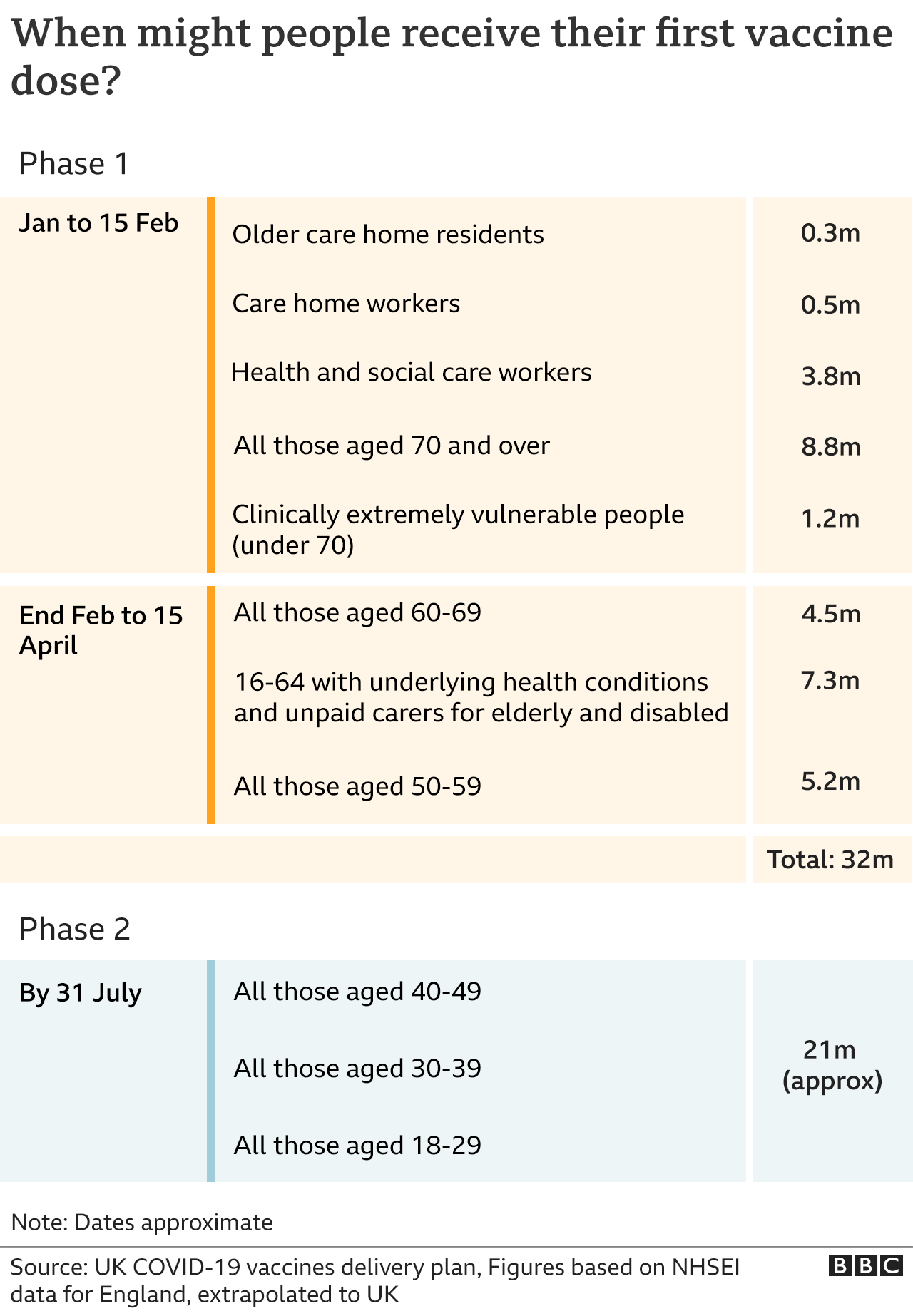
[1] Paper: https://www.cs.cit.tum.de/fileadmin/w00cfj/dis/papers/clouds...
[2] Figure 1: https://tum-dis.github.io/cloudspecs/?state=N4IgzgjgNgigrgUw...