Yeah - Amazon Elastic Transcoder which they just shut down and replaced with Elemental MediaConvert is almost certainly just managed "ffmpeg as a Service" under the hood.
Indeed, the recent trend of the US government itself posting videos of the drone murders of Venezuelans stands in real stark contrast to how that was handled just 15 years ago.
It's that it demonstrates that some sort of noumenon can likely have partial but not 'full' overlap as we understand it with a phenomenon.
To elaborate, the noumenon can have properties that are unknown to us and outside the purview of certain senses (if not all) but still have partial phenomenal effects such as gravitational effects.
Given partial overlap, we could, and likely should, surmise that overlap, if partial, can also be zero. In fact, partial overlap with certain things (such as the gravitational field) but no sensory experience is exactly what we'd predict if this were true.
The mistake is thinking I'm asserting that things are phenomenon or noumenon when that's not quite right. Mostly, the supposition is that things can exist and have either 'full' (unlikely I think), partial, or zero overlap with our sensory experience. Things that demonstrably have partial overlap suggest a wider world of things. I simply find the idea that our evolved sensory experience encompass even a sizable fraction of reality to lack epistemic humility.
A good example of this would be the scope of our sense of sight as it relates to the entire electromagnetic spectrum. We can't see things like UV or Gamma radiation, we can only infer their existence by their effect on things we can see. The reality is that those phenomena might not actually exist in any perceivable way. The only thing we know, strictly speaking, is that the effect happens, and we have a plausible mental model for why the effect happens that predicted other effects that we also observe. But we can't prove that the mental model is reality.
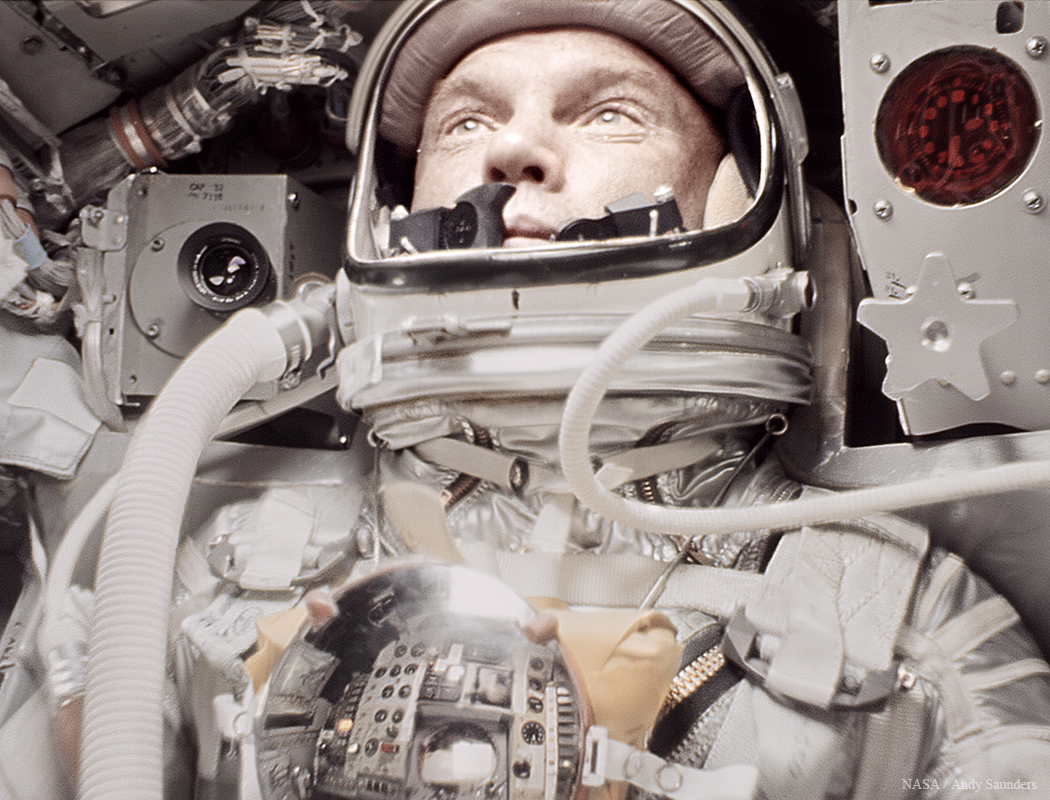
To take many exposures of the same scene and average the pixel values with the corresponding pixels from all the exposures. This increases the SNR and dynamic range, but naturally doesn't work very well if your subject isn't static. It doesn't increase the resolution of the image though.
For the 16mm movie cameras in this case, they probably selected frames from rigidly mounted cameras with little subject motion to get a good result out of it. Glenn strapped in tight in his tiny cockpit probably provided them with a decent number of frames they could stack without introducing much motion blur. In fact, you can see a bit of blurring at the end of one of the white straps center frame in that shot: https://cdn.arstechnica.net/wp-content/uploads/2025/09/03b-G...
Don't forget my fav, the humble reflection nebula. Of course there are always emissive stars in the background of any image of one so the point is moot. But still, there are a few hundred! :D
I know nothing about astro-anything so forgive my ignorance, but what light source would a nebula be reflecting? Is it meaningfully distinct for each nebula?
I'm no expert either, I just think they look neat. But from what I know it's primarily the nearby star or star cluster illuminating them, so yes it'd be distinct. Also there are mixed emission and reflection nebulae so technically I suppose they reflect some of the light from the emissive portions, though I'm sure it's a tiny contribution.
Another historical example I find myself thinking about is the huge number of objects that moved into a disposable category in the last century or so. What used to be built entirely by skilled hands is now the prerogative of the machine and thus a certain base level of maintainability is no longer guaranteed in even the worst-designed widget.
Yes, AI will mean more software is "written" than before, but more will be thrown away too. The allure of the re-write is nothing new, but now we'll do it not because we think we can do it better the second time, but because the original is too broken to keep using and starting over is just so much cheaper.
Soon at CRUD App HQ (if not already): "Last year's pg_dump is this year's prompt."