The cold call approach is something I've been hearing a lot. It's scary to just start talking to people when you have no experience, but I think that's just life. It was the same with negotiating salary, learning new thing and meeting new people. You just need an objective goal, courage and a way to learn from failures.
In psycopg2, variables can be inserted into queries using %s placeholders and supplying arguments to cursor.execute, but this does not allow for identifier arguments such as table or columns names. The alternative is to use psycopg2.sql.SQL.format, but this requires arguments to be converted into Composable objects such as Literal or Identifier.
With TemplateQuery, instead of wrapping arguments with psycopg2.sql classes (e.g. Literal, Identifier) the expected class can be written inside the query:
  >>> TemplateQuery('SELECT * FROM {table@Q} WHERE {@I} {@S} {value@L}').format(
  ...    'column_name', '>=', table='public.my_table', value=100
  ... ).as_string(conn)

  'SELECT * FROM "public"."my_table" WHERE "column_name" >= 100'
The character after the at sign @ in the placeholder key is the transformation that is applied to the argument before inserting it into the placeholder (S for raw SQL, I for Identifiers and L for literals, among others).
I wrote this small library while working on my master's thesis to help run similar analysis queries on different tables and schema configurations, without the mental overhead of wrapping arguments in the proper classes. I'm not sure if it will be useful to anyone, but I thought it was worth releasing. Would appreciate any feedback at all!
It depends on how big a commitment you want to make. I quit my job to go study biology and it worked out pretty well for me. Programming opens doors for you because the majority of biology grad students can't do it. You get good work and an accelerated path through classes, TAships, research and other university business. If you want to work in IT, the experience you get is perfect for applying for prestige places like Google, Facebook or Amazon. Mostly I've spent the last year writing pattern matchers to extract subtle patterns from huge data files.
If you're not ready for a big commitment (and even if you are), I'd recommend taking some classes too get a feel for the subject. Khan Academy has two (or you can google around for more) that look pretty good. The just-plain-Biology one covers a surprising amount of useful information. The one on Genetics is useful too, although you might want to skip past some of the stuff about cross-breeding animals and whatnot.
Another thing you can look at is Synthetic Biology, which is biology plus design, biology for hackers. Synbio says biology has been too interested in describing and cataloguing, and not interested enough in building. So even though what we can do is pathetically simple next to the evolutionary process that designs new organisms, we can still do little things like making human beings immune to all viruses and designing cyanobacteria that produce crude oil from air, water and sunlight. If you're interested in Synbio you should check out the iGEM competition, which is a major event and an organizing site for useful information.
If you don't feel like crawling around the iGEM database of standardized biological parts (it's like the library docs for Life) you could look at these videos instead: https://www.ibiology.org/playlists/synthetic-biology/
Email's in my profile. Don't be a stranger if you have questions.
Though I'm still very early into it, I can highly recommend starting a biochemistry degree, if you already have a programming/computer science background. Bioinformatics would be the direct route to that field, but in a bioinformatics degree, there is usually still not much of a focus on the low-level biochemical mechanisms and biochemical methods that form the basis for all the data you will be working with. Biggest downside though is a lot of lab-time, which for me personally is hard as I'm still freelancing on the side.
I'm only in the middle of my second semester and through taking a few biochemistry classes in advance and reading though the papers of our universities research groups it's already starting to come together a bit. Things start to click and I'm getting pretty far in trying to understand and reproducing some SOTA papers in weekend projects. For such a short amount of time of studying the subject, I think that's a pretty good payoff.
This would make a great visualization for a bassy music video. Link variables defining the polygon shape with amplitudes for bass frequency ranges and the color to the vocal tone.
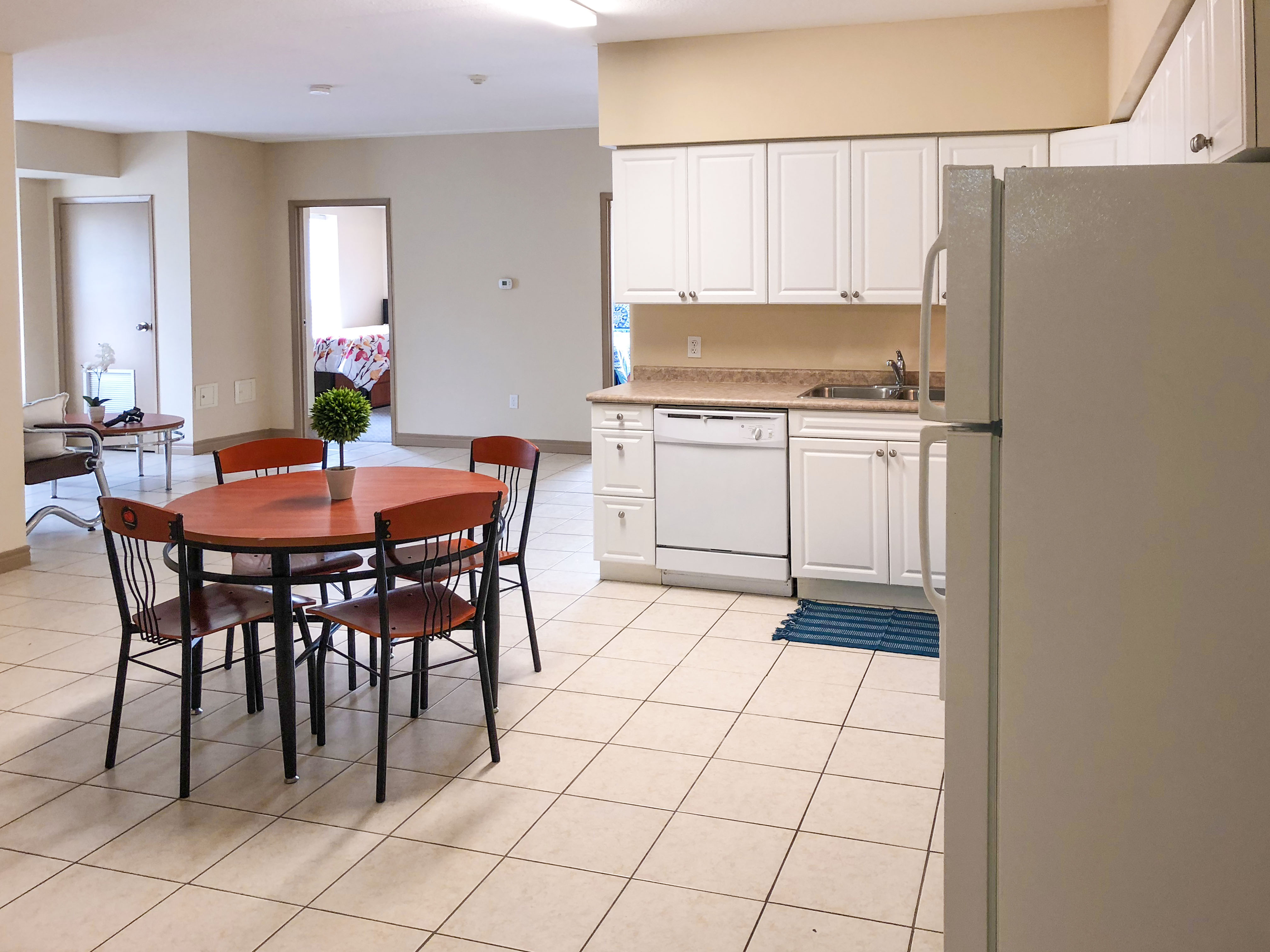
I lived in university-run student residence and in student-oriented rentals. The amount of wasted space was unbelievable considering everybody spent the vast majority of their time on campus. We didn't need an 86sqft living room, it just filled up with garbage. I couldn't find an apartment with just bedrooms, a tiny kitchen and a bathroom.
What I really wanted was one of these tiny apartments [0]. Build a whole apartment of these near campus, students only sleep at home anyway, and sometimes not even that. My univeristy is building a new residence and it has the same 3-5 bedrooms to a giant apartment with a living room.
I wonder what's the main barrier to building a lot of tiny single student apartments. Is it the municipal regulations, are they not economical or did research show that students actually want living rooms?
EDIT: Just look at the size of these living rooms. I've been in so many of these apartments and they're almost always full of boxes and trash.
Kitchens and bathrooms are expensive components to an apartment. Arranging the living space so that those are shared significantly drives down the cost of construction. dorm rooms with a shared floor wide bathroom probably achieve the same space efficiency as a 5 bedroom shared apartment with a bathroom and living room, with the added benefit that it will be easier to sell the building as apartments in the future should the need arise.
I wouldn't mind a shared bathroom or kitchen, but I don't understand the massive living rooms. My guess is it makes the unit more marketable to higher income students that in a lower volume can pay more in total for a given plot of land.
The answer to these questions is almost always "it's the law." Most cities have habitability requirements that mandate minimum sizes and required rooms. What'll end up happening, as happens here in SF, is that the residents will throw up a temporary wall in the living room to split the rent further.
Rent definitely affected my choice of school. With identical offers, I opted for a smaller tech-oriented university over the University of Toronto, which is either the top or one of the top schools in the country. I don't regret it, because rent in Toronto was insane and it's only getting worse. I'd have to commute 90 minutes to my parents' house with no time for a social life, and I'm super lucky to know that I even had that option.
And now rents in the small town are growing. Subdivided houses are torn down for luxury apartments, and with recent cuts to government loans, it might not be affordable for some low-income students.
It sounds like you're describing Waterloo. And as a U of T grad I agree, for many years it was a far more affordable option that was every bit as good (arguably better) for engineering and CS. Sadly Waterloo is suffering from the same insane housing cost inflation as the rest of Southern Ontario now.
You got it. I was lucky to start when it was affordable. The residence fees this year are completely insane. $1000/mo for a single dorm room and even more for a room in a 3-4 bedroom apt. Off-campus housing isn't much better.
>As part of our staged release strategy, our current plan is to release the 1558M parameter model in a few months, but it’s plausible that findings from a partner, or malicious usage of our 774M model, could change this.
This seems naive but I think it's a misdirection. Of course the model will have malicious users. Propaganda teams started testing its integration as soon as it was released. It's likely that OpenAI is counting on this for insights into HOW the model can be used maliciously. It's also possible that the model results have inherent trackable markers and OpenAI can later say that X% of social media posts were made using this model.
So what are the positive applications, aside from prettifying data like sports and weather reports?
Even with Skyrim's 800+ books, you frequently ran into the same book. Imagine libraries filled with plausible text that hides nuggets of lore seeded by developers. Along with more realistic text-to-speech this can allow games to support a large diversity of NPCs that have true radiant dialogue and sound more realistic than "I saw a mudcrab the other day".
With some modifications, I think models like this can outweigh even their nefarious applications:
Defense against text decomposition analysis. The model can be used to obfuscate writing patterns that can reveal a person's identity, either by randomizing form or standardizing it. Take your post and run it through the formatter to get the same idea and intent, but in a style that can't be traced to your other writing. Or you reform it into style of Ernest Hemmingway, like thousands of others.
Realtime plausible deniability encryption. Messages in a monitored chat can look like mundane conversation but contain encrypted messages. This would require the model accept seeds and work partially in reverse to diff two sets of text to reveal the hidden message.
In it's current form it doesn't look like it can do any of those things, but there's the potential.
    * Horizontally align news item titles
    * New Items take up full margined-page width
    * Search input at the top of the page
    * All facts button has a pointer cursor
    * Increase button text size
A really impressive use of Python for visual graphics design! I wonder what kind of packages you'd need to reduce the amount of work done in external editors, probably something that can make SVG.


Thanks for your input!