The data is successfully encrypted before it's sent (which you can verify with wireshark). What exactly are your concerns, given that the data isn't encrypted locally in the first place? And seriously with the question...what do you think is more likely, that the tiny team of 6 invested a ton of time reinventing the wheel with a custom in-house AES implementation, OR that they used any of the readily available and extremely well tested libraries? SMH
Your response indicates you may have limited knowledge on the topic.
> what do you think is more likely, that the tiny team of 6 invested a ton of time reinventing the wheel with a custom in-house AES implementation
AES is a cryptographic primitive. No one ever implements their own. What developers implement is the cryptographic system - the block cipher mode, initialisation vectors, rounds, salting etc. It all very easy to get this wrong. Their site does state they use GCM cipher mode which is the right choice (say over ECB, CBC…)
> which you can verify with wireshark
Viewing encrypted material in a packet capture is meaningless and provides zero assurances
> What exactly are your concerns, given that the data isn't encrypted locally in the first place?
The encrypted data in their cloud solution is adequately protected.
Companies that take end to end encryption seriously will generally provide details on how they went about their cryptographic system.
For example, is the encryption key derived from the password? If so what is the key derivation function? How many rounds didn’t get select? These are generally the responsibility of the developer to responsibly choose.
Small nit: I'd guess it is not that easy to verify this in wireshark.
I'm not an obsidian user or familiar with the code base, so could be wrong here.
The data is probably encrypted with AES before being sent (the E2E bit), though probably there is some metadata unencrypted.
When the data is actually sent, the entire thing would likely be encrypted again with TLS while it is in transit.
This means, for example, your ISP cannot see the unencrypted metadata or the encrypted data.
So if you open a capture in wireshark then you would likely see this. Of course it is possible to decrypt the TLS to check the underlying data is encrypted, but it is not trivial for most people.
An easier way to see what it is doing may be to run ltrace on it and check what it is writing to the sockets.
Or gdb, break on the SSL write function and inspect the registers to see what is being written.
Sorry that's my bad, I meant *Fiddler not wireshark. Fiddler makes it a piece of cake to decrypt the extra tls, leaving you with just the encrypted data you were sending.
It does when the position of each sensor relative to the position of the others matters. On earth that's trivial, but if you're 1.5 million kms out in space you could imagine this being significantly more difficult.
Not to mention, each of these 100 units would require the same shielding from radiation as the giant one does for the same reasons. We chose L2 for a very good reason; where are these 100 going to go? What are the odds that each one will end up where it needs to be x100 attempts?
Why do slow-mo lightning shots clearly show the opposite then? Unless you're referring to "conventional current", which is about as pedantic as you can get given that that's an obsolete and incorrect school of thought based around flow of positive charges before electrons were discovered.
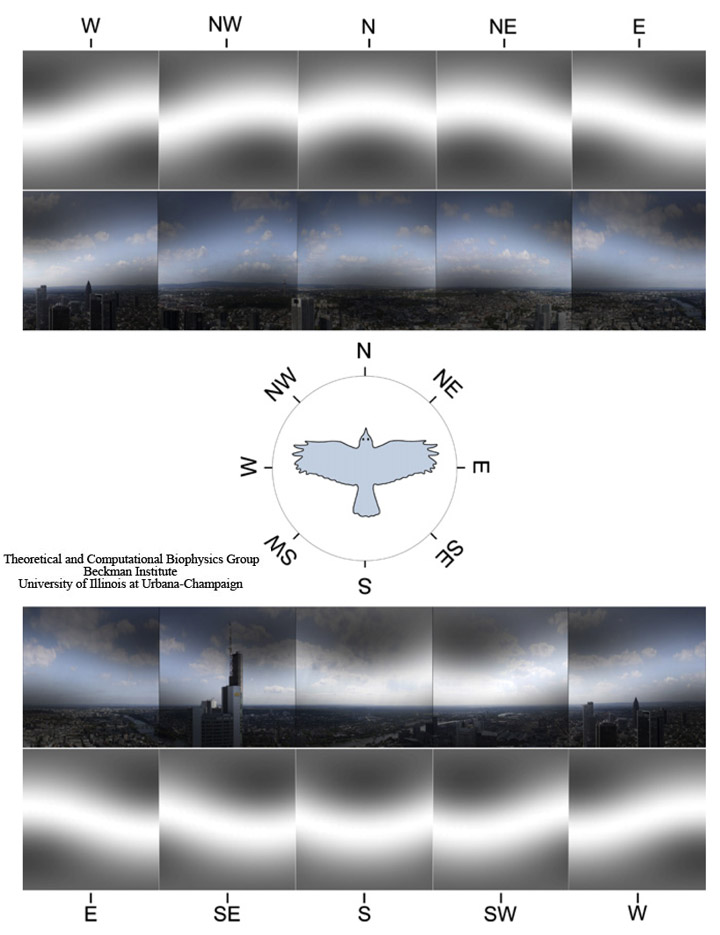
> A long-held view was that birds were aided in their orientation by a cluster of iron neurons in their beaks, which interacted with the earth’s magnetic field. “But, in the past ten years, people have begun to ask if maybe it’s something else.” Gow posits that this something could well be olfaction. “If you have a colony of birds,” she says, “they can find their individual nest among thousands by smell.”
That is the ideal goal, but I don't think the two ideas are exclusive. Take the case of learning a new skill like Chess. At the start you employed some sort of system to learn; that system is your own personal 'mental model' that you've constructed (whether consciously or not) to learn this new thing.
How long does it take you to reach unconscious mastery in chess? Once you reach that level of mastery, looking back would you say there was a different system you could have employed to reach that goal faster? What if you shared this new system with a beginner and told them "use this model to learn, not the one that seems intuitive to you now".
I think that's all a mental model is: recognising that other people who are better at the thing you're trying to do, have come up with a way to learn it faster than you're capable of intuiting as a beginner. I think it would be quite hubristic to assume you couldn't save any time by employing these ideas, or that your initial ideas are so close to the best approach that learning about another model is a waste of time.
Sure would. Both work (partly) by increasing the communication between different parts of your brain. It's why people will "see" things after auditory stimuli, or vice versa.
Changes at this basic level are temporarily re-writing how your neural network connects to itself, which translates to a change in how you perceive the world at the most fundamental level. It is very different from consciously trying to adopt a different perspective, as in that case there is no change to the underlying network processing everything that makes you yourself.
Some people find experiencing this malleability extremely upsetting and disconcerting, as it destroys the idea of your "self" being something concrete. This understanding is the oft-referenced "ego death", and for sure it is both exciting and terrifying.
Not many places will try a brute force attack directly on a login interface, but if your database is leaked the definitely. Nothing to rate limit an attacker then
So my understanding is that cases are rising due to Delta (even amongst vaccinated), which correlates with every other report I've seen. However I couldn't see in this report, what percentage of reported deaths (14) were unvaccinated vs single/double jab recipients?
The takeaway seems to be that, when borders open in Australia for my case, I'm very likely to catch covid; I don't so much mind catching it as long as I don't end up in the ICU or dead over it though (and ditto for everyone else in the country of course).
I think it is becoming clear that nearly everyone on the planet will catch it, eventually. Vaccinated rates of transmission are not as favorable as they were when the vaccines were brand new, but the impact on severity of symptoms still seems to be holding up (both from datasets like this and my own anecdotal witnessing among friends). So, it's "keep calm, get vaccinated, and carry on", I think.
That information seems to be listed in this report[1]. The TL;DR, if I understand it correctly, is that a single vaccinated person appears to be dying every other day on average, versus approximately 5 vaccinated people every single day. So that's a tenfold difference.
This is the relevant quote. Population wide fatality rate for non vaccinated individuals is about 9x higher.
> Over the past 7 days, the number of fully vaccinated and non-fully vaccinated cases who are critically ill in the ICU are at 0.5 and 5.4 per 100,000 population respectively. Over the same period, the number of fully vaccinated and non-fully vaccinated cases who died are 0.1 and 0.9 per 100,000 population respectively. Among seniors aged 60 and above, the number of fully vaccinated and non-fully vaccinated cases who are critically ill in the ICU are 1.9 and 48.0 respectively. The number of fully vaccinated and non-fully vaccinated seniors who died are 0.4 and 9.2 respectively.
Worth remembering that applying anecdotal experience to an entire world population in terms of generating statistics is unlikely to be accurate, and very much at risk of confirmation bias.
Most vaccines are only 65% efficacious in preventing infection from Delta. So even amongst 100% double vaccinated crowds, 1 in 3 will contract covid if exposed.
The real difference is the reduction in serious complications and hospitalization and death. Going off stats from my state (NSW in Australia), 78% of people hospitalized were completely unvaccinated. 19% had one shot. 2% had both shots. Those numbers are really, really hard to argue against IMO.
edit: I should add, it's even worse when you consider that 80% of our state is 100% vaccinated, meaning that the 78% figure above is true despite being from a pool that makes up only 20% of our state's population.
I mean I'm not basing anything on personal anecdotes, I'm simply stating that my personal observation supports what a scientific study says. When there is evidence to back up an anecdote it ceases to be an anecdote.
And it's not like I'm making decisions based on my coworker's family members getting covid lol. This is a much more complex issue, and that really kind of reduces the entire thing to the point of absurdity.
> I'm simply stating that my personal observation supports what a scientific study says. When there is evidence to back up an anecdote it ceases to be an anecdote.
That's actually a really good example of confirmation bias :) it can be a real sneaky logical fallacy! In this case you have no controls in place to verify the what, why, or how of those people's infections, but because it matches what you think it should you've accepted it as further evidence that confirms the proposition of the study. Anecdotal evidence remains anecdotal whether or not it correlates with a position in either direction.
So is the argument from fallacy... If you want to argue against science then you should bring your own evidence because claiming that someone agreeing that their observations match 3rd party scientific observations is a fallacy is beyond silly.
Based on this, it should be expected that the 2% figure you quoted would increase over time. I would say in Australia a lot of people are still in the "honeymoon phase" of immunity where it hasn't started to significantly wane amongst the population of the fully vaccinated.
Yes exactly right, which is what the Israeli data has indicated. It's not a huge decrease, but there's a definitive slow decrease in efficacy - worth noting it's nearly entirely against the Delta variant again though. So even though 2 shots will continue to keep you moderately safe, the argument is that there's no good reason to not get a booster (just like a flu shot every year).
edit: to quote specifics from the study
> Our findings are in line with findings from the randomized trial of the BNT162b2 vaccine, which showed a reduction in vaccine efficacy against symptomatic infection from 96% in the first 2 months after vaccination to 84% at 4 to 7 months after vaccination, when averaged over all age groups combined