A stock buy-back increases the stock's value through scarcity. It does not actually "return cash" in any immediate sense. Any value increase is completely on paper. The holder of the stock is still taxed when they sell their shares.
This is the same concept as you owning a home and someone builds a nicer home next to you. Your home value just went up. But you don't have a cent of that money until you sell your home, and then you are taxed on the gains (unless you roll it into another home, but that's a separate discussion).
Buyback programs are at the then-current publicly traded rates. They aren't generally at some magical premium, or else the whole trading price of the stock would go up even more.
Most people selling their shares in a company do not know who is on the buying side, and that is generally the case here. This goes for retail and institutional investors. And the buy-back programs are done slowly to avoid slippage, which can make it even harder to track down in the moment.
Someone who wanted to sell was selling anyway. They don't profit any more than their gains (or losses) already covered. The people who get "value" are the ones who did NOT sell their shares, and their "value" is only realized down the road when they do eventually sell.
I appreciate the lesson, I spent my whole career as a hedge fund trader so I’m familiar.
I’m not sure what this has to do with anything? Why does it have to be at a premium? What in gods green earth are you on about? What difference does it make if you know or don’t know who the buyer is??
Those who want to sell can sell (buybacks are programmatic) and those who don’t can benefit from appreciation.
> Who do you think they are buying the shares from? It literally directly puts money in the pockets of investors.
He's trying to explain to you why stock buybacks don't "literally directly put money in the pockets of investors". If your shares are sold back to the company as part of the buyback you are 1) no longer an investor obviously, and 2) have not realized any gains as a result of the buyback. Investors who did not sell see their shares appreciate, which is different from "putting money in their pockets"
Seriously? You’re going to defend someone’s complete lack of understanding of market dynamics by making a pedantic stand that someone who sold their shares no longer qualifies as an investor?
Well for one, that presupposes that investors sell all of their shares at the same time, which they rarely do. So, I have 100 shares and I sell 10 back to the company. I receive 10 shares worth of cash directly from the company and I still have 90 left thus qualifying me as an investor under your definition.
And secondly, your entire premise is absurd. By your definition, a dividend isn’t a company returning cash to investors because by the time they issue the dividend, it’s no longer their cash, it’s the investors.
You guys just don’t understand this stuff. The real world just doesn’t work the way you imagine it.
> Can you answer the question "who gets money literally put in their pockets as a result of a stock buyback?"
The investors who sold the shares to the company. Markets aren’t some magical entity that conjure shares out of thin air.
If a company buys back 10 shares, they buy those 10 shares back from an investor who wants to sell 10 shares. That investor now has cash literally in their pocket.
How do you think this stuff works? Where do you think the money goes when companies spend on buybacks?
The investors who sold shares to the company did so at the then-current publicly traded share price. I bet they wish they didn't since the stock value increased after the sale. These investors who sold did not benefit from the sale any more than they would have selling on the open market in a non-buyback situation. Hope that makes it clear!
This is very naive, in incorrect. The stock market goes up on average…investors know this. When they sell it’s usually because they need cash, or they believe there is a better use for their capital. Most people who sell stocks do so knowing that it will continue to go up.
This also has nothing to do with returning cash to investors. They were going to sell the stock anyway. Who cares if it keeps going up? It has nothing to do with the mechanics of a buyback.
> These investors who sold did not benefit from the sale any more than they would have selling on the open market in a non-buyback situation.
What in the ever loving Christ? Why does this matter? You guys just keep moving the goal posts. This simply doesn’t matter and I’m not sure why you guys get hung up on it. Shareholders love buybacks. Why does HN think they have figured something out that millions of other people have missed. It gets so tiring going in circles.
trading is zero sum. The investor that sold the share would of sold the same share to another investor. The company isn't buying stock above market price (thus adding value to the system).
The company may stock buy back directly from employee's RSUs, which are taxed as income.
> The company isn't buying stock above market price (thus adding value to the system).
That’s not how this works. Where is this focus on “adding value”? What the hell does that even mean?
Just take this to its logical conclusion: let’s say a company buys back 100% of its shares. In this case they have returned a ton of capital to investors very tax efficiently, and price will converge on whatever price the very last seller is willing to sell at.
I don't think it's accurate to say "you don't have a cent of that money until you sell your home".
Nobody has anything valuable until they transfer some cash to receive that thing. The potential to transfer X for Y is valuable. Not to mention borrowing against one's assets.
>"I don't think it's accurate to say "you don't have a cent of that money until you sell your home"."
That's a bit different, as you generally reap some ongoing benefits from owning a home, such as an income stream (rent) or place to live (savings on rent, which aren't usually taxed), which you don't get from owning stocks (other dividends, which are taxed, and the benefit of voting if they're voting shares).
>"Nobody has anything valuable until they transfer some cash to receive that thing. The potential to transfer X for Y is valuable. Not to mention borrowing against one's assets."
We generally don't tax things that have the potential to increase borrowing power (because of that thing alone); we don't tax high credit scores or educational status/attainment, or changes in either.
Another big one are R&D tax credits, passed under the Obama administration. The government told companies that they can save on tax if they pour money into research, so companies poured money into research and then (certain extremely vocal members of) the government got mad that they saved on tax.
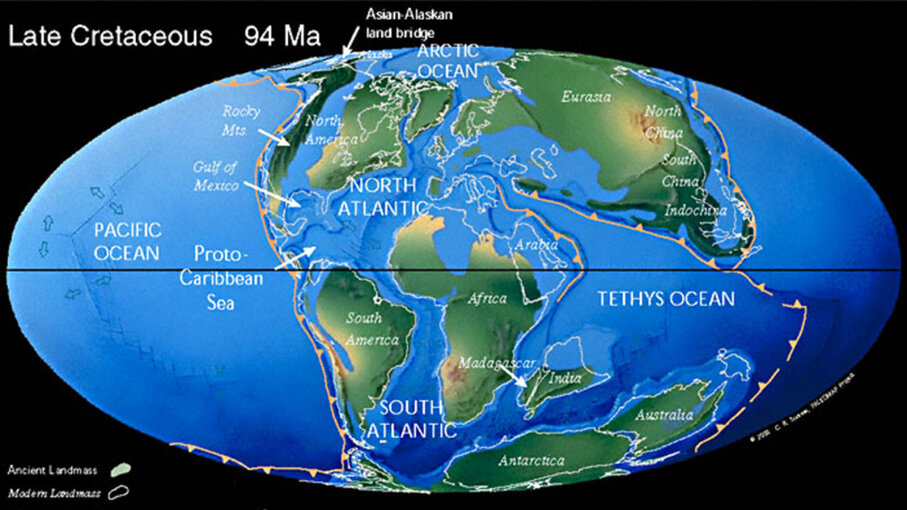
The Chicxulub crater off the top of the Yucatan peninsula is attributed for that particular event. It wasn't really known until the early/mid 90s I don't think.
Right. Although even after the discoveries related to the K-t boundary and the crater, there was a school of thought that it was just a contributing factor to a pre-existing general decline. My understanding is that there's now a general consensus that it was much more of a singular cataclysmic event.
There's still a substantial group that thinks the impact was part of a 1-2 punch with the eruptions of the deccan traps, which produced a far larger impact on the atmosphere but over a longer period of time. Iridium from the asteroid impact is found in the basalt deposited by the deccan traps, so they definitely happened concurrently.
That said, if you look at the patterns of extinction, survivors seem limited to things that could hide in burrows or in deep water and then survive for an extended period exclusively on scavenging, as if everything that happened to be on the surface was suddenly killed and then photosynthesis stopped working for a few years. Notably, species that would normally be very sensitive to climate change like small amphibians survive whereas generalists capable of long distance migration die out. There may have been ecological stress beforehand but a singular cataclysmic event turned it into a mass extinction.
Do we know for sure that the volcanism in the Deccan traps wasn't caused/triggered by the asteroid impact? I know they're pretty much located at the opposite ends of the world, so could the shockwaves from the initial impact have created an amplified node at the other side?
(edit: wikipedia[0] says it's inconclusive:
> Although the Deccan Traps began erupting well before the impact, [..] the impact may have caused an increase in permeability that allowed magma to reach the surface and produced the most voluminous flows, accounting for around 70% of the volume
While there are many large igneous provinces similar to the deccan traps (for example the siberian traps associated with the Great Dying), we don't really have any good evidence for large asteroid impacts comparable to chicxulub so it's tough to say with confidence what effects were directly the result of it versus coincidental.
The Great Dying you speak of happened to coincide with an asteroid crater off the coast of Antarctica [0]. I haven't been able to find an accurate globe of the continents at that time ([1] doesn't show the poles in great detail), but it does look like eastern Siberia was at the antipode of the Australia/Antarctica boundary. So the theory seems to hold up -- at least from the confines of my armchair, that is.
IIRC, oil and gas companies knew of the crater, but that knowledge was for many years proprietary information belonging to Mexico's state-owned oil company Pemex who paid significant money for the geological studies of the area.
Worth pointing out that postwoman is free and opensource. It is not quite as full-featured as postman, but for quick mocking without requiring registration, it is a great option.
https://postwoman.io/
Or ya know, since we’re all software developers and many of us need/want a tool like this we could collectively build a community version that we distribute freely and split the labor cost of development and maintenance among the people who use and contribute to it.
yeah let's all split those 8$ it costs, because that's what will get us out of the grind. 8$ a month is less than two coffees, if you need to split such costs among peers then you're probably in the wrong job.
Your comment history shows an interesting grudge against OSS. Do you genuinely think we'd be better off if all software were commercial? I'm asking sincerely.
It can be helpful to have an understanding of someone’s background and expertise. Talking to a subject matter expert is much different from an undergrad with an opinion. Looking at prior comment helps give a sense of who you are speaking with.
I've seen this particular user's comments frequently enough that their username clicked in my mind. I promise you I don't have the time to go through everyone's post history.
I genuinely believe OSS is great for sharing knowledge, but I also genuinely believe that no other industry out there has managed to play itself at this scale. Every single tool you want is made available for free by devs who burn themselves out writing free code to impress employers. Essentially, OSS devs have fought against corporate only to become trapped by corporate because now software has near zero value. Pretty illogical if you ask me. I'll buy a license for either of the two (postman or insomania), just because this crap needs to stop.
No, but I do code sometimes in my spare time or I am sometimes able to utilize my work time to contribute if it's functionality my company needs from an open source project we're using. It's not like you have to sign up for 8-hour shifts in open source software development.
All of my FOSS work has been either directly sponsored by my employers, or stuff I've done in my free time because I wanted to make a thing exist for my own purposes. I don't know anyone who's burned themselves out writing free code to impress employers, so I guess I just don't see it the way you describe.
coughlinuxcough what? linux vs corporate is not the same as literally cloning every small piece of software out there for the sake of getting a job and glory.
Postman has raised over $50M since they launched, they're not exactly two guys working out of a garage anymore. At what point do you classify them as "corporate"?
The Texas power grid is isolated and cannot routinely import power. It can in very temporary and emergency situations, but they do not as a matter of course to avoid federal oversight.
So while the US Western grid can time shift one hour in the way you describe, Texas is isolated.
Yup, because ... Texas. In the entire country there are 3 roughly independent systems: East, West, and Texas. Maybe they’ll reconsider given these incredibly high prices?
There's definitely an opinion in Texas that ERCOT is more reliable than the other two US grid managers, so it's popular to remain independent for that reason as well (besides the political reasons). Both the Eastern [1] and Western [2] Interconnections have had major grid-management incidents that took down large portions of the grid in cascading failures, and some analysts think further incidents are likely [3], while the Texas grid has never gone down.
There is some support for expanding the capacity of the asynchronous DC interconnects, though, which would let Texas import & export more electricity to the other two grids without tying itself to them directly. It already does a modest amount of that, but the current DC links don't have very high capacity.
No, but blackouts after storms are pretty common. Sometimes lasting for days.
IMO, that’s a big part of the reason why backup generators are so very popular here in Texas.
Certainly, that’s the reason I have seriously considered installing a 10-15KW natural gas powered backup generator. It wouldn’t be grid-tied or even grid-interactive in any way, but it wouldn’t take me long to go downstairs and throw the transfer switch.
What part of TX do you live in? My parents have lived in suburban Houston for 20 years, and their power has basically never gone out for more than short blips, not even during tropical storms or hurricanes. The power lines in their neighborhood are buried though. I imagine if you're getting frequent outages you must have above-ground lines that get downed by trees? That can be an issue, but doesn't have a whole lot to do with the state-level grid, just whether a given subdivision or city has chosen to spend the money to bury the last-mile lines or not.
California has far more rolling blackouts. When I lived in Texas, the only power outages I ever saw were during hurricanes or some random local event like a transformer going out.
Texas may be somewhat isolated from neighboring grids but it does have some ability to do some solar collection time shifting since the sun take over 50 minutes to traverse the entire state. Texas spans almost the entire central time zone; El Paso is in the Mountain time zone.
Nevertheless, Texas seems to be an ideal location for both wind and solar energy (and ironically, oil and gas too).
FWIW, I think the concern with "doesn't bother updating the passwords" was with respect to recovering from a hacked joomla install, not about an aging password management scheme.
I feel like this point should be much higher than it is, and should be highlighted more clearly in the article. And the article doesn't even make it clear if this is a 5/1 or a 5/5, but it also absolutely leaves out the point that the rate won't just change after the initial 5 year period.
Non-conforming and no-doc loans weren't the only problem in the 2007s. ARMs were a big issue too because everyone thought they could refi before the initial period was up and that ended up not being true.
I bet she's counting on being a W2 employee in 5 years after finishing nursing school and refinancing into a fixed-rate. Not a terrible gamble, especially with her likely LTV of 66%.
So wait... In the US, my "value" to facebook is about $100 a year? (~24/q rounded up)
Can I subscribe to facebook and opt out of all advertising and any data sharing exposure with third-parties? That is totally worth $8-10/mo to me.
Edit: I get it. You don't like this idea, or you don't think it will work, or you don't think facebook's investors will like it (full disclosure: I am one). Why on earth should that stop me from putting my obviously flawed opinion out there that I am sick of being the product and I'd love to opt out of that process?
Since you are willing to pay $100/year not to see ads, you are probably the sort of person who is worth much more than $100/year to Facebook and its advertisers.
Wait, care to elaborate? I'd assume it's the other way around; people who don't want to see ads are probably less likely to click on them and drive revenue, no?
He's in a financial position to afford $10 a month for the relative luxury of not being served ads, meaning he has a relatively large disposable income, meaning he's the kind of person I would want to advertise to.
In addition, his disposition for avoiding ads likely means he is running ad blocking, and thus already minimizing his ad exposure. This presents a less crowded field where any ads he does see may have a larger impact on his buying behavior.
The problem is that the rev/user isn't constant. If they get more users, they earn more from each user. And conversely, if they lose users, they earn less from everyone. So even if a small percentage of their users opted to pay monthly, that would have a negative impact on facebook's earnings on the remaining population.
I don't think that's what that number means. If you paid that value in dollars, then Facebooks revenue-tie-to-network effects is gone. Facebook currently has the ability to 'innovate' on the data you provide and presumably convince investors that the value will rise over time due to Facebook's own engineering talent. On the other hand, if you are paying a flat fee, the entirety of Facebook's business model falls flat - that it can increase that value without you knowing. Could Facebook survive a price increase from subscriptions at $10/month to $100/month? Probably not. Could Facebook engineer another 10x return on your data? Probably.
I thought that was the end game originally - reward users with cash for self providing information companies usually need to pay survey companies to get.
My point was that what people aren't giving their info to Facebook for free, Facebook has to spend money on their employees to create something which people then want to use resulting in them getting information.
Well I think about 50-100 million users in world would be looking to have paid account. Since those are valuable customers who would definitely not want to have invasive, tracking advertisements and advertisers definitely want to target them. The only way it would work is if FB totally does away with advertising.
With current numbers the way it could work is if those users make annual commitment of at least 500-1000 USD or 200-400 dollars / quarter.
So the users with loud ethical voice and concerns about negative affects of advertising can save the world from this whole tracking business by committing about 1000 dollars a year.
To the best of my understanding, you can opt out of personalized ads with google, but not all ads. At least for the search product.
For email, one can pay for their google apps tier, which doesn't have ads, but it is obviously targeted to business users, so the value prop is completely different anyway.
Re friends opting out, no, you would just need the system to exclude individuals who have the opt-out attribute from the graph search. But I do also have timeline review turned on and have for years.
I get that I am probably a minority user of Facebook, in that I have very customized security and privacy settings. To me, there has always been value in choosing with whom to share certain information. It isn't a global binary function.
My reasoning about the opt-out attribute not being followed would be if you are friends with someone else and they share information about you wouldn't you want that information to be private? Or would you just prefer to use the timeline review feature for all of your friends content that they would share.
What if you weren't tagged properly also and your friends share information about you? Then hypothetically your information would be available on Facebook.


This is the same concept as you owning a home and someone builds a nicer home next to you. Your home value just went up. But you don't have a cent of that money until you sell your home, and then you are taxed on the gains (unless you roll it into another home, but that's a separate discussion).