these models work best when you know what you want to achieve and it helps you get there while you guide it. "Improve anything you can find" sounds like you didn't really know
As a tool to help developers I think it's really useful. It's great at stuff people are bad at, and bad at stuff people are good at. Use it as a tool, not a replacement.
"Improve anything you can find" is like going to your mechanic and saying "I'm going on a long road trip, can you tell me anything that needs to be fixed?"
Doing a vehicle check-up is a pretty normal thing to do, although in my case the mandatory (EU law) periodic ones are happening often enough that I generally don’t have to schedule something out of turn.
The few times I did go to a shop and ask for a check-up they didn’t find anything. Just an anecdote.
sadly sometimes it's e-commerce websites where you actually want to buy their product and they interrupt you three times with "sign up to our newsletter and get 5% off with the code" modals, like they're actively trying to frustrate me into not giving them my money
Back in the ‘90s and early aughts, there was a well-known book called Web Pages That Suck.
One of their biggest refrains, was “Stop interfering with your user, when they are giving you money.”
They used to regularly hold up Amazon as the platonic ideal of an e-commerce site, but even Amazon has devolved into mis-click hell. Nowadays, I often click a button that takes me to some useless page, instead of the cart.
They usually succeed with me. Or if I really plan on purchasing I sign up to get the discount only to immediately opt out, so what’s the point? We’ve been furnishing a new house and so getting usually ~15% off a high ticket purchase I’m already decided on buying just for giving them my email which I also already will be giving them when I purchase is a good enough deal that I’ll do it temporarily. So much so, I can only think about how is this a good ROI for them.
That said, the sites that employ the “spin the wheel” approach to winning a discount are too much, I bounce.
> That said, the sites that employ the “spin the wheel” approach to winning a discount are too much, I bounce.
I get the impression that that stupid wheel is some kind of feature of one or several large e-commerce platforms shops can enable. If the shop is genuinely stocking useful products in some niche I make it a point to e-mail them and tell them how scammy it makes their site look.
It is an allusion of discount if they run those and opting out never works hr information is now stored on god knows how many servers.
They do it though because it works. Spin to win too is a total fabrication but gambling works. Just because something works doesnt mean there shouldnt be regulations against it.
> opting out never works hr information is now stored on god knows how many servers.
Just sign up for the newsletter with a disposable email to use the code. Or search for "<website name> promo codes" and the newsletter one will usually be the first result.
Burner emails work but they usually send it so you need to receive it. Assuming they use a generic code searching works but often they generate the code for single use at the time the email is sent. Promo code logic can get complex.
Best way i found is to buy when there is some xyz site wide sale but even then they can be sketch and jack up prices. Philips does this with their hue lights every time. Hilarious in how obvious it is.
the bayer pattern is one of those things that makes me irrationally angry, in the true sense, based on my ignorance of the subject
what's so special about green? oh so just because our eyes are more sensitive to green we should dedicate double the area to green in camera sensors? i mean, probably yes. but still. (⩺_⩹)
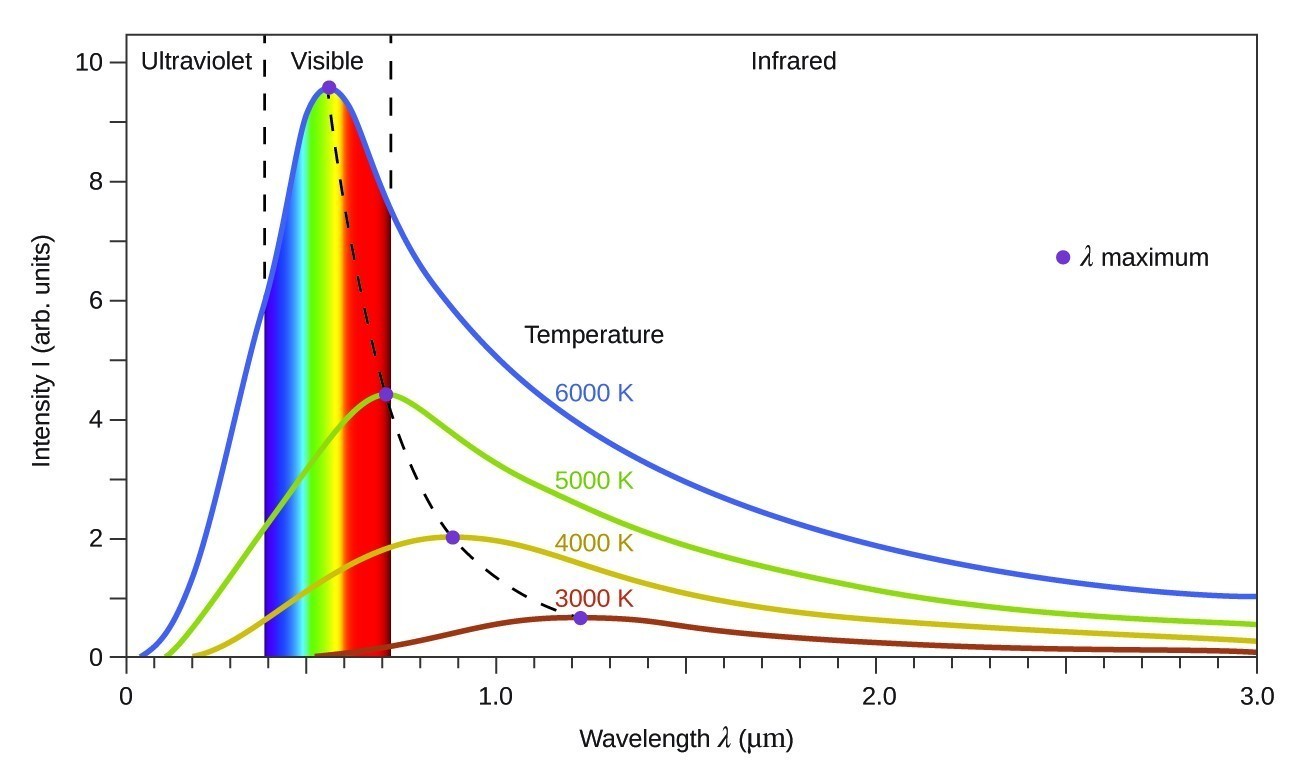
Green is in the center of the visible spectrum of light (notice the G in the middle of ROYGBIV), so evolution should theoretically optimize for green light absorption. An interesting article on why plants typically reflect that wavelength and absorb the others: https://en.wikipedia.org/wiki/Purple_Earth_hypothesis
Green is the highest energy light emitted by our sun, from any part of the entire light spectrum, which is why green appears in the middle of the visible spectrum. The visible spectrum basically exists because we "grew up" with a sun that blasts that frequency range more than any other part of the light spectrum.
I have to wonder what our planet would look like if the spectrum shifts over time. Would plants also shift their reflected light? Would eyes subtly change across species? Of course, there would probably be larger issues at play around having a survivable environment … but still, fun to ponder.
That comment does not make sense. Do you mean the sun emits it's peak intensity at green (I don't believe that is true either, but at least it would make a physically sensical statement). To clarify why the statement does not make sense, the energy of light is directly proportional to its frequency so saying that green is the highest energy light the sun emits is saying the sun does not emit any light at frequency higher than green, i.e. no blue light no UV... That's obviously not true.
> Do you mean the sun emits it's peak intensity at green (I don't believe that is true either, but at least it would make a physically sensical statement).
Yes, that's what I meant, as I was sloppy with my language, and it's definitely true.
Several reasons,
-Silicon efficiency (QE) peaks in the green
-Green spectral response curve is close to the luminance curve humans see, like you said.
-Twice the pixels to increase the effective resolution in the green/luminance channel, color channels in YUV contribute almost no details.
Why is YUV or other luminance-chrominance color spaces important for a RGB input? Because many processing steps and encoders, work in YUV colorspaces. This wasn't really covered in the article.
Not sure why it would invoke such strong sentiments but if you don’t like the bayer filter, know that some true monochrome cameras don’t use it and make every sensor pixel available to the final image.
For instance, the Leica M series have specific monochrome versions with huge resolutions and better monochrome rendering.
You can also modify some cameras and remove the filter, but the results usually need processing.
A side effect is that the now exposed sensor is more sensitive to both ends of the spectrum.
Not to mention that there are non-Bayer cameras that vary from the Sigma Foveon and Quattro sensors that use stacked sensors to filter out color entirely differently to the Fuji EXR and X-Trans sensors.
I don't think that's correct. It's not "all video" - you can easily encode video without chroma subsampling - and it's not because this is how analog TV worked, but rather for the same reason why analog TV worked this way, which is the fact that it lets you encode significantly less data with barely noticeable quality loss. JPEGs do the same thing.
If the Bayer pattern makes you angry, I imagine it would really piss you off to realize that the whole concept encoding an experienced color by a finite number of component colors is fundamentally species-specific and tied to the details of our specific color sensors.
To truly record an appearance without reference to the sensory system of our species, you would need to encode the full electromagnetic spectrum from each point. Even then, you would still need to decide on a cutoff for the spectrum.
...and hope that nobody ever told you about coherence phenomena.
nta you're replying to, but as someone who doesn't know rust, on first glance it seems like it's littered with too many special symbols and very verbose. as i understand it this is required because of the very granular low level control rust offers
maybe unreadable is too strong of a word, but there is a valid point of it looking unapproachable to someone new
I think the main issue people who don't like the syntax have with it is that it's dense. We can imagine a much less dense syntax that preserves the same semantics, but IMO it'd be far worse.
Using matklad's first example from his article on how the issue is more the semantics[1]
we can imagine a much less symbol-heavy syntax inspired by POSIX shell, FORTH, & ADA:
    generic
        type P is Path containedBy AsRef
    public function read takes type Path named path returns u8 containedBy Vector containedBy Result fromModule io
      function inner takes type reference to Path named path returns u8 containedBy Vector containedBy Result fromModule io
        try
            let mutable file = path open fromModule File
        let mutable bytes = new fromModule Vector
        try
            mutable reference to bytes file.read_to_end
        bytes Ok return
      noitcnuf
      path as_ref inner return
    noitcnuf
and I think we'll all agree that's much less readable even though the only punctuation is `=` and `.`. So "symbol heavy" isn't a root cause of the confusion, it's trivial to make worse syntax with fewer symbols. And I like RPN syntax & FORTH.
> littered with too many special symbols and very verbose
This seems kinda self-contracticting. Special symbols are there to make the syntax terse, not verbose. Perhaps your issue is not with how things are written, but that there's a lot of information for something that seems simpler. In other words a lot of semantic complexity, rather than an issue with syntax.
I think it's also that Rust needs you to be very explicit about things that are very incidental to the intent of your code. In a sense that's true of C, but in C worrying about those things isn't embedded in the syntax, it's in lines of code that are readable (but can also go unwritten or be written wrong). In the GCed languages Rust actually competes with (outside the kernel) — think more like C# or Kotlin, less like Python — you do not have to manage that incidental complexity, which makes Rust look 'janky'.
The comments would improve code quality because it's a way for the LLM to use a scratchpad to perform locally specific reasoning before writing the proceeding code block, which would be more difficult for the LLM to just one shot.
You could write a postprocessing script to strip the comments so you don't have to do it manually.
exactly, people have preferences, i don't get how this turned into white vs dark mode supremacy war with people seething and attacking each other over what should be a boolean config setting
But that's just the USA's software developers in just their first year after graduating. Software devs are 1% of the US job market, the first year after graduation is (66-21=45 years, 1/45 ~= 2%) of a working life, the US is just 4% of the world's population/25% GDP.
For the 1% to matter, there have to be other jobs that LLMs can do as well as a fresh graduate. I don't know, are LLMs like someone the first year out of law school or medical school, or are those schools better than software? Certainly the home robotics' AI are nowhere near ready yet, no plumber, no driver (despite the news about new car AIs), would you trust an Optimus to cut your hair? etc.
For the 2% to matter, depends how seriously you take the projections of improvements. Myself, I do not. Looks like exponential improvements come at exponential costs, and you run out of money to spend for further improvements very quickly.
For the 4% to matter, depends on how fast other economies grow. 4% by population, about 25% by GDP. I believe China is still growing quite fast, likely to continue. Them getting +160% growth, and thus getting 2.6x times the money available to burn on AI tokens, over the next 20 years would be unsurprising.
All in all, I don't think the USA is competent enough at large-scale projects to handle the infrastructure that this kind of AI would need, so I think it's a bubble and will burst before 2030 because of that. China seems to be able to pull off this kind of infrastructure, so may pull ahead after the US does whatever it does.
> For the 1% to matter, there have to be other jobs that LLMs can do as well as a fresh graduate. I don't know, are LLMs like someone the first year out of law school or medical school, or are those schools better than software?
Before looking to medical and law schools, I might look to middle-manager school or salesperson school or bookkeeper school.
I don’t know enough to speculate even beyond those crude guesses, but as I thought about this question, I found it interesting to skim the US’ employment-by-detailed-occupation chart:


especially since every developer has a different idea of what a commit should be, with there being no clear right answer
reply