As a third-worlder I welcome these jobs. They lower unemployment, raise average salaries, haggling power, increase the country's foreign currency reserves... Our minimum wage is similar to Kenya's and $1.46/hour after tax is way above the around 80c minimum.
It could make sense from an environmental perspective to produce and consume locally but for a job like this, the only reason to use US nationals would be to create local jobs.
I'd like to see a The Onion story about a third world person worried that the computer games they play are written by young exploited programmers in first world countries
Edit: I asked ChatGPT to write it for me:
Write me a story in the style of The Onion about a third world kid who worries the he is exploiting the young programmers in first world countries who make the games he plays
Headline:
Third World Child Struggles with Guilt over Exploiting First World Game Developers
Story:
In a small village in a developing country, a young boy named Ahmed sat huddled over his tablet, playing the latest mobile game. As he tapped away at the virtual farm, building and expanding his virtual empire, a feeling of guilt began to gnaw at him.
Ahmed couldn't shake the feeling that the game he was enjoying so much was built on the backs of exploited programmers in first world countries. He knew that the developers of the game were likely working long hours for low pay, all so that he, a third world child, could have a few moments of entertainment.
As the guilt grew stronger, Ahmed tried to put the game down, but found himself unable to resist its allure. He knew that he was complicit in the exploitation of his fellow human beings, but he couldn't bring himself to stop playing.
"I know it's wrong, but I just can't help it," Ahmed said, tears streaming down his face. "I wish there was a way to enjoy the game without feeling guilty."
As the sun set over Ahmed's village, the young boy made a silent vow to do whatever it takes to make sure that the game developers are treated fairly and compensated for their hard work. He knew it wouldn't be easy, but he was determined to make a difference, even if it meant sacrificing his own enjoyment of the game."
Ahmed's story is a reminder that in today's globalized world, the actions of one person can have a ripple effect that extends far beyond their immediate surroundings. While it may be easy to enjoy the latest mobile game or app, it's important to remember that behind every pixel is a team of hardworking individuals who deserve fair treatment and compensation for their labor.
Hell yeah even I would gladly take such a job. 120 rupees an hour is a good deal in such tough times where it's almost impossible to find a work from home job that isn't an outright scam. Last week I sat for 4 hours solving a crazy competitive programming question just to get an interview call. It's rough out there. If Anybody knows where to apply for these data labelling jobs please tell me.
I'm building something right now that is a reverse bidding platform for image acquisition and labeling (company makes a solicitation, workers bid) where you get paid per accepted image and label. It will open to US labor first and might take up to a year to expand to India (assuming you're there).
If you want to be an early India user (paid) put an email in your bio and I'll get in touch. If you can program though data labeling might not be the best use of your time.
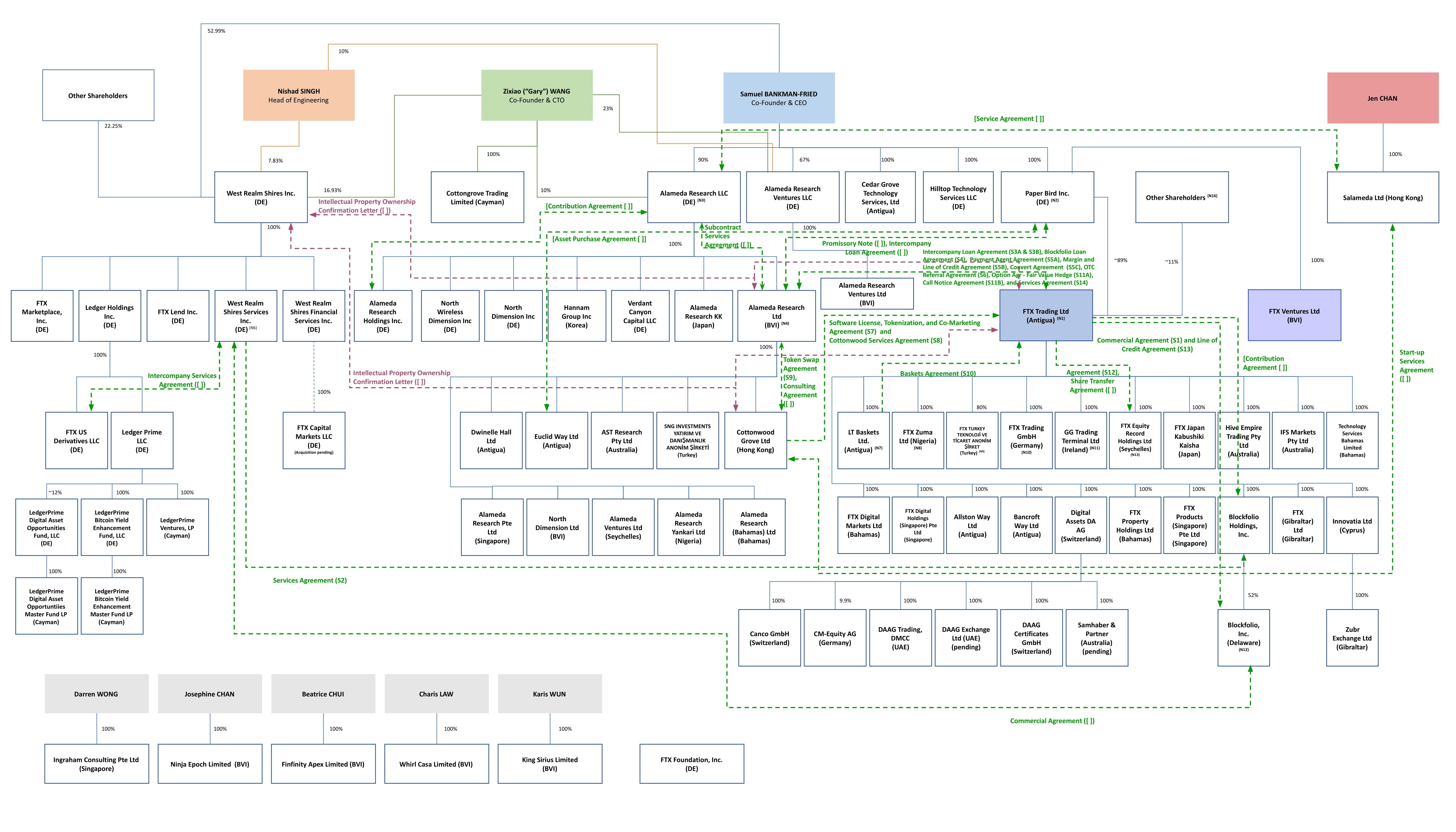
SBF said "We don't invest client assets (even in treasuries)". [0]
He then says the purpose of the transaction with Binance is to "clear out the liquidity crunches". [1]
How could there be a liquidity crunch if assets are not invested? You can't do a bank run on an entity that doesn't function as a bank and doesn't invest clients assets... Something is shifty.
12:38 PM · Nov 7, 2022 2) FTX has enough to cover all client holdings. [0]
4:03 PM · Nov 8, 2022 2) Our teams are working on clearing out the withdrawal backlog as is. This will clear out liquidity crunches; all assets will be covered 1:1. This is one of the main reasons we’ve asked Binance to come in. [1]
has enough to cover all client holdings ---> not enough to cover all client holding in 24 hours. Either they lost a billion or so dollars of client segregated funds in a day down the back of the sofa or it was a lie the whole time.
As other people said, usually a lot of assets are illiquid in 24 hours. You can say I have money to buy this house, but if I ask you for the money the next 24 hours, most people will say they need more time to liquidate.
It is actually irresponsible to the users (risk management wise) to be keeping all that cash in hand 24/7. The easiest bad case example: are you keeping all your savings under your mattress?
Edit/to commenters below:
I understand there are emotions, but that's simply how things work. As other fellow commenters noted, banks do not keep or even promise they do keep your money($) under their "mattress."
Say you deposited in EUR. The exchange and everyone borrows in USD, so your EUR become USD -- no way out of it. EUR goes down, and then there is a bank run. Even if as the bank were irresponsible and kept 100% liquid, they can not serve everyone 1:1 in 24h. Nobody can give you that guarantee, besides your local grocery store. We are thinking these things at the wrong scale.
We are not trying to shift blame away from FTX -- already the whole relationship was sketchy. But claims about keeping 100% USD with a 24h cashout in a worldwide scale is not something on the table right now. I get worried when people feel comfortable believing those statements.
Short dated government bonds would be the safest. But tweet 0 he litterally says they dont do that, they keep the cash under the mattress and you can have it if you stop by. People stopped by and there was no cash under the mattress...
> It is actually irresponsible to the users (risk management wise) to be keeping all that cash in hand 24/7. The easiest bad case example: are you keeping all your savings under your mattress?
"We never block withdrawls" is the new "We don't crash ever" as seen in the Facebook movie.
If you are in the crypto exchange business you gotta do both actually. Don't crash the website and don't suspend withdrawls ever.
My read of the situation: SBF's comments were about assets (balance sheet) rather than FTX's liquidity. I believe SBF was saying (paraphrasing) "Our balance sheet is fine; FTX doesn't invest customer assets; we're processing withdrawals as fast as possible." That's different than saying "we have 100% liquidity."
Banks make similar statements all the time -- they require regular audits of assets (stress tests) and maintain some minimum levels of liquidity.
In the Glass-Steagall sense, they probably shouldn't. Mixing commercial banking and investment banking was illegal from 1933-1999, and it is (arguably) one of the underlying factors in the 2008 financial crisis.
Note: There's a difference between being a custodian of customers' investments (brokerage / commercial banking) versus proactively investing customer deposits (investment banking).
Going to need a _huge_ source on that claim. Investing customer funds is the primary way banks make their money, and has been that way essentially since the invention of banking.
If you take other people’s money by promising you will be keeping their money under your mattress, yes, you should keep all that money under the mattress or you’ll be behind bars for fraud.
how many of these y'all need before you learn: all crypto is a scam. It never was anything else, it never will be anything else because it can not be anything else.
There's an awful lot of fancy piled on the simple fact that all crypto"currencies" are negative sum games. The only disagreement is whether this is an entirely new type of scam , a "Nakamoto Scheme" or the difference between these and the classic Ponzi are irrelevant like the difference between a CRT and a HDTV and then we are looking at a Ponzi.
Distributed ledgers are not a scam, and our true best hope for anti-corruption.
I would like every elected official to have all their income and spending listed on a public ledger.
True accountability of representatives to those they purport to represent will solve so many problems, both in terms of the types of people incentivized to become public servants, and also in terms of public understanding of spending and waste.
All this "crypto" is intellectual warm-up for what is to come, I'd highly suggest looking at rollups (what I would describe as ledgers within ledgers) which are delving into the true possibilities of next-to-zero cost of immutable transaction records.
>Distributed ledgers are not a scam, and our true best hope for anti-corruption.
They are not a scam, but they are almost completely useless
>I would like every elected official to have all their income and spending listed on a public ledger.
A public ledger is not necessarily a decentralised ledger. This could be accomplished by any bank account controlled by a US politician to send the payments made to a US goverment controlled webapp that's then publicly accessible (by FOI request, if necessary). No blockchain, no decentralised woo needed. What you have stated is a POLTICIAL problem, and those require POLITICAL solutions. No new or speculative technology, of any sort, is needed to accomplish the problem statement.
Because it is currency itself that you measure everything else against. What my sentence meant is that without transaction fees it would be a zero sum game -- ie if you undid all crypto-money transactions then nothing is left -- but with transaction fees their sum is a negative number. But you need to measure this in something.
Note how stocks are decidedly not like this because if you undid all stock-money transactions the sum would be positive because of buybacks and dividends.
> Because it is currency itself that you measure everything else against.
So what? I cannot see the significance of that. There are many possible measures of value.
> if you undid all transactions then nothing is left -- but with transaction fees their sum is a negative number. But you need to measure this in something.
Yes? So what's the important difference between cryptocurrencies and traditional currencies?
Giving them the benefit of doubt, this is not a contradiction. The statement means that they have enough illiquid assets to cover the withdrawal that they are working on converting into liquidity.
FTX/Alameda holds tons of illiquid FTT tokens that they cannot sell and which Binance was dumping. Thus, they might have not technically lied. But they were still wrong from the accounting perspective - they surely understood that FTT token cannot be used to cover gaps in large scale.
It was the question that matters "how fast you can process user withdrawals and with what risk"
Sam owns 8% of Robin Hood that is worth around ~$1B - he could sell that and cover some of the gap. But what we do not know yet is the size of the gap in time and space. FTX had $6B withdrawals pending on Tuesday.
> Sam owns 8% of Robin Hood that is worth around ~$1B - he could sell that and cover some of the gap.
Not knowing too much about this space have you ever seen anything like this happen? A CEO using their personal wealth to cover their customers funds seems unlikely.
That can't happen directly (I think).
Mingling breaks the limited liability mantle.
He will have to buy equity or other product from FTX to infuse with cash. And if it is going bankrupt he has to stop running it to preserve the liability "shield" -- details of course depend on the country/state of organization/incorporation. I know nothing about the Bahamas.
Example: Elon for instance infused his own cash into Tesla, when it was going bankrupt. But he practically bought equity to my understanding.
Covering customer accounts is different, in a financial firm. I do not know what tools the Bahamas give to FTX. This is all uncharted territory. (Also there is legal exposure to other countries.)
This isn’t a thing, limited liability (which is the fundamental principle that distinguishes corporations from partnerships) prevents this. The only way would be if SBF was charged with defrauding FTX
But they're meant to store the customer assets in a cold wallet. They're not meant to invest them in illiquid assets that would need to be liquidated to give people their money. If it's not a contradiction, it's an intentionally misleading statement to avoid admitting they let Alameda Research invest the money when the entities are supposed to be completely separated.
In that scenario they could point to some of the wallets to help calm the fears the money isn't available. Or they could approach a number of different lenders who would be comfortable lending at high interest rates if the money is there but slow to access. They only sell if we're in the non-charitable case.
I thought FTX Alemeda (the trading side) invested into their own token, which is tanking thus causing problems.
Alemeda has like $14b assets and $8b in liabilities. But of that $14b, $5b are in their own token (FTT) which is kinda?? worth nothing at this very moment. So now the assets and liabilities are more equally matched, but less margin for shifting values of tokens.
I don’t know, but the derivative of their assets looks scary the last 24hr.
Illiquid just means that you can't cash it in quickly.
Cash is 100% liquid while a house is illiquid you might have millions US$ parked there but only if you manage to sell it, then you convert it into liquid cash.
Liquidity is a measure of how easy it'd be to trade a thing for another thing you want.
Agreed, but in this case these tokens have suddenly become 'illiquid' because they have just become worthless. It seems that here the term 'illiquid' is being used as a euphemism.
But cold storage and locked funds lead to you taking out a loan or just saying "sorry, it's going to be a while, our funds are locked". You know what you don't do if your funds are illiquid? Sell to your competitor over night.
And that’s why banks are heavily regulated and get protections.
If FTX wanted protections against a bank run they could also choose to be regulated as a bank.
Cryptocons want us to both treat crypto scams as banks and not banks depending on what suits them in the moment, just like they want us to treat cryptocurrencies as assets or currencies based on what suits their argument in the moment.
All to hide the fact that it’s a mediocre technology which has been surpassed by many other technologies for most of its possible uses and is nothing more than a Ponzi scheme designed to enrich its original backers.
How many people do you think have more than $250k in the bank? How many people do you think have more than $250k in FTX? It sounds like you're saying it's not good enough because 0.1% of people won't get the full benefit.
Remember that blockchain transactions are slow and FTX has over 1m users. Even in the most positive of scenarios, I would not be surprised if it took days to clear the backlog of withdrawal requests.
Not sure what people are talking about here, bitcoin mempool doesn't even have a notably large backlog at the moment and fees are currently low/normal: https://mempool.space/
Exchange withdrawals are one to many for btc helping keep size down and most other chains shouldn't have any issues. Don't see how FTX or really any exchange should be bottlenecked by blockchains here.
Indeed, all Bitcoin blocks today are full. There is no physical possibility to withdraw all those funds. That's why Binance must implement Lightning deposits/withdrawals, like Kraken did.
Slow blockchain transactions and it would be shocking if they didn't stake user assets. Most (all?) proof of stake chains have lock up periods. Atom and other Cosmos chains are usually 21 days.
He admits they were illiquid and needed Binance to cover withdrawals 1:1.
>Our teams are working on clearing out the withdrawal backlog as is. This will clear out liquidity crunches; all assets will be covered 1:1. This is one of the main reasons we’ve asked Binance to come in. It may take a bit to settle etc.
> SBF said "We don't invest client assets (even in treasuries)"
We know that was false when it was said, given the Alameda balance sheet. (FTX invested in Alameda which made risky loans to crypto folks and bought FTT, which FTX minted [1].)
I know the SEC is struggling to stay on top of the crypto market, but it certainly seems like SBF should be in an absolutely huge amount of legal jeopardy right now. And if he isn't, then the crypto market is beyond saving and deserves to die.
> SEC...it certainly seems like SBF should be in an absolutely huge amount of legal jeopardy right now
FTX U.S. is fine. To the degree Americans are hurt, it's investors in the international entity. If anyone deserves regulatory scrutiny, it's the institutional investors betting fiduciary assets on crypto.
FTX issued FTT to Alameda. We have no idea what Alameda gave them as collateral, but it's clear it wasn't cash. Lending is a form of investing. (I don't get what unlocked versus collateral FTX on Alameda's balance sheet means.)
How can you say it's clear it wasn't cash? What's the source?
Also, FTX minted FTT out of nothing - effective cost zero - so no matter what they received in exchange, even if they had received nothing that is not an investment unless they received Alameda equity. I agree that lending is a form of investment but nothing says that they received a loan in exchange.
You could still be right, but it's all speculation :)
This a.m. before securing an emergency lifeline from rival Binance, FTX was canvassing deep pockets in Silicon Valley and Wall St — think billionaires, not institutions — ppl familiar told me & @lmatsakis @SaacksAttack. Two of the ppl he was seeking more than $1bn.
There's nothing decentralized about FTX or Binance. They operate in an opaque manner like any traditional business, transparency comes from forced audits
& regulation.
Decentralized finance is built on chain where all assets are publicly auditable at all times.
EDIT: parent comment talked about decentralized finance, then edited to remove mentions of defi
>literally centralized companies as "not-decentralized"
So defi is only 100% decentralized everything, even if the financial tools are decentralized? That feels like an appeal to purity if ever there were one.
Ok, my previous comment is a bit unclear about what I mean. In my opinion if there is a group of people, other than the participants themselves, who can control the operation of the financial service then it is not decentralized. There can absolutely be an organization that builds the service, but participants should not be forced to adopt updates and should be free to transfer their entire balance to any other service at any time.
I realize I’m on the fringe a bit with this but I think it’s not because I have an extreme idea of what defi is, it’s that there have been so many grifters in the last 5 or so years that have used the buzzword “defi” to sell their shitty reincarnation of long-outlawed shady centralized financial schemes as something revolutionary that it’s shifted the public perception of the term. I’d even agree with you that it’s an appeal to purity.
Note that FTX.us is regulated under some US licenses and is unaffected. What was blown up was FTX.com operation that is licensed and regulated in Bahamas.
The FDIC is just a ruse to let "useful idiots" think that everything is okay. In reality, the FDIC charges banks 90% less than the actuarial value of the risk they take on, and banks make wildly risky loans/bets all the time, knowing it's "heads I win, tails the taxpayer loses."
Insofar as you can call US Finance any better than crypto, it's because of socialized losses. IMO, bank failures are a much more appropriate solution.
I can tell you a bank like say JP Morgan Chase, who is charged 5bp a year (i.e. 5 cents for every $100 dollars), has a much higher chance of catastrophic failure than 1 in 2000. Many banks just like them fail every few decades, and it was generous of me to only say they're undercharged by 90% (i.e. 1 in 200 odds), when the reality is probably more within a range like 1 in 20 to 1 in 100.
The insurer is the United States government. They take losses on things all the time. It's called "socialized losses." I referred to it before, and it sounds like you don't even understand these finance 101 (or even basic high school civics) topics, so why are you insulting anyone?
The insurer is a corporation with its own financial statements, so it's pretty easy to see if it's operating at a loss (and thus subsidising the banking industry) or at a profit (not subsidising it). I guess you didn't know that either.
In case anyone is curious, here is what some of my research has found:
The empirical rate of bank failure in the last couple decades has been slightly over 1 in 250 banks per year (that is, ~0.4%/bank/year, or "40 basis points"). This is from these two sources: https://www.fdic.gov/bank/historical/bank/ says that on average 27.3 banks per year have failed, while https://banks.data.fdic.gov/explore/historical?displayFields... says that there have been ~6500 banks covered. (I think that the probability of a massive bank failure is in fact higher than the empirical rate, due to the tail risk of catastrophic failures.)
I have not been able to find what rates JP Morgan Chase pays for their deposit insurance, but I think this page https://www.fdic.gov/deposit/insurance/historical.html suggests that the rate is between 1.5 and 40 basis points per year. Some other sources I've found do suggest that the average rate is around 5 bps/year.
Already we see that the empirical failure rate is higher than the assessment rate. (Although note that the probability was not weighted by dollars, whereas the rate is.) This is perhaps surprising, because the FDIC claims that "The FDIC receives no Congressional appropriations - it is funded by premiums that banks and savings associations pay for deposit insurance coverage." https://www.fdic.gov/about/what-we-do/index.html Perhaps this is part of the point of this comment I am replying to.
As a result, it's plausible to predict: (a) the deposit insurance fund might go negative again (ie, the insurance rate is incorrect), (b) the deposit insurance fund will definitely go negative in a situation like the S&L crisis or the 2008 financial crisis (thus requiring tricks like the borrowing mentioned above), and (c) in the event of a more catastrophic failure, the insurance fund will go so far negative that it might be explicitly bailed out by the broader federal government.
> Why was there a liquidity crunch in the first place? A crypto exchange is a weird sort of business, in many ways more like a brokerage than a traditional exchange.
> A lot of FTX’s business is in perpetual futures, a leveraged product, sometimes levered 20 to 1. If you are an exchange and you are in this sort of business, you will need to come up with the extra $100 to lend to your customer. Presumably that doesn’t come from your equity: You are doing some sort of borrowing, perhaps from other customers, [2] perhaps from outside financing sources, perhaps from your affiliated hedge fund, etc. You will have some customers who owe you money, and others whom you owe money. You will be like a bank. If everyone to whom you owe money demands their money back at once, you will need to get the money back from the ones who owe you money, which might be hard. (You might not have a contractual right to demand the money back right away, or it might be rude and bad for business, or you might have to liquidate them to get the money back and that would blow up the value of your collateral.) In broad strokes this is a reasonable description of what happened to Bear Stearns, a brokerage that financed its customers’ positions.
[2] (footnote in original article): Effectively a perpetual future involves you borrowing from and lending to your customer in offsetting ways: If the price goes up, you owe money to the long and the short owes money to you. If the short doesn’t pay you, then you still owe money to the long.
> Cash and cash equivalents refers to the line item on the balance sheet that reports the value of a company's assets that are cash or can be converted into cash immediately.
> Cash equivalents include bank accounts and marketable securities such as commercial paper and short-term government bonds.
> Cash equivalents should have maturities of three months or less.
Don't know specifics on FTX/Alameda but this is probably normal to a degree for banks/brokers or just any regular business?
Well, if the customers are holding FTT and they're trying to get rid of their FTT, that could cause the liquidity crisis. The crisis isn't with the customer assets, it's with their FTT side of the business.
They lied to everyone of course. Never trust these corporations. They're sitting on huge piles of consumer deposits, of course they're gonna leverage that money. They cannot resist the temptation.
It's an obvious joke a 3 year old kid would understand, if that kid didn't value signal by implying someone was an antisemite because of an unrelated joke that is.
I get a couple of gallons of olive oil in a small village directly from the press in November each year. It's not filtered so it has a lot of particles in suspension and it goes bad faster, maybe after a year or so. But it tastes nothing like supermarket extra-virgin olive oil, the taste is so much more concentrated.
Olive oil has a pretty short shelf life. The best way to get the good stuff is to make sure you buy:
- the latest harvest (they're usually harvested in early fall)
- non-filtered
- stored in a dark bottle, somewhere cool (light oxidizes it)
- single origin (if it's not, then they're likely mixing old rancid and new oils)
A friend once sent me a gallon from his family's harvest. Nectar of the gods.
--
California Olive Ranch is available in (my) local groceries. They helpfully imprint the harvest date on the label. Any thing on the shelf is probably over a year old. Meh.
I've pre-ordered their harvest reserve (autumn). Two weeks from tree to mouth. Very good.
The fact that they closed his account frankly sounds like the outcome of an AML review.
Banks are deputized by the government to check for all sorts of suspicious transaction. They get fined when their procedures are not sufficiently stringent. They're not allowed to tip you as to why your account is being suspended or closed.
At any moment, any bank can lock your account for months without informing you of anything. It's unfortunately the power we decided to give them to prevent money laundering.
Yeah, thought the same. The AML team on a bank cannot disclose that the account is being investigated by the regulator, nor give any information to the client about it.
Of course, if the bank wished to do so, they could give information or unblock the funds. But the fines that the regulator can impose to the bank are disproportionate (hundreds of thousands, per individual case) to "convince" the bank to comply.
Thus, is not "the bank" who is doing that to you, it's the regulator, and the agreement between the bank and them. And this "agreement" is a requirement in order for the regulator to give a banking license, so...
Let's be clear, the bank is not gaining anything out of this, quite the opposite: they are at risk of bad reputation, having an angry customer at their offices or calling daily, etc...
It's a very frustrating situation, tho. I do understand that.
> No person shall ... be deprived of life, liberty, or property, without due process of law ...nor shall any State deprive any person of life, liberty, or property, without due process of law.
I know I'm at risk of upsetting the "private companies don't have to obey the constitution" police, but if the government is essentially acting through banks to deprive you of life, liberty or property then maybe the bank should be providing some sort of due process to you.
To everyone saying this will not work because it's more expensive... jets were more expensive than turboprops. And even though the former use more fuel, we prefer them.
The costs of flying an airplane isn't proportional to its fuel usage. The faster an aircraft is, the more flights it can perform per day.
The carbon emissions impact of flying a gas-guzzling supersonic aircraft aren't evident either. Of course, more gas is used per trip but fewer planes need to be manufactured. Since there is no supersonic business jet, it could also make sense for some people who used to fly private for the speed and convenience to reconsider as they may get faster to their destination by flying supersonic.
> The costs of flying an airplane isn't proportional to its fuel usage. The faster an aircraft is, the more flights it can perform per day.
It is indeed not proportional, but not in the way you are thinking. Drag (and ~fuel consumption) scales with velocity squared, so a plane flying twice at fast (and neglecting any time at the airport, which would make the argument even worse) would use four times as much fuel. I.e., even if twice the amount of passengers would be served, it would be done for four times the fuel consumption and four times the carbon emissions (or twice the fuel consumption per trip).
That doesn't have much to do with the point I'm making. I'm saying if you double fuel usage, you don't double the cost of using the plane.
As cost of fuel is only a percentage of the price of the ticket, it's pretty obvious that there is a threshold as a percentage of total ticket cost under which spending 4x more in fuel to fly say 1.5x more passengers (because the airplane isn't flying 24/7) makes business sense.
That is obviously one of the reasons why they are starting with business class tickets because, fuel consists of a smaller percentage of ticket cost.
Yeah, there is an epsilon on top of fuel. But maybe you missed the obvious fact that all aircraft are getting slower rather than faster over the last decades, so that threshold is in the opposite direction of what you're proposing.
And there is zero logic behind your second obviousm, as your premise is already wrong. The reason they start with business class is because you can charge more per seat. Seems pretty obvious.
Fuel cost, depending on routes, number of business seats, seat occupancy is at about 25% of total costs [0]. 75% is what you call epsilon? Aircraft speed as barely budged since we transitioned from turboprop to jets. That's something you could call epsilon.
You're right that they start with business seats because they cost more. Business class seats cost 3-4x time economy while occupying less than 2x the space so the cost of fuel as a percentage of the ticket price is lower. It might not be obvious to you but I'm happy to explain it :)
> 2x the space so the cost of fuel as a percentage of the ticket price is lower. It might not be obvious to you but I'm happy to explain it :)
See, your claim is that fuel cost is the sole reason they do this. I'd argue it's obvious they'd do that even if all fuel was free.
> Aircraft speed as barely budged since we transitioned from turboprop to jets.
Ah, it's again one of those nonlinearities you seem to have trouble with. See, the cost increase is, again, not proportional to speed. On top of the quadratic scaling, you have a very nonlinear and steep (not-proportional!) increase in drag coefficient. So, when you look up that what I say is true, but you want to weasel your way out by saying 'it's not by much', you're missing that the impact on drag (and fuel) is substantial.
And fuel cost is typically more than double the capital cost in an airline's budget at subsonic speeds
And the proposed aircraft are less than half the size of the aircraft they'd most likely replace, so actually sell fewer tickets on double the flight numbers
> a plane flying twice at fast would use four times as much fuel
Not that this only applies if they fly at the same altitude. If you fly higher you can avoid that. That of course causes other problems but it is a relevant factor.
The fuel burned by an aircraft is almost certainly the dominant portion of its lifecycle carbon emissions. I expect the carbon emissions due to its manufacture are negligible by comparison. Have you seen a source either way?
This makes so little sense to me. I don't know how much information is made public by the Dutch justice system but I would really like to see an affidavit or something like it to understand what specific charges are levied against that developer.
Once the trial starts, certainly journalists should be able to read all of it, unless the court decides some of it is too sensitive. The verdict will be published at rechtspraak.nl.
> On sustainable energy sources: I, as many other germans, receive all of my electricity from purely renewable energy sources for more than ten years now. 24/7.
How can you receive energy purely from renewable energy sources when the wind doesn't blow and the sun doesn't shine? Germany doesn't have any significant capacity for electricity storage. It's such a bold statement but it seems physically impossible.