This presentation misses a more fundamental point. It's not about the notation at all, it's about understanding that EXPT, SQRT and LOG are functions with a particular relationship to each other. That relationship can be expressed using a two-dimensional spatial notation, but that doesn't really help you understand the concept at all because there are a lot of different relationships that are naturally described by putting three things in a triangle.
What you really want students to understand is that expt, log, and nth-root are functions that are related in the following way:
  expt(b, n) = x
  log-x-base-b(x, b) = n
  nth-root(x, n) = b
It's really that simple. No fancy notation needed. In fact, fancy notation always gets in the way of understanding because people naturally think in words, not in spatial relationships. Mathematical notation was invented not because it aids understanding, but because when you're writing math with pen and ink it's faster and uses less paper to use Greek letters and spatial relationships than full words. But when you're on a computer, it's easier to write out the names of functions, and that is actually a better impedance match to people's natural mental processes, which involve language.
[UPDATE] I would like to revise this: not everyone thinks in language. But everyone communicates in language. For communicating mathematical concepts, language is the best tool we have. There's a reason that the symbology in math papers is invariably wrapped in natural language. It's the same reason that the video has a narration. It wouldn't make any sense otherwise.
Nope... The triangle notation is actually awesome because it does NOT put all the focus on the fact that EXP, SQRT an LOG are functions, and it actually promotes thinking at a higher level than first order functions: it's about an expression than can generate multiple functions or a higher order function.
Let me explain:
Let we define
EX(b, e, x) := { pow(b, e) == x }
And then the notational rule saying that "substitution a parameter for a star/asterix in an expression is defined as the value obtained by solving that expression for the substituted parameter", so now we have:
    EX(b, e, *) == pow(b, e)
    EX(a, *, b) == log(a, b)
    EX(*, e, x) == root(e, x) # or sqrt(x) if e == 2
And here you go: "triangles notation" in "words" :)
And from this on you can go much easier to much deeper questions than the ones you get from staring at the graphs of 3 different functions that don't seem to relate much to each other.
Classic mathematical notation is great for doing very basic physics and engineering... but horrible for anything deeper. Only thing is that people doing anything deeper are smart enough to be able to tolerate a few horrible notations and probably even like them because they scare the "peasants" away :)
But we should be prioritising what's best for education, not for the macho-ism of uber-physicists or uber-mathematicians, so go triangles go!
Yup. Frequently, in mathematics, we have some ternary relation r(a, b, c) such that fixing values for any two arguments uniquely determines a corresponding value for the third. This encapsulates not only the relationship between a^b = c, log_a(c) = b, and b-th root of c = a, but also the relationship between a + b = c, c - a = b, and c - b = a, the relationship between a * b = c, c/a = b, and c/b = a (as well as the non-commutative version of this where we have separate notions of left- and right-division), and myriad other such ternary relations.
In all of these cases, a triangular notation is apt for expressing and emphasizing the structure that any two arguments fix the third.
That having been said, that is all the triangular notation does; it does not help with any further structure that may be around for that particular relation (e.g., rules like a^(b * c) = (a^b)^c, which the triangular notation does little to simplify, though perhaps further notational choices could make these also immediate and clear). Still, when that ternary structure is what one cares to emphasize (and why shouldn't it often be of interest?), one should go ahead and emphasize it.
this readily shows that it's not about triangles, but some sort of binary tree, because / or * do not operate on the same domain. One is a special case of the other, or an extension.
Huh? I'm having a little bit of difficulty following you.
The triangle just captures that there are three quantities involved (with any two determining the third). I don't know what you mean with references to bifurcations and binary trees and so on.
If the mention of different domains is about the fact that you can't divide by zero, sure; in the same way, we find problems taking the logarithm of zero, or raising zero to negative powers, with uniquely pinning down roots of negative numbers, etc. For now, I am glossing over these things; let us suppose, for example, that in the ternary relation a * b = c, I intend all quantities to be drawn from some multiplicative group (thus, nonzero, and thus, with any two determining the third).
I didn't watch the video for several reasons, so if I was off, I'm sorry. From the comments I couldn't deduce what's actually wrong with the notation, or which notation for that matter. Yes, bad HN ettiquette is to respond anyway.
> If the mention of different domains is about the fact that you can't divide by zero
> I intend all quantities to be drawn from some multiplicative group
That's it. Still, I was trying to draw some hierarchical network, where log and root are both inverses of exp.
In the same way, multiplication is a special case of addition. Although It might not have to be, if it's just my preference to look at it that way. It reminds me of the diamond dependency problem (https://en.wikipedia.org/wiki/Diamond_problem#The_diamond_pr...).
Multiplicative groups to me look like a special case, too. The arrow diagrams look like category theory. I on the other hand just talk from intuition and my experience with the elementary functions, the order I learned in school.
EDIT: Subtraction and division as well aren't associative, so do they really form a subgroup? Another problem besides needlessly complicated notation is ambiguous notation. Wikipedia lists two alternatives for multiplicative groups. One is a special case of a ring which does have a null element. Now, in c/b=a, c can be the null element, but then a would be too, so c/a=b is still undefined. I'd guess that holds for the non-commutative version as well.
If people around here are interested in this idea, I would just like to point out that this is basically what embedding miniKanren (a super-simple logic programming DSL) in your programming language lets you do. You write "give me all q such that 2^q = 8 with an expression like `find q. PowEq(2, q, 8)." Also since the asterisk is sort of "loaded" it may be more helpful notation-wise to use an underscore, PowEq(2, _, 8) standing for the above.
The most obvious problem here is that you have to think about the composability of relations the way you do with functions, because PowEq(3, PowEq(2, _, 8), _) makes sense (find me the number that you get when you raise 3 to the [whatever number you'd have to raise 2 to, to get 8]), but the very similar-looking PowEq(3, PowEq(2, 3, 8), _) is actually a type error, the function is being called on a statement rather than a value.
I can't quite figure out which side you're arguing here. On the one hand you say that the triangle notation is awesome, but then you go on to use linear strings of symbols in exactly the manner that I was advocating. The whole point of the triangle notation (and all spatial notations in math -- subscripts, superscripts, the various arguments to sums, products, and integrals, etc) is that it's two-dimensional. That makes it really hard to render into ascii, which is one of the many reasons I think it's a bad idea.
I am certainly not arguing against teaching higher level concepts.
> The whole point of the triangle notation is that it's two-dimensional.
Nope. I'm arguing that what the OP calls "triangle notation" is just a particular representation of a cool idea. The idea actually happens to be independent of how you happen to represent it. Yes, it lends itself well to 2D scribling. but the real reason I find it's cool, and useful to more than schoolchildren is that it's a much deeper idea in disguise. I think the author doesn't even realize how awesome is the idea he's promoting and why...
P.S. And about sides: generally, when I enter a 2-sided argument, I pretend to support one but argue for neither or for both at the same time, and from the argument I try to pull out a 3rd side (yup, I love triangles) that no one has yes seen, offering a fresh perspective. You can never have enough opposing points of view :)
We may be in violent agreement here. I agree that the idea being communicated is a cool idea. I just don't think the triangle notation actually contributes much to the effective communication of that idea.
> That makes it really hard to render into ascii, which is one of the many reasons I think it's a bad idea.
...this is one idea that I really dislike. We have touchscreens everywhere, soon 3D glasses everywhere, a whole plethora of input devices, and at some point we'll have usable direct electric bran-computer-interfaces. Why limit to ASCII?! Heck, even 3D is not enough in my mind - you can "easily" imagine RGB color displayed on 3D objects as a secondary attached 3D space, hence boom, you can "easily" (probably not for most, but with enough training doable) visualize 4 (3 space + 1 time) + 3 (r, g, b) = 7 dimensions using sight alone!
Heck even programming languages should move away from 1.5D text. I can't wait to see the first really cool visual syntaxes. I imagine that the Perl 6 equivalent of a visual 2D/3D programming language combined with a more useful input device than a keyboard would look awe inspiring!
Imagine how cool would it be to play with 7D mathematical notations and to what cool insights they will lead :) (though for teaching and publication 2D is probably enough for math as the cool thing about math is still that you can do it with just pen and paper or in you head while using the 3D-processing part of your mind do things like walk on the street...)
Because it's precise and unambiguous, like math should be but often isn't. And it's easy to manipulate with code, so that makes it easy to enlist the help of computers to help with the work.
Whatever the relation between them, the fact is the EXP, LOG and ROOT really are distinct functions with their own personalities. EXP grows fast, and is single-valued. LOG and ROOT grow slowly and are multi-valued, but in different ways.
Triangles and the star notation above are useful in cases where the ternary relation is very salient. And that might include teaching, but they are only part of the picture.
> In theoretical physics, Feynman diagrams are pictorial representations of the mathematical expressions describing the behavior of subatomic particles. [...] The interaction of sub-atomic particles can be complex and difficult to understand intuitively. Feynman diagrams give a simple visualization of what would otherwise be a rather arcane and abstract formula. As David Kaiser writes, "since the middle of the 20th century, theoretical physicists have increasingly turned to this tool to help them undertake critical calculations", and as such "Feynman diagrams have revolutionized nearly every aspect of theoretical physics".
This is the first example that came to mind, but there are certainly very many others. Because the idea that written flat text is inherently a global maximum for representing/communicating/working with all concepts is absolutely absurd.
This is immediately self-evident if you've ever tried to teach anything complex to anyone who wasn't already a domain expert in an immediately adjacent area.
> This is immediately self-evident if you've ever tried to teach anything complex to anyone who wasn't already a domain expert in an immediately adjacent area.
I am a practising computational scientist, and I work in an interdisciplinary field. I work with the sort of folks you mentioned above daily.
And while I often do not start with an equation, that does not mean they are not useful. I don't think anyone is suggesting that to a non-specialist they are. Typically, I start with thought experiments or plots. People are often visual learners.
However, that does not mean that mathematical notation is a problem. Mathematics is a language, and like any language one must spend years (or in my case, decades) learning how to 'speak' it. While I would not suggest it is inherently a global maximum, I'm skeptical it is not at least a pretty good local max.
Could this be because as you go, you introduce more dimensions, degrees of freedom into your mental model. To accommodate for this, the brain needs to make room, and time and time again needs to reshuffle to make space for more connections or to eventually collapse them into multiple different models of a lesser degree.
I just read that second order logic can represent all higher order logics. The degree of the logic means the degree of nesting of sets into sets, that are quantified over by the logic expression. If sets of sets of values are all it takes, a two dimensional spatial representation should be enough. So far so good?
The problem with text is that it is largely sequential, i.e. one dimension, left to right.
Diagrams are good for representing and reasoning about physical things, and for mathematical concepts that have straightforward physical models, like numbers. But this is because there's a natural correspondence between these diagrams and the things they represent. There is no natural correspondence between a triangle and logs/exponents/roots beyond that fact that triangles have three sides and three vertices, and the set {log, expt, root} has three members.
> the idea that written flat text is inherently a global maximum
It's quite the opposite, text is a global minimum. Sequential text is best suited to represent some first order logic, a recursive enumeration of nouns. Or better yet a zeroth order logic, a simple enumeration of nouns. That is a desirable logic to work in, because it's complete. But we do need second order logic to ... beats me :)
> fancy notation always gets in the way of understanding because people naturally think in words, not in spatial relationships.
I'm pretty sure this is false for me. I think thinking in spacial relationships comes much more naturally to me than words. Words immediately start making my brain hurt. The notation you wrote is incredibly more painful for me to look at and understand than the triangles in the video.
I didn't even know that powers, logs and roots were that related. My math is bad :( I struggled through some of the Khan Academy but I find it really hard to remember all the rules. The triangles really helped me. But maybe the video was overly simplistic? These triangles (visual items) can be placed in the mind palace. I can picture them now and could probably figure out where the log2(x) fits in.
Let me rephrase that: people naturally communicate using language. In your head you may think in symbols and spatial relationships, but if you want to get a concept out of your head and into someone else's head you have to use language. There's a reason that the symbology in mathematical papers is invariably wrapped in natural language.
Mathematics is the study of patterns. Humans have amazing powerful visual and spatial reasoning centers in the brain which can process huge amounts of semi-structured information.
Writing words down instead forces everything through low-bandwidth serialized language processing apparatus instead.
Mathematical notation (and computer code, and music notation, and ...) benefit tremendously from even slightly exploiting spatial reasoning skills. But better is some kind of diagram, interactive simulation, or similar.
The fastest mathematical explanation is direct tutorial, person-to-person, where the amount of symbolic formalism can be reduced to a minimum, and hand gestures, chalk drawings, colorful verbal analogies, etc. can convey most of the message. When limited to pure symbolic formalism in a scholarly paper, mathematics teaching and learning is a much harder slog.
The reason formal mathematics uses symbolic formal language as a canonical way of recording results is that it’s easier to figure out how to verify it step-by-step and make sure that the logic is correct.
* * *
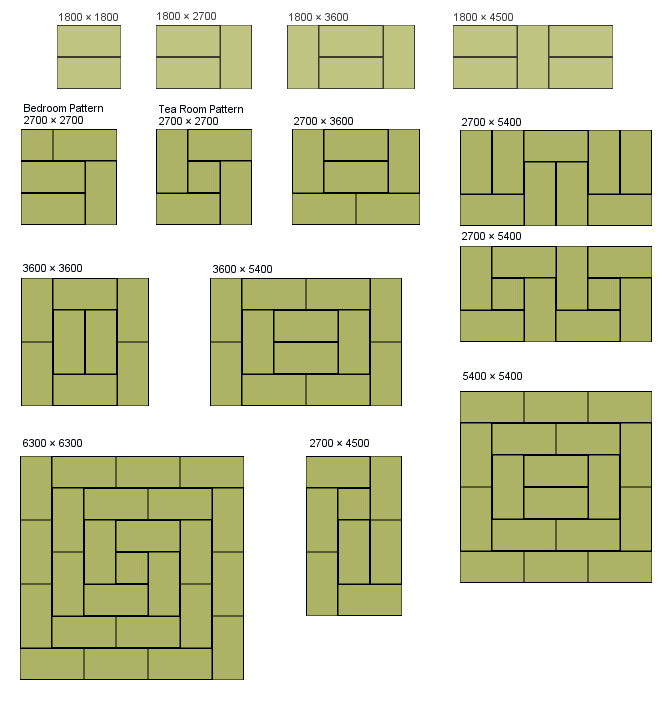
I’ll give you an example, from a paragraph a friend of mine wrote several years ago in a blog diary:
(I posit that you could decipher and understand this paragraph at least an order of magnitude faster if I drew a 30 second napkin sketch.)
> The tea room I went to is an “eight tatami design”, a large square space. Each side is two tatami lengths (four widths, two widths and a length) long. The eight tatami are arranged in the following way: from the entrance—which is in a corner, second forward on the left—two tatami extend into the room to meet the opposite wall on their short sides; the tatami touching the opposite wall is met on its right long side by a third tatami’s short side. This third tatami’s short side in turn meets a fourth tatami’s long side, whose two short sides meet the opposite wall and a fifth tatami’s short side. The fifth tatami’s second short side meets the room’s the fourth corner and its long side meets the sixth tatami’s short side. The sixth tatami’s second short side meets the first tatami’s long side. These six tatami form a square with an square empty middle. The empty middle’s sides’ dimensions are all one tatami length long. The middle, then, is filled by two tatami whose orientation is like that of tatami one, two, four and five—short sides to the opposite wall and the wall with the entrance. I tried out alternative arrangements and I might be wrong but I think that this solution (or a rotation of it) is the only possible tatami arrangement for the room’s dimensions that fulfills the rule “four corners must never converge”. Going in a circle around the room, starting at the door and following the direction in the description there, we can number the outer tatami one through six and the two inner tatami seven (left from the entrance) and eight (right from the entrance).
Comparing a less-than-optimal textual description with an optimsed symbolic or digrammatic description proves little.
It helps to know that tatami are rectangles with length 2x width (something a casual and/or non-Japanese reader might reasonably not know).
What's described is eight tatamis (length 2x their width), arranged in a square. Much of the confusion comes from describing each tatami's relation with its neighbors, rather than the space as a whole, and referencing other tatami rather than the room as a whole.
A simpler description:
A square room, four units per side, filled with eight mats, each one unit wide and two units long. Looking away from you, down either wall are two mats placed lenthways. On the near and far walls, a single mat between those, long edge to the wall. In the center square, two mats placed long edges parallel to the side walls.
I agree my friend’s description is not the best. He was trying to make it clear and unambiguous, and he’s a smart guy, but he hadn’t practiced this before and I’m sure he didn’t think all that deeply about it. It’s just not a priori obvious how to make a clear verbal description of a spatial relationship. A diagram of the same thing takes much less effort to construct.
I don’t think it’s possible to construct a textual description or mathematical formula of a collection of tatami patterns which takes less than 40–60 seconds per pattern to unpack into a clear mental image.
If I spend about 5–10 seconds looking at each of the 14 tatami mat diagrams in your picture, I’m confident I could reconstruct the patterns from memory a few minutes later. I can’t imagine doing the same without spending a significant amount of time on a textual explanation. Additionally, after examining an image with a bunch of tatami patterns for a couple minutes, I could probably tell you whether additional patterns satisfy the criteria to be acceptable or not, without doing any explicit analysis of those criteria. I’d have to think a lot harder if presented only with prose or formula descriptions.
My point wasn't that images or a symbolic (non-language) expression cannot be clearer and more accessible than text. It was that the example text you'd presented was exceptionally bad.
Yes, often a picture is the clearest way to express something -- I'd be better off showing you a blurry potato of the Mona Lisa than trying to describe it to you. At the same time, there are circumstances in which images aren't available.
When two people are conversing without having a visual medium -- in the dark, one is blind, over a radio or phone. When the text itself is all you have: in an anthropological or forensic context. And in such cases, with effort and refinement, that text can often be quite clear.
Which gets to the point: a diagram or symbolic notation is the result of effort and refinement. It's a reduction of a situation to its essential parts. It's also possible for such diagrams to be far other than clear or accurate. Look to ancient maps or images of animals or digrams of equipment or mechanisms, or even of the old-school maths notations that current notations have replaced. Albrecht Durer's illustration of a rhinoceros looks very little like a rhinoceros (though he was working from second-hand reports). It is a poor representation. An overly ornate diagram, chart, or illustration communicates poorly often because it seems to have little idea of what it wants to communciate.
If you've ever read or heard Edward Tufte's exposition of visual presentation, he offers many examples, some old, some new, of both good and bad graphics. His own designs are so excellent because they reduce the topic to its very essence. To draw on a reasonably contemporary example, his comparison of what NASA had used to portray O-ring erosion, prior to the Challenger shuttle disaster, and what a simple plot of erosion depth vs. temperature offered.
Which still leaves us with the question of whether or not any textual description of your tatami problem would be clearer than an image. I'm suspecting that one could get quite close.
At the point you’re citing Tufte, I’m pretty sure we essentially agree.
Note, this is what I was responding to: “[...] people naturally communicate using language. In your head you may think in symbols and spatial relationships, but if you want to get a concept out of your head and into someone else's head you have to use language.”
I am not sure that this is the clearest possible written explanation - "Each side is two tatami lengths (four widths, two widths and a length) long"?
It is often the case that words + diagrams is the clearest way to explain something, and in most cases where you have a choice, you can choose both. Symbolic expressions fall somewhere between the two, and when used properly, further increase your chances of getting the point across. There's no need to turn every choice into an exclusive dichotomy, regardless of how common that is on HN.
  > not everyone thinks in language. But everyone communicates
  > in language. For communicating mathematical concepts,
  > language is the best tool we have.
You definition of language is really narrow. Perhaps you really want to say that people are only comfortable in their native tongue? Do you consider 'expt' is a language? Actually I have no idea what "expt" is, which means we are not using the same language. I guess that was
pow(3)
or
b*n
The inverse function 'log-x-base-b' also confuses me, is it
b⍟x
or
x⍟b
By the way, I'm speaking in unix man and a programming language there.
People need to understand notation is a language. In you three lines of functions, you've used (),= four notational symbols, without which your statement would be uselessly long. People do communicate in languages. Math notations happen to be the native tongue of people using math (they were taught at first in schools).
For people speaking in that different language, the following are the same:
"is actually a better impedance match to people's natural mental processes, which involve language"
This is false when applied to all people. And this is the reason you disagree with the demonstration. Not all people think in language. I would wager that only half the population thinks in language.
I think visually. It's work for me to translate my thoughts into words. I have to do a translation process to write this comment. It's easy work, but my natural thoughts are pictures of concepts.
Richard Feynmann liked to talk about this a lot, but the internal mechanisms of thought vary drastically from person to person. Ironically, it seems common for people who think in words to suppose everyone else is that way. I am not sure why.
I'm pretty sure everyone thinks visually or geometrically or spatially or something like that. Most certainly visually if you're not blind. Few people would find this to be an unsatisfactory proof that the nth triangular number is equal to the total number of pairings of n+1 objects:
Better notation is certainly not worthless, and having a certain degree of symmetry or geometry to our notation is a good thing. I insist, nevertheless, that notation is not the biggest impedance towards conveying ideas.
Few people would find this to be an unsatisfactory proof that the nth triangular number is equal to the total number of pairings of n+1 objects:http://i.imgur.com/HCfGOYp.gif
It would be interesting to test this.
I forced myself to stare at that image longer than was comfortable, and I got nothing from it. Then I came back and read your words, then went back to the diagram, and still couldn't figure out what relevance the diagram had. Possibly I'm part of a small minority, possibly you are, or possibly it's 50/50. Without testing, I wouldn't wager a guess which of these is most likely.
You are likely better than me at visually assembling the individual frames into a coherent whole. The sequence forms a 3-dimensional image, but with 2 dimensions of space and 1 dimension of time. I feel my brain struggling (and failing) to project it into 3 spatial dimensions. The frenetic chaos leaves me longing for the serenity of words.
>I'm pretty sure everyone thinks visually or geometrically or spatially or something like that. Most certainly visually if you're not blind.
I don't think visually or geometrically or spatially or something like that.
I'm naturally thinking in terms of words and abstract concepts. Visualizing something in my mind is actual work; you can describe a person to me in minute detail without me ever visualizing what they might look like. My sense of direction sucks, and I typically don't solve problems visually (or geometrically or spatially).
Of course I can still convert between thoughts and images (though conversion between thoughts and words is often easier), and sometimes a problem is easier to explain visually. I understand your proof and find it satisfactory, but it took me some time and I would have prefered a proof by induction.
What about being convinced that local extrema of smooth functions occur when the derivative is zero? You find it easier to work through an epsilon-delta algebraic proof than to look at a graph and see that it's flat wherever there's a local extremum? Do you find graphs to represent data useless and you would rather look at long lists of numbers?
The derivative is the rate of change. If I chose any two points to the left and right to the local extremum, they are non-zero and have different signs. Since there has to be a zero between those two points, the local extremum must have a derivative of zero.
That's the line of reasoning I would go. Looking at a graph, searching for exceptions and concluding that there aren't any is probably as easy in this case. Like probably most people I have a harder time thinking about epsilon-delta proofs.
>Do you find graphs to represent data useless and you would rather look at long lists of numbers?
No, graphs are great. They sacrifice precision to show simple relations between large amounts of numbers, and are really good at that. Numbers a row of numbers can't do that (the closest equivalent to a line graph is to replace each but the first number with their difference to the previous number, but that's still inferior). Natural language is lacking precision at reasonable density for the job.
So graphs are pretty much the only decent tool for their job we have invented so far.
> Few people would find this to be an unsatisfactory proof that the nth triangular number is equal to the total number of pairings of n+1 objects:
I accept it as a proof for the specific case, but it took me quite a while to understand what was going on. I definitely can't tell whether it generalizes to arbitrary sizes this way. Maybe if I had a look at all frames at once I could notice a pattern, but the constant movement is really distracting.
>It seems common for people who think in words to suppose everyone else is that way. I am not sure why.
Perhaps because that's how you get to know what someone else is thinking? Even when you draw pictures (which is quite common in technical fields) they usually need some explanation.
"By relieving the brain of all unnecessary work, a good notation sets it free to concentrate on more advanced problems, and, in effect, increases the mental power of the race"
I'd guess that language can be encoded in higher dimensions, too, but I assume that the sequential nature of words in a sentence would require an ordering in a zero order logic to be logically complete. As I've learned from the RegEx discussion about the stackoverflow bug today, backreferences don't have to be done with recursion and that recursion and backtracking have suboptimal space and time complexity (https://news.ycombinator.com/item?id=12131909) (or sumsuch, I'm sure I misunderstood some).
it's easy to transform your examples into one line, in some sort of differential equation. At least representing log and root as inverse(exp(x, n)) for bound x or n.
This would have made self learning much easier for me. I remember when I was in high school I tried reading "The Road to Reality" by Roger Penrose and the gradient symbol seemed like some magical incantation only sorcerers could understand. If I had been told it was just a simple symbolic manipulation, I probably could have gotten through that section (now I would probably just Google it).
I bet if Professor Penrose rewrote his book in code-language it would be much easier to learn, at least for software engineers!
> It's not about the notation at all, it's about understanding that EXPT, SQRT and LOG are functions with a particular relationship to each other.
The notation being proposed is for those three specific functions. It's just replacing the existing notations for those functions with a new notation for those functions. Specifically, the author claims that this notation will make the relationship between those functions clearer.
> because there are a lot of different relationships that are naturally described by putting three things in a triangle.
He's not proposing this as a generic functional notation, but rather as a notation for these three specific functions. So yes, many other functions might benefit from a similar sort of notation, but this proposal isn't for any of them.
> But everyone communicates in language. For communicating mathematical concepts, language is the best tool we have.
When teaching math, teachers use a combination of natural language, formulae, tables, and diagrams. Teaching math without words would be (as you point out) nonsensical; but teaching math only using words would be incredibly hard to understand & follow.
As Gauss wrote: "In our opinion, however, such
truths should be extracted from notions rather than from notations."
(Nowadays most technical math is written in English, but back in Gauss's time people used Latin. He really wrote:
"At nostro quidem iudicio huiusmodi veritates ex notionibus potius quam es notationibus hauriri debebant.")
"people naturally think in words, not in spatial relationships"
I think you may be committing the typical mind fallacy. I often find I have to consciously shove words out of my phonological loop so that I can focus on visualizing a concept in order to understand it.



What you really want students to understand is that expt, log, and nth-root are functions that are related in the following way:
It's really that simple. No fancy notation needed. In fact, fancy notation always gets in the way of understanding because people naturally think in words, not in spatial relationships. Mathematical notation was invented not because it aids understanding, but because when you're writing math with pen and ink it's faster and uses less paper to use Greek letters and spatial relationships than full words. But when you're on a computer, it's easier to write out the names of functions, and that is actually a better impedance match to people's natural mental processes, which involve language.[UPDATE] I would like to revise this: not everyone thinks in language. But everyone communicates in language. For communicating mathematical concepts, language is the best tool we have. There's a reason that the symbology in math papers is invariably wrapped in natural language. It's the same reason that the video has a narration. It wouldn't make any sense otherwise.