My dad worked for the US diplomatic service when I was a kid. Our family started out traveling on ocean liners (on the North Atlantic route from Le Havre to New York in the winter: no glamour there). There was our journey from Lagos to NY in 1958: A DeHavilland Comet over the Sahara with four stops for fuel, and a diversion from Paris to Brussels for weather. Then a train to Le Havre on the English Channel, then five days of rough Atlantic weather with a steel plate bolted over the porthole in our cabin.
Then the 707 came along. That was then end of the stops for fuel and the multiday ship rides. Every trip took a day or too because of the 707.
Then came the 747. And that kind of travel got comfortable. Junior diplomats don't get to take their families in first class, but I did once see the piano in the upstairs lounge. Imagine: lifing a piano from sea level to flight level 370 and not caring about the weight! What an airplane!
A have a friend who was a flight attendant working the Teheran evacuation in 1979. They packed the 747 full. People were sitting on the floor in all the aisles. The holds were crammed full of peoples' stuff. And my friend said the plane just rolled and lifted off from Mehrabad Airport like it was full of marshmallows. (Of course, they were only going to Athens from Teheran, and they didn't refuel in Teheran ... the landing on arrival at Mehrabad might have been a bit heavy, eh?)
The 747 is a airplane for the ages, and definitely one of the good things of my life. I hope some people who made it possible are reading this. Thanks, you all.
> A have a friend who was a flight attendant working the Teheran evacuation in 1979. They packed the 747 full. People were sitting on the floor in all the aisles.
During Operation Solomon, an El Al 747 carried 1,122 Ethiopian Jews from Ethiopia to Israel.
TIL. And yes, characteristics associated with Ethiopians apply:
Operation Solomon airlifted almost twice as many Ethiopian Jews to Israel as Operation Moses. The operation set a world record for single-flight passenger load on May 24, 1991, when an El Al 747 carried 1,122 passengers to Israel (1,087 passengers were registered, but dozens of children hid in their mothers' robes). "Planners expected to fill the aircraft with 760 passengers. Because the passengers were so light, many more were squeezed in." Five babies were born aboard the planes.
I used to fly these every two weeks, KL691 and KL692 the flights between Schiphol, Netherhands and Toronto, Canada.
Then at some point they moved to 777's, and even though it was a nice plane and far more modern the 747 almost never had a turbulent ride whereas the 777 trips were far less comfortable, especially the red-eye return flight rarely was smooth enough that I could get some sleep.
Retiring the 747 was one (small) factor in the decision to move to Canada. I flew that flight so often that I knew most of the flight crew by name after a year or so, and quite a few of them would recognize me.
It's a magnificent aircraft and the most impressive bit to me is that it was designed mostly with slide rules and other old-fashioned gear.
Also, this is the only time I've ever gone faster than 1,250 Km/h groundspeed in a regular jet (and that probably wasn't even close to the record). Trade winds really helped there but still, it was incredible to see how fast we moved over ground (or rather, sea).
Why is this being downvoted? Turbulence is caused by atmospheric instability, which is driven by the atmospheric temperature gradient, and that has increased in the last few decades thanks to global warming.
I really don't see how that would relate to each other, there was a pretty strong correlation to which aircraft the flight was in and the routes were very similar.
That's fine. I'm curious how aircraft design affects the behavior of a plane when it flies through turbulence. My layperson's expectation would have been that turbulence is caused by localized air currents, and the plane is just getting shoved around. That's why I suspected a change in the behavior of the air itself.
The new composite materials might also be a factor, where perhaps the plane is designed to flex and distort more, which could make the trip more rough.
The most relevant characteristic is the wing loading, I think, i.e. aircraft mass divided by wing area. For a given gust, acceleration is inversely proportional to wing loading.
A380 > B747 > B777
(Though a B737 has the same wing loading as an A380!)
It's not the mass, it's the wing loading—the amount of mass being supported by a given area of wing. Airplanes with lower wing loadings get battered around more than those with high wing loadings.
My rule of thumb has always been that bigger planes tend to experience less turbulence, although I didn't specifically know of the exact concept of wing loading.
Are there a lot of cases where bigger planes experience less turbulence compared to smaller planes?
I just came home from Europe, flying CDG-SFO on an Air France A388 (A380-800). That was one of the rougher flights I've been on, both in terms of frequency and intensity of rough air. The flight over wasn't as bad, but it was still worse than average in my experience. That's my only memorable experience with anything of that size; I don't remember the air on any 74x flights I've taken (not least because they aren't very recent).
I've never had a bad flight on a Dreamliner or a 777, and have flown trans-Pacific on both. SFO-LHR on a Virgin A340 was also pretty smooth. My long-haul experience on smaller planes is limited, as is my short-haul on bigger equipment; nothing specifically stands out in either case.
None of my experiences should be taken as more than anecdotal.
Some turbulence is associated with crossing, entering, or leaving the Jet Stream. That meanders more now than previously, due to global warming. So turbulence could be directly related.
Just as far away as usual. Airspeed was quite normal, it was the tailwind that did it and that just gets added to your airspeed. Mach .92 is Vne, I don't think any responsible airline pilot would want to test the limit on that one.
Not closer than usual I'd say, it is just the volume of air the plane is flying in that moves over the ground. Like moving an aquarium in a car with fishes calmly swimming inside.
The A380 isn't that popular either. The A380 only makes sense for really popular routes with a guaranteed high passenger count, whereas the 787 is more flexible because it has a similar range and takes less passengers but is almost as efficient per passenger-mile.
The A380 was a bet on hub-and-spoke (Emirates is the biggest A380 operator, with all flights going to/from Dubai), while the B787 was a bet on point-to-point.
I agree. Also wanted to add a bit more color. When I did my MBA, we visited Emirates, and I heard a cool story. Apparently, international airports limited the landing slots that Emirates could use. Emirates then pushed Airbus to create the A380 so they could maximize passenger volume per landing slot. I'm sure this is only part of the story, but it's a pretty cool angle and a creative response to a business reality :)
I think high-efficiency twins and ETOPS (https://en.wikipedia.org/wiki/ETOPS) standards certifying twins for transoceanic flights have contributed to the reduced demand for four-engine jets.
Yup, Wendover Productions (massive aeroplane nerd) did a fanatastic video about this, really recommend it if anyone's interested in the economics of airlines.
> The A380 isn't that popular either. The A380 only makes sense for really popular routes with a guaranteed high passenger count, whereas the 787 is more flexible because it has a similar range and takes less passengers but is almost as efficient per passenger-mile.
Also with airports where you're slot limited, and hence operating a single aircraft is easier.
To an extent, but Ba don't use the a380 on Heathrow to New York, despite being one of the busiest long haul routes and LHr (and I assume JFK) being full. High profit passengers value the near hourly service.
They use them on long routes with low frequency but lots of connections - singapore, Joburg, LAX.
A380 definitely works for hub and spokes though - emirates run about 10 a380 flights to the uk every day.
> Remember that Boeing's original plan was to use the 747 as a freighter.
You have to wonder actually if that is even true (I've heard it as well obviously). Reason being Boeing may have been thinking SST wouldn't work or be practical (after all it wasn't) but it was easier to sell a 747 based on saying it could be used as a freighter primarily. If they had said it was just another long range high capacity plane the project might have never gotten approval because of the 'bet the company' risk.
No-one could say it was just another long range high capacity plane, as there was nothing comparable. And at the time, Boeing was spending a lot of money on a specific Mach 3 SST project - it was only later that it concluded that it wasn't feasible.
The trouble with flying wings is the fuselage tends to be too short for carrying a lot of cargo. You can't put heavy cargo outboard in the wings because then it's tough to balance the load and the high rotational inertia makes roll control difficult.
Flying wings work fine for bombers because the "cargo" is very dense and will fit into a short bomb bay.
This was interesting, thanks. For others: "inerting" is process of keeping fuel tanks filled with inert gases like nitrogen to decrease the change of a fuel tank explosion.
The reason the FAA considered fuel tank inerting in the first place is because of a 1996 crash of a 747 that killed 230 people[1], and which is thought to have been avoided had the tanks been inert[2]. Other 747s were lost to the same issue, such as the ULF48 that crashed in 1976 killing all aboard[3].
To answer your question, no, the 747 is not "safe". No aircraft ever made is "safe". They will all crash and kill people given sufficient flight hours. The question is what we consider acceptable risk, those standards change over time as technology improves, and as regulators phase out older models by sunsetting certain exceptions.
As that's done older aircraft either need to be retrofitted, or sold to jurisdictions with laxer rules.
I hadn't read the Wiki article about inerting systems up until now. It's interesting to me that the prediction is interting systems will prevent 8 of 9 expected wrecks in the next 50 years.
I'd argue that modern aircraft are safe especially after you factor in how many hours these things fly compared to the number of deaths. Of course, air travel has become significantly safer over time. Check out the early history of 727 hull losses. While the 747 had a number of poor designs (especially early on), the deadliest 747 wrecks were due to pilot error (e.g. Tenerife).
I appreciate your answer and the informative links.
    No aircraft ever made is "safe". They will all crash and
    kill people given sufficient flight hours. The question
    is what we consider acceptable risk,
Let's give our fellow HNers a little credit, shall we?
When the other poster asked if 747s were "safe," do you really think they meant to ask if 747s were literally indestructible? Or do you think the other poster meant "safe" as in "safe, compared to other aircraft, which are things that any reasonable human being understands can have accidents from time to time?" I really believe it was the latter.
Nobody thinks airplanes are indestructible, but it is counteractive to those not familiar with commercial aviation that not only is the market for licensing new airframes regulated, but that older airframes are expected to be retrofitted to the latest safety standards or lose their license.
This isn't how e.g. trains, buses and even taxis are regulated. E.g. I believe in most of the western world you could still operate an antique car without seat belts as a taxi.
This is how I read the GPs comment of "I take it 747s have been safe up til now". The only way the bus/train/taxi in my example would lose its license is if it could be shown if the vehicle didn't adhere to the safety standards at the time, whereas the same isn't true for airplanes at all due to how the FAA & EASA regulate them.
Theres a lot of speculation about TWA Flight 800 so thats pretty interesting. I some how stumbled on CPAN one night and the guy that wrote TWA 800 Crash Cover Up Conspiracy was giving a talk. Listening to the commenters afterwards, all were either engineers, pilots, or former air force and seemed to be in agreement with the author. Theres a TWA Flight 800 documentary as well.
So what. You can find more engineers and pilots who don't believe it was a conspiracy. The human mind tends to invent patterns where none exist in a vain attempt to make sense out of chaos.
In an era when corporations are constantly accused of short term thinking, the 747 was a bet-the-company deal for Boeing. There was no government financing nor subsidy. It was in service for 10 years before it began to show a profit for Boeing.
And then, boy did it ever show a profit. And not just for the Boeing, but for the airlines who loved its ability to make money.
The 747 was a triumph any way you want to look at it - free market, safety, engineering, money making, pleased customers, etc.
My father worked for Boeing during (or shortly after) the time the 747 was designed. It was all done with pencil and paper. Thousands of draftsmen drawing every little component.
I can't imagine the scale of such a process.
My favorite bit about that. If you were take all the drawings produced during the design phase, and put them on a 747, it would't get off the ground. Not sure if apocryphal or not, but I buy it.
EDIT: I see in another comment you worked there as well. Maybe you can verify the "heavy documents" anecdote :)
There was a joke that the design was not done until the weight of the paperwork exceeded the weight of the airplane, but I doubt anyone added it all up.
The 757 was the last Boeing airliner to be designed on paper. They were experimenting with CAD software at the time, but it was pretty primitive.
Slide rules were long gone. Engineers used calculators, and I snuck into the computer room and used Fortran for my work that had traditionally been done graphically with drafting equipment (I had no idea how that worked).
My dad[1] worked on I think can't find the right term, but the fixtures that hold satellites while they're carried into space. Back in the late 60's they were using numerical analysis to design the things. But have a gut feeling before 1980-1985 likely wasn't anything that could hold, retrieve and display, edit all the cad drawings for something as complex as a 757.
Bonus I remember retraining our draftsman to use CAD back in the late 80's, twuz painful.
Computer numerical analysis was used in some areas. But not with anything I was involved in (other than the programs I wrote myself), and it was not connected with CAD software.
Bonus: my dad flew DC-3's :-) He had nothing but good things to say about them.
I assume that the military part of Boeing, which was heavily subsidized by the government, paid for the tech development in the CX–HLS program - which resulted in the C5 - and from which many technologies were taken into the 747 program.
The 747 has the raised cockpit because of the CX-HLS being a front loading transport airplane, it wasn't designed because of a first class lounge - in fact in the beginning no one had a clue what do with it.
The CX-HLS was just a design study. (A design study is several years from a prototype airplane.) As 747 Chief Engineer Sutter put it:
"I should add that fostering large high-bypass engines was all that the USAF C-5 competition contributed to the Boeing 747, as my new airplane would be called. Time and again there appears in print the logical but false assumption that Boeing took its losing military C-5 bid and revamped it as the commercial 747. In fact, the 747 would be an entirely original design that owes nothing to the C-5."
"[...] CX–HLS program - which resulted in the C5 - [...]"
"In fact, the 747 would be an entirely original design that owes nothing to the C-5."
I sadly have not time to dig deeper, but this looks suspicious, b/c the planes look highly similar and both were planned as freighters by the same company at the same time. And although he is a primary source, if you ask me about some of my projects from 20y ago, I'm hard pressed to recall all details. Also considering the legal lawsuits between Boeing and Airbus in any case this is a wise thing to say.
But perhaps if I have more time next holidays. Thanks for the link.
If this helps any, the 757 was the result of the availability of new engine designs. Engines affect everything, and one thing led to another, and Boeing decided it was worthwhile to design a new wing, and a new wing led to a new fuselage, and pretty much a ground up design.
Airplanes just do not have interchangeable designs.
Boeing tried to save money by sharing parts between the 757 and 767, but this didn't work out very well. The designs were just different enough that the 767 engineering group had essentially nothing to do with the 757 engineering group, I don't remember even meeting my counterpart there.
The assembly lines were in different plants and completely independent, the tooling was all custom designed/built and so different, the testing/certification process was all different, and on and on.
And besides, a design study is mostly an outline that survived enough wind tunnel testing that one knows what the performance would be.
When I joined the 757 team, we started with a hole we were allocated that the machinery had to fit in. It's true that there's a family resemblance among Boeing designs, because they like to continue with what works. Design studies, though, are not proven designs.
> legal lawsuits
That is common among all highly competitive industries, whether they have merit or not. There's certainly enough of that going on in the tech sector.
I'm just a suspicious guy, and when I wrote an ecommerce cart system for one customer, and then move on to the next customer, I never take source with me. Did I benefit from designing and thinking through the first very similar system? Yes. Did I take things with me? No. Do I adhere to best practices that were developed in projects in the new company? Yes. Do I reuse code? No.
So - again - from my suspicious point of view, declaring we - hundereds of engineers and the company - took no knowledge and expertise except the engines from the CX–HLS program makes me suspicious.
AND as a CEO I would probably not be happy with engineers that do not use knowledge from other inhouse projects in a highly competitive market.
The company was being heavily government-subsidised at the time, both in their cancelled supersonic project and from the military side as other replies mentioned.
The Boeing 2707 SST had nothing in common with the 747. You'd be hard pressed to find any common parts or design elements. Supersonic airplanes are very, very different from subsonic ones.
The government paid Boeing to do certain projects. That isn't a subsidy. Just like when you buy an F-150, you are not subsidizing Ford.
Even if Boeing plows profits from government work into another project, that is not a subsidy. Profits are the property of Boeing, to use as they saw fit. (Boeing was making huge profits off of the 707 at the time.)
The government did not provide payments or financial assistance to Boeing to design or build the 747. They did for the SST, but that was for the SST.
Now, if Boeing diverted government money from the SST project to the 747, that would be fraud and a crime, and you'd need some evidence to assert that.
I was a freshman at Caltech in 1969, and my friends and I were looking for something to do.
We could go to downtown LA for a Chinese dinner, or to Tijuana to see if we could get into Mexico. Didn't work the last time: the border guard said "Hair too long. Go back!"
Or maybe we could visit Pomona College to try to meet some of the young ladies there.
That seemed unlikely, so a trip to LAX it was. We'd heard that the first 747 was there.
We dropped some fake psilocybin and made our way to the airport. No one minded that we were dressed like hippies and acting a bit odd, they were happy to give us a tour of the 747. It was the most awesome airplane in the world!
I was curious how the hell they ended up with a Buran, given that there were two, the one that flew was destroyed in a hangar collapse, and the other was never completed.
Turns out they have the atmospheric aerodynamic test vehicle (OK-GLI / Buran Analog BST-02).
As for how, it has quite the interesting history. Bought by an Australian in 2000, displayed for the Olympics, owner went bankrupt. No buyers appeared. It next shows up being exhibited in Bahrain, before the Sinsheim Auto & Technik Museum buys it (finally moved in 2008).
The remaining Buran vehicle is still in Russian custody.
The twin museum at Sinsheim as a Concorde and a Tu-144 next to each other. Makes for a fun day with a rental car from Frankfurt if you are an aviation nerd.
I once got to go up to the cockpit as a child, and remember climbing up that spiral staircase, awing at business (or first?) class, and entering the mindboggling cockpit of switches.
Something about that second floor, with a spiral staircase, is magical. Recently, I found out that 777's manage to fit a crew rest area on top of the overhead luggage compartments. I haven't been fortunate enough to check out one of those.
There are no hard and fast rules for the configuration. I've travelled on aircraft where the top deck was business class and others where it was premium economy.
Virgin Atlantic even has a few rows of regular economy in the rear half of the upper deck of (some of?) their 747s (front half is premium economy, business class is downstairs).
Oh sorry somehow in my mind I got locked into the United configuration (I recently read an article on WSJ about the last United 747 flight happening soon, so that must have caused it)
How much of this was due to fuel efficience, shorter range flights (vs fewer longer routes). I dont deny squeezing seats is a good way to amortize costs, and i am ok with thwt, but i am not totally convinced.
Although traveling as a whole is more unpleasant in many ways, modern lie flat business class seating is actually quite a bit more comfortable for long haul travel than first class travel in the 747 originally was. (There was a first class lounge on the upper deck to be sure but that didn't last all that long.)
Of course, coach is generally both tighter seating and generally has fewer empty seats than it once did.
This is a point most people seem to forget about. It's reasonable for a person on an average income to fly. It used to be essentially reserved for the elites and business travelers because of the cost.
In some ways we as the customers are making our own problem. People put an unorthodoxly large weighting on paying as little as possible to fly, so airlines have the incentive to cut prices any way possible. People will search 5 different websites for hours just to save $20.
Hyvee, a grocery store in the Midwest, partnered up with Casey's (a convenience store chain) to give Fuel Saver credits on gasoline for buying specific products in the store. E.g. Save 1 cent per gallon for buying your canned corn. It's quite popular because people hate paying for gasoline despite the convenience it provides. I simply make my purchases at Aldi and other much cheaper alternatives and come out way ahead.
Living in London I’ve paid less for some of my flight tickets to continental Europe on low cost airlines than I paid for an Uber ride within London.
So yeah while I dislike traveling in cattle class just as much as the next guy having sub £20 tickets to Spain, Portugal, France and even Greece is pretty darn crazy.
Heck right now I can fly to Chaina Crete for £19 with Ryanair.....
For reference this is just about if not less than what I spend on lunch and coffee on a working day.
Some reaction considering I can fly to Crete from the UK right now for £19 each way that’s what $25? A price of a Pizza?
If I don’t use the cheapest public transport I will pay more to get to the airport than I will for my flight tickets like 9 out of 10 times while flying from the UK to Europe on the cheapest fare these days.
You could still get the overstuffed seats in economy on United. The interiors were otherwise decrepit but their 747s maintained those comfy seats up until the end.
It's truly amazing how cheap flying has gotten. I flew SEA-LHR for $408 roundtrip on a BA 747 in the cheap fuel days of the early 2000s.
I had never flown anything other than coach before, but I was lucky enough to find a cheap-with-miles business class seat to Europe this summer when I had a break between jobs. I got to fly UA58 SFO-FRA, top deck, mere months before United retires the 747. It was truly an experience; it feels like a private plane up there with only a couple dozen passengers (and more than enough lavatories, no lines!)
When I worked for Boeing, I worked for a time for Burt Berlin, who designed much of the flight controls for the 747. Talking about the design with him was always fun, and he was always happy to show me how to do things. He was quite an amazing engineer and a good man.
I second this recommendation. Since listening I have heard all manner of things compared to the 747; yoga poses, describing something large, etc, as raised on the Podcast. It truly is an icon that translates across countries.
The pilot from this article also wrote a great book called "Skyfaring". A must read for aviation fans. Even though it's more lyrical and less technical I still enjoyed it a lot.
Skygods is a great read. Another great read, with a wider net is "Hard Landings", which not only tells the story of Pan Am, but also of the rest of the carriers.


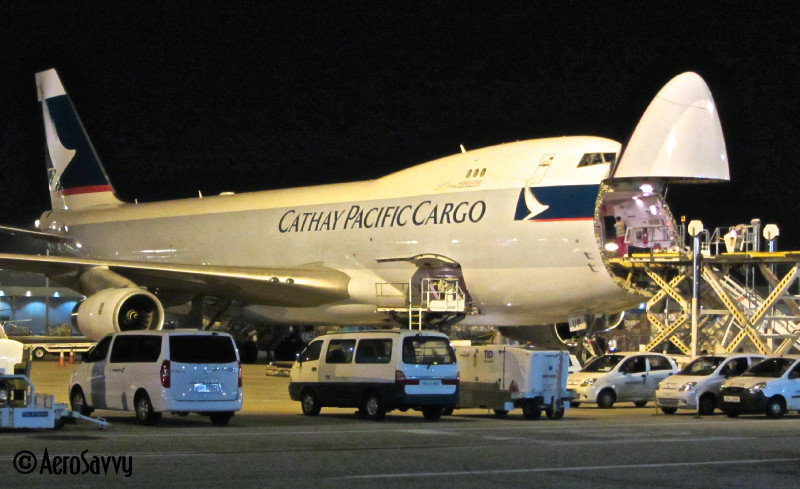

Then the 707 came along. That was then end of the stops for fuel and the multiday ship rides. Every trip took a day or too because of the 707.
Then came the 747. And that kind of travel got comfortable. Junior diplomats don't get to take their families in first class, but I did once see the piano in the upstairs lounge. Imagine: lifing a piano from sea level to flight level 370 and not caring about the weight! What an airplane!
A have a friend who was a flight attendant working the Teheran evacuation in 1979. They packed the 747 full. People were sitting on the floor in all the aisles. The holds were crammed full of peoples' stuff. And my friend said the plane just rolled and lifted off from Mehrabad Airport like it was full of marshmallows. (Of course, they were only going to Athens from Teheran, and they didn't refuel in Teheran ... the landing on arrival at Mehrabad might have been a bit heavy, eh?)
The 747 is a airplane for the ages, and definitely one of the good things of my life. I hope some people who made it possible are reading this. Thanks, you all.