It's possible that either decision attracted a different class of buyer. Altcoins have been dumping recently as people sold their holdings to buy Bitcoin in case there was a fork in order to get more of the forked coin (like what happened with Bitcoin Cash). Canceling Segwit2x may have caused traditional investors (e.g. those with less risk appetite) to feel that there are fewer questions about which chain survives a fork; they could have been waiting to put money into the market until there was a clear sense of which Bitcoin fork would be the successful one.
Altcoins are surging at the moment, so I believe that lends some credence to the first group being people trying to move into BTC to get more free coin.
> waiting to put money into the market until there was a clear sense of which Bitcoin fork would be the successful one.
I don't know, only if they did not understand that it's a win-win-win situation... they would have equal amount of coins on both chains so none of the three possible outcomes would be actually losing.
It's possible that confusion and conflict coming from there being two chains (imagine if a user sends bitcoin to a retailer who then claims they never received a payment because they were actually expecting coins on the b2x fork) could depress the price. Now we know that won't happen.
All Bitcoin news results in new people saying "I should buy some Bitcoin", so it doesn't matter so much what the news is as long as it reaches new people who will think they're missing out.
Not to use the B-word, but bubbles will continue to inflate as long as there are enough new people to put new money in.
I mean, it depends on your definition of "stable"? The yearly deltas in the price of gold between 2009 and 2015 are +31%, +8%, +9%, -28%, 0%, -12%. It's stable relative to, say, BitCoin, but if my salary changed that much I'd hardly call it "a stable income", and if my weight changed that much I'd definitely not call it "a stable weight".
If there is a fool born every minute, and we have 10 minute blocks, then this can continue ad infinitum and therefore produce a great medium of exchange and store of value. It is like a better version of Hawala. If this is the case, then it would appear to be that the greater fools are the ones holding onto a depreciating currency.
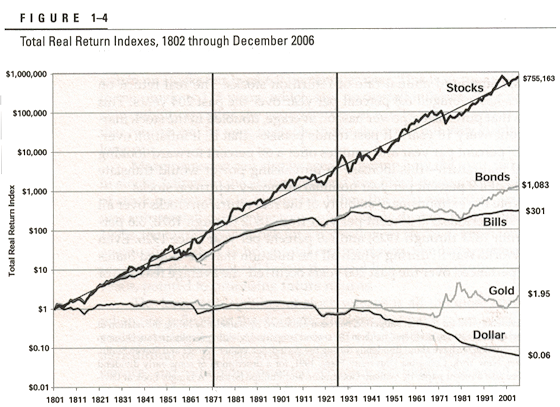
To some extent though it illustrates that after 200 years the value of $1 of gold was something like $1 in real terms while the value of a paper dollar became 6 cents. Even if that only kicked in after the 1970.
I see the opposite phenomenon, where literally any change or news about any cryptocurrency shows how stupid and terrible cryptocurrencies are, at least as often and as intensely as the phenomenon you're describing.
Price going up? PURE SPECULATION, DRUGS, AND MONEY LAUNDERING.
Price going down? I TOLD YOU IT WAS A BUBBLE THAT WOULD CRASH.
Price staying steady? JUST WAIT, IT'S A BUBBLE BEING HELD AT A PRICE ARTIFICIALLY, EVEN THOUGH I'LL NEVER MAKE A FALSIFIABLE PREDICTION ABOUT WHEN IT WILL CRASH.
Market fundamentals seem non existant here. At least a few years ago, when there were bad news the prices would reflect that. Now, it seems to go up anytime bitcoin is mentioned at all, regardless whether the market understands the implications or not.
This is why I got out of bitcoin trading. It used to correlate to the general attitude about it. Now the coins and miners are so centralized the real driving force of bitcoins price is the thousand wallets holding 95% of all BTC. Its like trying to predict market movements for a stock where 95% of the shares in a company are owned by one person. It isn't up to anyone else but that person where the price trends, because the behavior of the 5% crumbs mean nothing against the behavior of that one holder.
The price will simply go up when the whales want it to, and go down when said whales want to cash out. Fees could go up or down, China could do X or Y, the Fed could regulate it or not, and the general opinions of the ecosystem don't matter whatsoever - price is fairly solely dictated by the whims of a few dozen elites nowadays.
  In economics, the Gini coefficient is the standard measure
  of how inequitable a society is. This is tricky to
  determine for Bitcoin, as it's not quiet a "society" in
  the Gini sense, one person may have multiple addresses and
  many addresses have been used only once or a few times.
  (The commonly-cited figure of 0.88 is based on one small
  exchange in 2011.) However, a Citigroup analysis from
  early 2014 notes: "47 individuals hold about 30 percent,
  another 900 a further 20 percent, the next 10,000 about
  25% and another million about 20%"; and distribution
  "looks much like the distribution of wealth in North Korea
  and makes China's and even the US' wealth distribution
  look like that of a workers' paradise

  Dorit Ron and Adi Shamir found in a 2012 study that only
  22% of then-existing Bitcoins were in circulation at all,
  there were a total of 75 active users or businesses with
  any kind of volume, one (unidentified) user owned a
  quarter of all Bitcoins in existence, and one large owner
  was trying to hide their pile by moving it around in
  thousands of smaller transactions. (Shamir is one of the
  most renowned cryptographers in the world and the "S" in
  "RSA encryption")"
The original studies suggests early mining rewards were distributed mostly to a small group of users. It also shows attempts by large stakeholders to hide their large holdings by distributing funds across several wallet accounts.
If someone were to have monitored IP addresses in the swarm it may be possible to correlate attempts from single users hiding their funds across many wallets. Simply looking at the blockchain balances of single addresses will not necessarily indicate a single person controlling many addresses.
How can they possibly identify 47 individuals and what does that even mean in bitcoin context? Would an exchange fund holding millions of people’s coins be considered a single individual?
It seems like yes the day-to-day fluctuations may be at the whim of the large wallets, but how can they actually be in control of the price over longer periods?
Or if they can, then given that it's in their interest for the price to keep rising long-term, why not hold and go along for the ride?
They want to slowly sell off their stock so as not to affect the price too much. If they sold nothing, they'd make no money off bitcoin and eventually when they did want to sell, the effect would be so huge as to crash the entire currency. So to maximize their return from their bitcoins, they need to constantly sell off bitcoins. Not too much to affect the price too badly, but not so little that they aren't cashing in appropriately on their investment.
Most whales don't want to sell off their stock. Simplified spoken, they want to sell one coin for 7100, then buy one coin back for 7000 and cash out those 100 bugs (or cash out 50 and reinvest the other 50). They use their huge volume to try to influence the market their way.
But I guess most whales are in competition against each other, rather than cooperating. And that would be a good thing.
1 person =/= 1 address, and the gini coefficient is a measure of wealth distribution among people. bitinfocharts doesn't know which addresses are actually owned by a single person. an exchange, however, has the data and resources to suss it out, or at least estimate.
Looking at that kind of statistics can be interesting as long as you understand that any individual is likely to hold their funds over a number of Bitcoin addresses. That is how wallets work. Single addresses with large holdings are mainly cold storage systems, the largest ones are identifiable as exchanges. So those are coins owned by customers.
I think you are looking at the wrong market fundamentals.
People getting into bitcoin right now, buy because it can double their money in 6 months. They do not understand anything about Segwit2x.
They see news about bitcoin, look at the price again, and say "Damn, why didn't I buy it already?", and buy. That's your market fundamental right now. That is the value of bitcoin right now: "double your money in half a year".
I'm not saying bitcoin doesn't have any other value, or that it is overvalued right now.
> At least a few years ago, when there were bad news the prices would reflect that.
Even when the news were predictable or already known! Bitcoin has never been connected to any "market fundamentals", just hundreds of day traders trying to predict each others reaction to random scraps of news as they come by.
While I agree that most cryptocurrencies are severely disconnected from reality, is your last paragraph really any different from how the stock market works short-term?
At least a few years ago, when there were bad news the prices would reflect that.
As someone who was there and paid close attention, this is not true. E.g. silk road's closure didn't impact BTC for more than a few days, but everyone universally would've said it'd tank BTC's price.
Not in this case; it's actually pretty simple. There was anticipation of "free" coins after the fork, as there was when Bitcoin Cash forked. Price rose as people bought coins that would later be forked. Now it's cancelled, "free" coins are gone, so people see no need to tie up that money.
I guess what's weird is the idea that you could split two coins and the two coins price is greater than the original. That doesn't make any sense even though it happened with Bitcoin cash.
I guess it's comparable to a company who is being investigated and risks a large fine. Most of the time when the fine is determined, the stock price goes up.
The uncertainty keeps the price down. People expect a fine, but not how large it will be. I believe there are even cases where a company got the max possible fine and still their stock price went up.
It's not that weird. It's like any exchange of goods, both parties can come out with an advantage by getting something they want. In the case of Bitcoin Cash, 2 sides of the community got what they wanted.
The interested parties on either side would have been better off buying pre-fork and selling the one they didn't want, rather than buying after the fork, even though the end result is the same. That is irrational.
If people trade based upon information asymmetry, then the fact that Bitcoin Cash actually had miners, didn't crash fatally, and was capable of sending transactions constitutes an enormous change in the information landscape.
Pre fork BTC price + risk premium ~ BTC post fork + BCH
Pretend like the fork actually taking place and working successfully as comparable to a company's earning reports. The second that news comes in, it prices itself in almost immediately.
Very true - neither the person who wants BTC (but has no opinions on BCH) nor the BCH buyer wants to take the risk that the other coin will drop before he/she can sell it. In other words the risk premium isn't zero.
However a rational (impartial?) actor should be willing to take that risk if the premium is big enough. That could mean buying pre-fork or selling pre-fork if there is an obvious opportunity. Which means in an efficient market the risk premium should be zero "on average". It's hard to reason about averages with one sample but that sample was distinctly not zero!
Just like a tree forks into many branches allowing the tree to receive more sunlight and grow taller, Bitcoin forking into Bcash attracted more money into the market for both than original Bitcoin alone.
You could view Bitcoin + altcoins = total crypto market cap the same way..
You could also argue that if Bitcoin didn't fork previously, the total price of BTC alone would be higher than both forks now. Who knows?
It's more complicated than just a fork. Differently than the previous hard fork that split blockchains and created Bitcoin Cash, SegWit2X didn't offer replay protection, which means it was basically like a self-inflicted 51% attack [1], orchestrated by the core devs and other proponents.
The fact that is was called off gave temporary relief to the markets. It's hard to predict what will happen now, but at least it avoided tanking the market next week (for now).
What is interesting is that the BTC price went up on the email announcement and it started going down an hour later when coindesk released the news. I guess different type of investors/speculators read different news source ...
It's actually more complicated. With previous bubble spikes bitcoin price starts rising first then search term follows but search term then peaks before the price peaks.
I know everyone is going to say it is, but what if it's not a bubble... What if the huge demand and very limited supply is the driving factor behind the current price? I mean, even if you don't like bitcoin, there are a thousand more coins and there might be something in there for everyone... but you typically need to buy bitcoin first before you can get most of those coins.
Generally, huge demand and limited supply are necessary for any bubble to get going. I can see no way that the Bitcoin price is not a bubble.
It's rise in price is none-the-less astonishing, and is somewhat a testament to the soundness of the security model.
The whole system does require new money coming in all the time to maintain current price levels, as miners need to sell their bitcoin to get paid. It's less than a zero sum situation, as some of that money coming in goes directly to paying for the mining costs.
Since the overall awareness of Bitcoin is relatively low, in terms of actually knowing what it is, and how to get some, this bubble could run a long time, as there is a lot of money in the world, in need of investing.
> huge demand and limited supply are necessary for any bubble to get going
Does that mean gold is in a bubble? I mean, who are we to say either way? Bitcoin is arguably more useful than gold and it's supply is known with great precision. You could say that Gold is more speculative in a way since somebody could be sitting on a stockpile that is equal to half of the known supply.
> The whole system does require new money coming in all the time to maintain current price levels
That's only true for the next few years, then no new coins are created.
You can't see how it's not a bubble but frankly, I have trouble seeing how we can say it's in a bubble. Maybe it is, but I don't think anybody knows how to evaluate bitcoin... it's not like anything we've seen before.
When IBM started selling computers, their roadmap didn't include home computers because they didn't think that anyone would ever want a computer in their home. We understand the implications of bitcoin now about as much as IBM understood the impact of computers back then.
I guess people say all kinds of things, but I don't recall anyone arguing that Bitcoin was going up because of the impending fork. It certainly wasn't the conventional wisdom.
There was tons of discussion around the price and the fork. Why wouldn't the prospect of free money make it a sellers market? Bitcoin Cash fork brought Bitcoin holders 7-20% free coins.
Because this wasn't like BCash -- it was a hostile fork, with no replay protection, such that the two forks could not reasonably co-exist without first a major cataclysm. The best case result (according to most) would be the preservation of value on whichever chain survived. Anyone investing in the last couple of days looking for a dividend would have been a total imbecile.
Ah, then sorry for the flip reply. I look in on Reddit's r/bitcoin from time to time but there can be a low signal to noise ratio. I guess I follow the journalists Kyle Torpey (who has an email newsletter), Aaron van Wirdum of Bitcoin Magazine and other outlets, and Paul Vigna of WSJ. Adam Back, Jameson Lopp, Peter Todd, Pierre Rochard, and Pieter Wuille are good community members and Twitter follows.
There were many people that sold off a lot of their altcoins for bitcoin, so that they could be positioned for the fork coins. They are buying their altcoins again.
There are many people that can't make any decision in the face of uncertainty, and have shaky confidence in bitcoin to begin with, now the biggest uncertainty is gone and they are able to buy now that this is out the way.
not really. why does it matter that this message is authentic? that 2x _really_ isn't going to happen? it can still happen, and it doesn't matter who posts what online.
Jeff Garzik was the only author of btc1, the primary 2x implementation. For it to survive for any length of time, someone needs to step up and take over code maintainership.
This is effectively the announcement of discontinuation of software, and anything relating to that is usually signed. For example, Bitcoin Core release notes are signed when sent out via email, the binaries are reproducibly built and signed many times, and most git commits are signed by their author (and all merge commits are): https://github.com/bitcoin/bitcoin/commits/master
Do you have a citation for your understanding? Seems plausible but this is the first time I've ever heard this part of the mythology. I'm especially interested because Craig S. Wright went on and on about how uncomfortable it made him to sign a message with an alleged Satoshi key. I wonder if he created this story.
Satoshi was in favor of digitally signing Bitcoin transactions to provide non-repudiation as an underpinning of Bitcoin ownership.
> it is more important what is in the message than who wrote it.
That statement actually favors the signing of this textual message, since digital signatures provide integrity control in addition to non-repudiation of origin.
Satoshi could be a whole building of people, we don't know who he was, and so it's not even clear what "authentic" would mean in his case.
Integrity of the message doesn't matter - if you see a message and it makes sense to you, then that is all that is necessary. You can agree or post a response to argue a point. If it's something stupid, what does it matter that it's signed? And if it is from "Satoshi Nakomoto", how naive would you be to actually trust that?
Another way to illustrate this - in the Bitcoin world it is best to assume all messages are spoofed and never trust signatures. Even a signed message can be fake, it could be a lie or it could be written under duress. The only solution is to not trust signatures.
> Satoshi could be a whole building of people, we don't know who he was, and so it's not even clear what "authentic" would mean in his case.
That doesn't matter, because people can independently look at the design of the crypto. Your point about authentic in this context is meaningless.
> Integrity of the message doesn't matter - if you see a message and it makes sense to you, then that is all that is necessary.
That's exactly why you sign a message, to judge the veracity of the contents according to a trust anchor.
> If it's something stupid, what does it matter that it's signed?
You are fundamentally misunderstanding the purpose of signing messages. You don't sign to check stupidity, but to assert that important yet unsigned messages can be repudiated from the party believed to be the origin.
Another way to illustrate this - in the Bitcoin world it is best to assume all messages are spoofed and never trust signatures.
That's WHY you sign messages. It isn't a reason not to sign messages. You are confusing authentication of origin with identity of sender.
Right, you use your brain to check for stupidity, and once that check is complete, identity, authenticity and consistency of the message does not matter.
Bitcoin is a trust-less protocol, you cannot and should not trust any node, miner, developer, any online or offline post. Trust is not a thing in the Bitcoin world, and the tradition of not signing communications is generally rooted in this concept.
We know who satoshi is. We can't prove it, of course and we respect him enough to leave him be in peace, given what he has done (and the fact that the current team is stronger than him.) He doesn't like the attention he gets even now when only some of us have worked it out.
Please feel free not to believe me-- you shouldn't, I could be shilling for Craig Wright (ironically the one person who has proven that he isn't Satoshi) ....
At this point Satoshi is a principle and a philosophy and bitcoin needs to survive without him.
The person who used that alias would be offended at the idea that the direction of bitcoin should be determined by him.
Some people were waiting for the "free money" to come so they could buy "alt coins". Some will be happy to see BTC unchallenged. Price will be a balance of both.
I'll admit it, I was one of those people. On one hand, no "free money" for me, but on the other hand, I'm willing to accept this because it will hopefully lead to a stronger Bitcoin in the long run.
You'd think it would send it down assuming people were buying in anticipating the free coins after the fork. Since there aren't any free coins to get now and assuming that was propping up the recent price rise, why not sell? At least in theory.
edit: First three responses to the question all within one minute of each other with all completely different opinions. That's why it's so difficult to predict these things!
I assumed the same. Mainly because anecdotally the last dozen people I know who were new buyers knew little about the fork and were mainly buying in via the price-news cycle
Conversely for those who were following this removes the uncertainty around the fork - the downtime of a couple of days, potential 40-50 minute block times, lost coins, replay attacks, etc.
Sadly, this exact scenario was predicted by multiple people and could have been avoided by making segwit and 2MB activate atomically at the same time. This is a huge embarrassment for big blockers; they have been completely politically out-maneuvered.
The likely reason Segwit was activated when it was is because there was a movement by non-2X supporters to forcibly activate it around that date, and the 2X side blinked first. It's as simple as that. Also, 2X is inherently harder to deploy than Segwit because it's a hard fork, which means that everyone everywhere would have to upgrade their software. Even the proposed timeline for 2X was quite aggressive - more so even the BIP-50 upgrade back in 2013, which unlike 2X was entirely uncontroversial and absolutely necessary because nodes running the old version would end up stuck on different forks from each other.
It's an embarrassment for the industry as a whole.
The "New York Agreement" was a blog post, it was never a legally binding and enforceable contract.
There's a strong argument that the "agreement" was designed to fail, as it's hardly a compromise when party A gets what they want immediately, but party B has to wait.
> The "New York Agreement" was a blog post, it was never a legally binding and enforceable contract.
More important is that those who signed simply have no power to change Bitcoin.
> There's a strong argument that the "agreement" was designed to fail, as it's hardly a compromise when party A gets what they want immediately, but party B has to wait.
Yeah, especially when party A doesn't even sign any agreement.
I think if all the NYA signatories had gone all-in on 2x they could have killed the 1x chain. Between the majority of miners and a bunch of exchanges and payment processors, they probably do have the power. But the backlash and financial losses would have been significant.
"6 people called off the fork. Think about that." [0]
A censorship resistant digital cash is being built, and it only took 6 small time CEOs to completely throw everyone off and almost derail the project. When someone like CME Group, who now has skin in the game, also starts pulling their weight, who knows if the bitcoin experiment will survive?
Contrast it to how many people it takes to block any on chain scaling. As everyone practically runs Core the power in practice lies with their maintainers.
Bitcoin as it is now is crippled. There is no reason to block on chain scaling except for the Core maintainers to retain their power and allow their second layer solutions to viable.
People choose to run Core and the network is worth 122 billion dollars. You haven't provided any good arguments for on chain scaling but the market is screaming "bitcoin is doing it right".
> You haven't provided any good arguments for on chain scaling
Multiple dollar fees doesn't require any more arguments. The lack of arguments against on chain scaling, backed by actual research, is what's lacking.
> but the market is screaming "bitcoin is doing it right".
Have you considered that it's driven by speculation instead of technical merit? When the blockchain becomes unusable due to high fees and congestion the bottom will fall out. It cannot be driven by pure speculation forever.
The pure speculators I know invest in smaller cap cryptocurrencies to maximize their gains. The only people I know invested in bitcoin are in because they believe in its long term value.
Anyway at this point you're trying to predict the future and I'm sharing anecdotes so we're not getting anywhere, let's tackle your main point:
> The lack of arguments against on chain scaling, backed by actual research, is what's lacking.
The value of full nodes is widely understood by bitcoin contributors [0][1][2]. Increasing the block size directly increases the amount of resources required to run a full node. Increased bandwidth requirements is especially a problem.
It is up to the candidate (s2x), not the incumbent (core) to show that no, it won't be harder to run full nodes, or to show that you can have just as much security by running an SPV node. Because the candidate has failed to back up their proposal with evidence that security is not harmed, the proposal cannot be allowed to move forward. Makes sense?
So your only focus is on full nodes. So where's the research of how expensive nodes are and how many nodes would be lost if an upgrade to 2MB would happen? How big of a loss would be acceptable? Ideally how many nodes should exist in the network for it to be sufficiently decentralized? How much bandwidth is needed? How long can we expect our storage to last?
There is no credible research done, there are no numbers, yet even the smallest size increase is blocked.
It's also blocked by the same people who have previously supported even larger increases. What made them change their minds? Sure isn't any new research.
But the fundamental issue is that not everyone need to run a full node as long as you can connect to sufficiently many nodes yourself. There's simply no point in engaging in full node fetishism where everyone need to run one where the worst internet connection hamstrings the entire network. Most people run SPV wallets today anyway and the important nodes are the ones run by businesses and wallet services.
> So where's the research of how expensive nodes are and how many nodes would be lost if an upgrade to 2MB would happen? How big of a loss would be acceptable? Ideally how many nodes should exist in the network for it to be sufficiently decentralized? How much bandwidth is needed? How long can we expect our storage to last?
> There is no credible research done
That's precisely my point. Contributors have shown that full nodes are necessary to preserve the security of the network (see the links I posted), but the proposal of S2X was executed without ever engaging on a discussion to answer the very questions you are asking now.
They are good questions, and we should discuss them and we should answer them. But Jeff Garzik and the 5 other CEOs did not attempt to do this research and instead steamrolled ahead with btc1/s2x.
The damage the 1MB limit has done and is doing to Bitcoin is far more than possibly a couple of lost nodes would mean after an upgrade to 2MB.
This has been a problem for years. For example Gavin thought 16MB would be perfectly safe. There's research being done now examining 1GB blocks and how that would affect propagation time. A lousy 2MB is honestly laughable.
Doing nothing isn't the pragmatic or sane approach, it's the insane one.
In one post your criticism is that there is a lack of research, and I agree. But now you're making unsubstantiated claims again... the damage done to bitcoin? All meaningful metrics from BitPay's transaction volume [0] to on chain USD volume [1] to the price [2] shows that Bitcoin is doing fine and does not need saving. Public data shows that even though a fee market is developing, Bitcoin is still rising quickly in use and value.
As for the 1GB block research you're talking about, it was literally presented 5 days ago. S2X proposal started in May and the fork was planned for next week. The way we want this secure digital money thing to work is that proposals that are controversial or that may affect security are researched and the research is reviewed over many months or years.
I know you want to take the quick approach and just LOWER FEES NOW, but we know -- from experience -- that a cowboy attitude with blockchains makes it trivial to lose a lot of money [3].
> But now you're making unsubstantiated claims again... the damage done to bitcoin?
How about comparing Bitcoin's percentage of total market capitalization [0] which crashed from ~80% down to ~40% when the blocks became full? The last month has regained that quite a bit but you could speculate it's because the promise of long overdue on chain capacity increase.
> I know you want to take the quick approach and just LOWER FEES NOW
It's been years since the limit should have been increased. Yet here we are with no on chain scaling for Bitcoin even remotely close to reality.
> that a cowboy attitude with blockchains makes it trivial to lose a lot of money
You're really comparing apples and oranges if you compare raising the block size with Ethereum's poorly designed smart contracts.
That there is no credible research done should be an argument against untested proposals for change, not against status quo.
It is overwhelmingly clear that cryptocurrencies in general is in an early phase and that more research is needed on the subject. Especially since it seems like we'll be running these systems on an even larger scale in the future. It does however seem like more energy is spent spreading soundbites on Twitter than anything that has even a vague resemblance to the scientific method.
Full blocks is a change to how Bitcoin has been run. The limit was always meant to be raised as it was introduced as a spam protection. The full blocks policy has not had any research backing it at all.
No, it's really not. It was there from the beginning. Satoshi himself put it in place, years before blocks got even close to that size. When other people wanted to lift the limit he argued against it. He clearly did not deem it important enough to even research what limit was appropriate.
There's also the fact that Satoshi put a pretty agreesive schedule for the deflationary aspect of Bitcoin. Fees were designed to gradually take over as the miner's reward. You and I may or may not agree with that policy, or the schedule it follows, but it is a policy that was designed in from the beginning.
You're confusing the limit with full blocks. For all good it did the limit could just as well not have existed since blocks never reached it.
Furthermore Bitcoin used a soft limit which miners themselves increased. This is now no longer possible.
Satoshi introduced the limit as spam protection and he also explained how it could be phased in using a hard fork (although the term was coined at a later date).
I quote:
It can be phased in, like:
if (blocknumber > 115000)
maxblocksize = largerlimit
It can start being in versions way ahead, so by the time it reaches that block number and goes into effect, the older versions that don't have it are already obsolete.
When we're near the cutoff block number, I can put an alert to old versions to make sure they know they have to upgrade.
The idea of “consensus” in the bitcoin network is interesting to me. The code expresses “consensus” mathematically, and there exists a binary truth of whether a consensus has been “reached.” That’s simple and straightforward. It’s easy to reason about what happens once a consensus has been tautologically reached.
However, answering the question of “do we have a consensus yet?” is far less precise. Answering “what compromises can we make to achieve consensus,” even less so. All deliberation and conversation must happen offline, in “meatspace” amongst humans and operating outside mathematical principles. For example with the segwit2x fork, there was the New York Agreement, discussion all over the internet, etc. But does anyone have a precise number for the “theoretical consensus” or is all discussion based entirely on estimates?
I’ve always thought the “51% consensus” and the “hard fork” idea were hand-wavy solutions to a problem that can fundamentally only be solved by human cooperation. I also think Satoshi never expected this kind of discontent to be such a common occurrence.
Bitcoin should include a consensus building layer of code that acts as an arbiter for building consensus. It could execute polls, enforce rules of deliberation, etc. This is basically decentralized voting, which is generally seen as a distinct topic from bitcoin. But it seems bitcoin, one of the biggest decentralized networks, could benefit from a consensus building protocol.
The problem of decentralized governance is not going away. Solving it will be a massive technological step forward.
I think the most promising work here is around fork futures. Paul Sztorc (of Bitcoin Hivemind, the original decentralized prediction market, and Drivechains) has a lot to say about how with fork futures, we can let the market tell us how valuable proposals are [0].
We saw this in practice with the numerous S2X futures that were available. They were all predicting that S2X had about 13% chance of winning. This signal can then be used as substantial evidence in meatspace to retract or push forward a proposal.
Bitcoin core has a consensus mechanism and it is a very good one. What gets into the code is only that which has near unanimous agreement. which means proposals are discussed and altered and improved until everyone is happy.
Believe it or not this is working well, and bitcoin is moving forward at a very rapid pace (especially given the difficulty of doing blockchain systems right)... people just don't realized it because few people read the release notes.
Those who think bitcoin needs a consensus mechanism to determine its direction usually think that it doesn't have one and that some cabal is in control.
That's not the case.
Remember, Segwit and LN were from outside the community, the LN developers are mostly not part of core, and in fact one of the authors of the paper is an ethereum guy.
They both got support in core quickly because they are good ideas.
Both were announced in the fall of 2015 and cores support was in the code by May of 2016!
You can do on-chain voting for protocol changes and this was done for segwit2x which was activated with an overwhelming majority of votes. Unfortunately only miners vote and in cases where other parties disagree with the miners you can get problems. More recently there have been chain split futures markets that gather predictions from traders; too bad that information came too late to avert the segwit2x fiasco.
I still don't really understand why people were so against a block size increase.
I get that there are centralisation risks if the block size increases too much, but it doesn't really seem as though increasing to 2mb really make such a big difference?
Segwit activation in August was a blocksize increase, and a much more elegant solution than just doubling the blocks. An agreement was made by a few corporate entities to allow for segwit after a long standoff. They also decided on doubling the blocksize later in the year to appease the miners. Miners reneged on the agreement when Bitcoin Cash or BCH was forked when a small minority thought a better solution was to allow miners to control blocksize with a consensus mechanism. In the end it was clear the agreement and the hard forks never had community support.
Segwit2X was never about a blocksize increase, it was meant to seize control from the Bitcoin Core developers and switch development from the original Bitcoin repo to the newly created Bitcoin1 repo controlled by Jeff Garzik. It was not open to the Core developers and incompetently run, it was built on an old version of the software and resulting bugs were disingenuously blamed on Core developers.
Had this been a success it would have signaled the transfer of control of Bitcoin from the many developers and contributors to corporate banking and wall street interests. it would have been the end of decentralized crypto network open to many and the start of a corporate controlled network open to only a few.
segwit is the most thoroughly reviewed code that's ever been written, a vulnerability in SSL was revealed and patched as a result of this work. you're free to use BCH if segwit is a problem for you. and the mempool is fine.
> Segwit activation in August was a blocksize increase, and a much more elegant solution than just doubling the blocks
Segwit is a technical failure as it was implemented in a soft fork as a hack. It's scaling is inefficient. Did you see the capacity increase when it got activated? It was abysmal.
> Had this been a success it would have signaled the transfer of control of Bitcoin from the many developers and contributors to corporate banking and wall street interests. it would have been the end of decentralized crypto network open to many and the start of a corporate controlled network open to only a few.
The reason the capacity benefits from Segwit haven't fully appeared yet is because people haven't switched to using it yet. The 2X fork required everyone to switch to it at once via software that wasn't exactly well tested or thoroughly reviewed. That's why it failed.
There are no real technical arguments against increasing to 2MB, only political.
The main actors against a block size increase are Core developers who are also part of a company called Blockstream. Blockstream's business model is about selling side chains. But why use side chains if you can use on chain transactions instead? Well if you limit on chain scaling users would be forced on to your side chains...
The movement against the Segwit2x upgrade was so fierce precisely because it threatened to offset Core as the de facto Bitcoin client, making them loose their power.
They profit heavily from censorship on the bitcoin mailing list, the "bitcoin" subreddit and bitcoin.org. Their consistent propaganda and abuse has now caused the miners and businesses to back down on the Segwit2x upgrade, which would have been a certainty with 95% hashpower and business support.
Keep these things in mind and you should get a better picture.
There is also the contention that increasing blocksize would make running full nodes harder (at least by some margin) which therefore means an increase in centralisation (by a proportional margin). It would also set a precedent that miners are in control (or alternatively it could be interpreted as no-one is in control). The question then transaction speed and low fees are more important than the marginal increase in centralisation. Core would argue that any increase in centralisation is too much. Not sure why they think middle men are acceptable though.
> There is also the contention that increasing blocksize would make running full nodes harder (at least by some margin) which therefore means an increase in centralisation (by a proportional margin)
Yet there is no attempt to quantify by how much. The damage done to Bitcoin by full blocks is much more than what a potential increase to 2MB would cause. This zero tolerance policy rhymes extremely poorly when the fees makes Bitcoin more expensive to use than to run a full node.
> It would also set a precedent that miners are in control (or alternatively it could be interpreted as no-one is in control).
Miners are in control because the real power lies with them. The problem is that they aren't coordinated and so status quo is favored.
There have been a number of technical arguments put forth on the mailing list, and the discussion is much wider than the few developers who work for Blockstream. It is easy to introduce bias when following development through secondary sources. The development mailing list is mostly non technical enough that interested Bitcoiners can follow along, which would perhaps facilitate a more nuanced understanding how protocol extension proposals are being developed.
I don’t buy the argument that Core opposed Segwit2x because it threatens Blockstream’s business model or influence in the community.
First of all, if Segwit2x did succeed then Core could swallow their pride and simply update Bitcoin Core’s consensus rules to match btc1’s, and I think most users would prefer to continue to run Core.
Second, if Bitcoin is eventually widely used it would need more than doubling of the block size to scale, even with sidechains or LN. Also, scaling isn’t the only use for sidechains.
Third, many of Blockstream’s founders and team are long-time Bitcoiners and cypherpunks. I’d like to believe they would not compromise Bitcoin for the benefit of their company alone, but perhaps that’s naïve.
Your first point is not a contradiction. You can disagree with something for whatever reason, but still want to participate in whatever proposal 'wins'.
If you prefer baseball over football, but all your friends are playing football, would you rather join your friends, or play by yourself?
The value of full nodes is widely understood by bitcoin contributors [0][1][2]. Increasing the block size directly increases the amount of resources required to run a full node. Increased bandwidth requirements is especially a problem.
It is up to the candidate (s2x), not the incumbent (core) to show that no, it won't be harder to run full nodes, or to show that you can have just as much security by running an SPV node. Because the candidate has failed to back up their proposal with evidence that security is not harmed, the proposal should not move forward.
Why would a full node be more secure than an SPV node?
I had understood that SPV nodes store only the merkle root of all the transactions in each block, so as I understand it should be able to verify whether a given transaction is valid or not?
Peter Wuille provides one answer to this in the first link I shared:
> SPV nodes (such as some mobile clients, and Multibit) place a blind trust in the majority of miners, without checking validity of the blockchain they produce. It still requires a majority of miners to mislead an SPV node, but they can make it believe anything (including "You received 10000000 BTC!"). The reason why this does not happen is because full nodes would not accept such blocks, and assuming a large portion of the ecosystem does rely on full nodes, miners who do this would not see their blocks accepted by the larger economy, resulting in them wasting money.
Basically, a network comprised of only SPV nodes and miners places the SPV nodes at the mercy of the miners. Because of how centralized and state-controlled mining is (see Russia and China), this would be a very easy way for states to attack bitcoin.
OK clear now. Thin clients can only verify that a given transaction exists on the chain, but are not able to verify the contents of the transaction itself.
Andreas antonopolous sold a lot of believers on their investment as an investment in 'anarchy'. As such, any fork represents a dissolution of their original investment principle
I think small blockers are concerned that short-term fixes like increasing the block size will cause long-term scaling solutions to never be developed, necessitating more and more short-term fixes.
Which to me is just stupid - like taking 5 min to increase the blocksize is going to take away significant development effort from more novel solutions. Meanwhile, tx fees are stupidly high and bitcoin can't be used as a currency for small-ish transactions.
SegWit was a soft-fork block size increase with other scaling improvements.
I'm strongly against having any hard fork in Bitcoin.
The last Ethereum hard fork (when half of the devs wanted to cancel it because of the bug that was found) showed how dangerous it is.
At this point Bitcoin is worth so much, that it's better to not touch it at all without a formal proof that the network is not harmed at all.
The biggest difference Segwit2x would make in centralization is the fact that block propagation latency is already very slow, and if it gets to over 10 minute for the whole network, the network can split.
Bitcoin is an amazing store of value, and those of us who hold the currency wouldn't accept any risk of increased centralization just because non-holders want low transaction fees (that can be very easily be created by a centralized system)
Hard forks aren't dangerous. Monero has scheduled hard forks all the time. It's the best and cleanest way to upgrade.
> The biggest difference Segwit2x would make in centralization is the fact that block propagation latency is already very slow, and if it gets to over 10 minute for the whole network, the network can split.
Yet there's no research to remotely suggest a meager increase to 2MB would have any effect. Compact blocks and Xthin (and recently Graphene) also improves on this immensely.
> Bitcoin is an amazing store of value, and those of us who hold the currency wouldn't accept any risk of increased centralization
Typical black and white thinking. Bitcoin must have a primary use case that's not a store of value otherwise it will crash down when no new money is injected.
> just because non-holders want low transaction fees
Yeah because non-holders are the ones who want to use Bitcoin as was always intended. Pure holders are only in for the speculation.
The title of Bitcoin's whitepaper is "Bitcoin: A Peer-to-Peer Electronic Cash System" not "Bitcoin: A Peer-to-Peer Store of Value System".
> The last Ethereum hard fork showed how dangerous it is.
The last hard fork was on Oct 15, 2017. It did not split the chain, it went smoothly and added great new features. Ethereum has had many hard forks. Only the DAO one was controversial. Using hard forks to upgrade the network is smooth and works great.
What are the technical reasons that mean bitcoin has such a long time between blocks? Other large chains (Ethereum, Litecoin) have significantly lower confirmation times.
Lower block times increase orphan risk and increase the size of the chain (because there are more block headers), but I suspect Satoshi pulled 10 minutes out of the air and now it can't be realistically changed.
I guess this is one of the merits of proof-of-work: force miners to mine on one chain only, and if the token on the fork is worth less compared to their relative increase in hash rate on the fork, they lose money.
In my opinion, the financial motive of miners played a big role in this decision, and that’s exactly what proof-of-work is supposed to achieve: consensus through selfish miners.
Has anyone done the math on the profitability of Bitcoin Cash miners versus regular Bitcoin miners?
The BCH income also seems a lot less stable than for BTC; shooting up to twice as profitable as BTC and then down to half as profitable. I assume there’s quite a lot of variance in the time-between-blocks in the BCH network.
Very funny for a currency with no central control that a few people in central control can just call off a hard fork, and make ridiculous amounts of money in doing so.
Not ethereum, but one of the contracts written on top of it had a bug that some newbie triggered by mistake and locked something like $160M worth of moneys.
Ethereum's value, its reason for existing, is the deployment and operation of smart contracts.
When one of the most popular semi-complex smart contracts fails not once but twice in a matter of months (losing hundreds of millions USD in the process), it is time to look not at the newbie or the contract programmer, but the platform itself.
Ethereum works fine as a currency too (~15 sec per block, quite nice). It also works fine with simple contracts, it's the humans who aren't good enough (yet) to write bug-free code.
Bugs in software of various kinds cause billions of dollars worth of damage, deaths too. Yet I don't see people claiming it's the fault of C++.
I don't understand this desire to immediately assume bad faith in these situations. It's a complicated situation, involving a lot of actors. Yeah, probably some of them are acting in bad faith. But probably most of them are just trying to develop a functional cryptocurrency. This stuff is very hard, and having it all so decentralized only makes it harder.
Personally I was hoping for the 2x fork to succeed, or, barring that, for some kind of miracle switch over to Bitcoin Cash, which has the 8x capacity without the baggage of Segwit. But realistically this is probably the best outcome for Bitcoin for the reasons outlined in the message.
Bitcoin fundamentally attracts people who assume existing markets are run in bad faith. It's why there's so much propaganda attacking "fiat currency," and presenting Bitcoin as some kind of ethical imperative.
Bitcoin markets are a simulation of what would happen if you replaced the small group of people controlling governments and central banks with a small group of internet trolls, who held 95%+ of all available currency between them.
I have more of a general aversion to the actions of the (Core) people who support SegWit, including false promises, censorship, and other shenanigans like the 2x trojan horse which we've just seen play out:
https://www.reddit.com/r/btc/duplicates/6iecx7/if_segwit_act...
Can't speak for thefalcon, but implementing Segwit (or any change) as a soft fork creates the possibility of an eventual chain re-org, as well as the possibility for non-upgraded miners to accidentally work on an invalid block. Soft forks have all the difficulties of hard forks (requiring 51% of hashing power to work), with those two additional disadvantages.
I can't speak for the user thefalcon you replied to, but most opposition as I understand it comes from the fact that segregated witness makes things more likely to rely on centralized infrastructure, departing from the original vision of bitcoin as a decentralized system that can't be controlled by entities like governments and banks.
> miracle switch over to Bitcoin Cash, which has the 8x capacity without the baggage of Segwit.
That fork (BCH) already happened. You were hoping that the vendors who stated "follow the chain w/greatest difficulty" would land on BCH? The merits just aren't there, and that's likely why miners aren't there either.
> But probably most of them are just trying to develop a functional cryptocurrency. This stuff is very hard
IMO people who haven't actually tried to do that actual development have no idea how hard it is and don't put sufficient weight on the concerns expressed by those who do. The segwit 2x proponents weren't developers.
> Bitcoin remains the greatest form of money mankind has
> ever seen, and we remain dedicated to protecting and
> fostering its growth worldwide.
How sad that people are lured into "money" and selling and buying "money" while not understanding that provision of products and services are the most valuable in the world, and that any money is just a certificate of trust exchangeable for such products or services.
Bitcoin is nothing but speculation and this kind of forks cannot make it better. Basic agreements especially relating to money shall never be changed or people loose trust in it.
No, it resolves uncertainty and lets the community move forward in a unified way. It also shows Bitcoin's resilience in the face of committed minorities who would try to take over its governance. In short, Bitcoin survived a coup d'état, achieving total victory over a rebellious group of powerful actors (CEOs mainly).
I checked coinbase expected exactly that, thinking "oh man, I'm glad I didn't sell my eth a month ago to buy into bc trying to capture free altcoins like others did and like I considered doing, it'll be down like 10% at least" but it... shot up about 10% instead. I don't get it.
Having too many forks makes it confusing for newcomers (and even hedge funds). So naturally avoiding a fork and keeping the community together is good for Bitcoin, which made the price go up.
on wex it went up as high as $7900 and as low as $7000 so it is still very volatile, I would expect more of a sell off as people who bought in hoping to capitalise on a fork now exit their position but this may also mean more risk averse investors will buy in now that there is no contentious fork due. so, as usual with bitcoin, no one knows what the hell is going to happen
Wouldn't you expect alts to do well in this situation, since it's essentially the yang to the yin of moving from alts into Bitcoin in fork anticipation?
The note states there was not enough consensus (only 30%) How much consensus would be quorum for this sort of shift? Making a hardfork is really a last resort. If we are trying to increase transaction capacity, is blocksize really the most efficient way to go about it (without screwing up the other aspects of BTC)?
Looking whats happening on Ethenerum, those who knew in advance already made fortune. Funny we don't have SEC actually able to look into these. Amazing times.
If you have insider info about the direction of a market, then you have a much reduced risk. You can move in big, take your bite of the change, and then cash out.
The Segwit2x effort began in May with a simple purpose: to increase the
blocksize and improve Bitcoin scalability. At the time, the Bitcoin
community was in crisis after nearly 3 years of heavy debate, and consensus
for Segwit seemed like a distant mirage with only 30% support among miners.
Segwit2x found its first success in August, as it broke the deadlock and
quickly led to Segwit’s successful activation. Since that time, the team
shifted its efforts to phase two of the project - a 2MB blocksize increase.
Our goal has always been a smooth upgrade for Bitcoin. Although we
strongly believe in the need for a larger blocksize, there is something we
believe is even more important: keeping the community together.
Unfortunately, it is clear that we have not built sufficient consensus for
a clean blocksize upgrade at this time. Continuing on the current path
could divide the community and be a setback to Bitcoin’s growth. This was
never the goal of Segwit2x.
As fees rise on the blockchain, we believe it will eventually become
obvious that on-chain capacity increases are necessary. When that happens,
we hope the community will come together and find a solution, possibly with
a blocksize increase. Until then, we are suspending our plans for the
upcoming 2MB upgrade.
We want to thank everyone that contributed constructively to Segwit2x,
whether you were in favor or against. Your efforts are what makes Bitcoin
great. Bitcoin remains the greatest form of money mankind has ever seen,
and we remain dedicated to protecting and fostering its growth worldwide.
Mike Belshe, Wences Casares, Jihan Wu, Jeff Garzik, Peter Smith and Erik
Voorhees
Mike Belshe mike at bitgo.com
Wed Nov 8 16:58:41 UTC 2017
Previous message: [Bitcoin-segwit2x] Require a new Statement from NYA companies
Next message: [Bitcoin-segwit2x] Segwit2x Final Steps
Messages sorted by: [ date ] [ thread ] [ subject ] [ author ]
The Segwit2x effort began in May with a simple purpose: to increase the
blocksize and improve Bitcoin scalability. At the time, the Bitcoin
community was in crisis after nearly 3 years of heavy debate, and consensus
for Segwit seemed like a distant mirage with only 30% support among miners.
Segwit2x found its first success in August, as it broke the deadlock and
quickly led to Segwit’s successful activation. Since that time, the team
shifted its efforts to phase two of the project - a 2MB blocksize increase.
Our goal has always been a smooth upgrade for Bitcoin. Although we
strongly believe in the need for a larger blocksize, there is something we
believe is even more important: keeping the community together.
Unfortunately, it is clear that we have not built sufficient consensus for
a clean blocksize upgrade at this time. Continuing on the current path
could divide the community and be a setback to Bitcoin’s growth. This was
never the goal of Segwit2x.
As fees rise on the blockchain, we believe it will eventually become
obvious that on-chain capacity increases are necessary. When that happens,
we hope the community will come together and find a solution, possibly with
a blocksize increase. Until then, we are suspending our plans for the
upcoming 2MB upgrade.
We want to thank everyone that contributed constructively to Segwit2x,
whether you were in favor or against. Your efforts are what makes Bitcoin
great. Bitcoin remains the greatest form of money mankind has ever seen,
and we remain dedicated to protecting and fostering its growth worldwide.
Mike Belshe, Wences Casares, Jihan Wu, Jeff Garzik, Peter Smith and Erik
Voorhees
--
Mike BelsheCEO, BitGo, Inc
-------------- next part --------------
An HTML attachment was scrubbed...
URL: <http://lists.linuxfoundation.org/pipermail/bitcoin-segwit2x/...
Previous message: [Bitcoin-segwit2x] Require a new Statement from NYA companies
Next message: [Bitcoin-segwit2x] Segwit2x Final Steps
Messages sorted by: [ date ] [ thread ] [ subject ] [ author ]
More information about the Bitcoin-segwit2x mailing list
total meltdown. sell on news event ...wow. I think a lot of people were buying in anticipation of getting an alt coin, which is not going to happen. Given that alt coins are falling now, this looks like just another capitulation event, with the fork cancellation being the trigger.
This is just one guy, Mike Belshe, declaring his intention not to participate in the hard fork. Meanwhile, the miner support for the fork is still over 80% [0]. So it's pretty clear he doesn't speak for the majority.




k
Edit: Otoh, looks like it's seeing a bit of a drop now, but I doubt it will hit the pre-anticipation levels.