The 'living memory' claim seems a bit far fetched, too. Let's pretend living memory means the last 100 years, that'd mean air pollution levels in 1920 wee so poor you couldn't see Everest from Kathmandu. I'm no expert, but I don't think Nepal and the surrounding area of China were industrialised at that time, and there definitely weren't many vehicles on the road at the time, so where would the air pollution have come from?
Been to Kathmandu several times and I wouldn't say Nepal is industrialised in general, but not even remotely at the level of China.
What makes the air really bad in Kathmandu is the amount of old trucks and buses on the very dusty streets of the city. It's a different kind of air pollution to what you might experience in an industrialised nation.
When I'm there I always wear a mask, otherwise a cough will develop almost for sure in a few hours. If you go a little bit outside of the city the air is very clean and the views are amazing.
Kabul is the same with a huge amount of air pollution, like a visible white fog. Kabul is also not incredibly industrialized.
The hard part about Kabul is the geography. It is a raised elevation surrounded by a ring of mountains like a large crater on a giant mountain top. The bowl shape traps the air pollution within the city and it absolutely does obscure visibility.
no, but it was still a sprawling metropolis, one assumes there was a lot of wood and coal burning going on.
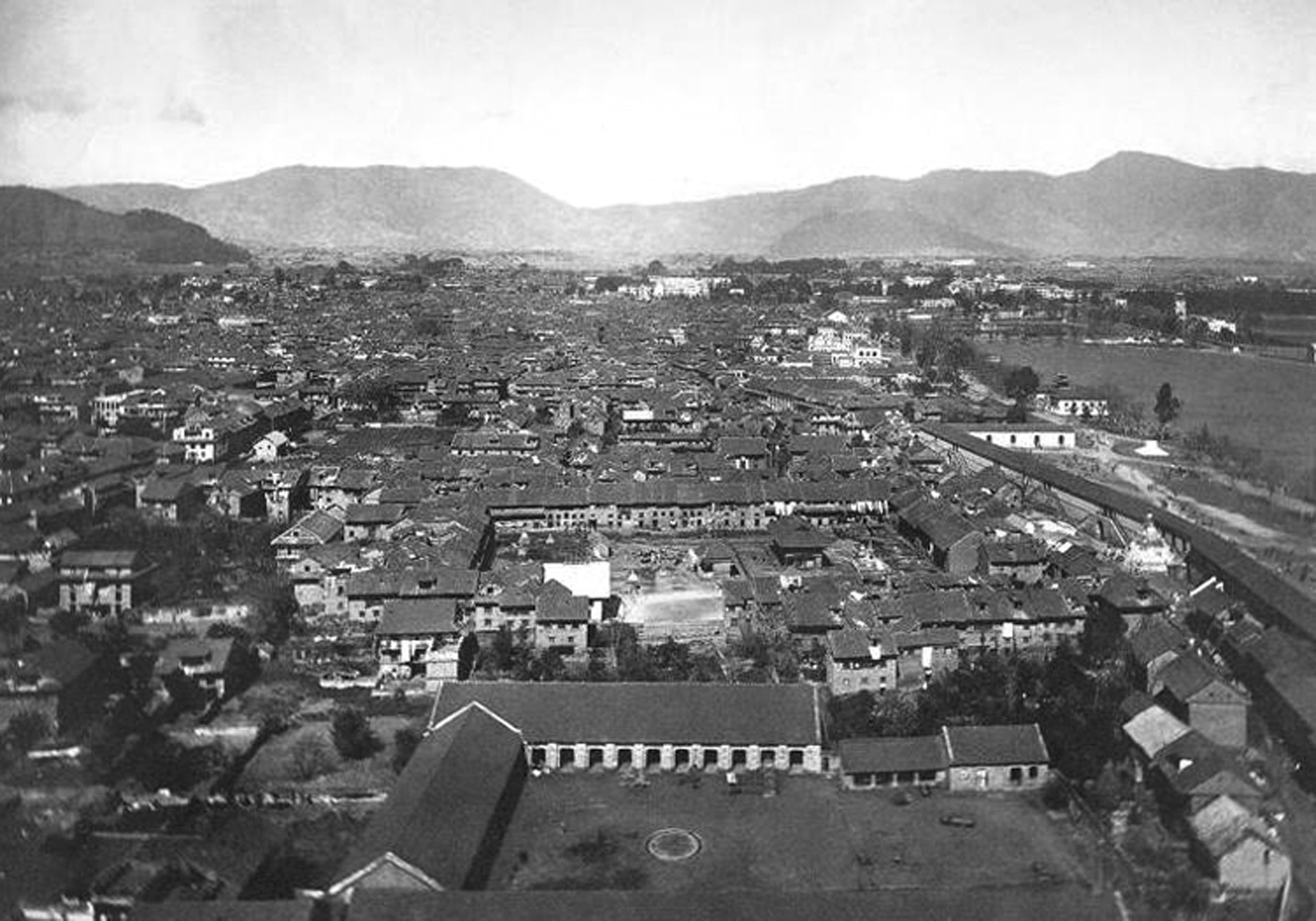
Here's a picture from Kathmandu in 1920. It appears to have poor visibility, but it's unclear from the picture whether or not that is pollution or weather.
"Here's a picture from Kathmandu in 1920. It appears to have poor visibility, but it's unclear from the picture whether or not that is pollution or weather."
You don't think it's the quality of a 1920 photograph?
Very true, it's incredible the amount of burning that goes on in front of most houses at sunset.
But I guess our cities in Europe were similar in the past, especially in the countryside.
In rural areas of the U.S. some people still burn their trash.
As a kid who watched a lot of 20/20 and 60 Minutes, I was always afraid of the smoke because people would often toss batteries, PVC pipe, etc, in their trash pit. But it was normal behavior, so when visiting someone's house I just tried to stay upwind of the cancer cloud.
Particulate pollution from burning is mostly non-combusted junk. The bigger the scale the more it makes sense to invest in technology that lets you get more out of your fuel from more complete combustion. Someone just burning trash to get rid of it can burn it in a pit. Someone burning trash as a fuel for their industrial process that requires heat is going to invest in a gasifier burner so they're not spewing wasted joules out the smokestack.
Not really. Wood or coal stoves are still very much in use in villages. At least that's what I saw living in many developing countries for the past two decades.
Btw, burning biomass would not change the problem. Wood and charcoal is biomass too.
Wrong again. In developing countries, a majority of people live in the countryside. That's one thing that differentiates those countries from developed countries.
But that's not really important, because even if only 20% of households used wood/coal for cooking, it is very much noticiable.
Answering only your final question: the smoke of burning wood and coal for heat. Coal fire was the cause of the infamous London “pea souper” fogs, for instance. It’s hard to remember now but burning gasoline and natural gas were significant improvements in the levels of pollution (and other hygiene factors) in cities during the 20th century. Of course at that time the only air pollution people were thinking of was particulates.
Also it looks like Kathmandu is in a valley which can concentrate the issue so a smaller absolute amount of particulate pollution can have more impact than the same activity on a plain.
> so where would the air pollution have come from?
-An ignorant (as I have never been within 1,000 miles of Kathmandu) guess is loads of wood-burning stoves; they soot like mad and can make Woody Allen[0] trust the air.
[0] When asked about NYC air pollution, he allegedly quipped that he didn't trust air he couldn't see.
The surrounding area of China is Tibet, which is virtually empty, so I doubt there is much pollution over there.
I think the main issue in Kathmandu is that it is surrounded by mountains, which trap pollution in. This is a problem for all cities with similar geography.