I hate articles like this, and especially the "boots" example. Like most things, it sounds great in theory. Reality is usually much different.
>“Take boots, for example. He earned thirty-eight dollars a month plus allowances. A really good pair of leather boots cost fifty dollars."
So he makes $38 per month...where is that other money going? As a cowboy, he is spending that on whiskey and prostitutes. We've all seen the movies. These days, it is the exact same thing where people spend their excess money on crap - big screen tv's, and that kind of stuff, even if they are very poor.
People do not do comparison shopping to get the right price. People wait to the bitter end before they fill up their car with gasoline, and do it at the gas station that costs $.50 cents more per gallon, but they travel past a station that is less expensive all the time, they are just not near it when they absolutely need gas at that second - they could fill up their tank when it is 1/4 tank left at the cheap gas station - people don't plan ahead.
It's pretty easy to lift oneself out of poverty in many (not all) cases, but people are ruled by emotions and what they want at this second. People don't plan. They don't comparison shop. When they get a little extra cash to buy in bulk quantities on some kind of thing like a great toilet paper sale - they spent the money on a dinner at a restaurant instead, because "they deserve it".
I'm not saying this is the same with all poor people - if you are a single mother with 2 young children, well, that's tough if you have nobody to help you out.
.
Furthermore, that cowboy in the example could go out and try to get a side hustle. Make enough extra to get more basics.
And the "food deserts" are complete bullshit, in reality. Yes, there are places that don't have large grocery stores, for sure. BUT, when I looked at a map in Chicago, for instance, there are Costcos and all kinds of stores that are 5 miles away. There's no desert, unless you mean that there's no grocery stores within a block. But one of my relatives lived in a remote area and traveled 1 hour to get to Costco to make big purchases of living staples. So if a poor person doesn't have a car, well, they need to work - find someone who has a car that can drive you there and split expenses. Find a church that has a van to travel there. Yes, you have to work at it a little bit, I personally am not going to life someone up and carry them piggyback for 5 miles because they don't want to work at finding someone to help them.
I'm looking at ALL this stuff in the article and it's almost all bullshit...but one does have to try to figure it out. It is not super easy, but it isn't super hard either.
The main problem, though, is that people just don't want to what is necessary.
Doing what is necessary demands a lot of energy. Every way to save a few dollars demands more of your time and it adds up.
We the lucky ones get to hire help when it suits us. We can budget our energy, and replace it with money as needed. When it runs out we can catch a break in a nice restaurant or on a beach. We also make dumb mistakes with our money, but they don’t hurt. We can say “today I’m too tired to cook” without being judged harshly. We can pay more for gas and still eat that week.
If you’re in such a comfortable situation, you might forget how tired poor people are, and how little slack they actually get. The demands of their situation are much greater and their energy is not unlimited.
The demands of your situation are far gentler. I consider exercising empathy to be part of them.
I've been poor and tired a long time ago. I know what it is like. But it is what it is, and you have to deal with it, right? You can't just do nothing. So, at least what I did, is work on the extra work that would give me the highest payback and greatest time savings, because that shit build on itself. The first thing I did was to buy what staples that I could in bulk. Not only did it save me money, but it prevented me from having to go out and make special trips to purchase those items - so I got a LOT of time back.
I started making food in bulk, and froze it, and food prepped on Sunday so I didn't have to make food every day, just grab and go. Saves a LOT of time.
To this day, I do the same thing, and have not changed anything, because that stuff got ingrained in me. I don't really have dumb mistakes with my money, too much, as I am super careful and have priorities.
But, if you are poor, what can you do? You still have to work and try to get out of poverty, even if you are tired. So one should try to think what they can do to get the best payback for everything they do, and do that first.
Like if you're poor but still own a car, and driving to work takes $50/week in gas, then maybe buying a bicycle and bicycling to work might save $2,500 per year in gas. If one is healthy enough. I'm not saying to do this - it is just an example. But still, if one could, that's an easy $2,500 per year. Then you take that money and use it to buy toilet paper, beans, rice, and other staples in bulk. This means you get a discount for bulk, PLUS you don't have to go buy them every week and take time and effort to do that.
> I've been poor and tired a long time ago. I know what it is like.
How many times have they turned off your water?
"When someone is telling me they are or have been poor and I’m trying to determine how poor exactly they were, there’s one evergreen question I ask that has never failed to give me a good idea of what kind of situation I’m dealing with. That question is: “How many times have they turned off your water?”."
Please forgive me my curiosity. The linked article was somewhat eye-opening for me on who is poor and who isn't, and I now keep asking this question too. So, how many?
The issue is not how many times my water has been turned off. The question is what has led the water to be turned off at someone's house that has had their water turned off.
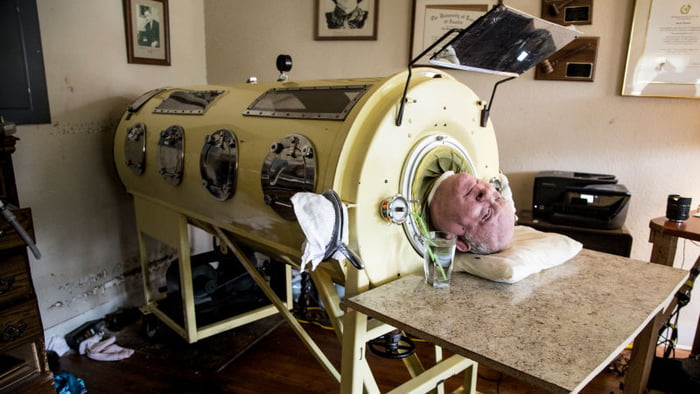
At some point, sure, there is nothing you can do. If someone has had polio and is in one of those polio breathing machines (https://images-cdn.9gag.com/photo/av7qWyq_700b.jpg), then yes, there's nothing anyone can do there, for sure. Or if someone runs out into a busy street and gets run over and killed because they didn't look, nobody can bring them back to life.
But if you put aside those examples, I need to know what they did, and where they are, and what they are capable of doing. Based on that information, I could advise them on what to do so that it doesn't happen in the future.
Unfortunately, as I have learned the hard way, I could share this info with people on how to prevent it from happening in the future, but only 1 person out of 10,000 will actually want to change their life and do things a new way. That's the hard cold facts. A person who gets their water turned off over and over is doing the same exact things that get their water turned off over and over. If I had 100% control of their money, and could force their arms and legs to do what I want them to do, it wouldn't happen.
I mean, I looked on indeed.com and there is a job that pays $35/hour to answer phones, do light filing, front desk receptionist. That's $70K per year. I could go to that person, help them fill out a resume, send it to the company, tell them how to dress and role play with them on how to interview, but 9,999 times out of 10,000, we'll do all that work and they won't show up to the interview. And have some kind of excuse, of which I know what most of the excuses would be.
> But if you put aside those examples, I need to know what they did, and where they are, and what they are capable of doing.
Interestingly enough, the article I linked in my previous comment[0], and another one by the same person[1], have answers to your questions. Also, that particular person managed to get out of poverty eventually, and wrote a follow-up post on that[2].
So that's the guy who was /really/ poor, and struggled for a while. He has some insight on what it is like and why it is so hard to get out. I guess he'd be infuriated by this patronizing "hey, that's easy, why don't you just...", even though he does not write it out loud.
Let's have more compassion to those who are less lucky than us, fellow stranger, shall we?
This is really out of touch. First off, poor people can’t afford Costco memberships. Second, 5 miles is a very long distance in Chicago. How can someone justify spending an hour in traffic each way, and with what car?
That was just an example saying Costco. But, one can try to find someone who has a Costco membership and make a trip together. Or maybe going in on a membership with someone else. If a Costco is near enough, it would make sense to find the money to buy one, because the savings would give enough money back to make financial sense.
5 miles is not a long way. I live in a metro area, one of the highest traffic-wise, and I go that far, no problem.
The car - you have to do this thing called "work" and work at finding someone who has a car and share. Maybe a church has a van that does this kind of thing. I'm not saying it is the easiest thing in the world, but seriously, it is not that difficult to find out if someone has a car that can go to a grocery store, even a normal one, and carpool.
There's a lot of other things one can do to lift themselves out of poverty, that are not difficult.
No one making $9/hr with a kid or two is going to be dishing out for a Costco membership and getting a volunteer to drive them around everywhere they need to go. There is no long-term savings and “financial sense”, it’s hand-to-mouth, sometimes shoplifting to survive. Have you executed this plan yourself? If not, I’d suggest appreciating the fact that it isn’t this easy or many people in poverty would have done it.
You are putting words in my mouth. I didn't say drive them everywhere, every day, available 24/7 every minute of the day.
Since you are taking that tack, I now know that you are not having this discussion in good faith.
>or many people in poverty would have done it.
Nope. And you are the 100% proof. Instead of asking me how, you attack me. Most people would willingly starve to death before doing something different. Trust me, I've tried to help many people out of a bad situation. I got emotionally invested in their situation - they came to me for help, not vice versa. And they just spent money like drunk sailors when they had a little bit.
Anyways, you are not discussing in good faith so I'm going to have to part ways with you here.
“Choose to not be poor” is the thesis of your statement, whether you meant for it to be or not. It’s hard for that to be a good faith start to any discussion regarding poverty.


>“Take boots, for example. He earned thirty-eight dollars a month plus allowances. A really good pair of leather boots cost fifty dollars."
So he makes $38 per month...where is that other money going? As a cowboy, he is spending that on whiskey and prostitutes. We've all seen the movies. These days, it is the exact same thing where people spend their excess money on crap - big screen tv's, and that kind of stuff, even if they are very poor.
People do not do comparison shopping to get the right price. People wait to the bitter end before they fill up their car with gasoline, and do it at the gas station that costs $.50 cents more per gallon, but they travel past a station that is less expensive all the time, they are just not near it when they absolutely need gas at that second - they could fill up their tank when it is 1/4 tank left at the cheap gas station - people don't plan ahead.
It's pretty easy to lift oneself out of poverty in many (not all) cases, but people are ruled by emotions and what they want at this second. People don't plan. They don't comparison shop. When they get a little extra cash to buy in bulk quantities on some kind of thing like a great toilet paper sale - they spent the money on a dinner at a restaurant instead, because "they deserve it".
I'm not saying this is the same with all poor people - if you are a single mother with 2 young children, well, that's tough if you have nobody to help you out.
.
Furthermore, that cowboy in the example could go out and try to get a side hustle. Make enough extra to get more basics.
And the "food deserts" are complete bullshit, in reality. Yes, there are places that don't have large grocery stores, for sure. BUT, when I looked at a map in Chicago, for instance, there are Costcos and all kinds of stores that are 5 miles away. There's no desert, unless you mean that there's no grocery stores within a block. But one of my relatives lived in a remote area and traveled 1 hour to get to Costco to make big purchases of living staples. So if a poor person doesn't have a car, well, they need to work - find someone who has a car that can drive you there and split expenses. Find a church that has a van to travel there. Yes, you have to work at it a little bit, I personally am not going to life someone up and carry them piggyback for 5 miles because they don't want to work at finding someone to help them.
I'm looking at ALL this stuff in the article and it's almost all bullshit...but one does have to try to figure it out. It is not super easy, but it isn't super hard either.
The main problem, though, is that people just don't want to what is necessary.