I find the physics of rail guns pretty fascinating. For something nominally invented in world war 1 (1918) which is now "only a few years" away from possible deployment. We are talking literally a 100 years later. We went from powered flight to flying in orbit in less time, think about that.
Is it a compelling weapons concept? Of course it is, you don't need explosives to shoot things that is pretty huge. Are wars bad? Of course they are.
That said, the concept has been around for a hundred years, so people are going to work on making a practical weapon out of it. Which means that at some point its going to be a component of a military action. And not having one of your own, will change the calculus of what you can and cannot do.
The concept is the same for any projectile weapon: I'm going to convert stored energy into kinetic energy.
Bow and arrow? Stored energy in the bow turned into kinetic energy in the arrow. Handgun/cannon/musket? Stored chemical energy in some compound, quickly converted into kinetic energy in the bullet via exploding.
A rail gun isn't much different- it's just a different means to store the energy (in electrical storage) and a different means to apply the energy to the projectile (magnets). The real problem is that these two changes require a lot of overhead in terms of gear to make it work. It's only worthwhile to do it if you intend to really, really add a lot of kinetic energy to something.
It's the same reason the electric car has taken 100 years to finally be worthwhile- chemical energy is much more dense and easy to convert into kinetic energy. Battery tech is only now catching up to the point that it's worth doing.
You put it well. The problem of of putting energy into projectiles caused a move from kenetic to chemical weapons (missiles).
But delivering chemicals to a target is expensive and at some point scaling it up becomes politically dangerous (you cannot just lauch even a conventional icbm without all sorts of risks).
Scaling up kenetic weapons ended up with huge battleship guns that did almost as much damage to the ship itself as the target (OK, a bit of an overstatement but I doubt any of those sailors left the navy with hearing intact). They were slow to fire, extremely heavy, and required a lot of dangerous chemicals to be stored. One mistake and the ship would blow up.
This allows deep penetrating weapons containing huge amounts of energy to pierce bunkers from way over the horizon.
This is the kind of weapon the Navy will want if the Korean peninsula ever heats up to a boil.
Edit: I suspect I am being downvoted because I am discussing weapon systems. There is a difference between advocating for weapons/war and discussing them. It is better weapons are discussed in the open, than developed in secret where the public cannot weigh in. Truly horrifying things are born in the dark.
> ...huge battleship guns ... were slow to fire ...
I was curious about how fast battleships could actually fire, so I googled around and found a couple stats.
On an Iowa class battleship:
- Armed with nine 16"/50 caliber Mark 7 guns [1]
- Each 16" gun is quoted as having a firing rate of 2 rounds per minute [2]
- Each shell weighed between 1900lbs / 865kg and 2700lbs / 1225kg pounds [3]
So math says 2 rounds/minute * 9 guns is 18 shells/minute. That is 34_200 lbs (18 * 1900) and 48_200 lbs (18 * 2700) of ordinance per minute. I would not want to be on the receiving end of that!
EDIT: fixed some numbers I goofed after @CapricornNoble was kind enough to point them out. Thanks!
A few minor corrections. The 16-23 rounds/minute is for the secondary battery of 5" guns, not the primary battery of 16" guns. If you watch a video of the loading/firing process of a 16" inch gun you'll quickly see why a firing rate of 1 round per 3-5 seconds is physically impossible.
So 2/min * 9 guns * [900kg;1225kg]/gun =
16,200kg/min high explosive broadside or
22,050kg/min armor piercing broadside
Your concluding sentence is 100% correct: best to be somewhere else.
Interesting but I don't think that's sustained fire.
You see crazy him rpm for firearms. The rate of fire is restricted by the magazine size (ship guns do have magazines) and how fast the gun can cool.
The US Army changed the barrel of the M4 Carbine (automatic rifle) after some troops during a sustained defense of some hill had barrels failing after glowing white hot. Machine guns often have barrels that can be replaced during prolonged engagements.
A hot naval gun could detonate the charge if it overheats. It has happened although I don't remember how long ago.
Good point. I removed the reference to sustained fire. Still a lot of ordinance for the receiving end to dodge! The dent those guns put in the water when firing is mind boggling to me => http://i.imgur.com/5aKQulg.jpg
A fun fact is you can figure out why battleships became obsolete just by comparing Iowa's guns to more modern systems.
A 16", 2,700 pound AP shell from an Iowa class battleship contains 40.9 pound of high explosives as the payload. A 1900 pound HE shell contains 153.6 lbs. of high explosive payload. The AP shell travels at a velocity of 2,425 fps on average. The HE shell travels at a velocity of 2,615 fps on average. An Iowa class ship traditionally stored powder and shells to fire each of its 9 guns 130 times before needing to be re-supplied. The maximum range of the cannon was 24 miles.
By contrast, a Tomahawk cruise missile has a range of 1,550 miles and contains 1,000 pounds of high explosive. An Ohio-class guided missile submarine carries 152 of these on board. A single Ohio-class submarine can put more explosive payload on target than 3 Iowa class battleships firing their entire magazines dry (assuming AP shells), it can unleash its entire devastating salvo in about 2.5 minutes (as contrasted against an hour+ for a battleship), and it can do it from over 64 times the range as the battleship's cannons. Oh also the missiles are guided, and so can actually hit targets at extreme ranges where-as battleship were notoriously inaccurate outside 20 miles. At the Battle of Calabria the battleships on both sides fired a combined total of 335 large caliber shells, to one hit!
Of course the one advantage of the battleship is its shells are travelling on average ~3 times faster than the cruise missile is, and so it's far easier to shoot down a missile than it is a shell. But I hope with the above math you understand why naval planner's response to this was basically "Well if you can shoot down one of my missiles with 50% probability, we'll just fire off 5 at once and we'll still have >95% chance of landing a hit". And unlike with battleship shells, when a single missile hits you you're dead as a dodo - 1000 pounds of HE vs. 40 or 153 pounds for battleship shells.
Even if submarines and airplanes had never been invented, the big gun battleship still would've been rendered obsolete just from missiles alone. Even railguns aren't likely to change this, as we happen to have perfected hypersonic missiles at roughly the same time railguns became practical and HSMs are...I mean basically take all the advantages of a gun, and all the advantages of a missile, and put them into one thing. Hypersonic missiles are amazing/terrifying, and they will be the 'defining weapons' of 21st century naval war.
Also as an aside, can we talk about how damn cool the Ohio class SSGN is?! It's by far the coolest thing the navy currently owns IMO. It can hide in the ocean depths impervious to harm, pop to the surface and fire off 152000 pounds of high explosives, and then retreat to the safety of the ocean darkness again before its enemy even knows what happened. I own a model of it I keep on my desk and it's one of my favorite possessions.
Note: On Los Angeles class submarines the vertical launch tubes can be fired with ~1 second delay per round. So assuming the navy's technology on the Ohio's is still held to the same standard, that's 152 seconds to fire all 152 missiles or 2.5 minutes to fire the whole stock.
>And unlike with battleship shells, when a single missile hits you you're dead as a dodo - 1000 pounds of HE vs. 40 or 153 pounds for battleship shells.
I'm curious if this would be true for a heavily armored target like a battleship, though. AFAIK no modern missile is designed to penetrate ~12 inches of hardened steel armor, as no targets have that kind of armor any more.
On 10 November 1942 the Vichy French Battleship opened fire on Allied landing vessels in Casablanca after being re-floated following her sinking on 8 November. TBF Avengers were dispatched to deal with her, but they lacked AP bombs and were relying on 1000lb general purpose bombs instead. Jean Bart was struck by one such bomb on her starboard side toward the rear:
The rearward hit would go on to sink the battleship, this time permanently.
On 22 May 1941 the HMS Warspite was struck by a 500 lb from German bombers, and had her side ripped open and had to immediately steam home least she possibly tear her own guts out. It would take 4 months of repairs before she was ready to be sent back into the fight.
In both instances we're looking at about 1/10th the payload of explosives of a Tomahawk crippling or sinking a well-armored battleship with 1 or 2 lucky hits. The reason is because WW2 battleships employed "all or nothing" armor, where some parts of the ship were extremely well protected (turret, belt) and others had extremely thin armor - which meant even a non-AP bomb could sink a battleship if it was simply big enough boom to rip the ship open in these non-armored areas.
A Tomahawk is guided and carries a very big warhead, so assuming it was programmed to know where the armor on the ship it was fighting had a weak point I wouldn't be surprised if it was able to cripple or kill an Iowa class vessel in just one hit.
Also we do actually have plenty of modern missiles able to penetrate 12 inches of hardened steel armor. The AGM-65 Maverick has penetration against rolled homogeneous steel armor of between 1000 to 1500 mm, or between 40 inches and 60 inches of penetration. It's designed to kill tanks that are using modern composite armor, and needs that level of penetration to do its job. Against simple steel armor, of the kind on a WW2 battleship, it would slice through it like a knife through butter.
Right, but those bombs may have been designed with armor piercing in mind. Battleships' main batteries fired both AP and HE shells, the latter being unable to penetrate heavily armored targets.
I take your point re the Maverick. But you do need to make a big hole in a battleship to actually sink it. To kill a tank you just need to make a small hole and spray the insides.
A 16" AP shell weighs about as much as a Tomahawk and is traveling much faster. Sure, it has a smaller charge, but also a lot more kinetic energy. In fact, the charge itself was irrelevant to the shell's armor piercing capacity, as AP shells were fused to explode after the armor was penetrated.
Point of order in the definitions here: an explosive projectile is still a kinetic weapon and is notNOT a chemical weapon. A chemical weapon causes chemistry to happen in/on the target: mustard gas, VX nerve gas, etc.
This is not my opinion. This is widely accepted and a matter of many international treaties.
I fully understand what OP was trying to say. The problem is words. You can think whatever you want. If you want to deal with other people in a shared reality and influence the arc of history, I suggest learning to identify, adopt, and use rigorously defined words as intended, wherever possible, because that frees up your very limited intellectual capabilities to focus on the things you actually want to change.
Electric weapons are super neat. Their specs can put the projectile very kenetic, they can uitilize more exotic energy sources, etc.
However, in terms of a man portable gun, they just really don't have the specs needed. Sure, we can make them more ruggeded and more effective at lower KE output. But a major issue for a man portable gun is heat. Heat causes expansions and affects ductility, ductility and expansion cause jams. Jams mean you're dead.
It turns out that the brass cartridge is really really good at getting hot and then taking that heat with it as it is ejected. The HK-G11 is a good example of the issues that the lack of heat ejection can cause [0].
As we do not have super-conducting materials that can be man portable and at room temperature, there is significant heat build up in the copper rails of the rail gun. With catridges you can throw that heat away easily, with rails, you have to have a cooling system in them to continue to use the gun. Either that or you have to stop the warfighter from using the gun until it cools. This, especially when lives are on the line, is non ideal.
Hence, railguns are mostly used in much larger applications like ships. There you can have the cooling equipment to keep the gun functional and operating and you can use the ocean as a heat sink. Your heat issues are still present though. More exotic materials than cooper are used for the rails, things that need to be at LN2 temperatures. But on a ship, you have the room and weight to carry the LN2 cooling equipment. Currently, railgun tech is still being developed. Reliability is a big issue, one that was solved in chemically launched projectiles through decades of tial and error. Rail guns are likewise going to need those decades of learning to occur.
The weapons we have today are very well engineered (cheap, reliable, understood tolerances/ranges, etc). As such, where railgun tech will be used is in limited cases as compared to the well developed cheamically launched projectiles. That means that there are less cases where the railgun can be used and then learned from. Especially with weapons, you need real life testing in order to understand the engineering issues, as lab testing is generally forbidden due to loss of human life. Hunting deer and boars will only give you so much. Fortunately, we humans don't go to War too often these days (though this is very debatable to a lot of real people). Unfortunately for railgun engineers, that means there is not a lot of real world testing in the panic that is a battle.
Like, fire one of these railguns that are ship-based in rough seas at a hostile target that is shooting at you too. There's smoke, flak, little wires, mist, spray, etc in the air that can gum up the gun and jam. Does firing one of these things in a storm have interactions with lightining effects? How does that big of an EM field affect sailors over time, like the concussive blasts affected sailors previously?
But that's already something that a person can think of. It's the stuff you cannot think of that are the main issues. When the panic sets in and the battlefield is very live, what happens that will affect the armaments that you did not think of?
I don't disagree, at 100,000 feet all weapons are mass gets propelled by force, where I part ways with you is here:
"A rail gun isn't much different"
While I completely agree that in concept rail gun isn't different, making one is extremely different. That is why I would have little trouble making a bow and arrow over the weekend that would serve as a respectable weapon[1], but I would not be able to create a similarly lethal rail gun[2]. Reducing the theory to practice is neither straight forward nor obvious. People have been trying to build them for 100 years after all and we're only now seeing some that come close to being competitive with other weapon systems.
What I'm saying is that your "overhead in terms of gear to make it work" covers for a whole crapload of technology and engineering.
What I hear when you dismiss this technology is a lack of appreciation for what is involved, it sounds to me like someone saying "Making an atom bomb is pretty simple right, simply hold a super-critical mass of fissile material really tightly until you've achieved the desired number of fission events. Right?" But you can't pick up two 4 lb pieces of plutonium and bang them together like a couple of rocks and expect to get a bomb event (although you will die). There is nothing "simple" about it, even if the concept is easy to express.
[1] In part because we learned how to make bows in Boy Scouts and I spent a summer doing a survival course where I had the opportunity to build one for my final.
[2] Even though I'm a classically trained EE, understand the theory, have experience in switching fairly high currents from my Battlebot experiences and a fairly complete EE lab at my disposal.
Oh, we're definitely in agreement- conceptually the same, implementation details of a few orders of magnitude different.
Mostly I was replying to the idea that "hey, we've known how to do this for 100 years". Sure we have- conceptually. We knew that batteries/electricity + magnets could implement the same pattern as "chemicals exploding". But we sure as heck didn't know how to make it practical.
That's why it's 100 years later and very few of us have either electric cars or rail guns.
It’s not just about more kinetic energy, a larger shell gets you that. Higher speed projectiles means longer distances which saves missiles which are extremely expensive and you only carry so many of them.
Rail guns can be powered by IC engines saving you carrying oxidizer around which is really heavy and dangerous. Many ships where destroyed when their gunpowder magazines detonated, sometimes outside of battle.
Rail guns can also be powered by Nuclear which is extremely compelling of your ship is already going to have a Nuclear Reactor.
> It's the same reason the electric car has taken 100 years to finally be worthwhile- chemical energy is much more dense and easy to convert into kinetic energy.
no kidding, and that's understating it. Look at the kilojoules (or watt-hours) per kilogram in one litre of diesel versus one kilogram of lithium ion batteries, or one volumetric litre of li ion batteries. It's significantly greater.
It's not like the technology behind railguns hasn't been stable and ready to use for decades now. It's just that, until the more recent invention of ancillary technologies like supercapacitors, it's been so costly to fire them that there was no logical place for them on the battlefield, so we never bothered to operationalize them.
I can't agree with this: "It's not like the technology behind railguns hasn't been stable and ready to use for decades now.", at least not in terms of practicality. I did a bit more research on flight and found a similar comment from Wilbur Wright[1] about George Cayley.
It is very different to be able to demonstrate a principle in physics (such as flight, or accelerating a piece of metal with electricity) and building a practical application of that principle. In many ways the time it takes between those two points is likely a good indicator of just how difficult it is to reduce the principle to practice.
You yourself mention super capacitors, another comment mentions the rails, then there are the switching devices themselves, the wiring harnesses, the control system. That is why I'm pretty awestruck at the fact that they were able to make it work and get this close to being something they can field test.
[1] "About 100 years ago, an Englishman, Sir George Cayley[2], carried the science of flight to a point which it had never reached before and which it scarcely reached again during the last century." -— Wilbur Wright, 1909 --- http://www.ctie.monash.edu.au/hargrave/cayley.html
I'd be interested to know why we haven't seen intermediaries that don't need the advanced tech of a rail gun, like why haven't we seen magnetically driven mortars or artillery? These seem less demanding, is it just a case of existing tech being good enough?
The energy density of batteries is relatively low compared to the liquid hydrocarbons and other chemical accelerants. It goes from being a mortar you can throw in the back of a Jeep, to a mortar you can throw in the back of a Jeep plus a semi truck full of battery capacity.
On ships and airplanes, you can replace internal weapons bays which have substantial storage capacity. And the batteries (this is particularly an issue for airplanes) aren't terribly mass-dense either. And you can use the vessel's turbine-powered electric generators to recharge the batteries from fuel (this reduces the range, but hey, tankers).
To me, it's not entirely clear why we're bothering. Do we actually envision shore bombardment as a useful combat modality going forward? IIRC the types of ships that can mount this weapon are the same types that are currently vulnerable to hypersonic anti-ship missiles. All our potential equiv-tech adversaries have those, to my understanding. So wouldn't the railgun only be useful against lower tech opponents? And against such opponents, does it fill a substantial gap where we don't already have sufficient other tools?
A large part of the reason that guns fell out of use on warships was that they were outranged by everything - guns that can shoot up to 40km (like those on the Iowa class) aren't enormously useful against destroyers tossing missiles from 200km or strike aircraft from a carrier 400km away. Guns that can shoot down planes and incoming missiles at 100km, though? That's pretty damn useful, even if it doesn't close the distance entirely vs missiles. As for why guns at all - well, guns tend to have magazine depths undreamt of by missiles, and railguns will likely follow that pattern. If moving to railguns for AA defence means you can shoot down 3 or 4 times as many incoming missiles for the same weight, that would be enormous.
And in the fog of war... Who's to say that a DD won't be able to close to railgun range of an enemy warship? Life's a lot easier when you can stay below the horizon, after all!
There are no hypersonic antiship cruise missiles deployed today. Some ballistic missiles have limited antiship capability and they do travel at hypersonic speeds but there are reasonably effective defenses against them now.
The railguns can be used to shoot down missiles. Interception is a matter of speed. If railguns are faster they win and we are back to fighting with bullets.
I've been wondering when EMALS catapults get converted to ultracapacitors. The current energy storage system on the Ford class carriers is a motor/generator/flywheel setup, and it's a reliability headache. The catapult itself is just a linear induction motor.
Reminds me of the electric car tech, in a way. I remember reading somewhere on HN that when the cars were initially gaining traction, electric engines were an option already, even with some prototypes. The issue was that the battery tech wasn't quite there to make it efficient and have any mileage compared to gas powered cars. So we went the gas route. And only within the past 5 years, we got a sign of electric cars coming back as a real alternative to gas cars.
Yes, similar and it was more than batteries, it was also magnets and car materials Etc. Batteries are an important part of that (and still the weak link given relatively long charge times) but it would be a disservice to a Model 3 to say that if you had LiIon batteries in the 70's you could have built one then.
I think the interesting use case would be to put things into space for a lot less money. Imagine putting one or many of those new Space X internet satellites into a rail gun that goes straight up.
It doesn't need to go all the way into space, it just needs to get pretty high, then the cost to break into orbit can require a lot less fuel and make it a lot more cost effective to do space stuff.
This has been discussed before but to summarize, it doesn't work that way.
I realize you didn't say "into orbit" but it is a reasonable place to start. The disadvantage of 'gun' type launch systems are that they only get one shot at putting energy into the system and they have to do that at low altitude where the air is thickest (the biggest impediment to going fast) as a result your space craft leaves the gun and goes into the soup of the atmosphere and burns up[1]. This is a problem with the rail gun as well as hypersonic projectiles that have active payloads have to deal with friction heating and remain functional at the point where they arrive. The secondary problem is the g-force as a function of the acceleration of going from full stop to 7.9 kM/s in say 10 milliseconds. Your basic physics will tell you that is an acceleration of
80 thousand 'Gs'. If you are launching a payload you need a container that can not crush its contents. Of course all that air resistance will bleed off energy/speed so you actually have to start much faster than 7.9 km/s, as much as 10 - 12 km/s to "coast" into orbit. Now you're over 100,000 Gs to start.
[1] This is not unlike shooting a bullet into water (other than water has higher viscosity and the bullet has a lower velocity) but the effect is the same.
Is there a reason you couldn't make the railgun bigger? For example, build it up the side of a high mountain. Then you can spread the acceleration across multiple kilometers and by the time you reach the top the air is thinner.
> Imagine putting one or many of those new Space X internet satellites into a rail gun that goes straight up.
Orbit doesn't work like that. Getting 200, 300 miles up is the easy part - the vast majority of the required energy comes from going sideways at 7800m/s.
I think they were suggesting that you could save fuel for once you're out of atmosphere, so that you're not fighting air resistance when you start a burn to get into orbit.
You could save a decent chunk of your fuel this way. Maybe 25% or so.
In exchange for that, you have to build your rocket and satellite to withstand 10,000 gees of acceleration and hypersonic flight through the lower atmosphere. And somehow build a rail gun that can fire something the size of an office building.
You'd have to re-purpose something like a deep mining shaft from a diamond mine, then stick a giant rail gun in it, almost like Germany's V-3 cannon[1] but on steroids.
No we aren't aiming straight up because we need to get into orbit. We need to go sideways as fast as possible. As long as you're not aiming at the ground you will always aim "up" but not straight up.
Maybe I should rephrase and emphasize that I think this is interesting not necessarily immediately practical. From what I understand about rail guns, they're not even practical yet to deploy for military ground to ground purposes, let alone to get things into space.
I think I'm taking a lot of liberties to imagine a future where we figure out a ton of challenges to get all the engineering to match the theory of making this happen. And in general, I believe we should take an optimistic approach to the future, given that getting humans into space in scale would be a marvelous accomplishment for the human race.
Do you mean in order to use this as an ASAT or ABM system? In that case, probably - though you'd still need some sort of terminal guidance to actually achieve a hit.
If you mean "account for the sideways movement" as "give the satellite the horizontal component of the required orbital velocity" this doesn't work for a variety of reasons - #1 is that the railgun is 2000m/s and orbit is 7800m/s, and #2 is that things going 7800m/s (17450mph) at or near sea level tend to get very, very hot very, very quickly which is not particularly great for railgun projectiles and utterly disastrous for things like solar panels.
Two problems with that: going up is only 3% of the energy that is required. The other 97% is "going fast enough sideways to stay up". The other problem, even if you angle your shot, is that you need to raise the perigee so that your orbit doesn't intersect the launch site anymore. These two things combined mean that you would have to railgun a rocket that is still about half the size of a rocket that takes of normally. And liquid filled rocket would NOT like or withstand a rail gun launch. But you have should bought yourself TWO major technological problems: rocketry and rail guns. That is not economical at all. Much easier to make the rocket a bit larger (you need to develop a rocket anyway) and get rid of the complexity introduced by the rail gun.
Ronald Reagan was way ahead of you (and everyone else). Back in 1987, the Strategic Defense Initiative (SDI, also known as "Star Wars") featured this concept.
The press excoriated him (hence the derogatory name "Star Wars" being affixed to the program).
The part you mention was called "Brilliant Pebbles", and featured space-based weapons as a cornerstone of the initiative. [0][1]
1) "The system charges for two minutes..." One shot per two minutes is pretty bad; the current 5" gun shoots 16-20 rounds per minute.
2) "...at speeds up to Mach 6." One of the issues with old school, large caliber naval guns was that the blast from the guns would damage or destroy equipment near the muzzle. (I was just reading Pursuit by Ludovic Kennedy, about the British pursuit of the Bismark, and (IIRC) one ship (the Prince of Wales?) had its bridge windows blown out when firing the B turret "over its shoulder".) Is the shockwave from a railgun going to be similarly dangerous?
No because "chemical" guns accelerate their loads by putting enormously high pressure gases behind them. Obviously, then, once the load is off the gases spew out the end (and make a really, really loud bang noise). Railguns, IIRC, use a chemical charge to get the first couple of mach but then the magnets to pull the load to full speed so it's not followed out the barrel by a mountain of hot gas.
The flames you see coming out the end are chemical charge and/or bits of the sled melting and it travels down the barrel. (people who know better, please feel free to correct me)
A good question to ask is if it would still take 2 min if hooked up to a ship's nuclear reactor power grid, or if the 2 min is more of an artifact of it being an alpha test rig designed more for data and refining the design.
I'm positive that at the very least they've got plans for making the version fire faster than one shot ever 2 min in a production model, even if that means throwing 16 times the hardware / capacity at the charging and cooling components.
No, beyond the initial propellant. The projectile accelerates constantly (hand waving here) so it's a constant force on the origin (relative mass should make this a wash), whereas the projectile enjoys exponential velocity.
Two minutes is pretty short, I'm actually blown away. If only we could all charge our electric vehicles that quickly.
Most of the muzzle blast from a powder gun is from the hot gases that escape after the projectile, not the shockwave from the projectile itself. The rail gun has very little hot gas escape so the blast should be much diminished.
Does anyone know why there is a flash of light and a puff of smoke when the gun fires? Since it's electromagnetic, you'd think you wouldn't see anything.
A combination of three things:
1) The flash is air in contact with the super-hot rail ionizing instantaneously from the heat, and becoming plasma.
2) Friction (From the projectile against both the rail itself, and air) producing vast amounts of heat, which then
a) causes water vapor in the air to flash to steam
b) produces smoke from burning metal
I am not sure how much of the smoke is from 2)b), because I'm assuming the surface materials are designed to minimize friction and therefore surface burning.
Water vapour is steam, i.e. it is the gaseous phase of water mixed with other gases (N2, O2, etc). Just like liquid water is still water if you mix it with alcohol. There is no possibility for a phase transition.
No steam references entropy or distribution of the molecules in the air. Concentrated water molecules visible as myst produced from hot water is steam. The water molecules evenly dispersed in the air is humidity.
>Concentrated water molecules visible as myst produced from hot water is steam.
Steam/water vapor/humidity is gas phase H2O and is transparent. Water droplets in air is often referred to as 'steam' or 'wet steam' but is liquid phase H2O suspended in air. If it mattered in context I assume it would be clearly stated as gas rather than liquid mist.
I doubt anyone would call the component of air that is 'humidity' by the word 'steam' but it seems it would be correct [1]. I am used to the term 'water vapor' for that gas phase H2O though.
Railguns are not coilguns. Railguns maintain physical contact between the projectile and the rails for the entire length of the barrel. That's a lot of friction. Friction leads to heat, light, and a puff of smoke from material that has been ablated during the launch, if I were to guess.
This leads to one of the big problems with railguns, which is that you have to replace the rails frequently due to wear and tear.
The old designs used to use copper behind the projectile. The current would make it vaporize and be a conducting gas/plasma thing to push the projectile along with the lorentz force.
I was stretching back in my memory about this stuff so had to read up again, the term they use is a "plasma armature" or "hybrid armature". I haven't been able to find out what this one uses in a quick search around.
A railgun, while its mechanism is electromagnetic, works on a base level by causing a massive high-current electrical short.
As a side effect (as in most electrical shorts), both the rails and some of the projectile are vaporized when the gun is fired due to both friction and electric arcing; and that's the smoke and fire you see.
This wear (which is signifcant per shot) is also the main obstacle to actually using railguns in any significant capacity in warfare (the other being the need for a massive current source, but nuclear generators and massive capacitor banks help).
Coilguns, on the other hand, don't actually touch the projectile they fire, and as such have a significantly cleaner output.
Coil guns require a lot more precision and accuracy in both manufacture and timing than rail guns, because you have to sequence the pulsing of the coils (compared to one massive burst of sustained power on a rail gun).
In a nutshell, you need to deal with most of the rail gun hard problems and then also deal with the added coil gun problems.
When you compress a gas it creates heat. The projectile is moving so fast it super heats the air infront of it as it compresses it.
Also normally things that go the speed of this projectile (mach 6 I believe) are way up in the sky where the air is less dense. So theres a whole lot of air down here for it to shove out of its way.
The explosion is from the rapid expansion of the superheated gas after leaving the barrel.
although there is no gunpowder, the acceleration in a railgun is quite violent and the projectile needs to contact both rails while it is being accelerated. the smoke is probably just from the friction of the projectile against internal components. the flash could be from the same or an electrical arc (railguns use very high voltages).
another possibility for the "smoke": powerful railguns often use a pressurized gas to start the process of firing. if the projectile were stationary at the time that current was applied, it might be spot welded in place.
Yea I was confused about that too. I expected it to just be a piece of Lead or Tungsten that launched out at high velocity. I don't understand the smoke/explosion either.
You don’t remotely need to hit escape velocity. If your aim is good enough you just need to lift your projectile high enough - the satellite brings plenty of relative velocity.
Yeah there's been several scifi books written where the ease of access to things like diy-bio and manufacturing being miniaturized pose a huge threat by letting more and more people have access to the ability to make a new plague or bombs. Rainbow's End by Vernor Vinge is one I'm fond of.
No. If your projectile reaches altitude of target satellite with 0 velocity, hangs for a moment and starts to fall down, but then is impacted at relative velocity of kilometers per second by a satellite, your weapon (or Kessler syndrome trigger) works. It doesn't need orbital velocity at altitude, only the altitude. That is a lot lower energy!
On top of everything else commented, there's the matter of how delicate you need to be about it. I do hope no one ever tries to down a satellite with a railgun, as debris might create a runaway effect that brings about a dark night. Use lasers, be responsible.
Some forgotten limitations of railguns: There is a maximum speed for projectiles in naval warfare. Earth is round. So anything moving too fast (~8000m/s) simply cannot hit distant targets. If fired horizontally, the shell will climb up as the earth curves away. This causes all sorts of difficulties if trying to attack another ship. At best, your shells will hit horizontally, far above the waterline. You would need a shell that could either fly itself downwards, bleeding speed, limiting penetration, and defeating the point of using a railgun.
You lose a lot of velocity with the air. So, you’re initial velocity can significantly exceed 8000m/s while still hitting a distant target.
This loss of velocity applies to all rounds costing long rang shots significant energy. However, a larger issue in anti ship combat is travel time. A WWII round fired at 820m/s at a target 24 miles away spent almost 90 seconds in flight. Higher velocity means flatter trajectories and vastly less time in flight.
Theoretically you could have a projectile with downforce. This would allow you to break that limit. I imagine it's highly impractical though. I hadn't thought of that limit though, good comment!
Then it needs to fly, which means it cannot be spinning. And it probably needs some internal mechanisms to control that flying. Now it is more a hypervelocity drone than a inert kinetic impactor.
100 miles to what? An aircraft? A very tall ship? A bunker on a mountainside? Until they have a reliable system that can be run over and over for days, I don't think anyone knows exactly how these things will be employed.
It looks right. It looks like it could well be the ancestor of the MAC cannons from Halo.
EDIT: I said this to my coworkers a couple of weeks ago: I'm calling it now. Either 1) Naval Railguns also wind up being killer AA weapons and there aren't any game changers in submarine warfare or 2) Railguns are going to be the equivalent of WWII naval cannon -- They won't be nearly as important as something else.
Railguns would completely surpass missiles for StS warfare
Yes, but my thought is that it's possible that in the future, no one is going to care about surface warships shooting each other. My full prediction is: Either 1) Naval Railguns also wind up being killer AA weapons and there aren't any game changers in submarine warfare or 2) Railguns are going to be the equivalent of WWII naval cannon.
Navies will be important, but what people will care about is 1) the ability to interdict shipping, 2) the ability to prevent amphibious landings, and 3) the ability to project power. It's possible that technology will get to a point where ships fighting ships with guns is irrelevant to all three. One possibility is that navies will develop swarms of autonomous AI minisub drones which can deny the sea to surface ships. Autonomous flying drones could also yield such a change.
So let's say there is some game-changing development like the ones mentioned above, such that surface ships within a certain range of the enemy are no longer viable in combat. What will happen to the big railgun equipped ships? They will be relegated to shore bombardment, but only once air superiority has been established, and all other opponents have been neutralized: Just like their WWII forebears.
(If railguns can become killer AA weapons, then my prediction 1) applies. I'm not certain this will come to pass, however.)
Sure, but missiles have to propel themselves, are very large compared to railgun projectiles, and are easier to break apart by putting a heavy wall of lead in the air.
Railgun projectiles have none of these disadvantages. They don't need propellant (or a warhead; the energy delivered upon impact is more than sufficient to break things without needing to explode), they're a solid projectile (and as such can't be as easily destroyed or knocked off course), and they're smaller than a missile is making them much more difficult to track.
To successfully defeat an incoming railgun projectile, it would both required sufficient detection technology coupled to a laser that would need to fully ablate it; where missiles require detection of a significantly larger object and can be defeated by shooting at them/more active protection measures.
Could you hit a railgun with a railgun? Why wouldn't countries build massive anti-ship railguns to prevent any such ship from getting even close to their naval facilities?
Missiles are bigger (they carry their own engine and fuel), are in the sky longer due to their longer range, and shooting missiles from the sky has never been implemented with a high success rate in active combat.
Well aware. The radar signature is still significantly smaller for the projectile. Also, note how hard-kill tank defense systems work better on missiles/rockets than SABOT.
I've never quite understood why we need to change technologies so completely to get the projectile moving faster. As in, why couldn't we do the same thing by just making a bigger explosion in the barrel? I assume there's some point of diminishing returns or inefficiency that makes it impractical, but I haven't been able to find a source that gives the math to explain it.
To make a bigger explosion you need a bigger barrel and more powder charges.
Eventually you hit a limit where you simply can’t create enough pressure to propel the projectile faster and not turn the barrel into a pipe bomb.
For the most part many guns have already hit their practical limit in this regard.
There is a good reason why battleships fell out of favor other than the US being the only blue water navy after WW2.
Those big guns are a bitch they are slow to reload and you can’t be anywhere near the muzzle including good couple 100 yards of the bow of the ship when those fire.
Also powder takes up space and weight, takes time to reload and it can explode when ignited.
Having a gun with parts that don’t explode intrinsically when set on fire is a pretty big advantage for any combat vehicle or vessel, not needing to carry propellant for your rounds is also a huge plus because you can carry more rounds or other munitions and supplies.
It isn't only that, with a powder charge you are pushing the projectile with an explosion. That explosion will also cause a disturbance on a ship, until you get to a pretty enormous size, you have to calculate that into your trajectories. With a railgun, you have a series of magnets pulling a projectile forward incrementally faster. It's a lot less energy wasted into the environment, meaning a lot less energy put back into the ship. These larger guns could be put on smaller ships and calculated with greater accuracy with greater ease due to less wasted energy put back into the ship and gun, I'm guessing.
Explosives are really dangerous to carry around. Go looking through the fates of ships lost in WWI and II (last time there was a fair amount of ship combat going on) and there's an awful lot of "several rounds hit but everything was basically fine, except then one hit the magazine, blowing the ship in two and sinking her", or a fire starting and doing something similar, or a smaller cache of explosives readied for immediate use in a gun blowing up and causing massive damage, or whatever.
Not sure if that's the reason, but it's probably a reason.
It wasn't even shells hitting magazines. It was shells hitting gun turrets, with the explosions reaching the magazines.
In the Battle of Jutland (The largest naval battle of WWI), the Royal Navy lost three capital ships (Two battlecruisers and a heavy cruiser) to single shells that struck their gun turrets, detonating their ammo magazines.
The gun turrets were, in theory, supposed to be sealed off, by blast doors, from their magazines - but in order to increase fire rates, it was standard practice to leave those doors open in combat.
The Germans, not being suicidal lunatics, kept equivalent blast doors closed, which is why none of their capital ships went up in flames, despite taking a lot more damage.
The Royal Navy had a long and well-established tradition of exceptionally well-drilled gun crews, probably going back almost 150 years from WWI through the Napoleonic era. It could be argued that their fast-firing and disciplined gunnery were decisive in more than one British victory.
HOWEVER....as you point out this led to objectively-suicidal practices....What's that term for when you've been doing a risky job for so long you don't realize how dangerous your habits are? Yeah Royal Navy gunnery is a textbook example of that.
Gas pressure just can't linearly accelerate something as efficiently as magnetic force can. You can get so much more velocity for the same barrel diameter instead of scaling barrel diameter and thickness because you have thrust being added through the whole length of the barrel instead of gas pressure being used to propel a slug at the end and then dissipating.
The propellant for a large shell takes up more space than the shell it fires, it's tremendously dangerous to have around from both accidents and enemy impacts.
Compared with a rail gun which is room full of exquisitely machined inert metal blocks.
Cost - Those inert machined metal blocks are cheap in a military if not absolute sense.
Though, this only really makes sense on a nuclear-powered ship. You've got to store your energy somehow, and I'm sure gunpowder is less energy-dense than diesel fuel, but from what I've read one of the big attractions of electric weapons is that you can replace all that chemical energy storage with far, far denser nuclear energy.
Sadly, news these days involves a lot of "we've invented <X>, to kill people that disagree with us". Often the word "disagree" is replaced with "undermine" or "threaten". It's all the same human-life-ending bullshit. I don't feel at home in this world any more. When I was 18, I enlisted in the armed services and "did my part" as people often say. What a fucking mistake, I'm humiliated and embarrassed every single day to have played "my part" in any of this. The modern-day me wishes I could go back to the 18-year-old me and turn my weapon on my masters when they were all gathered to cheer us on. Unfortunately, I'm sure dozens would have stepped in to take their place as quickly as I ended them.
> "Tolerance is a social norm because it allows different people to live side-by-side without being at each other's throats. ... [Tolerance] is an agreement to live in peace, not an agreement to be peaceful no matter the conduct of others. A peace treaty is not a suicide pact."
Someone a little better with aerodynamic drag computations could do a quick back-of-the-napkin to figure out the maximum range of something fired at sea-level going Mach 3,4,5,6,etc. The biggest issue I see is just vaporizing the projectile on launch, so there would be an upper bound on muzzle velocity based on projectile material properties.
As long as the projectile travels fast enough that there is ablation, you can use the Newton approximation [1] to get a rough idea. Using densities for uranium and air, and a projectile length of 1m, that gives a range of 15km. Of course when the bullet slows down, that is significantly extended.
Not the hardest. Bit less than Tungsten so pretty hard but far from hardest. It is used because it is really really dense and hard enough. Perfect for piercing armor.
Depleted uranium also has a few other wonderful qualities - one is that it's self-sharpening, as the nose of the projectile will shear instead of deforming [0]. Another is that uranium burns in such situations, which means you get 'incendiary' for free.
Artificial diamond? But it doesn't matter - you don't actually want something hard because you don't actually want it to go all the way through and out the other side. You want it to dump all that lovely kinetic energy into whatever it's hit.
Yeah, DU has an incendiary property along with a "self sharpening" property. It doesn't mushroom as much when used as a sabot round as tungsten. My platoon sergeant in the US Army was a former tanker and we learned all about it (I flew the Shadow 200 TUAV).
In the past [1] they were taking about 220 miles. Of course not even close for intercontinental strikes, but it could be a cheaper and more difficult to intercept alternative to cruise missiles.
For example Shayrat, the target of Trump's attack with cruise missiles in 2017 [2] is about 190 miles from the coast of Cyprus
That defeats the purpose of a railgun. A railgun is useful because it can fire long distances at a low cost. Combining a traditional rocket with a a railgun, if it was possible (which is isn't because a railgun shot is made of special material) it would just be a waste.
Coilguns have physical limitations that make them unsuitable for extremely high velocity applications. Specifically, the engineering difficulty in switching the coils on and off scales with the square of the currents used in a coilgun.
Any inductor has a rate of change of current proportional to the voltage across the ends. So all else equal, if you double the current, you double the switch-on and switch-off times. But, since you're using higher energies, you're getting a faster projectile - which means you now need to switch the coil off faster as well, to prevent suck-back.
So in short, coilguns get significantly harder to build at higher energies. In contrast, railguns get more energy efficient as projectile velocity increases.
I'd guess the main reason is that it's an inherently more complicated design; if you don't sync the electromagnets perfectly you spend energy decelerating the round. it does have the advantage that the projectile doesn't need physical contact with an electified rail, so maybe it could be less damaging to the device itself.
These railguns also have synchronized pulsed power systems that are quite complex. The University of Texas has been researching this stuff for decades. Here's a simple paper I Googled up https://apps.dtic.mil/dtic/tr/fulltext/u2/a639371.pdf
The coils are inductors, and so cannot be turned off instantaneously - you get a voltage across them proportional to how quickly you're changing the current. As you build a faster coilgun, it gets harder to deal with the voltages generated by the sharper current pulses necessary to do useful work. And presumably you're also increasing the current involved to get higher velocity, which also contributes to the engineering difficulties involved in managing the coil voltages.
Amateur railgun builders comment about the projectiles welding themselves to the rails; that certainly doesn’t happen in a coilgun. I think there’s also a big problem with supplying extremely high currents, which you can circumvent a bit in a coilgun by having more turns of wire.
Speaking from ignorance, I would expect that official research would encompass military grade material science, to which amateurs don't have access realistically.
Do you mean like going to space? There's some research but after everyone figured it that all humans inside would be instantly squished they started researching other avenues. The g forces are pretty large and would damage a lot of cargo too.
Not so. That's only for a very short launch. You would actually have a track a few miles long (probably up the side of a mountain) and launch using that. The g-forces would be very mild.
I was a little shocked at that number, so I ran the math again, and wow.
Quite a bit longer than I expected.
Maybe a circular track till you build up speed, then switch over to the mountain track?
Of course the circular track would have g-forces due to that..... (Do you feel like doing more math?)
I guess it's more practical to use the track just for the initial boost above the atmosphere, then a rocket to add speed. Also a track that can handle something moving at km/s is .... not easy.
A circular track means you'd have to accelerate the vehicle inward proportional to the square of the velocity.
If target exit velocity is 11 km/s, and the acceleration of the straight portion of the track is insignificant compared to the circular portion, in order for the combined linear and centripetal accelerations to stay under 3G, I'd make each component 20.8 m/s^2.
So if 20.8 m/s^2 = (11000 m/s)^2/r, then r has to be 5800 km. Closing the ring at that radius makes the circumference larger than the distance needed for a linear track.
Untrained humans could not ride it up to Earth-escape velocity. LEO only needs about 8 km/s. So that requires a radius of 20.8 m/s^2 = (8000 m/s)^2/r, 3000 km. Still too big.
What if we bump the G threshold to 5G? Then centripetal portion of the acceleration should top out at 34.7 m/s^2, and required radius drops to 1850 km.
Okay, cargo only then, just to LEO. 25G max acceleration, 8000 m/s exit velocity. Radius 370 km, circumference 2300 km. Still more track than needed by a linear launcher.
It's always cheapest to put all the acceleration towards moving the vehicle in the direction you want it to go, instead of wasting some energy pushing it in different directions that ultimately cancel out.
You could use a spiral track, but the final leg of the spiral is going to have an effective radius so large it might as well just be straight the whole way.
I assume that the same technology could be applied for launch systems, with one major change: maximum acceleration. An electric railgun would need to be very long in order to reach high velocity without undergoing huge accelerations as in the Navy railgun. Ramping up a vehicle with payload and fuel in it without destroying it is the name of the game.
Seems vulnerable to damage during a battle. A couple stray bullets or shrapnel hitting those power cables would put it out of commission unless it was heavily armored.
where as they would just ping off an old-timey cannon harmlessly.
As usual, I find the music in all of the linked videos delusional, as if this high-tech killing machine was created to astonish patriotic five-year-olds. For the sake of analogy, someone should overlay the same music to the engineering of a-bombs and gas chambers.
I agree on at least the first half of your statement. Although I'm not sure I'd say 'delusional' as much as - I don't know? - Jingoistic? Bombastic? I feel like I should be playing Command and Conquer to that sound track. At the end of the day, these are killing machines that are being designed to take human lives, and it does feel more than a bit inappropriate. I think that's what you're getting at with the latter half.
I'd say the nature of weapons tells a lot about the morality. A gas chamber designed to look like a shower is obviously only useful for murdering masses of helpless and unsuspecting people who are already under your control. I'd be willing to say that's always immoral, no matter the circumstances. A railgun is a weapon, but only really useful against ships and armored buildings or vehicles, and possibly aircraft and missiles. It's mainly for killing armed combatants in disputed areas, and can be used for good or evil. I don't see a moral problem with building them. Like any weapon, they can be used for good or evil, but some lend themselves to one or the other to an extent.
Perhaps it is the appropriate word here. However, I think it undermines the bigger picture. Many of these weapon showcases are made at the behest of weapon companies, the items of which are sold to the highest bidders.
See Vice's coverage of SOFEX on Youtube for a good showcase of delusion.
A friend overlaid an EDM track (Flux Pavilion if I recall) on the original test fire videos from several years ago when the prototype was located at the Virginia test site. I enjoyed the short piece of creative they remixed in the same way I enjoyed the Iron Man franchise. It’s a killing machine, but the engineer in me still deeply appreciates the advanced technology these systems are based on (energy/thermal management, power control systems).
SpaceX vehicles are a firmware update away from being high precision ICBMs (and their CEO has said they’d take DoD work and build weapons systems). No one on here is calling for somber treatment of that kit and their YouTube launch streams. Condemn the action, not the tool.
I am not foolish enough to predict the future, nor what said future will demand of us. Two nuclear weapons ended World War 2. Seconded guessing hard decisions is a privilege of existing in the future after those decisions were made, a privilege that one might not otherwise have had.
Do you feel better about using a nuclear weapon over a chemical weapon? Why or why not? Once death is assured, we’re just arguing time and the experience.
War in general is terrible and merciless, and should be avoided at all costs. I can be a pacifist but still want to pull out all of the stops when the devil comes knocking.
> Seconded guessing hard decisions is a privilege of existing in the future after those decisions were made, a privilege that one might not otherwise have had
I dunno... I think a very small percentage of people alive at the time of using nuclear weapons on Japan would have actually done so. My own opinion is that the same percentage today would advocate for using nuclear weapons on another populace. The problem is that the people in charge of these things aren't in the majority - they are psychopathic power-hungry war mongers. Have you ever heard of an instance where a pacifistic head of state ruled a nation, beyond Tibet? I have not - those types of people tend not to interested in becoming head of state in the first place. People who aspire to dominate a nation(ie presidents, prime ministers, emperors), don't have a huge moral leap to make(if any at all) before they are willing to murder another nation's people.
tldr; anyone who is capable of being made a leader of a nation, should never be allowed to do so. they tend to be willing to murder people to get what they want, and that's generally bad for the rest of us living on planet Earth.
> I think a very small percentage of people alive at the time of using nuclear weapons on Japan would have actually done so.
Ever talked to any older Asians from nations who were occupied by the Japanese before and during the war? They would have happily used as many as the United States was willing to provide.
It's amazing how many people forget the immense scale of the atrocities that the Japanese committed before and during WWII, eclipsing even that of the Germans.
“I think a very small percentage of people alive at the time of using nuclear weapons on Japan would have actually done so.”
The 300,000 innocent Chinese civilians dying PER MONTH, the estimated 1,000,000 US soldiers estimated to die in the invasion, the countless Soviet soldiers who might have joined them in an invasion, the 10’s of millions of innocent Japanese citizens who would have died in an invasion, all might disagree with you.
And weird how you mention Tibet without mentioning the slow rolling genocide taking place there thanks to their Pacifist leaders.
We've been stockpiling nukes for a half-century, and only ever used two. I would contend that the two which were used were a net benefit in terms of what it would have cost (in both American and Japanese lives) to invade the islands.
Of course, the threat is only good if the nation doing the threatening is willing to use it, so the merits of stockpiling are still arguable. With that said, they were something of a tool for a while. It has been argued that Wilson lacked foresight due to his decision to drop nukes, but what would you have done? Would you have been willing to condemn a half-million young American men to die, given the choice?
It's the classic argument, debated since the time of Pericles: is a javelin gone astray responsible for a death?
> the two [nukes] which were used were a net benefit in terms of what it would have cost (in both American and Japanese lives) to invade the islands.
There was no need to invade the islands. For the last year of the war, the Japanese had severe problems importing supplies. A significant fraction of their imports were coming in on tiny wooden ships: larger ships and steel ships would probably be sunk by US submarines or US aviation before making even a single delivery, and Japan had almost none left. The US could have simply waited and gotten the same result that they got with nukes. The reason it did not wait is worry that Stalin would invade northern Japan.
The first sentence of the wikipedia page on mining in Japan is, "Mining in Japan is minimal because Japan does not possess many on-shore mineral resources". Although the Japanese homeland does have coal reserves, the extraction costs are much higher than they are in the US and in Europe. It has and had very little petroleum reserves. The wikipedia page I mentioned says that "in 1941, Japanese petroleum production was . . . 0.1% of world petroleum production" and that the US produced about as much petroleum in a day as Japan did in a year.
I agree that the decision to use the bomb wasn't purely (probably not even mostly) based on the desire to limit loss of American and Japanese life. I'm also not saying I necessarily agree with the decision, but an extended siege would surely have caused massive food shortages. By the end of the war Japanese daily rations were already barely above the minimum long term daily requirements, and by 1946 even with US aid, rations were at 65% of minimum daily requirements.
I don't know how many Japanese would have died because of a siege, but it seems likely that if the siege took an extended amount of time, it would be more than died during the bombings.
Additionally in the alternative scenario where the Soviets invade, you'd still likely have a higher death toll. And there is also the continuing deaths of Civilians and POWs in Japanese occupied Manchuria that would have continued until the Soviet invasion was successful.
I don't think I could order a nuclear attack or support a politician who did--but from a purely utilitarian perspective, it's not an easy decision.
> "SpaceX vehicles are a firmware update away from being high precision ICBMs"
While strictly speaking true, as an ICBM booster the Falcon 9 would be going on 6 decades obsolete. Cryogenic propellants for ICBMs have been obsolete since the early 60s.
An ICBM doesn't need to. An ICBM does not need to be that large. Being reliable and on demand is much more important than payload capacity. A Minuteman-III can launch with minutes of notice; you don't need to fool around with fueling it on the launchpad for a hour or more before launching it, or any of that nonsense. Because it requires less launch infrastructure, you can launch it from a greater range of locations. Being small also aids in this since it's a lot easier to move around the country. What's more, a Minuteman-III is $7 million a pop, which is a fraction of the going rate for a Falcon 9 launch.
So if your aim is to chuck nukes, a Minuteman-III is plainly superior to a Falcon 9 in every respect save payload. What about payload then? A Minuteman-III can carry up to three warheads with hundreds of kilotons of power each. That's a lot of damage. The Peacekeeper missile, removed from service in 2005, could deliver up to 10 warheads. Of course that cost more, a little more than a Falcon 9 launch, but still had the advantages of being a solid fuel rocket. Still in service, the submarine launched Trident-II can carry as many as 8-14 reentry vehicles, but in practice is limited by various treaties to a fraction of that. If there was the political willpower to violate those treaties and have an ICBM carrying more warheads than either the Minuteman-III or Trident-II currently carry, they would simply put more warheads onto the Trident-II. That'd be a lot simpler than re-purposing the Falcon 9, and a lot more useful.
Something else to consider though is range. Minuteman-III has enough range to hit Russia from the North, but not from the South. That might seem like a pretty severe limitation, but that's actually the way people want things to remain. Back in the 60s the Soviets designed something called the Fractional Orbital Bombardment System (FOBS). Basically, it was an ICBM capable of putting the warhead into orbit, giving it unlimited range. So, in essence, Russia could nuke America over the South Pole, instead of the North Pole, thereby bypassing all of the early warning systems that were looking North. Because this system was seen as a way of bypassing early warning systems, it was seen as a first strike weapon and therefore a destabilizing force. These sort of systems are now prohibited by treaty, and Falcon 9 would be in violation if it were an ICBM. But as a first strike weapon, a Falcon 9 is pretty shit. They take a long time to load and fuel, and their launch sites are high profile. A first strike is all about having the element of surprise; in an Falcon 9 FOBS/ICBM scenario, there are too many opportunities for detection. Particularly when you remember that SSBNs exist.
(There is another option though. The first ICBMs (as well as the Falcon 9) used cryogenic liquid propellants, and modern ICBMs use solid propellant, but in between these two technologies was a third: storable liquid propellants. The Titan II ICBM for instance burned aerozine and n204, both of which are liquids at room temperature, therefore the Titan II can be stored in a fueled state, ready to fly. These missiles could fly on very short notice, but they're also pretty dangerous to be around.)
I listened to it and agree it sounds very childish. Better would have been to have some intelligent narration, the story in a nutshell. How much energy is required for a railgun? What uses do they have that cannot be done with conventional artillery? what were some of the major challenges faced by the R&D team? All of that could have been explained in the audio track that was instead used for crappy Michael Bay action movie music.
One of the problems with existing Navy "gun ships" is that explosive ordinance can be a hazard to sailors and has to be handled very carefully. Additionally, it has to be stored very carefully. One of the things a railgun hypothetically allows is launching non-explosive inert projectiles. What happen when you launch a big hunk of steel at something 200 miles away travelling Mach 6? Another huge benefit is the speed allows using this for anti-surface and potentially anti-air as well (covered in the article), something conventional munitions can not do.
Yes, but not both. You have ground to air, ground to ground, ship to ground, ship to ship. For the most part (with some standouts that do multi-role such as the Tomahawk) each munition is specialized for a single role. The railgun is being heralded as being capable of doing all 3 for limited use cases, which is fairly unique.
The SM-6 is anti-air and anti-ship. It has the option to add GPS guidance to it (SM-6 Block IA and the newer IIA), but it is much more expensive as a Tomahawk and is generally not used for this case. A Tomahawk is around $1.4 million per whereas the SM-6 Block I was $5.6 million per and the newer full rate production version (Block IA and newer) is $4.8 million per.
For reference, the Hypervelocity Projectile (made by BAE Systems) that Railgun fires comes down to a unit cost of $86,000-$90,000 per shot depending on what source you read. So ~$90,000 per railgun shot gives you ~53 shots from the railgun for every single SM-6 when it comes to cost. This is entirely game changing from an economics perspective with similar capabilities. By lacking rocket motors or being explosive, it is also much safer to transport so you can likely pack more ammunition onto a ship.
It means taking out adversarial missiles or aircraft. When they're travelling so fast, they might not need any homing technology. The state of the art F22 Raptor has a top speed with afterburners of Mach 2 for reference. The railgun projectile is travelling at Mach 6 per the article. If the plane is within range, it might not be able to run away from one of these if they get the aiming correct.
The railgun is a precise weapon that strikes specific targets and so the users of it can exercise reasonable judgement on it's use. It's a requirement of various treaties on warfare, such as the Geneva Convention, that war fighters be accountable for their actions and not engage targets under specific circumstances, such as if they are civilians or surrendering.
Gas is an extremely unreliable and indiscriminate weapon that is highly likely to affect individuals beyond any reasonably intended target, including civilians. It's not possible to use it and still meet obligations under treaty, such as not engaging civilians and surrendering troops. Therefore it's use is not allowed and any use of it is accountable as a war crime.
One of the big differences is that gas chambers are only useful for killing prisoners while there is no indication whatsoever that railguns will be used to kill prisoners.
(That said, if it were my execution and the choice were given to me, I would of course chose the railgun! Suffocating on cyanide gas doesn't seem like much fun, I'd rather be vaporized by a hypersonic artillery shell, if it's all the same to you...)
DIY videos by armed service members often use over-the-top soundtracks. I bet the intent of that video wasn't to be PR or marketing, just a fun recap of work done.
Railguns, rockets, explosions, lasers... fast cars, fighter jets, massive supercomputers... all impressive engineering "magic" that spark some childish awe in a certain type of person.
As an adult, I know the why behind the technology. That "awe" grows into "awesome" or "awful"... but it always starts awe.
Actually yes, but the application of on the other hand...
Only a tiny few of the multiple conflicts since WW2 have been helpful or even justified. Many have been hugely counter-productive. Yet I can't deny that wars and military spending have given huge impetus to advance many capabilities. Capabilities that have ended up having huge applications in peacetime too. Whether rocketry or WW2's improvement of the cavity magnetron, or early computers. Who knows how many decades later some of the stuff we take for granted might have arrived, or sat on a dusty shelf as interesting but impractical or non-commercial? Even the humble tin can got its start supplying food to the navy, in the age of sail.
For all but the tiniest fraction of human history, nearly everyone alive was enslaved or forcefully controlled by the wicked and strong. If rail guns help maintain this tiny sliver of historic wonder, where people are freer every day, then yeah, they’re exciting.
Do you not see that materials science from high performance cruise missiles might work its way through other uses of materials science such as structural engineering and bridges? Bridges can be used to hold tanks, does that mean all bridge engineers are bad?
In the same vein, as an industry, pornography really improved computer storage density and video codecs whereas electronic trading really improved the tech to reduce networking latency. Virtually all engineering benefits from other engineering that came before it. There are plenty of other ways, but this is how it is. Most all of what NASA does or has ever done has directly benefited the Department of Defense. Does this mean we should shut down NASA because it helps the military make more efficient missiles or spy satellites? When does this silly argument end.
> "Most all of what NASA does or has ever done has directly benefited the Department of Defense."
People often overstate this. For instance, when pointing out that the Mercury and Gemini programs used ICBM boosters, people sometimes insinuate that NASA was in fact developing those rockets for the military and all the manned spaceflight stuff was just a nice cover story to make the rockets seem benign. In fact, the rockets were already in military use by the time NASA got their hands on them. Those IBCMs were not created using NASA as a PR cover-story. They were weapons from day one which were later repurposed for civilian use.
Another big example is the Saturn V. Unlike it's predecessors, it was never an ICBM. NASA designed that one from the ground up for lifting people. Of course there are more military applications for rockets than implementing ICBMs. Satellites have obvious military applications, so any sort of space launch technology will have military applications and anybody who advances the state of the art for launching satellites will be, in that sense, contributing to the advance of military technology.
> Most all of what NASA does or has ever done has directly benefited the Department of Defense.
Especially since a lot of the benefit has gone the opposite direction a lot of times - how many of our space telescopes started life as extra reconnaissance satellites?
This is precisely my point! As much as one might be morally against military research, it is well funded and bleeding edge.
Case in point: I had to get a double bunionectomy when I was in the Army after spending a year in Iraq and got my feet wrecked. They surgically broke my big toe in 2 places and drilled 2 holes. They then put "pins" in each hole made of pig cartilage. This procedure allows the body to heal and then it absorbs these "pins" which prevents arthritis. At the time I got this surgery, in 2004, it was not available to the general civilian population. Now, it is. It was pioneered to help the military and now the entire populace can benefit from the exact same technology.
Problem spaces that push boundaries of engineering ultimately result in better engineer for everyone.
The survival instinct is the greatest motivator of human activity. Nothing provides an impetus for the mind to innovate quite like "figure this shit out or we're dead."
Hans Zimmer recycles that riff all the time (I think he used it first in Drop Zone, then Crimson Tide, The Rock, Gladiator, and probably elsewhere). I guess the Navy wanted to give it a shot too.
One day history will likely show the whole project amounted to nothing more than propaganda meant to impress teenage boys so they enlist. I anticipate this supposed weapon system seeing very little if any use in battle, but receiving extensive media and promotional coverage.
Some people are hoping for a return of the battleship era, with nuclear powered ships slinging shells at each other across the horizon with electric cannons. But I'm pretty sure that is wishful thinking.
Am I supposed to celebrate the spending of untold billions on an unnecessary weapon of death while my Bridges and roads crumble, my health care system sucks and absolutely nothing is being done about, or to prepare for, climate change?? I'm not impressed
> Am I supposed to celebrate the spending of untold billions on an unnecessary weapon of death ....
It'd be wonderful if it were indeed unnecessary. But the human species evolved in an environment where it was adaptive to seek power and dominance. Many individuals, groups, and nations still engage in that quest — even though in time it could lead to a very bad outcome (and might explain the Fermi Paradox [0]).
We could, of course, accept that others will achieve superior weaponry and that in due course we'll surrender to them. That doesn't sound so appealing. Unfortunately, the only practicable alternative, at least for now, appears to be to continue to compete in the arms race. It'd doubly unfortunate because there are so many more-constructive things that we'd prefer to spend the money on — if we had the choice.
EDIT: An analogy: I live in Houston, very near the Texas Gulf Coast. It'd be great if we didn't have to spend so much money on hurricane- and flood preparation; it's easy to think of better uses for that money. But if we didn't spend the money on hurricane- and flood prep, then we'd risk losing much of what we do have, to forces over which we have no control (at least not in the near term).
The absolute dumbest thing about not spending on infrastructure is that it has colossal potential to invigorate any local economy. Huge amounts of labor and materials needed. And usually you're not shipping massive amounts of aggregate across country, it's from nearby quarries. And you're definitely not watching the money disappear overseas.
Plus doesn't infrastructure spending normally result in higher returns than it costs?
> A recent Business Roundtable study found that $737 billion in public investment over 10 years would set us on the path toward reviving our national infrastructure. While those numbers seem daunting, the report also showed that every additional dollar invested in infrastructure delivers roughly $3.70 in additional economic growth over a period of 20 years.
Yeah. So I forget macroeconomics class from a long time ago. But there's some effect where a dollar changing hands in a local economy 3 or 4 times has a huge multiplicative effect on economic growth.
And being labour and trade intensive means you can campaign on creating jobs for your blue collared workers.
The reason there were such problems in this area until recently was congressional earmarks.
When people lobbied for their representatives to support their pet cause, traditionally the best way they had to do this was to issue an earmark as part of some bill. Earmarks are not heavily fought by other representative because they do not give federal money to a state, rather they are the federal government forcing a state to spend some of their own money on something they wouldn't otherwise have done. The problem with this is that unless the local government decides to overbudget for this and run a surplus every year, this money comes from somewhere. Typically something boring that people don't care about, like infrastructure maintenance. That is, people don't care about it until it starts to actually fail...
Then congressional earmarks got banned. Only, things are actually worse now, because it turns out the political horse trading around earmarks was the only reason representatives have to compromise across party lines, instead of always holding a hard line on the issues their supporters want. This is the direct cause of the current political gridlock.
Yep, this has been pretty widely reported, in fact when I was looking for an article that covered this the first one I found (from April this year) talked about a bridge in TN which collapsed: https://www.npr.org/2019/04/05/710364158/report-finds-more-t...
Generally towns and states rely on federal funding for a significant part of road and bridge maintenance. Generally, they've been falling behind. Most states have long lists of bridges that they know are not really safe to drive on any more.
Yes, lack of funding plus poor planning. In my town it seems that every time a road is newly paved, 2 months later they're tearing it up to do some utility work, then after a single winter season it's back to how it was with potholes everywhere.
I find this invention will solve our problems. Just point at China, fire the gun, and all problems solved.
Just kidding, seriously what do we point it at? And what problem will it solve after it's been fired?
Also why are we not competing on high speed rail technology? Why do we always have to beat a country with military technology given how completely useless most of it is.
> Also why are we not competing on high speed rail technology?
The US competes at the top in dozens of other categories, from aerospace to biotech to software to agriculture to semiconductors to spacetech to medtech. Why should we need to compete in high-speed rail technology?
It's the last problem the US has. There's no need to dominate everything - as no nation practically can anyway - just buy Japan's excellent high-speed rail tech. If the US were going to build a national high-speed rail network, it would be best served to buy that tech elsewhere rather than reinventing the wheel, so as to save money and time. The high-speed rail that gets built in Texas for example should probably use Japanese tech:
June 2019: "Japan's 'supreme' bullet train aims to impress Texas with speed"
"The real audience for the demonstration, however, was the stakeholders of a privately constructed high-speed rail line in the U.S. state of Texas connecting the cities of Dallas and Houston."
1. I'm talking about public government projects like the space race or international highway system. Not commercial business sectors like biotech, software or agriculture. Typically governments do projects for the good of society or to compete for prestige (which offers no tangible utility) with another country. I'm thinking kill two birds and instead of building a gun they will likely never fire, build a huge public bullet train system that actually benefites society and makes America not look like a giant car mono culture.
2. My mistake, I meant the rail network infrastructure itself not the technology.
3. Not only is there no need for the US to dominate every industry. There is no need for the US to dominate at all for the industry I'm talking about and that is government projects. The rail gun serves a single purpose. Prestige, that's it. With globalization taking over the world today, firing that rail gun at any country is just bad news for everybody and unlikely to happen at all so why build it at all.
Governments should serve utilitarian needs of the people. Governments should not build projects just to one up another country. Seriously who cares if China's GDP surpasses the US... It doesn't matter in the end.
wow, how'd I miss it? I see it now, and it's very prominent.
On a side note, gotta love the reflexive HN downvote brigade. Discussion of this as a response to China (not discussed prior to my comment) is a relevant and important discussion topic. anyway ...
You actually want horizontal velocity, not vertical. Getting "up" is easy (it's only a few miles), it's the horizontal speed that keeps you there.
The only reason rockets launch straight up is to avoid the thick air as quickly as possible, then they turn and accelerate sideways the rest of the way.
Or they do a gravity turn to round off the corner, largely in the same manner as that one math problem you probably did in school that involved finding the fastest path that includes running on the beach for some distance, then swimming at slower speed to a point in the water.
Also, different rocket designs have different efficiencies at different outside pressures due to overexpansion or underexpansion of the exhaust plume. Kicking a rocket out of the atmosphere--or at least up to a lower pressure altitude--with a big gun first stage changes the requirements a bit for the second stage rocket engine. It's slightly more efficient.
But the biggest advantage is that you aren't ever accelerating the fuel for the first stage along with the rest of the vehicle. The disadvantage is that you need a very long track if you don't want to reduce vehicle occupants to thin red paste with excessive acceleration. Also, you can evacuate the gun barrel and put one or more plasma windows at the end, so your initial acceleration doesn't have so much atmospheric drag.
How it works now is that some percentage of the humans want to become, and/or want to support authoritarian rule. Authoritarian rule always wants to expanad, and will treat both it's subjects and other people as objects.
How should it work? Like eradicating smallpox, we'll need to somehow engineer, or teach, or by some other method, eradicate from the entire human race the authoritarian impulse.
Until then, the choices are: 1) submit, or 2a) create systems of laws & institutions to ensure that power remains distributed and is difficult to hijack/co-opt/capture by any one person or group and 2b) (since all systems are hackable/fallible) be prepared to fight for your freedom and the freedom of others less fortunate.
“Hi Drew/Glenda
It is with great pleasure to see the project at this stage. We have yet once again proved the sceptics, nay sayers and persmists wrong. From a plain field to a sight commanding building that yields hope to drags of our society and the future itself. Despite of the hindrances we have encountered along the way, I am humbled, awed and jubilant to have been a part of such a gesture. In this money fueled life style I would also been delighted to have made myself a fortune in building such a building that is going to make a difference in many people's lives but the greatest fortune of all is the joy I find in knowing that these hands have built such a meaningful building. The project may have come to its end but the memory will linger in my heart forever. This hasn't only equipped me with skills but changed the way I view life. It is this reason that I would love the organisers to allow us to keep the tools we have used in building the hope and the future of our society so that we can continue putting bread on our tables and helping those in need of our assistance. My humble thanks to all those who selflessly opened their check books and offered with their hard earned cash to the project, and not forgetting those who could not offer funding but took it upon themselves and used their precious time to personally give a hand in this project. This project is a full proof that humanity/Ubuntu still exists.
Regards
Michael Dyasi”



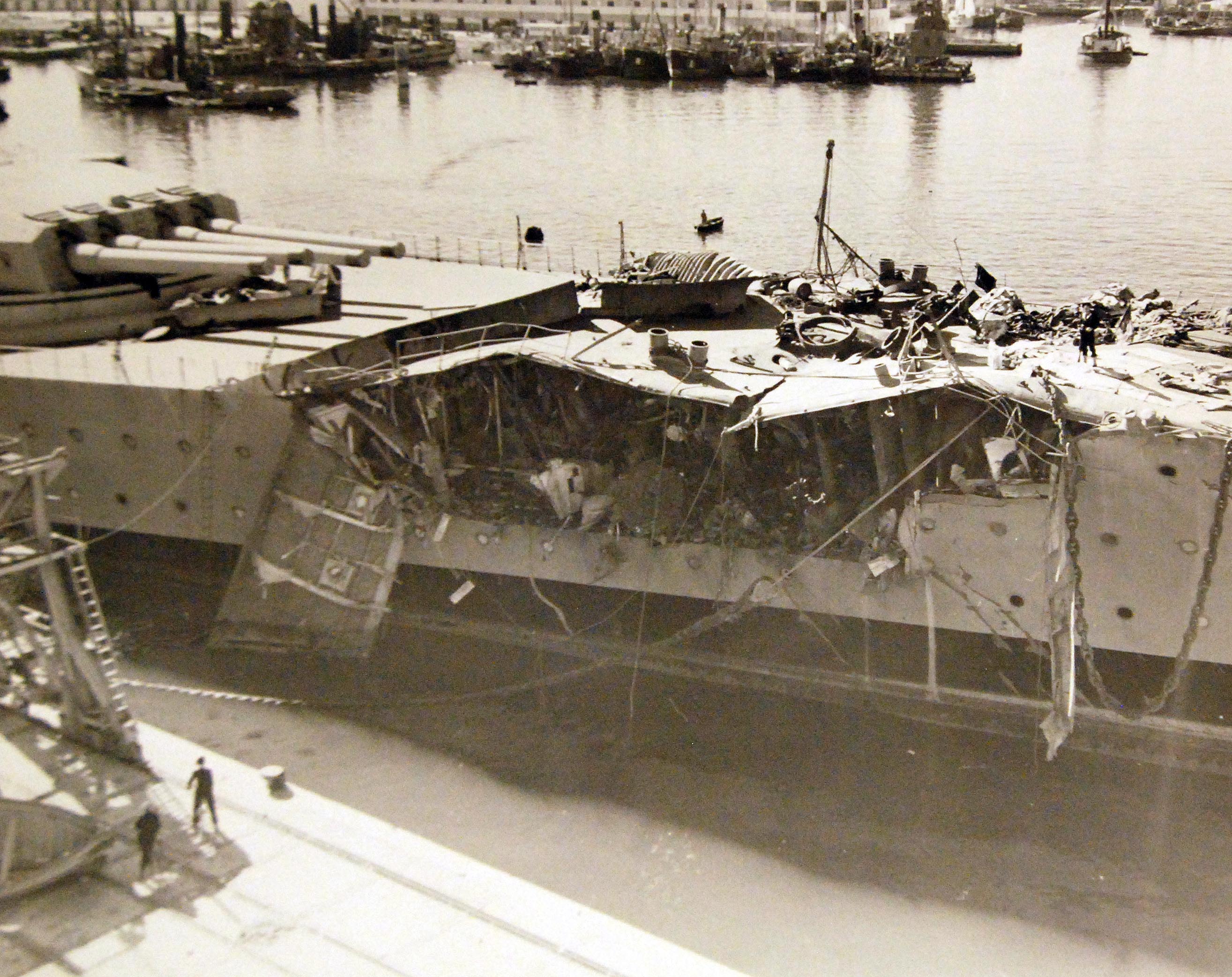
Is it a compelling weapons concept? Of course it is, you don't need explosives to shoot things that is pretty huge. Are wars bad? Of course they are.
That said, the concept has been around for a hundred years, so people are going to work on making a practical weapon out of it. Which means that at some point its going to be a component of a military action. And not having one of your own, will change the calculus of what you can and cannot do.