This isn't a new thing at all. This is how cars all use to look!
This isn't some huge statement on how millennials want to be grownup and childish at the same time, or some other pop-psychology drivel. It's just the normal change of fashion over time. Non-flake paint jobs stand out a lot in a sea of cars with them.
In fact, I've already noticed a shift back towards paints with contrasting metal flake now that even the most pedestrian Japanese cars are coming with simple glossy paint. BMW has this new sparkling copper grey that's a cool grey in low light, a warm light grey in direct light, and has reddish specular highlights and it has this very 90s color changing vibe to it.
> UPDATE: A few ppl have also mentioned the important role of the “Nardo Grey” paint color from (Porsche-owned) Audi in this timeline — a wet-putty hue that came out in 2013 and became a car-head phenomenon.
Grabber Blue came out on the Mustang even earlier and is a throwback to the 70s color of the same name. Voodoo Blue and Army Green on the FJ Cruiser is also a simple glossy color on an even older car. I'd argue this kind of paint was popularized by the retro-modernism of the 00s mixed with the cool grey trend of the 10s.
Yeah, my friend's mom drove an old Lark convertible when I was a teen, and it had a cadet green paint job that looked like this. I always thought it looked particularly classy, especially compared to the glittery cherry red Studebaker she'd previously owned. More saturated hues with this finish feel "retro" and less saturated hues make it feel "futuristic". I'm personally a fan, even though I'm really down on the gray neutral trend in design in general.
>>Grabber Blue came out on the Mustang even earlier and is a throwback to the 70s color of the same name. Voodoo Blue and Army Green on the FJ Cruiser is also a simple glossy color on an even older car.
Yeah, but both of these cars only really exist in one small(by size) market - the US. Audi's Nardo Grey was available(and visible) globally.
The New Beetle came in quite a few retro colors, some of which were non-metallic paint, and a handful are identical to colors offered in the 70s (granted, modern paint methods are different)
I decided to go with some examples because I was familiar with them without having to look them up.
They achieved gloss without a clear coat. Lots of papita colors can be purchased in one or two stage (base and clear). The average person would not be able to tell the difference
I don't think they did used to look quite like this. They also didn't have the metallic element so were a more solid color, but they didn't have the same quality -- flat while still being glossy. The last two pictures of the old Porsche and BMW are what old cars looked like, and that's not the same as the "putty" look.
> Your experience may be limited to the tiny corner of the earth you frequent.
Maybe, but I'm almost certainly from a different corner of the earth, and IME old cars never aimed for the wet putty look.
I follow car news quite deeply, and have been since the 80s, and other than military vehicles, I have not seen manufacturers paint their cars to look like wet putty until recently.
Maybe they were offered but not popular?
If you have links to any examples of old cars that look like wet putty, I'd love to see them.
Personally, I find these "putty" colors to be very nice looking - particularly the gloss grey. It is the polar opposite of the "look at me" red cars of the past. There is a common idea that red cars get more tickets - not sure if that's true, but I have always chosen silver as it is more nondescript and also you don't notice dirt on it as much.
People took that stat to mean that cops can see the red better and so can spot the speeder more easily. I always took it to mean that people who buy red cars like to speed.
Maybe in Australia it's not. In the US it is a myth.
If you get a quote through the Australian site provided, you will be questioned about the color of your vehicle, and this is how that data was collected. Car insurance quotes in the US do not ask you what color your car is.
The linked article (to the extent that it's credible) suggests that:
1. Having any less-common color raises the price of insurance because, in the event of damage, the car will be more expensive to repaint. "For example, metallic paint can be more expensive than a standard colour and therefore the car may be more expensive to replace."
2. Gray and silver cars are the most likely to get into accidents, not red. (Red is #3.)
3. A price comparison site quoted the highest insurance rates for gray and black cars, not red.
The OP didn't claim that red cars were the most expensive, just that there was a surcharge for red which is true.
I've worked for insurance companies here in Australia and the UK. Not all insurance companies ask about car colour but some do. I assume it would be the same in many other countries.
There is a story in the UK that red cars get pulled over more often due to police playing 'snooker'. In a game of snooker you have to pot a red ball every other ball... when playing with cars it means a lot more red ones get pulled.
Living in the rust belt, I have come to enjoy owning gray (or at least mid-tone) color cars. In the summer, we get dust and dirt which looks bad on light-colored cars and requires frequent washing. In the winter, we get road salt which looks bad on dark-colored cars and requires frequent washing. Neither is near as pronounced on gray, meaning I literally never wash the outside of my car. Rain and snow do it often enough for me.
I'm convinced that's the only reason people buy that ugly champagne color on cars. I hate it, but judging by a friend who never washes her car, it does not show dirt.
Work friend from Britain bought his first car in California with a dark grey paint job so it wouldn't show dirt. And then found out that dirt in California is light tan not iron/coal dust dark.
Had a VW in that color. It's very good at hiding dust, less so with real dirt. For city driving, yeah, it could be left unwashed for many months with no-one the wiser.
The nondescriptness of silver cars is a pro and a con - when I first switched to driving one there was an immediate increase in the amount of time it seemed to take for other drivers/pedestrians/etc to notice me, and I've had to adjust my standard of driving defensively to compensate.
Oh, I thought it was just me. I’ve come much closer to getting into accidents with gray cars, because I just didn’t notice them at a glance, or see the movement. Silver seems like a good color if you want to drive a getaway car, and a bad color if you have kids.
It's been studied, there is a crash risk increase for gray cars amongst other colours. I am on my phone and can't find am easy to access source except this:
I wonder if that's also true for scooter and motorcycles. I'm thinking about getting one of those, but ideally in some bright and highly visible color.
I imagine so, but I think you get more mileage from reflective high vis clothing.
Make sure you get to an MSF course, they teach you about lane positioning for visibility and defensive riding techniques. Some assume this means riding like Tom Cruise, but most saftey occurs by never being in an incident at all.
It's definitely more interesting than the overwhelming majority of silver cars in the past 10 years, although I'd really like it if we had more colors in the roads (and used car lots)
I know there are serious logistical and maybe marketing considerations but I don’t know why Tesla, and perhaps any other brands that are primarily ordered online, couldn’t have a ton more colors available. Even if there’s a significant fee a ton of people would jump in it.
The last time I bought a car it was my Camaro. I wanted orange. They didn’t have orange. They had orange-red along with two other reds. I would have loved a deep forest green, but all they had was a neon green.
I've lived thru Mary Kay pink, 1973 GM green, and merconium yellow. That bright grey is the most unsettling color I've ever seen. It's like what needs to be sewn back in after a blobfish knife fight.
The closest analogue I've personally seen is polish ziltz, pigsfeet in clear gelatin.
Silver has a marginal impact on crash risk, especially at night. It may be marginal, but being in a car accident is not something I want to do for a fourth time (never at fault). You might notice how hard it is to see your hood in bad weather if you have a glossy silver paint.
I tend to pick white now, which is also the best colour for hot climates like mine.
> Neutral colors have the added benefit of being more easily resell-able (at a higher price), especially to private parties.
Only for neutral cars. Flashy cars (like the Audis and Porsches described in the article) carry a premium when they're flashy colors. There are even whole events dedicated to unusually-colored Porsches (paint to sample).
That probably depends a lot on where you are. In large parts of the Bay Area expensive cars are ridiculously common and while I haven't gathered any actual data, my impression is that neutral colors are nearly as common for luxury vehicles as they are for normal vehicles. Seriously, a white/black/grey/silver Model S/X, RX/NX, X5/X3, GLC/GLE, Cayenne, etc. is a ubiquitous "soccer mom" vehicle around here. Of course you will also see your brightly colored 911s and similar. Oh, and those new (I think?) mid-engine Corvettes are everywhere.
Often this is because the paint itself is a more expensive option. In the end, neutral colors sell the fastest and most consistently. Colored cars have a smaller market based on the buyers tastes.
I buy it. There are some colors that just always look good on any car. They are fairly basic, but you can't really go wrong with them. Like black paint on a vehicle, black looks decent to good on just about anything.
black is great on a car, but very hard to keep clean, especially if there's a desire to avoid hairline scratches and swirls. There's also a need to avoid car washes to keep the car scratch free.
Grey/Silver color range is much easier to keep clean, and stays cooler in the sun.
> Grey/Silver color range is much easier to keep clean, and stays cooler in the sun.
That's true, however there's also a surprisingly big drop in reflectance going from white (~85%) to even a light gray (~50%). Now these figures are for "normal" flat paint used for steel construction, the glossy metallic paints used for cars probably have higher reflectances. But still.
It's grey primer with clearcoat over it. How could that be a good thing?
It's also as invisible as possible against the background of an asphalt road. Also a bad thing. Unless headlights come on automatically in fog or twilight, that aesthetic will likely be a deadly one.
Very good point, this removes one layer of paint then. All cars have three (or four) layers of paint. This is two layers only.
The main reason could be to increase the profit for the maker (or reduce the market prize so they could compete). Should be also cheaper to repaint for the owner
The trend of gray tones in consumer goods brings to mind the Puritan rule of wearing only "sadd colors." Perhaps we are experiencing a new wave of Puritan chic?
From the book Albion's Seed: "The taste of New England ran not to black or gray, but to “sadd colors” as they were called in the seventeenth century. A list of these “sadd colors” in 1638 included “liver color, de Boys, tawney, russet, purple, French green, ginger lyne, deer colour, orange.” Other sad colors were called “gridolin” from the French gris de lin (“flax blossom”). Still others were called puce, folding color, Kendall green, Lincoln green, barry, milly and tuly."
I wasn't aware this was a trend; I thought it was just practical. a gray coffee machine may not make for a striking kitchen centerpiece, but it doesn't clash with anything either. if you're KitchenAid, by all means, go and make 12 different colors for a stand mixer. but if you only want to make one color, it might as well be gray.
I always get my cars in gray for a similar reason. I like cars, but I don't want mine to stand out on the road. don't need the extra attention from cops, thieves, etc. plus, a gray car in the right shade looks clean for a long time between washes.
The trend the article discusses is using colors that are tones, meaning a hue mixed with gray. So it's not just that a lot of things are gray, it's that even the things that are colored have a gray-ish cast.
I admit I didn't read past all the pictures of cars in TFA. I see what you mean with kitchen items now. weird trend, but I think my original point still holds? desaturated versions of otherwise incompatible colors clash less, to my eyes at least
Ok, I'll bite. I used to live in Dallas. It's not really a secret that literally everyone speeds all the time on the highway. If you commute daily, it's not uncommon that you'll probably be going 10-15mph over the speed limit at some point. Of course you don't have to speed, but sometimes it's easier to stay in the flow of traffic and drive a little faster.
Most of the time, the cops are too busy with other stuff to sit by the road writing tickets for speeding. This is probably why there are so many speeders. It's barely enforced. However, on the 3 days a year where the department has had a slow morning, I wouldn't mind having a less conspicuous car. For the cop, it's much easier to focus on the bright neon green car and pull them over once they turn on lights and sirens and start following them.
Nobody wants attention from the cops, but it's also important to acknowledge the possibility. If you drive the speed limit perfectly, by all means, get a bright colored car. For most people, a little bit of speeding is a daily habit and statistically, having a car that blends in will lead to fewer tickets on average.
In my country everyone is speeding as well, but speed limits are enforced primarily by the radar-cameras, not cops. So you just have to know location of those cameras (thanks, Waze) and slow down there.
I assumed that your concern was cops giving trouble just because they can, not for actual violations.
This is true where I live currently (Netherlands). Luckily, there are no silly cameras on my commute to and from work. :)
In America, cops generally will leave you alone unless you're actively breaking the law right in front of them. Most departments are understaffed already, especially in big cities. In Dallas, there were a couple of suburbs that were notorious for writing traffic tickets and in those areas, people would slow down. But those areas were wealthy and have low crime rates so the local police don't have much else to do.
There was a time when the point of the neutrals trend in decor was supposed to be that everyday things could fade modestly into the background to let the colors of clothing, food, art, etc. stand out more. But I don't think that's the way the trend has gone. Kim Kardashian has a completely beige house, in which she and her children have been photographed wearing beige clothing, etc. It seems very exhausting. And the flip side is that youth culture seems to remain interested in bright colors, at least for now.
The Puritan and the modern intellect-centered (technical, ideological, on social media a lot...) type person have something in common. Both put "the life of the mind" first and the real world second.
Maybe they both seek to surround themselves with drab, undistracting stuff so they can focus better on their mental life.
>The Puritan and the modern intellect-centered (technical, ideological, on social media a lot...) type person have something in common
As someone who is more read I care to be about the culture of early new england I feel very comfortable (and by comfortable, I mean I hate it and I think that it is a terrible trend) saying that the current crop of people who fancy themselves intellectuals and historical puritans have approximately the same politics. They have some radically different beliefs about acceptable behavior but the overarching fundamentals about right vs wrong and community, family and self line up very well. This is not a compliment.
The only true matte finish on a normal car that I know of is the Hyundai ionic 5. The wet in wet putty is the glossy coating. On matte paint, there is no gloss. It’s also a pain to maintain
https://manuals.plus/hyundai/ioniq-5-matte-finish-paint-manu...
Most of the luxury brands offer true matte paint finishes. For example, if you want matte paint ("Frozen" as they call it) on a BMW, you can order through this program:
Like you said, these true matte paints don't have a clear coat, so they are a pain to own.
On the other hand, these "Putty" finishes that the blog is talking about are likely an attempt by the paint companies to offer a matte-like look that is still easy to maintain, and that's why they do employ a clear coat. The PPG paints use a special matte clear coat, and axalta paints use a matte additive to the base color and a matte clear coat product. Those are the two main automotive paint suppliers, but I expect the other suppliers have a similar approach.
Multiple lights that can all be turned off - except for the so called "daytime driving light", but that's also a double edged sword: many drivers seem to think that if they have these they can get away with leaving the "real" headlights off for longer, but forget that there is no daytime light at the rear of the car. So yeah, a murky-matte-gray car in murky gray weather at twilight is the worst situation for visibility I can think of too...
I only really see this issue on old vehicles. Most vehicles have lights set to automatically turned on when it gets dark. I very rarely see a new vehicle that doesn't have this enabled and/or daytime running lights. Even newer Honda civics have a feature to automatically turn on high beams when no oncoming traffic at night
Reflectors glow only when somebody else lights them up. Background-colored cars makes it a lot easier for two unlit fools to connect. Head on.
Black suffers from this somewhat, but less since backgrounds on the road are rarely black until the hour when headlights become essential. Muted grays are a handicap all day long in any form of suboptimal weather.
That's not accurate, so many designs of cars are hard to see the side profile of even with lights. Even if it were, it's not bourne out in studies of paint colour and crash risk. Grey/silver represents an increased crash risk, especially at night.
Something I think hinders visibility is also that cars are often amongst dozens of other lights, especially at intersections where it matters most.
Actually the Australian study you quoted earlier showed that the difference in crash risk was largest during daylight hours, as in Australia many people drive with their lights off during daylight.
But yes, I suspect if you were to redo that study in a country where people always have the lights on (perhaps due to local law if nothing else), you'd see the biggest difference in poor lightning conditions.
Daytime too curiously enough. Though I suspect some of it may be the proliferation of cheap LED replacement “bulbs” being put into housing meant for halogen bulbs and never being aligned/aimed to mimic the factory cutoff.
In most the the aftermarket LED bulbs that I’ve seen, the location of the diode(s) causes light to emit from different point(s) that it would from a halogen bulb, thus reflecting differently than intended.
> “To put it simply, yes. LEDs can be used in reflector headlights BUT (and it’s a big but) if you’re upgrading the bulb, you also need to upgrade the reflector bowl. Failure to do so can blind or dazzle other people. You see, no two reflectors are the same. Each reflector headlight design is meticulously crafted based on the precise specifications of the halogen bulb it intends to use. This ensures there’s a good throw and spread of light.
Replacing a halogen bulb with an LED, therefore, throws the reflector off balance. Even minute changes will alter where the light hits the reflector and gets projected out to. Essentially, the light will end up in places it was not intended to. This is exacerbated by the fact that LEDs are a directional light source, whereas halogens are omnidirectional. Unlike halogens, an LED will not illuminate the reflector surface evenly. This has two consequences:
Firstly, by shining light only at the reflector’s sides, there’s likely to be blank, hollow, or hot spots in the light beam.
Secondly, by failing to illuminate the upper portion of the reflector, the headlight will have reduced distance projection. Instead, the light will scatter above the cut-off point and blind other drivers.“
Exactly this. I don't have many opinions or preferences on car finishes, but the now-standard retina-searingly-reflective finishes ought to be illegal for safety reasons. If TFA is complaining about a move away from that, then I hate TFA.
[EDIT] I'm not 100% sure what TFA is complaining about because I'm pretty sure I haven't seen this in the wild yet. Must be a regional trend. Coasts usually get stuff way sooner than us so maybe I'll know what it's about in a couple years.
In the Dallas area, not quite a coast, this trend has been bugging me for roughly a year, and the 2023 models of many cars seem to feature non-metallic colors even more than 2022 did.
Well I think the author makes a good point - the flat finish looks a lot better with more interesting colors (and more gloss). The abundance of de-saturated blues and green will age like milk.
I wish they could tune down those bight LED back lights (and brakes and turn signals) I hate driving at night because of this.
Audi is particularly blameable for this.
I think they should be regulated the same way as low/high front beams.
Don't mind the "wet putty" look specifically as much as I hate the related lack of color available on cars these days. What happened that made everyone want bland, boring colors on everything? Liven up, people!
Because people realized that glaring saturated colors everywhere is garish overkill, and that you don't need to scream personality with every square inch of the objects you own.
We've (thankfully) moved to a world that is primarily more neutral tones, that allow you to selectively choose color accents that are more easily and economically swapped out depending on your mood.
When you're next to a car or getting out of it, it's much nicer for the color accents to be coming from your clothes than from the giant car. That way they highlight you, not a big piece of machinery.
I mean, I'm not exactly advocating for everything to be neon yellow and pink everywhere all the time. I'd just like something to break up the colorless-with-accent (usually something desaturated as well!) monotony that's everywhere, lest the whole world end up looking like Mirror's Edge. It's a balance.
Where the pendulum lies might just be a matter of fashion.
Most cars aren't that interesting so making them invisible with different shades of gray makes sense. Beautiful looking cars deserve nice colors though. I would never buy a gray Porsche.
You speak too confidently about what people realize or want but your advice on how to properly vogue is spot on. You can't take that damn thing to the dance floor, can you? But I don't think it correct to ignore the idea of aesthetic preferences that are not about status or visibility, but rather invigorating and seductive 'things' ;-), the way a properly loved piece of machinery to whom we trust our fragile lives to must and should behave. Sexy. Now that is not about glitz or attention whoring, is it?
Also, I mean, you are right in that over doing anything is likely an error, but Nature is our teacher (so say the same "people") and Nature is rather keen on bright colors. I guess it really comes down on who is doing the splashing around and nothing definitive about saturated colors in themselves.
It's a feedback loop problem. Most cars that dealers order are not for a specific customer, so they choose bland colors that most people can live with, which makes those cars easier to sell. Then the automaker looks at orders and sees that most orders are for white/gray/black (in that order for NAFTA). The OEM stops offering the unpopular colors because they're data driven. Then customers who don't mind waiting for a car to be ordered want a fun color, and the choices are very limited.
And some automakers actively discourage factory orders.
The other problem is that while both partners in a couple may like bright colors, they may like different bright colors, so something neutral becomes a reasonable tradeoff.
There is a similar thing happening with houses. I have watched This Old House for years and they will often mention that when the house was built 100 years ago the exterior was painted with bright colors. My grandmother's house was stucco with molds used to make it look like it was stone blocks and each block was painted a different color.
Now it seems most houses are painted boring "neutral" colors (there are exceptions, of course).
You can choose from any of these five vibrant shades of grayscale, seven if you include almost-black and white-but-not-quite, plus dull-dusty-yellow and very-dark-blue!
PPS: I genuinely wrote 100% of that comment out of nowhere absolutely tongue in cheek, except with "dull-red" instead of yellow, but still figured out I'd check out VW's website[0] just for kicks to see if my joke had any sort of ground, and was so not disappointed... I even got the counts right.
PPPS: Come on, Oryx White Premium Mother-of-Pearl ?!
Novel and unusual colors are more expensive to repair (fewer parts with matching colors) and thus bump up insurance premiums. Fewer color lines are cheaper for both the manufacturer and customer.
If it was important enough to a large enough group of people, you'd think manufacturers and dealerships would jump at the chance to offer another high margin markup line item. I personally wouldn't mind a less neutral color, but I'm not interested enough to pay more for it myself.
I know rationally why a manufacturer would want to limit their color palette. I just wonder why people were more willing to pay for color in, say, the 80s than they are now. Look at the paint colors available for an early 80's Corolla [1] compared to the same car today [2]. Perhaps I'm overanalyzing but I think it's a symptom of an increasing tendency to emphasize things like insurance premiums and resale value over any kind of humanity or personality.
We see the same thing in modern interior design. Just like many of today's cars it's black, white, and grey. If you're lucky, maybe a neutral color or two. Inoffensive, but soulless.
As far as interior design goes, I think it's pretty common for realtors to recommend repainting colored walls to a neutral pallet to maintain a broad appeal / let potential buyers more easily imagine their own style in the home. There is a "chic" trend taking this to an extreme, which might just be a reaction to that, I'm not really sure.
However, it does help explain why cars come in fewer colors today- dealerships hate having cars sit unsold on their lot, and don't want colors that appeal to a tiny percentage of potential buyers. If manufacturers struggle to push colors onto dealers, then they simply stop making those colors.
Speaking of soul... if I was given a choice between the "4C8" variety of orange and cheaper insurance premiums, I'd pick cheaper insurance premiums in a heartbeat. Maybe I'm a souless impersonal robot (I've been accused of being a robot before, not so much the rest), but I really don't feel a need to express myself with the color of my car. The extra color options are very much in the "nice to have" category.
Very few parts come pre-painted to the body shop. If you find yourself in need of one, you'll find that they'll need to paint the panel they're replacing and do blending on the adjacent panels. As good as they are at matching color, they aren't perfect.
Also, UV fades the paint. Even if you could get pre-painted panels, they wouldn't match a car that's spent much time in the sun.
I had a rattle can tinted to match the factory color on my hood. It wasn't even close on the 12 year old car. On the outside of the hood. The inside of the hood would've been pretty damn close.
It depends on if you're getting a new or a used part, no? Most times for cars over a few years old the shop can get a used panel off of a scrap car for much less than buying a new part, and in that case it might already match... Unless they are stripping and re-painting those, I have no idea.
> you'd think manufacturers and dealerships would jump at the chance to offer another high margin markup line item.
for whatever reason, paint and detailing work tends not to be the strong suit of a car dealership. a lot of enthusiasts will even refuse a complimentary wash when they get their car serviced.
the higher end manufacturers do offer additional paint options. but it's really expensive (Porsche charges >$20k for true paint to sample) and it takes even longer to get your car delivered. it's hard to justify at any price, but especially for the vast majority of cars that cost under $100k.
> I personally wouldn't mind a less neutral color, but I'm not interested enough to pay more for it myself.
And thats the thing, those that are interested enough can still go and get their car repainted, without making it more expensive for the rest of us that aren't as concerned with having their cars be a unique color.
Taking a brand new car to a paint shop right of the lot doesn’t seem mighty efficient.
The premium manufacturers usually offer colors other than neutrals at a premium, and what the OP is pointing at is that economy brands don’t offer that option at all. Why can’t we have both cheap neutrals and color options?
It might be less efficient for the few consumers who do want custom colors, but it is by far more efficient for the rest of consumers and the company to limit their color choices. Their manufacturing processes aren't set up to do very small runs of specific colors, and for those premium brands that do offer custom colors, the further away from the standard offering you go, the more you pay. Custom colors on some of the premium brands can easily run into the thousands of dollars, largely because they're doing effectively what I suggested -- doing a custom paint job towards the end or after assembly.
Not to mention that even supporting the pipeline of being able to order custom colors, with all the logistics that entails after manufacture, might not be something the manufacturers want to support.
> Why can’t we have both cheap neutrals and color options?
No one wants to bear the extra costs for color lovers. Dealers don't want to be stuck with the banana-yellow cars for months on end, and manufactures don't want to switch their painting booth paints for colors that are <1% sales when they can crank out 5 more white cars in the time it takes to switch colors.
Wraps are cheaper alternative to repainting, so those who love bright colors can get an electric blue wrap right off the parking lot.
I loved the 70's for car colors. Actually, a lot of consumer products were more colorful then. To me that colorful era reflected an optimism, an enjoyment and an embrace of life.
For some reason over the decades that followed it seems we all started preparing for a funeral of some kind.
Is it really though? Logic would dictate that while the market for a non-neutral color might be smaller, supply would also be smaller which should cancel the demand side out.
Anecdotally, and this might be a poor example because it's an enthusiast car and not something that most people are going to be encountering, I was looking at used Porsche Boxsters earlier this year, and the more interesting colors actually commanded a premium over silver or black cars because they're much harder to find. I do wonder how that translates to something more practical, but I have a hard time believing that it would negatively impact resale value to a huge extent.
> interesting colors actually commanded a premium over silver or black cars
Because someone paid more for that in the first place.
Every dealer is going to have a white, black, and silver/grey at 'stock' cost. After that the price goes up.
People by a car in a color because they like that color and are willing to pay more for it. People buy a car in a neutral because they want a car and don't care about the color.
You make a really good point, and while the color-price discrepancy remained true in my story for the 'stock' cost yellow and red vs. neutrals, my sample size is 1 model of car so it's hard to say how true that stays across the board.
> Is it really though? Logic would dictate that while the market for a non-neutral color might be smaller, supply would also be smaller which should cancel the demand side out.
Logic would dictate that the smaller markets will be less liquid and have wider spreads.
Yes. I worked in asset backed finance on decision systems, and that was a rule. Neutral, meaning black, grey, silver white, while not always the first choice for second hand buyers is much less of a dealbreaker than a 'wrong' color.
Commonly repeated non-sense. You can check on Autotrader yourself. There is no effect AT ALL between colors and neutral colors might actually sell for less then flashy colored cars overall.
nevertheless, one can lament the situation: With all the mass production and economies of scale, any desire off the beaten path becomes either extremely expensive or unobtainable.
Hey, it's more profitable to sell junk that doesn't last very long, to have a closed platform, to make a smart tv that tracks you.
This article confused me because of the connotation with "new cars." All car paints used to look like this until more and mare cars started selling "metallic" colors in recent decades, often for an extra cost. Look at old Volvo 240s for example, and very few of them have metallic colors, and usually only the higher end models. White, black, and red typically have always been and still are usually non-metallic colors.
A few years ago I suddenly noticed that non-metallic paint became so rare that it looked striking, when in the past (mid 90s or earlier) it had been the opposite- metallic paint was rare and a car with it would really stand out.
I strongly prefer the non-metallic look, and think it holds up better over time as well. It looks cleaner and simpler to me. I also prefer the look of Cellulose based paints used on mid-70s and older cars, which were even less glossy than modern non-metallic paints.
It's not just about flakeless paints, it's about gray (and desaturated colors) used for flakeless paints. Cherry red and bright yellow flakeless paints don't look like putty.
Grays have been a significant trend for years now, in everything from houses to furnishings to cars.
In my city in the Southeastern US (and others from what I see on social media), the dominant colors for high end house remodels are dark gray or stark white. So it's not infrequent to see a charcoal gray house with a couple of putty gray cars parked out front.
From the standpoint of reducing solar heat gain and fuel/utility usage, it's a terrible trend.
I’m guilty of this trend. Painted our house almost black last spring. Brutal summer. No impact to interior or HVAC use/cost as far as I can tell. I’m in Texas fwiw.
Interesting! Sounds like you have a well insulated structure. One other aspect, however, is the effect on the outdoor spaces on the sunny side of the house. You might find that they are warmer due to the increased radiant heat absorbtion and emission of the dark surfaces.
I’d actually be surprised if it was insulated much at all by modern standards. It’s a mid century construction. My guess is the air gap between the insulation/siding and the masonry is carrying the heat up and out of the attic/roof.
And yes the radiation on the exterior is quite noticeable. It’s being felt by a few bushes.
I'm not a car guy so am pretty oblivious to the trends, but I actually stopped and took a photo of an Audi with this a couple of months ago, because it looked fantastic IRL. Not sure how much it comes across in the photo https://i.imgur.com/9sQQwT2.jpg , it looked more matte in the flesh.
That's precisely the "wet putty" effect being described. It's quite striking. Often your first way of describing it is "matte" but it's clearly glossy.
"Wet-putty cars is part of a broader mainstreamification of gray-shaded consumer-good colors heavily targeted at younger Gen-X-ers and Millennials." Basically, it's a design trend from architecture and consumer products that bled into car colors, according to the article.
I've been wondering about this for years. At first, I thought it might have something to do with new paint manufacturing techniques or environmental concerns with traditional paint jobs. But probably just a design trend.
> We are talking, e.g., ~2014-era Dwell house pictorials, Heath Ceramics jawnz, Kinto thermoses, a bunch of the new Technivorm Moccamasters, Mepra flatware, and “popping” PVC kicks from Crocs to Bottega Veneta Puddle Boots, etc., etc.
Crocs are the only brand I've heard of from that paragraph. None of these words are in the Sears, Roebuck catalog.
It's a fashion newsletter. You're likely a step or two away from these influences but not the intended or expected audience of the products themselves.
It's like how your favorite musician's favorite musician is often someone you've never heard of and sometimes not something it's even easy for you to like. Their entire professional life is in experiencing and evaluating these things, so they get way "out there" compared to people who are not focused on it, like us.
Yeah, I'm not complaining. It's amusing, if anything. And while in fiction coming across brand-heavy paragraphs might be irritating, it can also be evocative- cyberpunk novels love to namedrop a ton of fictional brands.
I drive a 2002 bright yellow Mini (official color name Eggyolk Yellow), which is showing its age a little from the dings in front but still shines up nicely and makes it easy to see in the parking lot.
The other day our family and some friends of us were driving in the family SUV somewhere downtown and saw another, newer Mini, with a totally custom paintjob, it was a pearly, shiny, electric pinkish-purple, kind of like a fancy candy wrapper. I think they cranked their flake content up to 11. The entire car OOOHHed and AAHed and asked to slow down to gaze it at. Great color, great statement, wish more were like that.
The handful selection of home goods (and one house) picked in attempts to illustrate the point that it's affecting more than just cars and is some generational effect is hilarious.
Sorry to whoever wrote this blog, but vases will always come in a sickening plethora of colors and patterns.
Why do new websites start with a blurb about the site, then a flyover to nag you to sign up for their mailing list? Whatever this article had to say is lost, I just hit the Back button.
it's trendy, and the latest blogging platform du jour. you'll be clicking "let me read it first" multiple times per day until substack turns that off, you block it somehow, or the next blogging platform du jour comes along.
> In the context of wet-putty whips and other contemporary consumer products, though, this strikes us as a hedged, half-stepping, and underhandedly infantilizing approach to color design all the same — a way, basically, to sell millennials “grown-up” toys within a smokescreen of ersatz refinement.
You're mileage may vary of course, but in some way this reminds me of modern superhero movies. Sure, you're still watching Batman, but its gritty and serious now, acutely aware of the wider societal implications of delegating the fight against organized crime to a guy in a bat costume.
Nothing against enjoying childish things as an adult, but it's notable that those movies do a lot to pretend they are actually thought-provoking culture pieces dealing with current issues - and not the latest adventures of characters which were invented almost 100 years ago to amaze children.
> Nothing against enjoying childish things as an adult, but it's notable that those movies do a lot to pretend they are actually thought-provoking culture pieces dealing with current issues - and not the latest adventures of characters which were invented almost 100 years ago to amaze children.
This is particularly notable with the recent Batman movies vs. say Batman Returns (1992). That was not a "gritty" or "serious" movie but still earned its PG-13 rating.
I used to drive a Dodge Magnum - bought it for a road trip around the US and ended up really liking the car. Unfortunately, Americans hate station wagons (and it only really came into existence when Germans bought a controlling stake in the company), so the model only lasted 3 years in production.
It only dawned on me that SUVs were tall station wagons when I learned that the current model Dodge Durango was originally going to be given the Magnum badge. I started looking at SUVs differently... But I still can't get on board with the format.
Anyway, now we've got a Transit Connect, with shiny metallic blue paint. Unsurprisingly perhaps, this eurovan is also being discontinued in the US. The automobile market in the US is bonkers.
I guarantee most of them don't give a shit, they bought an SUV because it's practical and convenient and the incremental increase in operating costs, fuel consumption, etc. is inconsequential.
They don't give a shit because they don't know better. My wagon carries just as much cargo as a mid-size SUV but it gets 10-20% better mileage and can take a corner a hell of a lot more comfortably. It's just a much better driving experience.
Depends on the SUV. A Ford expedition, and other full size SUVs most certainly were not descendants of station wagons, but of covered full size trucks.
Love my wagons, btw. Id love to have a subtle sport wagon.
The Nardo grey on Audis is what I immediately thought of, I definitely think that's what started the trend. The first car where I noticed this effect was the Lamborghini Reventon, which Wikipedia describes as "mid opaque grey without the usual shine". That was apperantly inspired by fighter jets.
I like it, although like everything it gets boring when it takes over and dominate. A bigger problem is the lack of color, every new car is some variant of grey.
It turns out there is a world wide trend towards grey, white, black, and colors in products of all kinds are decreasing. Some say it is the averaging influence of AI data analysis of consumer prefs. An overview here:
https://craft-theory.com/blogs/news/are-colors-disappearing
Clearly designers have gotten influenced by the clay modeling process used to prototype cars and now expect the real cars to look similar. (half-kidding)
Flat paint became popular in house interiors first. Then matte finish became a trend in autos but it's insanely difficult to keep the dust off; especially the textured variety that is popular. I think the manufacturer's are trying to find a happy medium between the trend and the realistic maintenance.
It looks like the recent VW vehicles have all defaulted to this worst kind of gray: it's not just lifeless, it's devoid of light and expression and joy. I see it in all new Skodas and quite a few VWs.
A high gloss surface is easier to clean. You see gloss used for interior trim in houses that gets a lot of touch and wear for that reason.
Walls, which get comparatively little touch, get a lower sheen.
If you aren't referring to sheen and are referring to the sparkle of metallic paint instead, I don't know either. I'm betting that it hides imperfections in the underlying surface better, but I really couldn't say.
I have read that white and yellow are super forgiving colors as well, which could be why you see a lot of non-metallic white on fleet vehicles.
As a millennial: I like these colors. They seem to make no statement at all and be unoffensive. The world around my seems very easily offended and the last thing I want to do is stand out with some sort of color opinion that might say something about my belief in anything at all. Putty colors sounds right to me. I'd like my choices to be moldable into whatever might be in fashion.
I am also a big fan of the colors. I feel like I get enough flashy bright colors from my phone and job, and it feels more natural and calming. I think the calming bit also subconsciously gives me a feeling of more dependability as well.
I don't like this reasoning, but I agree with it. These colors represent a passive emotional stance, a denial of individuality that's in tune with the post-COVID / post-Floyd / post-Trump zeitgeist. A retreat to safe homogeneity.
The trend started showing up earlier than that, of course, but I think that's why these colors have found a larger, more enduring market than anyone expected.
They may also be showing up more often because the mica flakes were considered environmentally unsound and had to be replaced with something more expensive or less effective, or something like that. Ask anyone who bought a $100K Porsche a few years ago and is now watching their interior adhesives and windshield seals fall apart.
They look very tasteful and other car makers and individual designers in other areas seem to agree. The author even said:
> The effect was sneaky but striking… the VW looked more uniformly smoothed, and as a result more visually dense, than yr typical car — sort of like it had been formed out of wet putty. Paradoxically, the paint job was so “muted” that it drew our attention way more than any of the other regs-painted cars at the trailhead…
There's nothing that indicates it's better at hiding or being 'inoffensive'. A brighter red or other glossy colours are just not very interesting but unless it's neon they still blend in with every other car because they're normal these days. A boring white/black design would be more inoffensive.
Every single one of these new colors screams "military" to me. That's not a negative or positive descriptor, to my mind; just the first word that pops into my head when I try and describe the trend.
It's a trend and fashion, and not a particularly new one. Why is the author so annoyed by it? I got strong "old man yells at cloud" vibes from what seems to be a very young person. Strange.
Mica is the main component used to give auto paints their metallic look. Mica is mined in sometimes terrible conditions in India and Madagascar. I wonder if Porsche joining the Responsible Mica Initiative has anything to do with the reduction in metallic finishes?
Weird, mica is extremely plentiful here - there's actually a scandal here where concrete blocks to build houses were made with too much mica, up to 14% in some cases. (It's not good for the structural strength of the concrete). It feels like you could walk into any field in some parts of Ireland and pick up enough mica to last the worldwide auto industry for years.
I have been noticing this style for almost 10 years. The recent uptick in cars with this style paint surely indicates that it will not be around much longer.
> The result is faintly but palpably uncanny, almost as though a computer-rendered object has somehow infiltrated the real world, beholden to a slightly different set of physics…
The impression these cars make on me is slightly less alien: they remind me of the drab utility vehicles I saw in my youth in Romania, painted with whatever paint was available (definitely no sparkle included).
FINALLY. I've been trying to Google this phenomenon for the last couple of years since I noticed it. I wasn't sure if it had something to do with supply chain stuff or just what, but now that I think about it, the "dull shiny" aesthetic is all the rage in lots of consumer goods.
1. it's not that the colors are themselves bad, but that the author feels the trend is being forced upon their whole generation
2. there are a number of not-very-grey pastels that I've seen on the road: Subaru's Hyper blue WRX STI, Toyota's Voodoo blue 4Runners, Dodge's orange Challengers, soon Nissan's new yellow Z, ... so maybe the author is too focused on what they dislike
Re: 1, it's funny because I always felt metallic colors were thrust upon us all for 20 years, a trend with its own missteps. Remember the green metallic early-00s Altimas? Worse than any grey pastel I've seen. But it doesn't indict the whole metallic category.
Personally, one of our first family cars was a pastel close to butter. (nowadays, my car is silver metallic)
Typically you can choose from a few colors in whatever the manufacturer considers a "standard" finish. Additional colors — plus the glossier or more pearlescent finish options — will be artificially locked in to a higher trim package. So, you'd end up spending (e.g.) $5500 to go from "red" to "glossy red", and you'd end up with a bunch of other options you may not have wanted. It's a great, consumer-friendly approach to customization /s.
It's pretty much about a dozen shades of gray, and 2 or 3 selections of black/white these days after car shopping. This may be slight hyperbole.
If you want to paint a new car something other than white/grey/black it seems these days you are both paying substantially more from the factory, as well as dealing with unknown delivery times for your "custom" color car.
Most folks seem to shrug and pick one of the many shades of grey.
I've been commenting on this trend for a couple years now. My pet theory was society is simply moving towards a more dire mood the past 5-10 years.
I've never had an issue negotiating a decent price on a customized order over a car already on the lot. Just have had to wait a few months usually for it to come in.
As for "any color you want", Audi has advertised for quite a few years that for $2500 (or so, it may be more now) you can have any color under the sun. But, when I actually tried this, I was told, "We don't know you, your dealer is too small, we wouldn't paint it that color, and we're booked up for a solid two years anyway". So, while they advertise it for anybody, they seemingly were only doing it for VIPs.
I'm a little confused by this comment. You start by saying you've "never had an issue" customizing a vehicle order, but then a few sentences later directly give an example where you had an issue getting a car customized.
Which is it? Did you once try to get a car customized only to be told they're booked up for a solid two years, or have you never had an issue and only had to wait a few months every time you've tried to get a car?
Personally, I absolutely have had issues trying to custom order a car. The first time I tried to buy a new car I assumed I could easily go and order exactly the options and colors I wanted, only to be turned away from dealership to dealership for actually placing an order. Every dealer only wanted to sell the cars on their lots or search their networks to find similar enough cars to sell me instead of placing an order. The second time buying a new car dealers would agree to take my order, but wouldn't commit to having any kind of delivery even within a year.
I used to think that all Toyota drivers were just boring, choosing the same colours for their cars. As it turns out, only the boring colours are available for no additional charge.
That kind of effect can amplify the apparent popularity of various things. 40% want the boring colors but the other 60% are very-divided over what they'd like, so it ends up looking like 90% want the boring colors because most people won't pay (much) extra to get the color they want, and manufacturers favor not-offensive over actually-desired in a lot of cases.
Another classic example is the 2000/2001 Audi TT in "aviator gray" - there were even joke license plates made to say 'paint me' because it almost looks like paint primer.
VW also played with limited order colors on the New Beetle around this time.
I sprayed my old Caprice with a matte black primer. It looked awesome with the chrome trim. I got a few compliments on that. I wish I would have sprayed a matte/satin clear sealer on it instead of paint.
In my eyes, any car that's grey, white, or black is saying "I care more about preserving my car's financial resale value than expressing my personality", which is rather sad and pathetic. In my eyes. It's a move that says you've capitulated in some small, symbolic way. Give me green, yellow, blue- anything but white. I feel the same way about painting every room in your house white. Why make your home look like the lobby of a bank? You're going to take no risks at all now? Every place you live is just a longer term hotel? Ugh. Just stuff yourself and mount yourself on the wall and be done with it.
Because I have little desire to "express my personality" through my choice of car? I don't particularly like cars. I don't particularly enjoy driving a car. I hate traffic. Driving on a racetrack can be fun, I admit. But I have zero desire to accidentally run over some kid on a normal road in some testosterone-fueled show-off, and drive accordingly, which is responsible but effing boring. I have a car because it's convenient. As for car color, gray is fine because I can basically forget about ever needing to wash it, and it's easier to sell when the time comes.
Yeah, I guess I can understand that. I work from home and I hardly ever drive. Honestly I'd prefer that public transportation was better so that I didn't need a car at all.
And (in Europe) all car manufacturers offer only 5 colors - black, white, gray, reddish and bluish. Maybe 2 blacks. Or 2 grays. Sometimes red or blue cost more than the others. But, essentialy - no-other-colors. (well, Porsches and Ferraris probably got more.. but.. not my sandwich)
That's it. Then, i slowly started realizing it's been going for years... Looking now at any parking place around, the only colourful cars are some 20y old ones - if any. All else.. is either black, gray, here-there white, and few reds/blues.
Damn, someone is salty. I like that color when I ordered my car because there weren't that many cars in such color...now I want a "normal" color because everyone is sporting the same color.
Also guessing (my finishing experience is more on electric guitars than cars), but I would guess the other way. A purely flat color will show slight imperfections more than a paint with flake in it, because the flake provides visual noise that can hide imperfections.
Is it not a military thing? “Battleship gray”? Designed to make your car look more intimidating. Which is what people want when they are stressed and see life as a competition.
There is nothing intimidating about gray-- it is as utilitarian as it gets, and just happens to be useful for camouflage at sea (hiding...not threatening).
While it's true that military ships (and planes) are painted gray in order to camouflage against a background of haze and clouds, it's also true that there's a civilian demographic that have some kind of desire to appear as tough manly men by adopting a military-inspired aesthetic and behaving in an aggressive and intimidating manner.
You can look to long on render models in red clay sculpting and finally convince yourself that this is what looks good.
The tools defaults destroy the aesthetics sense of the artist and thus the artist.
Finally, colour-pickers offering pallets. Have one color you like? Get the default from the tooling too. So download the red clayed car, color pick and out pops the whole pallet of modern car. Its based on aesthetic theorys thus, it automatically has to be a good choice for all scenes.
Trends in paint are fun. Flat colors were last really common in the 90's, which is retro cool in its own way now, although then it was generally done with single stage paint and the gloss/wet look came from the occasional polish and wax, not a clear coat. Metallics have been the more popular choice for a couple decades now, with flats usually being reserved for base models and usually only in white or black.
It reminds me of how movies don’t try new things and keep playing it safe with sequels. Everyone is afraid of trying something new like a bright red car and failing. I have my doubts how good their data is though. It could just be groupthink and hivemind everywhere thinking that.
> - “sh*t” all over the place (“Have you clocked these s*ts??”)
I find this particularly distracting and annoying. Either write out "shit" or just use a different word. "Censoring" your own text like this comes off as an attempt at being edgy.
> this strikes us as a hedged, half-stepping, and underhandedly infantilizing approach to color design
Replace "color design" with "writing" and it becomes self-referential.
You'd think that for safety you'd be able to get cars in blaze orange, electric blue, or the same yellow they use in highlighters. Stuff that literally fluoresces. Why isn't there a paint that glows in the dark for an hour after dusk?
Does anybody know, what the flakes, that the article mentions, is made of? It made me wonder, because they also state, that the colour is used everywhere, not just cars. Also made me wonder, what the real reason might be? Cost? Availability? Environmental protection legislation?
It's been a long time since I did automotive body work. But the fillers and flake in most modern paints are not metal at all. They're glass, ceramics and polymers.
There was a steel coated flake I saw at an auto show that used magnets in the process to put effects in before drying.
I know I saw a titanium at some point, but I wasn't doing the work. So I don't know much other than "metal flake" is largely an effect and not always ingredient.
The kid in me believes all cars should come in Spectraflame, those bright metallic colors old hot wheels were painted, instead of the boring muddled colors available today. Cars today have lost all their individuality and character, and the lack of colors does not help.
This is off topic but I’ve wondered why cat panels are designed in a way that makes them so difficult to fix yourself. It would be nice if I could patch em up or change the color myself, like I can with my walls at home, without making my machine stand out.
This is a deep topic. But the short version is that let's take a paint called PR4 from the factory. If they were spraying this color in the morning in the winter, and or afternoon in the summer, even at the factory it won't perfectly match. Now give the recipe of PR4 to a body shop and it doesn't matter, they'll need to match it anyhow.
As to why panels aren't replaceable. It's cost and weight. If your panel just unbolts, you have the weight of bolts and fasteners, durability of it becoming loose, assembly time at the factory, etc. For modern vehicles, a lot of the class-A body panels you see are structural components. Without these, you would need a stiffer unibody or frame. Cost and weight top to bottom.
Everyone has tried it here and there. Honda elements have replaceable fenders iirc, but it doesn’t change the math.
You can be lighter and cheaper if you don’t plan on swapping panels out.
Body shops are pretty good at what they do.
Fancier cars like McLaren go the entire opposite direction. Some panels have no way of coming out at all they are part of the carbon tub, other panels must be cut out with a knife because they don’t bolt on anywhere.
I don't really care about these colors, but yeah, you see them more and more, even in Germany. But there was a decade where almost every car was silver. Time's a changing ¯\_(ツ)_/¯
Worth mentioning that recent cars are big AF compared to their older generations. A small red 1990 BMW M3 and a big red 2020 M3 are visually very different. If my car is a large SUV I wouldn’t pick a green one, for example.
Why do new cars drive like wet putty? Electric steering makes spirited driving as joyless as a 40 year old Buick. It's like steering a jellyfish. And sport mode only manages to stiffen the jelly.
Because many (most?) cars have things like steering assist to keep you in your lane and not killing a bus full of children. Car design has been focused on safety and not joy riders looking to lose control and crash into something for some time now.
How is "schmesla" not being mentioned? They aren't always grey but they are always metal-flake-free, yet varnished I guess, and I don't personally like it.
I like it. When I was a kid cars were bright colors. For my entire adulthood they seem to have just been black, white, gray. At least this is some damm variety on the road.
US readers: Slightly off topic, but why don’t more people personalize the look of their cars? Is it fear of resale value? What if the personalization was easily reversible?
Customization also makes your car much easier to identify. If another driver is annoyed by you on the road and later recognizes your chariot parked somewhere, a distinctive look will make it a lot easier for them to do you damage.
This is the reason I don't have any window stickers, bumper stickers, or a vanity license plate.
I tend to drive no more than 5 MPH above the legal limit and the road-ragers around here get SUPER bent out of shape about that. (Honking horn, flashing lights, whizzing past on a double-yellow, you get the idea.) The car I drive is very common in this area and don't need any reason to stand out to those idiots.
It is also a theft deterrent for the same reason. If someone steals your car and it has a unique paint job, it will be easily spotted, even with a fake license plate. So thieves will prefer cars that easily blend in.
The answer to the why part of this question, I think, is that this is what computers are capable of rendering. These are exactly the paintjobs that the GTA cars have.
Peronally I like non-flake colors. They remind me of cars from the 50's and 60s. Hope the trend continue but with more vibrant colors instead of gray gray gray.
The first time I saw a car like this, my reaction was that it looked like the classic Packtra 'Namel enamel paints I used on plastic models in the '60s.
While the gray (especially the matte finish) might cause less specular reflection, any color that makes the car stand out better against the background would improve a light camera's ability to detect and track the object. Given a typical gray and green background, a distinctive color (e.g. yellow, bright red, purple) would make the car stand out most (just the way it does to the human eye). (BTW, I work in the image analysis and object detection space.)
As someone inexpert in SD car vision systems, I believe lidar (or an equivalent) likely will be necessary to enable level 3 in confusing spaces like tight urban traffic or bad weather. Light cameras, even in stereo, don't support reliable rangefinding at distance (since quickly identifying & tracking a trustworthy focal point on every essential target object isn't trivial, esp in low/noisy light). For years to come, SD car software will surely remain inferior to the human visual system in combining target acquisition, recognition, interpretation, and tracking. To compensate, car software needs all the sensory augmentation it can get to build a better model of surroundings, like adding lidar, radar, or structured light to the car's multiple light cameras.
I'm in agreement. I'm amazed that they could come up with an entire blog posts worth of words depicting naught more than curmudgeonlyness towards a new trend. I thought maybe there was a really interesting reason behind the shift when they tapped in the Porsche designer, but nope - just whining about millienial trends.
That makes sense to me. Part of the reason the initial popularity of enthusiasts painting their own cars in a flat color was just that it was unusual. The novelty is gone once manufacturers start shipping them that way.
In my experience, car dealers are more likely to inventory "boring" neutral colors that most people will tolerate to get something on the lot rather than more polarizing bright colors.
I recently bought a Porsche Macan in the "Chalk" color they mention in the article, because I liked it (obviously). It seems that about half the people who comment on it hate it, and the other half love it <shrug>.
Offtopic, but I find the sassy and judgy tone of this article incredibly irritating. I don't love matte car paints either, but I don't shit all over them or the people who like them.
Is this style supposed to be funny? maybe I'm just jaded and cranky.
I'm usually quite critical of campy or exaggerated writing styles, but I thought this wasn't too bad. I like sarcastic and blunt writing for entertainment, but only when there's a legitimate point to be made. The only things that bugged me were the "subscribe to my newslettar!" pop-up and the fact that the author uses swear words but then... censors their spelling? Like, why?
Also, I've been meaning to write an article wondering why the front-ends (particularly headlights) of all cars look like an angry face.
The author discovered non-metallic paint in pastel colors, doesn't like it, and has some really strong opinions about it and the people who do.
The irony of presenting all this drivel on a page with a dull, pastel greenish-yellow [0] background, almost identical to the (quote) "putty-lookin' a** whips" on the pictured Volvo was surely lost on the author. The article's language serves to replace the missing intellectual value.
> Also, I've been meaning to write an article wondering why the front-ends (particularly headlights) of all cars look like an angry face.
Yeah, what's up with that? Is it just a cultural reflection? Is it because the automakers think we want to appear angry to other drivers? I miss the happier cars of decades past: the MG Midgets, VW Bugs, original Miatas, etc.
I love this particular topic, and it’s been something I’ve been following for a while now. It became mainstream to talk about it around 2014 or so, but I first noticed it emerge as a cultural trend in 2002. My personal pet theory is that the vicious, aggressive car style emerged out of the post-911 era after the buildup to the War in Afghanistan and the eventual Iraq War. In other words, I’m convinced that this car style arose in the 2000s out of the cultural militarization in response to 9/11, which led to beefed up and weaponized hardware for military and civilian vehicles in these conflicts. When these conflicts first began, I remember seeing firsthand how this war aesthetic began to bleed into popular culture. One of the first films I recall seeing minor, but aggressive car mods prominently used on screen reflecting this aesthetic was "Equilibrium" (2002). I think from there, it proceeded to spill out into the commercial car market.
they look like an angry face to make others turn away. i'd love it if cars had friendly faces as if they are from the "cars" movie, but i'd be afraid of others trying to approach them for a hug or a kiss
One of the main reasons I'm super into Rivian's aesthetic -- which is super controversial! I love the R1 front end, it just looks like it's happy to be there :)
Aggressive headlights and frontends are part of a trend in car design to cater to those awash with masculine insecurities or being told by the media they need to be more "manly"
Take a look at the previous generations of Mazda Miata's compared with the current.
Today more women than ever before are buying cars, and more cars than ever before are designed (also) with women's needs in mind. Some models are designed to look intimidating, the typical customer for an Escalade or an S-Class probably wants something imposing, aggressive looking. But the generalization in your analysis seems oddly personal.
Design changes so much because people expect a new look to motivate a new purchase. Making designs that will look obsolete as soon as the new one comes out is a huge part of selling the new model even if the technology under the hood (literally and figuratively) may not have changed much.
Ironic request given the lack of any evidence in your previous very definitive statement that it's:
> part of a trend in car design to cater to those awash with masculine insecurities or being told by the media they need to be more "manly"
But if you now tell me (below) that it's just "your opinion" and not a matter of fact then it's perfectly fair to call it "projection" (taking your personal feelings and generalizing them to others).
This isn't a PhD thesis. But fine, every other aspect of product design has been proven beyond doubt to be subject to planned obsolescence. It's not only reasonable to assume that aesthetics won't be an exception, it's also the best area to do it as it cannot be regulated in any way. It appeals to people's inherently subjective tastes.
You can probably find even better resources than these a short internet search away:
I don't have to provide evidence of my opinion about design. You have to provide evidence when you claim that a company is doing something for a specifc reason
For example women are shorter on average than men (and subsequently have shorter arms, legs, fingers) so everything has to be sized and placed appropriately, like seats and seat belts, steering wheel, stalks, buttons, pedals, etc. This is not a given especially in big cars. The dash and pillars also have to be designed to maximize visibility for short drivers.
Then there are the smaller things like storage spaces, being able to pull open the door handle without breaking longer nails, or to get in and out of the car even when wearing a tight dress. Things along these lines.
Ask any woman who was driving 20+ years ago, they probably have a more exhaustive list.
Some reports say that some Japanese women like aggressive grills because looks aggressive is good feature to avoid harassments from badass on road. JDMs are really nice to make small cars to behave looks big and aggressive.
example: Toyota Roomy, Toyota Esquire, Suzuki Spacia Custom
Right... and for every range of height women are 10+cm shorter than men. In the US the difference is 12-14cm regardless of percentile [0].
While things became more and more adjustable recently, this has not always been the case. Even on bicycles I know plenty of women who had to look for non-standard sized parts because they can't comfortably reach the brake lever while holding the grips safely.
Just ask a few women who know about older cars. They can spot these issues because they had them themselves, just like you could spot why men want aggressive looking cars ;).
Hey. I had an old Miata. A friend said it looked like a jellybean. Maybe that's feminine; I don't know. I also haven't seen any current ones, I don't think.
An awesome car. A MG Midget / Triumph but with great engineering.
still, those were super-cool. You could flip them up without turning on the lights, and one Miata driver would greet another one in the oncoming lane by doing that.
Have you also noticed the hot colors are all military these days. Navy gray, desert khaki, marine corps green. I see it as little more than a trend, but it does offer you more ammo to diss.
Because they like them? Because their friends think they’re cool? Do you not buy anything that you like but not need? Are you tasteful in everything your purchase?
You’re coming across as more of an ideologue than the sorts of people you’re so comfortable lumping together. You’re extremely comfortable making sweeping assumptions of people on the grounds that you don’t relate to them. This comment of mine is significantly more negative than what I like to see on Hacker News, but I think it’s important to question needless callousness and divineness.
What really irritated me is that the person has no idea about what they're talking about.
- The color most closely tied to this trend is Nardo Grey, to that point that cars that don't come from the brand that brought it out (Audi) still get referred to by that name: https://touchupdirect.com/blog/what-is-nardo-grey/
- It already has a more suitable disparaging name than "wet putty look", it's the "primer look": Because the cars look like someone covered them in primer, then clear coat, and skipped the paint to save a few bucks. Of course that's not actually how or why it's done, but if you're going to write an article with half empty angst about it, at least use the one insult that actually kind of checks out.
- Murdered-out doesn't mean "matte black" at all, it just means most of the car's parts were made black (by tinting/plastidip/wrap/paint, etc), regardless of if it's a metallic black, flat black, or matte black. They kept on using such a simple to look-up term wrong and it just really grated my nerves each time.
There's a bunch of smaller things that just scream "I googled a bunch of random words, didn't quite get the meaning, but I'm still going to act like I know a lot about this".
>What really irritated me is that the person has no idea about what they're talking about.
Absolutely... I'm also surprised no one seems to be commenting about how he's just kind of wrong in the technical explanation.
He says "flake" is "the tiny metallic flecks that car manufacturers have been mixing into paint for decades" and that new cars have less "flake". But that's kind of wrong... the type of cars he's complaining about generally have mica/pearl flecks, which are ceramic/silicate, not metallic. Mica/pearl paints are a little less flashy to the eye than metallics, and manufacturers have dialled down the amount of mica just a little in addition to that.
idk where you run but in my city murdered out absolutely means all matte black finish and has for years. I don't care what urban dictionary says or whatever that's how it's used in person out there, so this read correct to me.
People who murder out cars with matte black wrap all the time, but people also murder out cars that already black by adding black wheels, wrapping the trim and slapping on 5% tint all the time. Call it being cheap?
Like many things in life the difference between a murdered out car and just a black car is in the details. a matte black car without tinted windows is just a black car.
I agree, it really made me stop reading it. Excessive profanity and dumb slurs make the author seem really uniformed. Surprised the author talks like that and then uses a really interesting title for his blog like its engineering focused.
I found the misspellings and shortenings ("yr" instead of "your"?) to be distracting. It also made me immediately question whether the author would have any knowledge-based insight beyond what just reading the question in the title would give me.
I was surprised to see this newsletter on HN, and even more surprised that no one else was commenting on it's bizarre style. I heard about it a few weeks ago on Twitter. Then there was a NYT article about it (https://www.nytimes.com/2022/11/10/style/inventing-a-new-lan...).
I also didn't really get it at first. And I think it's mainly about fashion, which I'm not really interested in.
But I subscribed just to get follow along and get some diversity of ideas. The writing reminded me of A Clockwork Orange.
I felt the exact same way. I get that it's a writing style and I won't complain about that, but when applied to an argument as subjective "I don't like that color, I like this color", it doesn't work so great.
If you're seeing ads and/or multiple popups on this page, I think your computer has some malware. There should be the standard Substack "Subscribe to this newsletter?" box that comes up and that's it.
Nit, but these aren't matte. They do have a clear coat, but the color underneath is subdued. You don't see very many reflections in those fancy matte paint jobs, like the bimmer pic.
But yeah, this article reads like a stop-liking-what-I-don't-like! rant.
I'm almost willing to go out on a limb and say that bimmer is a wrap job. I actually like the look of it, but that style is very typical for wrapped cars.
EDIT: And if i'm not mistaken, I've found the source for the image and it is indeed a wrap job
I love it. The author has earned confidence in their subjective aesthetic judgements, and the tone relays that confidence without being condescending or dismissive. It's miles better than the "hyperrational dispassionate contrarian" stance that is standard here imo.
I love when people are confident in their judgements. Especially when it comes to style and taste, it's great to see people drive a stake in the sand, and do so with emphasis. It feels almost, I don't know, liberating perhaps.
> What did they do to earn the right to say "I don't like this color"?
Everyone has this right. The author just claimed it.
lol they aren't randos. One is a long-time culture writer and interviewer with a solid reputation and bylines everywhere. The other is an industrial designer for apple and used to be literally a color forecaster for a major fashion brand.
So one is a person expressing their opinion in an informal manner, and the other is a person expressing their opinion in an informal manner? That doesn't seem like much of a contrast.
I thought the rule of HN was to avoid comments like the above, that are baseless and devoid of content, derived purely from subjetive feelings about other people's opinions.
Its not that hard to write the same article in 5 different ways. The author wrote it this way simply because they wanted to. People respond to tone, words, style, slang, crudeness, emphasis in different ways, and writing is an art form. I believe that diversity in writing styles is good.
>Also, if you see "polite" writing how would you know it's fake?
You develop your own detector after being "trained" on the dataset of prior comments.
Okay, that is your view, it isn't mine. There isn't any reason to believe someone is going to be truthful or untruthful. For me, the best way is to develop your own detector. I don't have all the answers, so YMMV.
To the larger point, this isn't about absolute certainty - which is a red-herring and an unattainable ideal.
On the bright side, I learned how much microscopic flakes contribute to paint detail. Overall, it was an absolute snark fest, a large amount of effort for a little opinion.


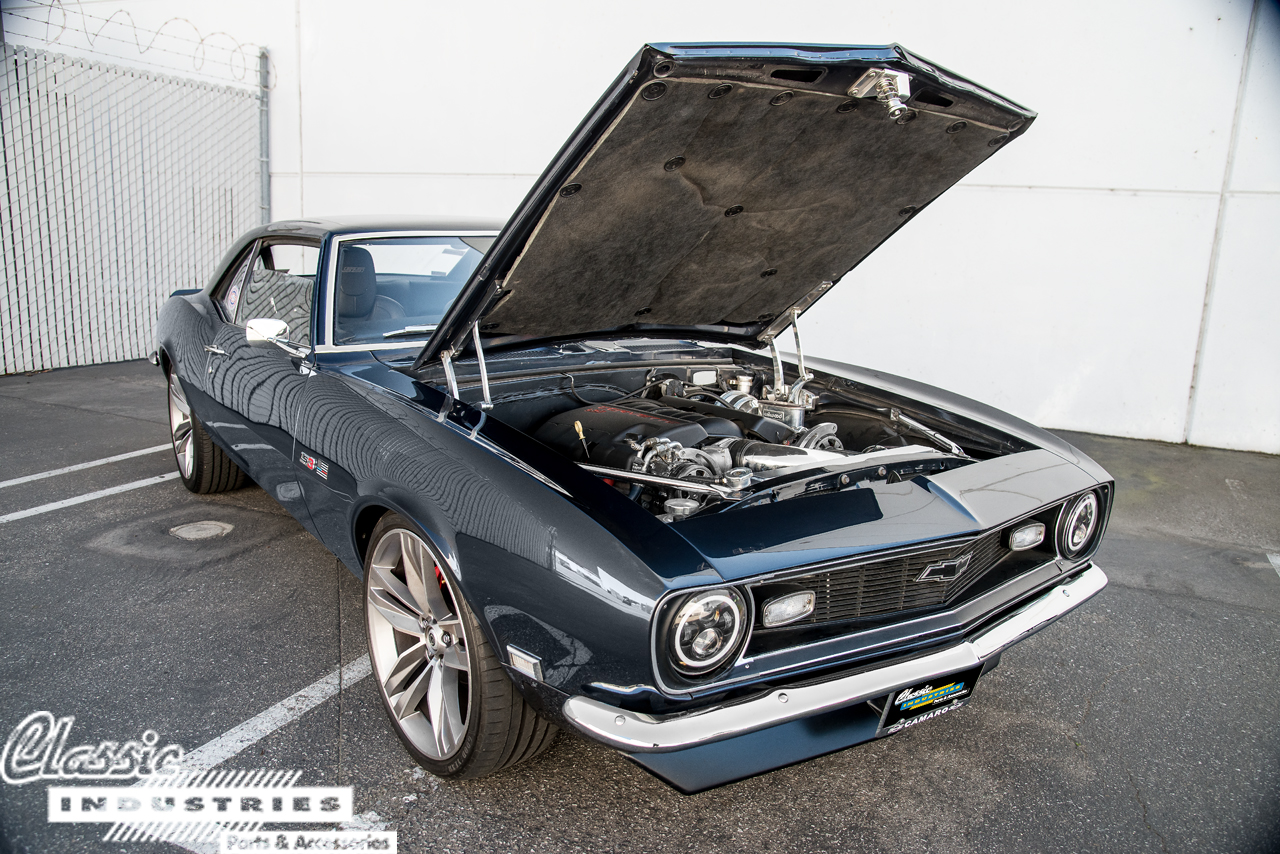


This isn't some huge statement on how millennials want to be grownup and childish at the same time, or some other pop-psychology drivel. It's just the normal change of fashion over time. Non-flake paint jobs stand out a lot in a sea of cars with them.
In fact, I've already noticed a shift back towards paints with contrasting metal flake now that even the most pedestrian Japanese cars are coming with simple glossy paint. BMW has this new sparkling copper grey that's a cool grey in low light, a warm light grey in direct light, and has reddish specular highlights and it has this very 90s color changing vibe to it.
> UPDATE: A few ppl have also mentioned the important role of the “Nardo Grey” paint color from (Porsche-owned) Audi in this timeline — a wet-putty hue that came out in 2013 and became a car-head phenomenon.
Grabber Blue came out on the Mustang even earlier and is a throwback to the 70s color of the same name. Voodoo Blue and Army Green on the FJ Cruiser is also a simple glossy color on an even older car. I'd argue this kind of paint was popularized by the retro-modernism of the 00s mixed with the cool grey trend of the 10s.