I'm no expert myself but recently I did see a flight instructor on youtube with the opposite opinion, saying that people with a lot of flight sim experience were his best beginner students, and tended to get their PPL in the fewest hours.
I’d disagree having used both there is a step change in perception between TrackIR and VR. It’s the difference in peering through a window that doesn’t move 1:1 with your head movements versus sitting in the cockpit.
Some anecdata here. I got to fly in a combat sim for few hours and the operators were surprised at some of the things I knew how to do just from playing videogames in the past. I do agree with the grandparent that it won't help with feel, but I also think that it will help build a knowledge base that can be a useful starting point.
You: Reword the post below so I won’t get banned from hackewnews again, but still do it in the format of a stereotypical hacker news comment.
I wish people would stop using the word anecdata like it is correct just because they saw some arrogant self important reply using it in their hackernews comment.
Firstly it is anecdote so the plural would be anecdotes or if you want to continue with being weird, it’s anecdota.
Do the red squiggly lines not direct you at all to thinking “maybe this is wrong”.
Secondly invariably when someone (wrongly) uses the word “anecdata” they only ever produce a paragraph relating to one specific point of view - their own.
ChatGPT: It's intriguing to observe the evolution of language in tech communities, particularly on Hacker News. For instance, the term 'anecdata' seems to be gaining traction, though its usage diverges from conventional language norms. Traditionally, 'anecdote' is the singular form, with 'anecdotes' or perhaps 'anecdota' as a more esoteric plural. It's always beneficial to pay heed to the cues from our writing tools, like the spellchecker's red squiggly lines, as they often guide us toward standard language practices. Furthermore, it's worth noting that discussions enriched by diverse perspectives are more insightful. While 'anecdata' typically encapsulates a singular viewpoint, embracing a variety of experiences could enhance the richness of our conversations here.
Fortunately, that’s not how language works. When a lot of people use a word a certain way, that defines it as cromulent. Everyone knows the browser spell-checkers are 1) incomplete and rather mid, and 2) sometimes to be deliberately ignored when writing, because it doesn’t have any of the portmanteaus I like to use.
Anecdata is different from the plural of anecdote, it can be used correctly and more aptly than “anecdotes” in situations where the alternative is statistical evidence, which is common here on HN. It can also be used for fun in any situation the writer deems, because that’s acceptable use of English (cf. Lewis Carroll).
Maybe take the last clause of ChatGPT’s prosocial answer to heart, and embrace a variety of experiences. Language, especially English, is really fluid and fun when you learn how to use it. There are almost no language police nit-pick meme talking points that are actually correct. Literally has always meant figurative, myriad can be correctly preceded with “a” and followed with “of”, “less” and “fewer” can be used interchangeably in any situation, etc. etc.. Invariably when someone tries to go edgelord and get on their high horse about their pet English annoyance, they’re actually wrong.
(Valid dictionary words I used that give me red squiggles and/or spelling suggestions: anecdata, edgelord, merriam-webster, OED, prosocial, mid, nit-pick.)
Hahaha. I think you’re wrong again, so please, by all means, elaborate. What’s incorrect, and what would be correct alternatives? You know I was referring to a specific famous poem there, right? Feel free to consult a definition and let me know specifically how my use fails to fit. https://dictionary.cambridge.org/us/dictionary/english/cf
Like your mistake with anecdata, it can be hard to say when something in English is incorrect, which is why it’s not just boring and unimaginative to police language, it’s ironically so often wrong to make such claims. Dictionaries can only provides examples of usage, they cannot prescribe incorrect usage.
Hahaha I guess so! Would you rather I didn’t vouch for your comments and ignored you instead? What language did I police, exactly? What would you like to discuss instead? Maybe I’m starting to see why you’re shadow banned? Happy holidays my friend! Language is fun, there’s no good reason to complain about how it’s used, and it doesn’t help, and there are good reasons to avoid making assumptions and trying to claim that people are incorrect, especially when it’s you who’s wrong and you don’t know it. Just sayin’. Enjoy English and all its weirdness, learn to play with it and let others play with it. That’s how works and how it’s supposed to work. Fighting it will just leave you unhappy.
They’ll have explicit knowledge (what the takeoff speed is and where the speed dial is), but probably lack tacit knowledge (what that speed feels like, or what ground effect feels like). Acquiring a PPL in the fewest hours isn’t necessarily the best metric if it means they’re finding shortcuts with their explicit knowledge.
The problem is theory can be detrimental to real world practice. You may not know how to properly integrate the knowledge you have with what are you trying to learn.
That's not really true, or is at least unclear. The FAA allows time logged in approved simulators to be counted toward an instrument rating, for instance, up to a limit.
The US Army make use of simulators when training their helicopter pilots, as it enables their trainees to meet test standards with fewer hours spent in real aircraft. [0]
Except that not every hour is the same. Flying straight and level following a GPS track with no relevant weather or traffic anywhere near accumulates a different kind of experience than other kinds of situations (bad weather, complex airspace, other traffic, ...).
Number of landings is probably more relevant for survival.
If you don't understand why that's bad, look up the 2009 crash of Air France 447, when a pilot made an error that should have been impossible to make with any kind of flight training and killed 228 people.
That pilot pulled back constantly on the stick, costing him speed, eventually stalling the plane. He kept pulling back on the stick as the plane fell like a rock despite maximum thrust. He actually overrode the input of the other pilot that tried to pitch down to regain speed and recover from the stall. By the time the captain showed up and diagnosed the situation, they no longer had the altitude to trade for the necessary speed to recover.
Look I'm no expert but even Ace Combat taught me not to do that. To say nothing of simulators where you actually learn concepts like energy management. Planes are not rockets.
Wow that's a tragic story, and it's rather maddening that the junior pilot didn't properly hand over the steering when asked to. 3 minutes of bad decision making and panicking.. ouch.
While he did do this, the UX of the plane was just asking for disaster. Averaging the inputs of the two sticks when they disagree is an... interesting decision, and the fact that the stall warning could go off when they had stall prevention on, desensitizing pilots to the warning when it was actually warranted, was a disaster as well.
A worryingly similar incident happened last year (AF011) on a Boeing 777, where two Air France pilots were fighting each others’ yoke inputs.
Not to say the Airbus UX isn’t a problem, but one of the most basic things in dual pilot flying is being explicit about who has the controls. Once that basic level of situational awareness is lost, it’s going to be hard to maintain control.
Certainly, by the time you are piloting for Air France, you'll have had so much training and experience that whether you used a flight simulator before getting your first pilot's license is irrelevant.
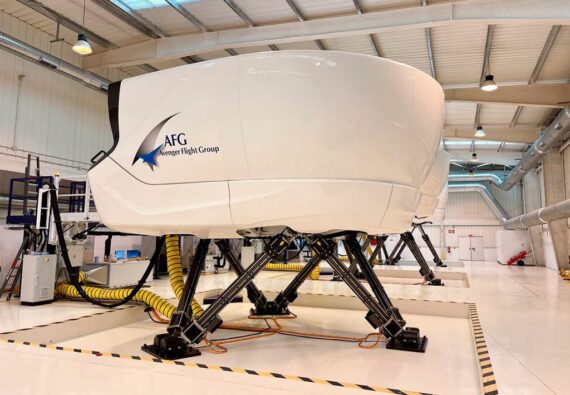
Not to mention that the flight simulators for large passenger aircraft are far more advanced than anything you can buy as a consumer, let alone download to a PC. Their physics simulations are advanced enough to use in crash investigations to simulate possible failure scenarios. Their use in training airline pilots is mandatory, not detrimental.
It costs at least $1.5 million. It's ~150x cheaper than the plane and since zero lives at risk, US airline pilots are required to train emergencies in simulators while being accessed by an examiner every six months (IIRC).
For general aviation though, nothing that powerful is available, but you can log training hours on an FAA-certified simulator running the pro version of X-plane.
I’m fairly certain most of the cost there is in the machinery. The software should be more or less comparable (there’s no reason for it not to be anyway).
> I’m fairly certain most of the cost there is in the machinery.
Why are you so certain?
While the hardware isn't exactly cheap, neither is the software. Gathering feedback from a bunch of pilots and incorporating it into the simulator isn't cheap. Renting out an A330 and a couple of pilots to run experimental validation isn't cheap - it costs >$50k an hour and you'll need hundreds if not thousands of hours. Validating each software release isn't cheap.
*> The software should be more or less comparable (there’s no reason for it not to be anyway).
I'm working on second hand info but AFAIK it takes over a dozen modern networked server systems to provide the fidelity the simulators need (with multiple GPUs no less). The software isn't comparable simply because a consumer machine isn't powerful enough to run the real stuff and the quality of the simulators has absolutely sky rocketed in the last 20 years. The've been constantly upgraded to the point that a 747 simulator now costs more than the plane itself.
I think this is more a selection effect than anything. People who spend lots of time in simulators are more likely to know what a stall is and how an incipient spin looks than someone who is completely new to flying.
I saw a similar comment a few times. The cynic inside of me asks: Why do they say that? To convey that they are experienced experts (which they may not be), and that people book more hours than necessary if "a lot of sim experience".
From what I can gather, sim experience can be a mixed bag -- some positive, some negative.