> Debian is a large part of that history isn't it?
Debian was an early full Linux distribution, but it wasn't the first. Debians big (early) contribution was apt, which could install packages and resolve dependencies over the internet and made package management easier than rpm based distributions of the time.
That is quite the understatement. I can remember the shock and amazement that came over me the first time I used apt. It was one of those computing moments that I will always remember.
Unfortunately I also remember being frightened whenever I had to read the XFree86 README and saw the section about video cards setting on fire.
I am actually a little embarassed by the extent of my Debian fanboyness. So even though I would like to shower apt with platitudes I think stellar hardware support is most likely the result of a kernel package that provides almost every kernel module turned on.[1]
[1] And to a lesser extent xserver-xorg-{input-all|video-all}
I guess not surprisingly, Debian was the distro that switched me off of Slackware. I remember the defining moments for each distribution for me: in 1993, when we set my computer down on a friend's pool table next to a stack of 20+ disks with Slackware on them. (Took the plunge.) And the moment a coworker told me "just install Debian, and use apt-get." (Stopped having to fiddle with configure and make files for things that I "just needed.")
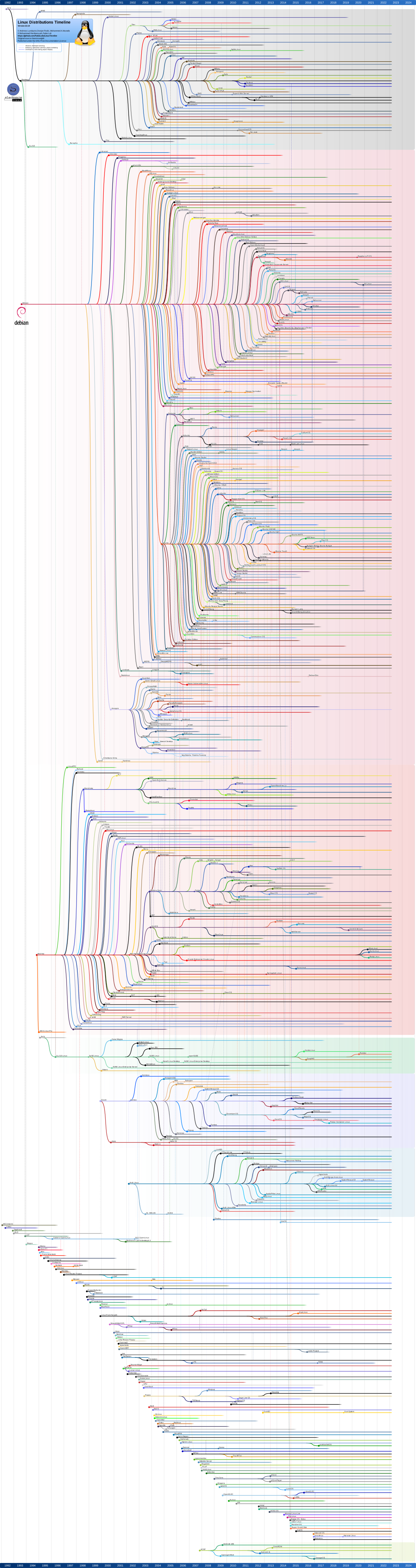
Very neat indeed, though its sheer size seemed to cause indigestion in every app I tried to display it with (they could display it OK, but try to zoom in/out and prepare to wait...).
It would be even cooler if there was some indication of popularity over time as well, e.g. via variation in line thickness or something (...image gets even bigger... ><).


Debian was an early full Linux distribution, but it wasn't the first. Debians big (early) contribution was apt, which could install packages and resolve dependencies over the internet and made package management easier than rpm based distributions of the time.